
When people think of Nyingchi, they often picture spring peach blossoms or the Yarlung Tsangpo Grand Canyon. Yet for many travelers who have explored the region, Basum Tso is the place that leaves the deepest impression—especially in autumn.
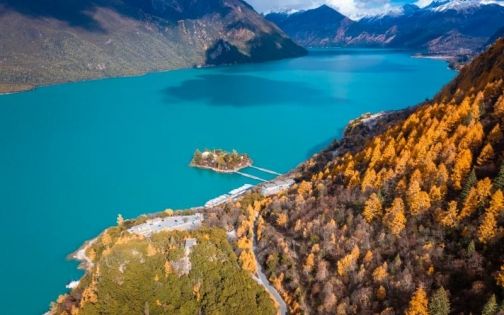
Also known as Cuogao Lake, Basum Tso means “Green Water” in Tibetan. It is one of eastern Tibet’s largest glacial freshwater barrier lakes and one of Tibet’s three sacred lakes.
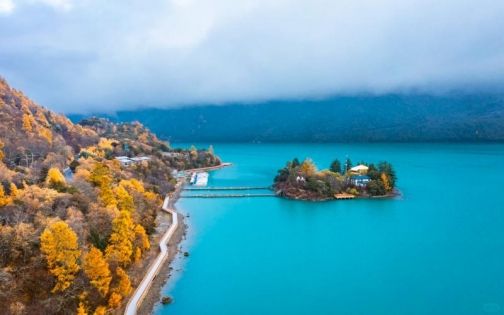
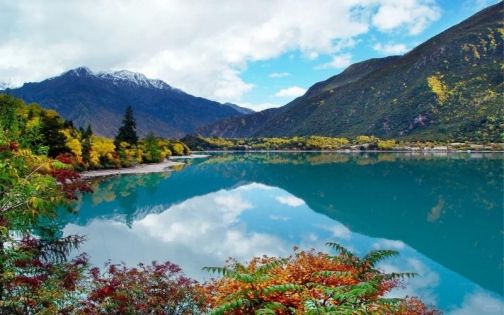
Every year from September to November, snow-capped mountains, golden forests, and emerald-blue waters combine to create one of the most spectacular alpine landscapes in Tibet. Many photographers consider autumn the most photogenic season, when the lake becomes a masterpiece of vibrant colors.
Compared with the busy spring blossom season, autumn offers fewer crowds and even richer scenery. The lake remains crystal clear, forests turn shades of gold and orange, and early snowfall often dusts the surrounding mountains, creating a breathtaking combination of white snow, colorful foliage, and turquoise water.
If you’re planning an autumn trip to Tibet, Basum Tso deserves at least one full day—ideally an overnight stay—to fully appreciate its beauty.
Basum Tso
Is Basum Tso Worth Visiting?
Without question.
Situated at an elevation of approximately 3,490 meters (11,450 feet), Basum Tso enjoys abundant forest coverage that provides significantly more oxygen than many other parts of Tibet. As a result, most visitors experience little or no altitude sickness, making it one of the best destinations for travelers visiting Tibet for the first time.
What makes Basum Tso special isn’t just the lake itself. Within one scenic area, you’ll find snow mountains, alpine lakes, ancient forests, rivers, grasslands, and authentic Tibetan culture, all without requiring strenuous hiking.
Why Autumn Is the Best Season
Many travelers assume spring is the ideal time to visit because of the peach blossoms.
In reality, autumn offers even more dramatic scenery.
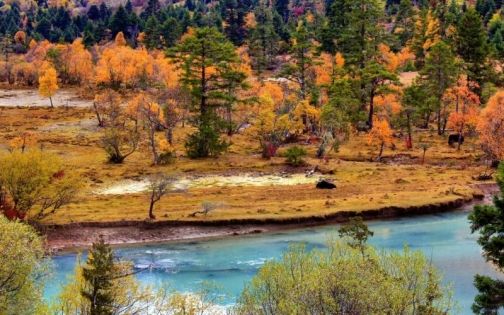
From September through November, forests transform into a vibrant palette of golden yellow, fiery orange, and deep green. The lake remains an intense emerald color, while early snow often blankets the surrounding peaks.
The contrast between blue water, golden forests, and white mountains creates a level of visual depth that simply doesn’t exist during summer, when everything is lush but predominantly green.
For photographers, autumn is undoubtedly the best season.
How to Get to Basum Tso
From Lhasa
Driving or hiring a private vehicle takes approximately four hours via the Lhasa–Nyingchi Expressway.
The route passes the beautiful Nyang River Valley and Mila Pass, offering numerous opportunities to stop for mountain photography.
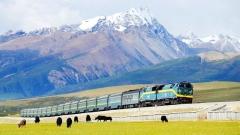
Alternatively, take the high-speed train from Lhasa to Nyingchi, which takes about 1.5 hours, then continue by shared vehicle for another two hours to Basum Tso.
From Nyingchi
The drive takes around two hours.
Regular buses also depart from the Nyingchi Passenger Transport Center, with fares starting around CNY 62. During the low season, departures may be less frequent.
Joining an organized day tour is another convenient option.
Entrance Fees
Peak Season (May 1 – October 31)
- Entrance Ticket: CNY 120
- Sightseeing Bus: CNY 45
Low Season (November 1 – April 30)
- Entrance Ticket: CNY 60
- Sightseeing Bus: CNY 45
During certain winter promotions, admission fees may be waived, leaving only the sightseeing bus charge. Be sure to check the latest policies before traveling.
Visitors staying overnight in Jieba Village may be allowed to drive into the scenic area with proof of accommodation, depending on current regulations.
Basum Tso
Recommended One-Day Itinerary
Most visitors explore Basum Tso by sightseeing bus, stopping at the major viewpoints.
A recommended route includes:
- Daqiela Viewing Platform
- Tsozong Monastery (Lake Island)
- Forgotten Pier
- Jieba Village
- Xincuo (if time permits)
Allow five to six hours for the main scenic area.
If you also plan to visit Xincuo, spending one night nearby is highly recommended.
Must-Visit Attractions
Daqiela Viewing Platform
This is Basum Tso’s most iconic viewpoint.
From the elevated platform, visitors can enjoy panoramic views of the lake, surrounding mountains, and the island monastery.
Morning provides the best lighting for photography.
Lake Island & Tsozong Monastery
The island is connected to the shore by a wooden bridge.
Its thousand-year-old Tsozong Monastery, belonging to the Nyingma school of Tibetan Buddhism, is one of the lake’s cultural highlights.
Standing on the island, you’ll enjoy magnificent reflections of snow-capped mountains mirrored on the lake.
Forgotten Pier
A quieter photography location that requires about a 20-minute walk.
The area features artistic photo installations, including a “Sky Mirror,” and becomes especially beautiful at sunset when warm light reflects across the lake.
A Hidden Gem: Walk the Lakeside Boardwalk from Jieba Village
Many visitors simply follow the sightseeing bus route and miss one of Basum Tso’s most peaceful experiences.
Instead, get off at Jieba Village Viewing Platform and take the lakeside boardwalk.
Under normal conditions, the trail continues all the way toward the Lake Island before reconnecting with the main road. If sections are temporarily closed for maintenance, simply return along the same path.
The round-trip distance is approximately 3 kilometers.
Because the forest is dense and oxygen levels are high, even first-time visitors to Tibet usually experience no altitude discomfort.
Unlike the grand panoramic viewpoints, the boardwalk offers constantly changing scenery.
Golden autumn leaves line the shoreline, emerald water sparkles beside the trail, and every turn reveals a new perspective of the surrounding mountains.
Best of all, very few tourists venture here, allowing you to enjoy the scenery in complete tranquility.
Is Xincuo Even More Beautiful?
If your schedule allows, don’t miss Xincuo.
Many travelers who have visited destinations like western Sichuan or Kanas believe Xincuo is equally beautiful—or even more pristine.
Located deep inside the Basum Tso Scenic Area, Xincuo is inaccessible by sightseeing bus.
Visitors can hire an official shuttle or off-road vehicle for approximately CNY 120 round trip, or ask local guesthouses in Jieba Village to arrange transportation.
The access road is famously bumpy, but the journey is well worth it.
From the parking area, you’ll hike approximately 3.5 kilometers one way (7–8 km round trip).
The trail follows rivers and forests with almost no elevation gain, making it ideal even for beginner hikers.
Along the way, you’ll encounter alpine lakes, streams, forests, meadows, and spectacular mountain scenery.
Late afternoon offers the best lighting, and if you stay until sunset, you may even witness the famous Golden Sunset illuminating the surrounding peaks.
Basum Tso
Is Jieba Village Worth Staying Overnight?
Absolutely.
Unlike many heavily commercialized tourist destinations, Jieba Village remains peaceful and authentic.
A single main road connects traditional Tibetan homes, family-run guesthouses, and small local restaurants.
After day visitors leave, the village becomes wonderfully quiet.
At night, the sky fills with stars rarely visible in cities.
Early in the morning, snow-capped mountains emerge through drifting mist while smoke rises from village chimneys—a scene that perfectly captures the tranquility of rural Tibet.
Many guesthouses blend traditional Tibetan architecture with modern comforts, and hospitality is often exceptional.
Some hosts even prepare warm milk tea, turn on room heaters before guests return from hiking, and serve homemade breakfasts.
If you plan to hike Xincuo, staying in Jieba Village is also the most convenient option.
Best Photography Locations
Lake Island Pier
Use the emerald lake as your foreground, with Tsozong Monastery and snow-covered peaks forming a stunning backdrop.
Daqiela Viewing Platform
The best location for panoramic photography and drone shots (where permitted).
Jieba Village Meadow
Golden autumn grasslands combined with snowy mountains create a perfect setting for portrait photography.
White, beige, or red clothing photographs particularly well.
Shallow Lakeshore
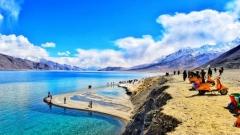
On sunny days, the crystal-clear water reveals beautiful ripple patterns, earning this spot the nickname “The Maldives of Tibet.”
Practical Travel Tips
- Autumn temperatures vary significantly. Daytime ranges from 10–15°C (50–59°F), while nights often fall below freezing. A warm down jacket is essential.
- Visit Daqiela Viewing Platform in the morning for the best light.
- Schedule your Xincuo hike in the afternoon when visibility is excellent.
- Always confirm local drone regulations before flying.
- Xincuo’s trail is well-maintained and suitable for beginners.
- To avoid tour groups, visit popular viewpoints before 9:00 a.m. or after 3:00 p.m.
Suggested Two-Day Itinerary
Day 1
Nyingchi → Basum Tso → Daqiela Viewing Platform → Lake Island → Lakeside Boardwalk → Forgotten Pier → Overnight in Jieba Village → Stargazing
Day 2
Sunrise over the snow mountains → Xincuo Hike → Lunch in Jieba Village → Return to Nyingchi or Lhasa
This itinerary allows you to experience Basum Tso at a relaxed pace while enjoying both its daytime scenery and peaceful evenings.
Basum Tso
recommend route: