As the famous local saying goes, “First came Jokhang Temple, then came the city of Lhasa.”
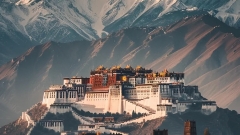
If the Potala Palace stands as the supreme symbol of Tibet’s political and architectural grandeur, Jokhang Temple is unquestionably the living soul and spiritual heart of the Tibetan world. Built in the 7th century, this ancient temple has silently witnessed over 1,300 years of history, drawing millions of pilgrims who travel thousands of miles to offer prostrations at its gates.
This comprehensive guide explores the rich origins, supreme spiritual status, and unforgettable highlights of Jokhang Temple in Lhasa.
Key Takeaways
Historical Origins: Built in the 7th century during King Songtsen Gampo’s reign for Princess Wencheng and Princess Bhrikuti; one of Tibet’s oldest timber-structure temples.
Supreme Spiritual Status: Houses the sacred 12-year-old life-sized statue of Sakyamuni Buddha (Jowo Rinpoche), making it the ultimate pilgrimage site for Tibetan Buddhists across all sects.
Architectural & Cultural Hub: Fuses Tibetan, Han Chinese, Indian, and Nepalese architectural styles; marks the historical center around which the city of Lhasa grew.
Top Reasons to Visit: Experience heartwarming pilgrimage traditions (prostrations), admire ancient murals and relics, and capture panoramic views of the Potala Palace from its golden roof.
Origins & History of Jokhang Temple
The creation of Jokhang Temple marks a defining moment in the rise of the Tubo Kingdom and the flourish of Buddhism in Tibet:
The Legend of Songtsen Gampo & The Two Princesses: In the mid-7th century, King Songtsen Gampo married Princess Bhrikuti of Nepal and Princess Wencheng of Tang Dynasty China. Princess Bhrikuti brought the 8-year-old life-sized statue of Sakyamuni Buddha, while Princess Wencheng brought the priceless 12-year-old life-sized statue. To enshrine these sacred statues, King Songtsen Gampo ordered the construction of Jokhang Temple.
Draining the Lake to Build a Temple: Legend says the current site of Jokhang Temple was once a marshy lake called “Wotang Lake.” Using Chinese geomancy (Feng Shui), Princess Wencheng determined that the topography of Tibet resembled a reclining demoness, with the lake at her heart. To suppress the demoness, King Songtsen Gampo used white goats to carry soil and fill in the lake to build the temple.
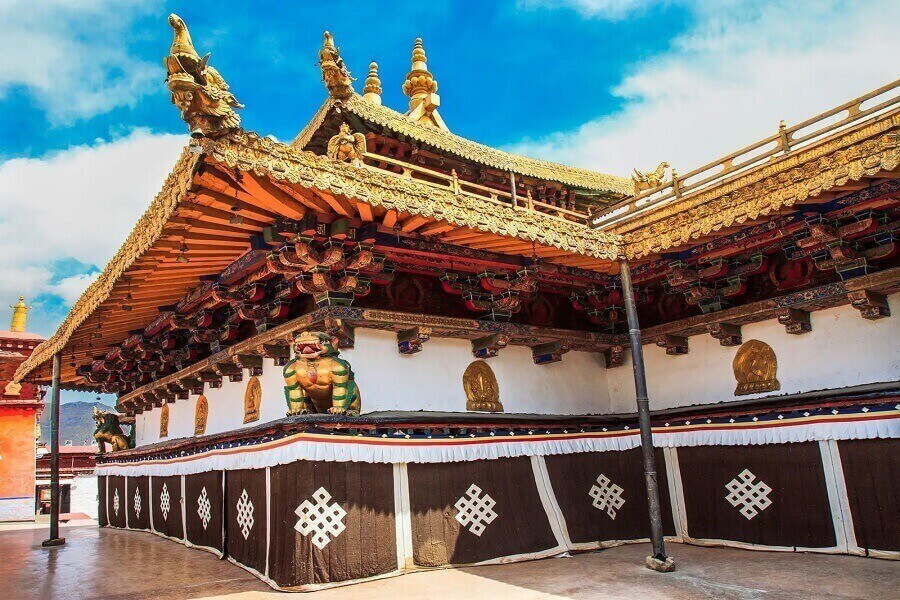
A Masterpiece of Cultural Fusion: Jokhang Temple’s architecture seamlessly integrates Tibetan stone walls, Han Chinese timber brackets and hip roofs, alongside Indian and Nepalese wooden carving styles—creating an enduring architectural marvel.
The Supreme Status of Jokhang Temple Today
To the Tibetan people, Jokhang Temple is not merely a place of worship; it is the ultimate holy land of holy lands.
Enshrining Jowo Rinpoche: The main hall enshrines the gilded bronze statue of Sakyamuni Buddha at age 12 (Jowo Rinpoche), blessed by Buddha himself. In Tibetan Buddhism, seeing this statue is believed to be equal to meeting Buddha in person.
Revered Across All Tibetan Buddhist Sects: Unlike many monasteries dedicated to a specific lineage, Jokhang Temple holds a unique, non-sectarian status. It is equally honored by all major schools, including Gelug, Nyingma, Sakya, and Kagyu.
The Center of Lhasa’s Geography & Life: The layout of Lhasa expanded outward from Jokhang Temple. Three concentric pilgrimage circuits surround it: the inner Nangkhor, the middle Barkhor, and the outer Lingkhor—making Jokhang the undeniable center of Tibetan culture.
Why Travelers Must Visit Jokhang Temple
Stepping into Jokhang Temple offers visitors an unforgettable cultural and emotional experience:
1. Witness Unwavering Faith & Devotion
At the entrance, pilgrims prostrate themselves day and night on stone slabs worn smooth by centuries of devotion. The scent of yak butter lamps and the deep chanting of monks create an atmosphere of profound tranquility and reverence.
2. Admire Ancient Art & National Treasures
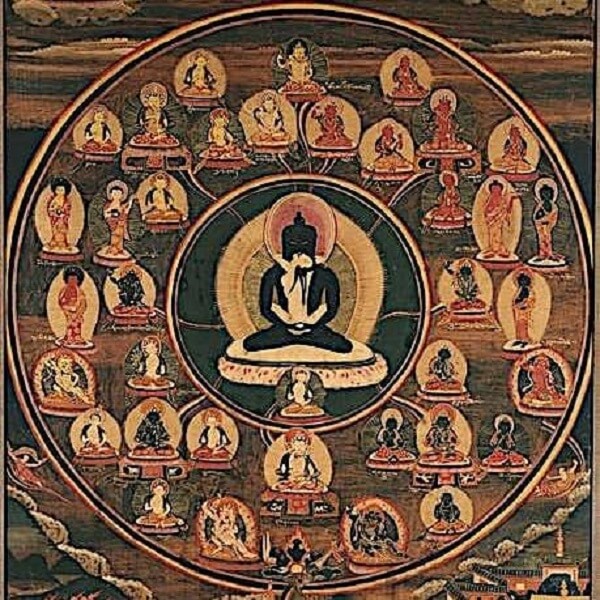
Beyond Jowo Rinpoche, the temple houses vast historic treasures: 1,300-year-old carved wooden pillars, hundreds of meters of vibrant frescoes depicting Princess Wencheng’s arrival, precious Thangkas, and royal gifts from imperial dynasties.
3. Panoramic Golden Roof Views
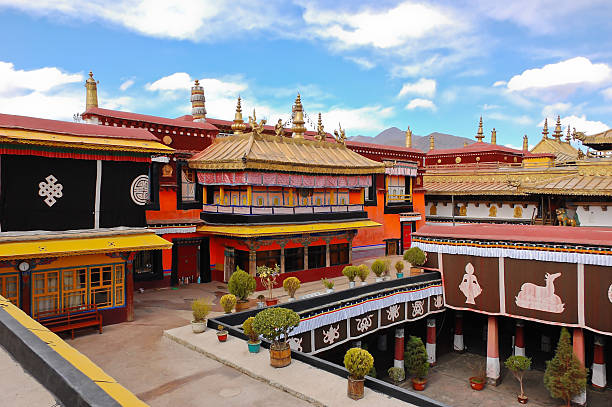
The golden roof of Jokhang Temple is one of Lhasa’s finest photography spots. Standing among shimmering bronze wheel-and-deer statues, visitors can enjoy sweeping views of the distant Potala Palace and the bustling crowds along Barkhor Street below.
Jokhang Temple is a living masterpiece of faith, history, and culture. When visiting Lhasa, take time to spin the prayer wheels, light a butter lamp, and feel the true, timeless spirit of Tibet!