
Riding across snow-capped peaks and vast alpine deserts at an average altitude of over 4,000 meters, the Qinghai-Tibet Railway—often called the “Sky Road”—connects Tibet with the rest of mainland China. As a monumental engineering achievement, it conquered three major world-class challenges: high-altitude hypoxia, permafrost instability, and fragile ecosystems. Beyond its technical triumph, it offers travelers an unforgettable, scenic train journey into the heart of Tibet.
Key Takeaways
- A Legendary Engineering Marvel: Spanning 1,956 kilometers, the Qinghai-Tibet Railway is the highest and longest railway built on a high-altitude permafrost plateau in the world, reaching its peak at Tanggula Pass (5,072 meters above sea level).
- Strategic & Economic Motivation: Built to break Tibet’s long-standing isolation, the railway boosts trade, freight transport, and tourism between Tibet and mainland China while reinforcing border defense and national unity.
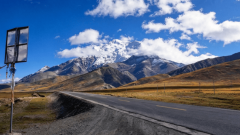
- Unrivaled Scenic Corridor: Crossing Qinghai Lake, the Kunlun Mountains, the Hoh Xil uninhabited area, Tanggula Pass, the Qiangtang Grassland, and Lake Cona, passengers can view snow-capped mountains, alpine lakes, and rare wildlife such as Tibetan antelopes.
- Advanced Plateau Technology: Unlike standard trains, Qinghai-Tibet trains feature a dual oxygen supply system (diffused and individual oxygen outlets), UV-resistant windows, zero-discharge vacuum toilets, and specialized high-altitude diesel locomotives to overcome extreme altitude and environmental challenges.
Why Was the Qinghai-Tibet Railway Built? History & Significance
Motivations: Overcoming Natural Barriers & Boosting Regional Growth
Before the railway opened, Tibet was the only provincial-level region in China without a railway connection. Transportation relied entirely on highways (such as the Sichuan-Tibet and Qinghai-Tibet highways) and flights, which were costly and frequently disrupted by extreme weather.
Economic Lifeline: Tibet needed large quantities of building materials, food, and daily necessities from the mainland, while local goods needed an efficient outward transport route. The railway dramatically cut logistics costs.
Tourism & Cultural Exchange: The train made traveling to Tibet more affordable and accessible, sparking a boom in Tibet’s tourism industry and fostering cultural exchanges.
Strategic & Border Security: As a vital frontier region, a reliable railway network plays an indispensable role in maintaining regional stability, border security, and national unity.
A Two-Phase Mega Project
Connecting Xining in Qinghai to Lhasa in Tibet over a total length of 1,956 kilometers, the railway was constructed in two distinct stages due to extreme environmental conditions:
Phase 1 (Xining to Golmud): Covering 814 kilometers, construction began in 1958. Following pauses and resumptions, it officially opened for operation in 1984.
Phase 2 (Golmud to Lhasa): Spanning 1,142 kilometers, this section was the core technical challenge across the permafrost plateau. Construction started in 2001 and took five years, fully opening for service on July 1, 2006.
Key Stations & Scenic Highlights Along the Route
Riding the Qinghai-Tibet Railway feels like traveling through an epic gallery of high-altitude landscapes. Heading southwest, here are the key stations and highlights along the journey:
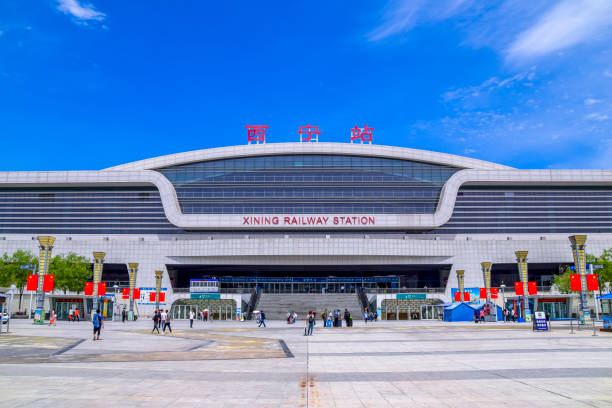
Xining Station (Elevation: 2,261 meters)
Highlights: The starting point of the Qinghai-Tibet Railway. Passengers board here and begin gradually adapting as the elevation rises.
Scenery: Shortly after departure, the train passes near Qinghai Lake, China’s largest inland saltwater lake, surrounded by golden canola fields and blue waters in spring and summer.
Golmud Station (Elevation: 2,829 meters)
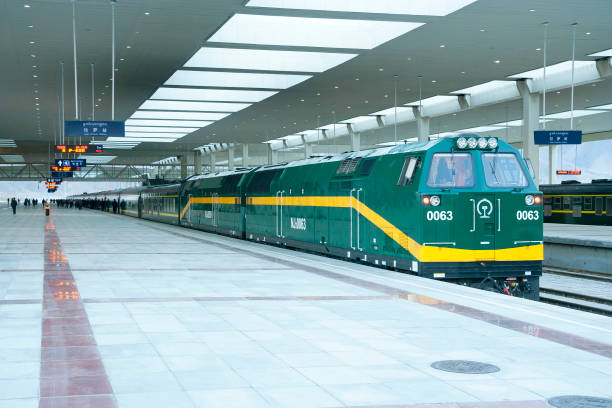
Highlights: The junction between Phase 1 and Phase 2, and a vital hub before entering the high-altitude permafrost section. Here, engines are switched to specialized high-altitude diesel locomotives.
Kunlun Pass & Fenghuoshan Tunnel (Elevation: 4,700–4,900 meters)
Scenery: Past Golmud, the train climbs steeply into the Kunlun Mountains, passing through the Fenghuoshan Tunnel (4,905 meters above sea level), the world’s highest railway tunnel built on permafrost.
Hoh Xil & Qingshuihe Bridge (Elevation: ~4,600 meters)
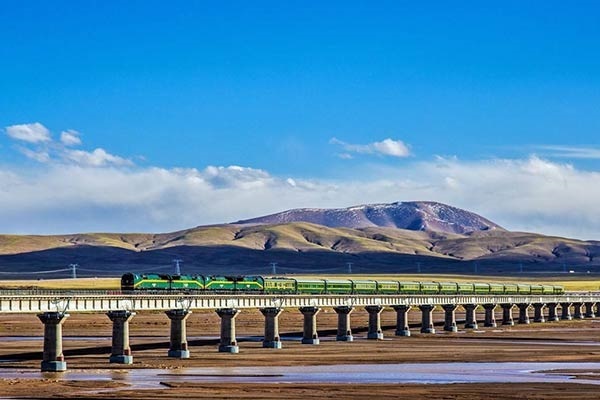
Scenery: The train enters the Hoh Xil National Nature Reserve. To avoid disrupting wildlife migration, engineers built the 11.7-kilometer-long Qingshuihe Bridge as an elevated corridor. Lucky travelers can spot Tibetan antelopes, wild yaks, and Tibetan wild asses from their windows.
Tanggula Station (Elevation: 5,068 meters)
Highlights: The highest railway station in the world! Nearby Tanggula Pass (5,072 meters) marks the railway’s highest elevation point, where snow peaks feel close enough to touch.
Nagqu Station & Lake Cona (Elevation: 4,500–4,800 meters)
Scenery: Traversing the vast Qiangtang Grassland in northern Tibet, filled with grazing yaks and sheep, the train runs directly along the shore of Lake Cona. Considered a sacred lake by local Tibetans, its clear blue waters mirror the sky like a giant jewel.
Lhasa Station (Elevation: 3,641 meters)
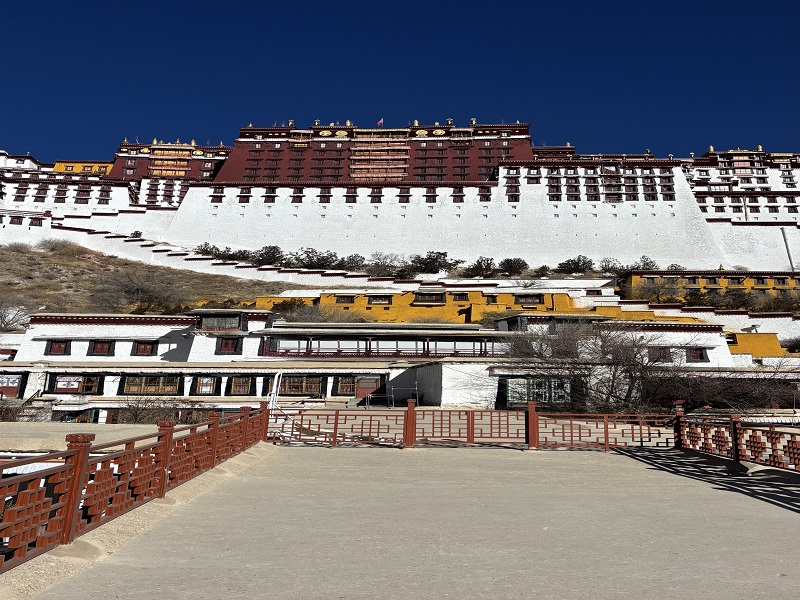
Highlights: The terminal station of the Qinghai-Tibet Railway. The station building blends modern design with traditional Tibetan architecture, welcoming travelers to the holy city of Lhasa.
How Do Qinghai-Tibet Trains Differ from Standard Trains?
To handle extreme plateau conditions—low air pressure, severe oxygen deficiency, intense UV radiation, freezing temperatures, and permafrost movement—Qinghai-Tibet train carriages are engineered with specialized technologies:
Dual Oxygen Supply System: Standard trains rely on window vents and basic air conditioning without oxygen enrichment. In contrast, Qinghai-Tibet trains feature a fully sealed dual oxygen supply system. Past Golmud, “diffused oxygen” is automatically pumped into the cabins to raise overall oxygen concentration. Additionally, individual oxygen outlets are located near every seat and berth for passengers to use with personal tubing if needed.
Pressurized & Sealed Cabins: While standard train interiors reflect outside pressure changes, Qinghai-Tibet carriages are heavily pressurized and sealed to reduce ear discomfort caused by sudden pressure drops when passing through high passes or tunnels.
UV-Resistant Double-Pane Windows: To protect passengers from intense high-altitude solar radiation, carriage windows use double-paned glass coated with special UV filters that block over 90% of ultraviolet rays while providing thermal insulation against extreme cold.
Zero-Discharge Environmental Protection: Because the plateau ecosystem is exceptionally fragile, Qinghai-Tibet trains use vacuum-flush toilets and centralized waste collection systems. All wastewater and trash are contained on board and emptied at major stations for eco-friendly processing, maintaining zero emissions along the line.
High-Altitude Diesel Locomotives: Standard electric or diesel engines experience significant power loss in thin, low-oxygen air. The Golmud-to-Lhasa segment uses specialized high-altitude diesel locomotives fitted with turbocharged engines designed for extreme cold and low air pressure.
On-Board Medical Support: Unlike standard trains equipped only with basic first-aid kits, Qinghai-Tibet trains carry dedicated medical staff, pulse oximeters, emergency equipment, and backup oxygen cylinders to assist passengers experiencing severe altitude sickness.
Practical Travel Advice for the Qinghai-Tibet Railway
Ticket Booking: Peak travel occurs during summer (June to August) and autumn. Sleeper tickets (Soft Sleeper and Hard Sleeper) sell out quickly, so book well in advance through official ticketing channels.
Altitude Adaptation: Taking the train helps your body adjust gradually as elevation increases. However, after Golmud, the altitude quickly climbs above 4,000 meters; use the personal oxygen outlets if you feel lightheaded or short of breath.
Packing Essentials: Bring your Original Passport/ID (and Tibet Travel Permit for international travelers). The plateau air is dry, so pack moisturizer, lip balm, a thermos for warm water, and warm layered clothing for sudden temperature drops.