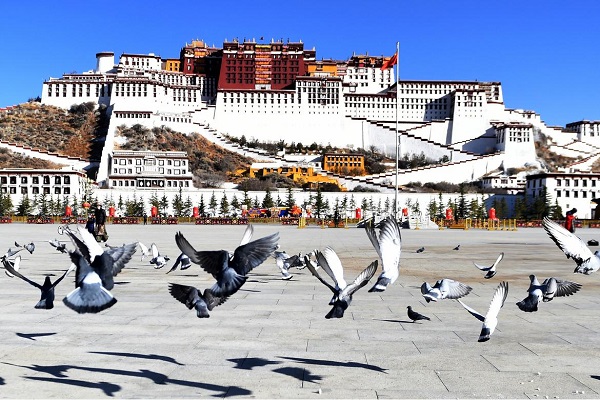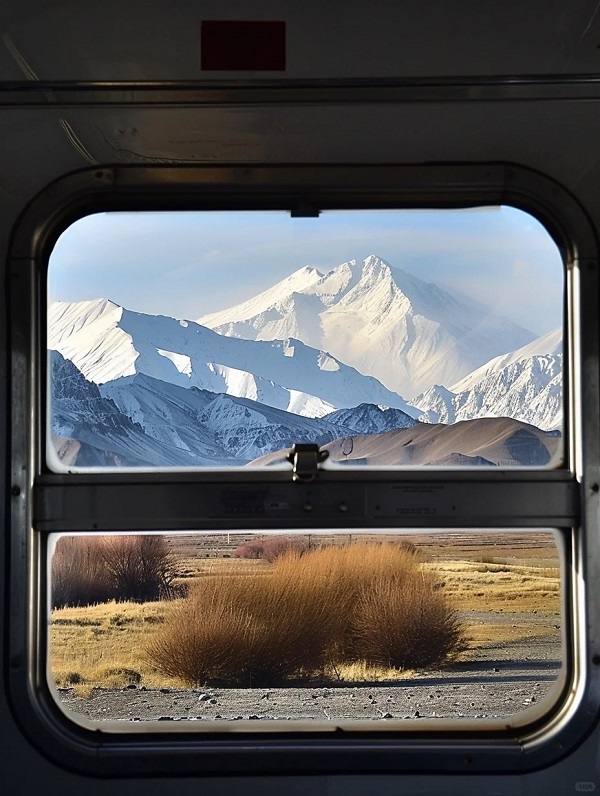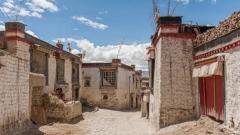

As the first rays of morning sun pierce through the thin mist and gently illuminate the golden roofs of the Potala Palace, the sacred city of Lhasa awakens to the rhythmic, rustling footsteps of pilgrims on the kora paths.
For many travelers journeying to Tibet, the region is defined by its holy mountains, sacred lakes, and spiritual devotion. Yet, for the Tibetan people who have called this snow-covered plateau home for generations, the truest warmth of daily life is hidden within a steaming bowl of Tibetan noodles and a cup of rich, milky tea in the early morning.
Tibetan breakfast culture is a pure, natural epic of human harmony with an extreme environment. Today, let us step into the lively sweet teahouses hidden in the streets and alleys of Lhasa to savor the morning delicacies passed down through the millennia and trace the pure natural sources of their ingredients.
The Soul of Tradition: Tsamba and Butter Tea
In the long history of the plateau, a Tibetan nomad’s breakfast was not spent in a bustling urban teahouse, but inside the warmth of a traditional black tent. The most classic breakfast pairing for a traditional Tibetan household consists of “Tsamba” and “Butter Tea.”
Tsamba: The Gift of Highland Barley from the Plateau Soil
-
What to eat for breakfast: Tsamba is the most traditional staple food in Tibet. To eat it, locals place a small amount of yak butter, dried cheese curd (separ), and sugar into a bowl, pour hot butter tea over it, and then use the fingers of their right hand to gently knead and roll the mixture clockwise. Once the tea and flour blend perfectly, it is shaped into compact, savory-sweet dough balls and eaten. It has a hearty, dense texture with a rich, natural grain sweetness.
-
Food Source: The soul of Tsamba is highland barley (known as qingke), one of the very few hardy crops capable of surviving and ripening in the freezing altitudes above 4,000 meters. The barley is washed, roasted, and then ground into fine flour using pure, water-driven stone mills driven by pristine plateau streams. This high-fiber, high-calorie food provides the enduring energy needed for a full day of farming or herding in cold, oxygen-deficient conditions.
Butter Tea: The “Water of Life” Against Extreme Cold
-
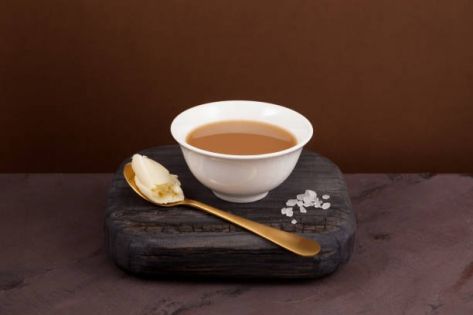
What to eat for breakfast: No Tibetan morning is complete without butter tea. It carries a slightly savory, salty flavor with a smooth, velvety texture that instantly warms the stomach and effectively prevents lips from chapping in the dry, harsh mountain air.
-
Food Source: Its essence comes from the yak. Nomad families churn freshly milked yak milk to extract golden yak butter. This butter is then combined with a deeply brewed dark brick tea soup and a pinch of salt, before being vigorously pounded together in a traditional wooden churn until the tea and oils emulsify completely. The brick tea historically made its way to Tibet via the ancient “Tea Horse Road” from inland China, blending seamlessly with local yak butter to become the ultimate symbol of Tibetan culinary identity.
The Morning Smoke of Modern Lhasa: Tibetan Noodles and Sweet Tea
With the passage of time, breakfast culture in cities like Lhasa and Shigatse has evolved into a vibrant “teahouse lifestyle.” By eight in the morning, the sweet teahouses lining the streets are already packed with locals.
Tibetan Noodles: A Bowl of Rich Broth and Lingering Flavor
-
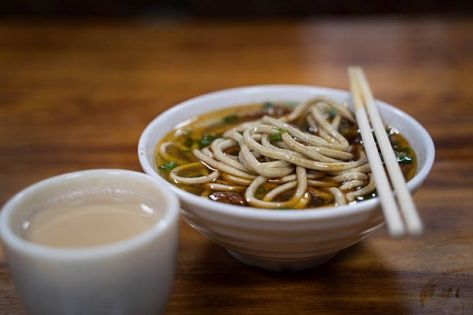
What to eat for breakfast: A bowl of authentic Tibetan noodles is usually served in a modest portion, featuring noodles with a distinct pale-yellow hue. Its texture is entirely different from regular wheat noodles or Cantonese wonton noodles; it is firmer, carrying a subtle, pleasant chewiness unique to alkaline dough. The magic of Tibetan noodles lies in the broth. Before serving, a handful of scallions and finely diced yak meat are scattered on top, often paired with a spoonful of locally made Tibetan chili sauce for a spicy, savory kick.
-
Food Source: The noodles themselves are made from wheat flour mixed with an appropriate amount of alkaline water. The soul-soothing, crystal-clear yet incredibly rich broth is made by slow-stewing yak bones and large cuts of yak meat with select spices overnight in a specialized high-pressure cooker—a pure, natural essence of the plateau.
Tibetan Sweet Tea: The Indian-Inspired Chai of the Plateau
-
What to eat for breakfast: If butter tea is the proud tradition of the northern pastures, sweet tea is the absolute ruler of urban breakfast in Lhasa. Sporting a smooth milk-tea color, its sweet, creamy, and silky texture appeals effortlessly to international palates. In local teahouses, residents love to order a large thermos of sweet tea alongside a bowl of noodles, chatting about daily life with friends and neighbors for hours.
-
Food Source: The birth of Tibetan sweet tea is a fascinating cultural intersection, influenced by early British and Indian tea traditions traveling across the Himalayas. Its ingredients are wonderfully simple and pure: black tea leaves, fresh milk (or premium milk powder), and white sugar. Boiling the aromatic black tea liquid together with milk creates this beloved morning beverage that has captivated Lhasa for over a century.
The Survival Wisdom and Cultural Depth Behind a Tibetan Breakfast
Traveling the world, it is rare to find a place where breakfast has retained such a high degree of natural authenticity and distinct regional character for thousands of years. The unique breakfast habits of Tibet encapsulate two great survival wisdoms of the high altitude:
-
High Calories for Ultimate Insulation: Whether it is yak butter, barley, or rich bone broths, the core characteristic of a Tibetan breakfast is its high concentration of fats, carbohydrates, and proteins. In a thin-aired environment where temperatures frequently drop below freezing, the human body burns twice as many calories just to maintain core temperature. These foods are a strict biological necessity.
-
Eating in Season and Honoring Nature: The ingredients for a Tibetan breakfast are remarkably pure, relying entirely on barley nourished by glacial meltwater and yaks grazing freely at the foot of sacred mountains. Before enjoying their morning meal, many locals will gently flick a few drops of butter tea or a pinch of tsamba into the air as an offering to the deities and the earth. This profound reverence and gratitude for the food provided by nature is the most beautiful element of Tibetan dining culture.
Immersing Your Senses in the Breath of Tibet
Many who travel to Tibet find themselves constantly rushing from one iconic scenic spot to another. However, if you truly want to understand Tibet, do not just look at the landscape—go sit in a local sweet teahouse for breakfast.
Sitting amidst the rising steam, wrapped in the rich aromas of milk and tea, you will find yourself surrounded by local grandmothers who have just completed their morning koras. Listening to the warm, rolling murmurs of the Tibetan language and holding a comforting bowl of slow-simmered Tibetan noodles, you cease to be a mere observing tourist. In that exact moment, your palate and your breath merge completely with the rhythm of this sacred snow plateau.