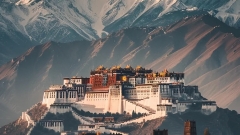

In Tibet, there is a well-known saying: “Without visiting Ngari, you haven’t truly experienced Tibet.” Situated in the far western expanse of the Tibetan Autonomous Region, Ngari Prefecture sits at an average altitude exceeding 4,500 meters (14,760 feet) above sea level, earning it the celebrated title “Roof of the Roof of the World.”
For many global travelers, Ngari is synonymous with the sacred kora (pilgrimage circuit) around Mount Kailash. However, this vast and ancient land encompasses natural wonders and historical mysteries that extend far beyond a single holy peak.
Key Takeaways
- Diverse & Stunning Attractions: Beyond Mount Kailash, Ngari features the sacred Lake Manasarovar, the ancient lost civilization of Guge Kingdom, the surreal Zanda Earth Forest, and the uniquely split freshwater/saltwater Pangong Tso.
- The “No-Man’s-Land” Myth: With an average elevation above 4,500 meters, northern Ngari (part of the Changtang Plateau) has a harsh, low-oxygen climate and extremely sparse population (fewer than 1 person per square kilometer), remaining a sanctuary for wildlife like Tibetan antelopes.
- Modern Dining & Accommodation: Shiquanhe Town (the administrative center) offers excellent hotels and amenities. Major county seats and tourist towns (Zanda, Burang, Darchen) feature clean hotels and Sichuan/Tibetan cuisine, while remote transit points rely on basic guesthouses and personal provisions.
Top Attractions in Ngari Beyond Mount Kailash
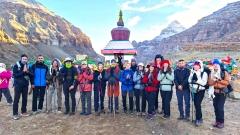
Aside from paying homage to Mount Kailash, Ngari offers breathtaking geological formations and rich historical ruins.
Lake Manasarovar and Lake Rakshastal
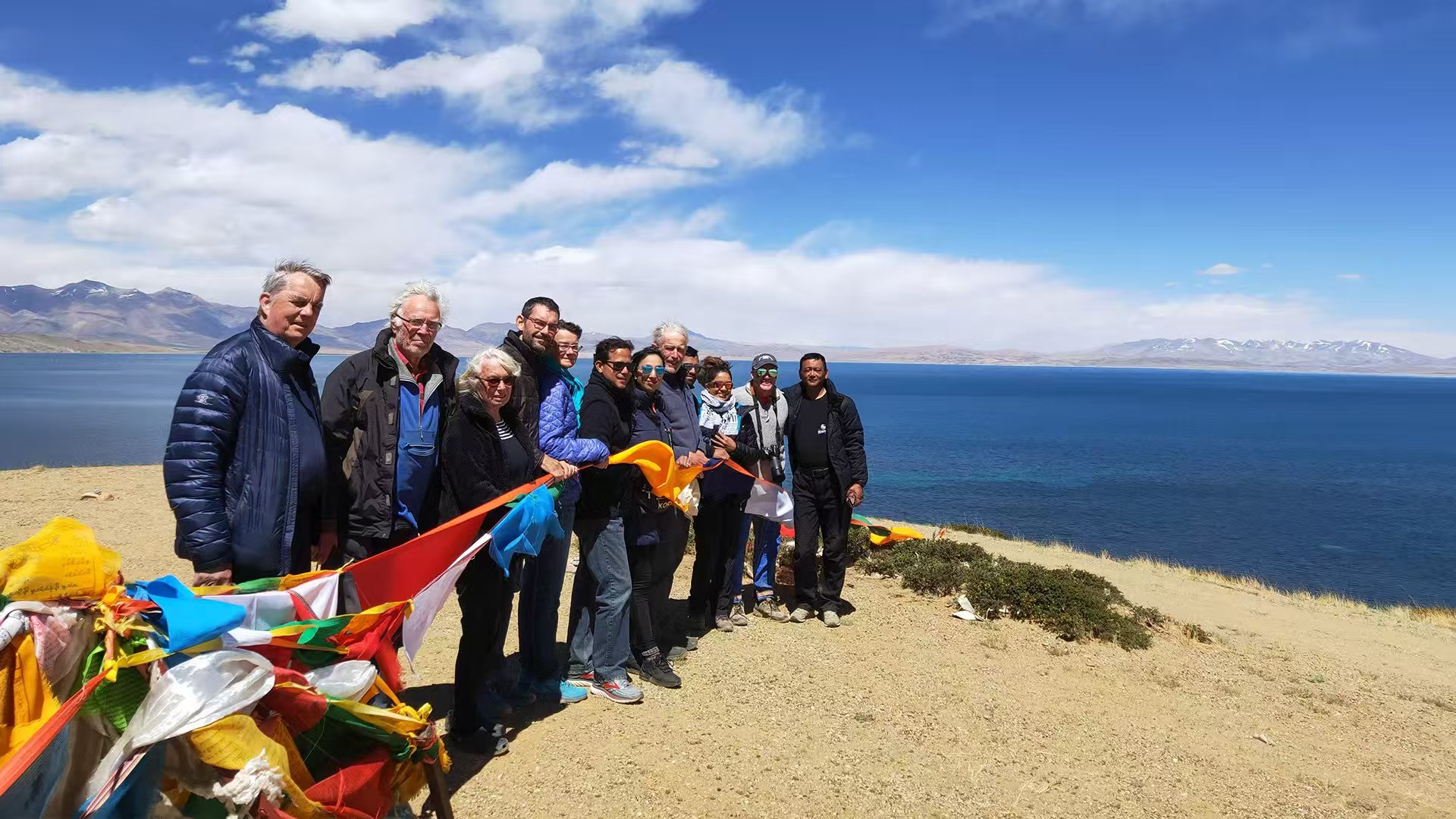
Lying in the shadow of Mount Kailash is Lake Manasarovar, one of Tibet’s three great sacred lakes. Its sapphire waters are considered holy by pilgrims who believe bathing in them cleanses a lifetime of sins. Separated by only a narrow strip of land is Lake Rakshastal (“The Ghost Lake”), famous for its dark, salty waters, lack of vegetation along its shores, and turbulent winds—creating a dramatic contrast between sacred and eerie.
The Lost Civilization: Guge Kingdom Ruins
Perched dramatically on a desolate yellow clay hill in Zanda County, the Guge Kingdom ruins date back to the 10th century. Having flourished for hundreds of years, this powerful kingdom mysteriously vanished in the 17th century, leaving behind hundreds of cave dwellings, fortresses, stupas, and remarkably preserved frescoes that glow magnificently at sunset.
Nature’s Masterpiece: Zanda Earth Forest
Formed over millions of years through geological uplift and water erosion of ancient lake sediments, the Zanda Earth Forest spans hundreds of square kilometers. Its intricate clay formations resemble grand castles, watchtowers, and palaces, making travelers feel as if they have stepped onto another planet.
A Dual-Nature Wonder: Pangong Tso
Located in Rutog County, Pangong Tso is an elongated lake straddling China and Indian-administered Kashmir. Intriguingly, the eastern portion within China consists of fresh water supporting lush vegetation and bird islands, whereas the western portion flowing into Kashmir becomes saline and barren.
Why Is Ngari Called a “No-Man’s Land”?
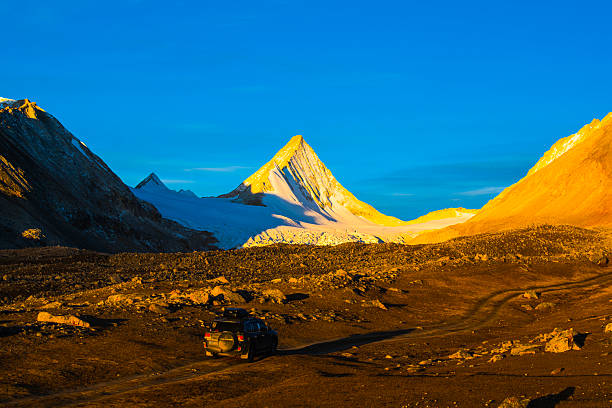
The term “Ngari No-Man’s Land” primarily refers to the core region of the Changtang Plateau in northern Ngari. Several unique geographic factors account for this reputation:
Extreme Altitude & Climate: With an average elevation exceeding 4,500 meters, atmospheric oxygen here is roughly 50% of sea-level density. Mean annual temperatures linger below freezing, accompanied by severe winter and spring sandstorms that push the limits of human habitation.
Ultra-Low Population Density: Spanning over 300,000 square kilometers, Ngari is home to roughly 120,000 residents, resulting in a density of less than 1 person per square kilometer. Beyond designated town centers and nomadic settlements, one can drive for hundreds of kilometers without seeing a single human soul.
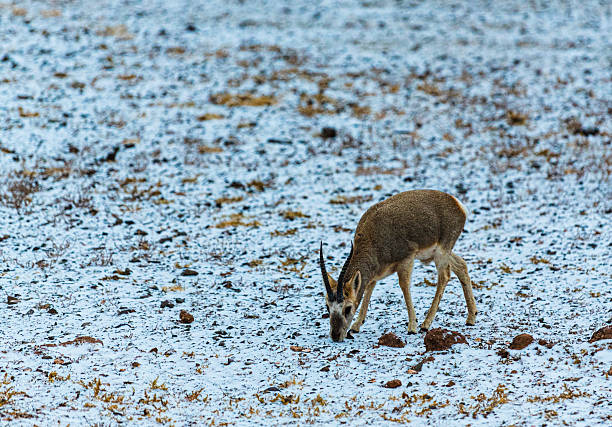
A Wildlife Sanctuary: The absence of dense human settlement has made the region a safe haven for rare, high-altitude wildlife, including Tibetan antelopes, wild yaks, Tibetan wild asses (kiangs), and snow leopards.
How to Handle Accommodation and Dining in Ngari
Thanks to ongoing infrastructure improvements across Tibet, conditions along the Ngari Northern and Southern Circuits have upgraded significantly, though facilities vary depending on location:
Accommodation Experience and Expectations
In Shiquanhe Town (the administrative center of Ngari Prefecture), lodging options are comfortable and well-equipped. Visitors can find three- to four-star standard hotels featuring 24-hour hot water, heating systems, and diffuse oxygen-supply amenities.
When passing through major county seats such as Zanda, Burang, and Rutog, accommodations remain very respectable. Clean business hotels and local guesthouses provide essential modern amenities that meet the needs of most travelers.
In scenic hubs and trekking areas—such as Darchen at the foot of Mount Kailash—towns offer a variety of hotels. However, at high-altitude stops along the trek (like Dirapuk Monastery), accommodations become basic, consisting mostly of multi-bed dorm rooms with shared facilities. Hikers are strongly advised to bring a compact sleeping bag.
Dining Options and Food Supply
Cuisine Types: Dining in Ngari is dominated by Sichuan cuisine and traditional Tibetan food. Because many eateries are operated by migrants from Sichuan, travelers can easily enjoy hot stir-fries, noodle soups, and hotpots even in small remote towns.
Cost of Food: Since almost all food supplies—including fresh vegetables, meat, and rice—must be transported across vast distances from Lhasa or Xinjiang, meal prices are higher than in inland China, averaging about 1.5 to 2 times the cost.
Packing Emergency Snacks: Long driving legs between towns in Ngari frequently take 6 to 8 hours without roadside restaurants. Travelers should carry high-calorie snacks (such as beef jerky, chocolate, energy bars, and biscuit packs) along with an insulated thermos of hot water.
Practical Travel Advice for Ngari
Acclimatize for Altitude: Spend 2 to 3 days in Lhasa (3,650 m) before heading west to Ngari. Carry altitude medication (such as Ibuprofen) and portable oxygen canisters.
Obtain a Frontier Pass: Ngari is a border region. Travelers must obtain a valid Frontier Pass (Bianfangzheng) listing “Ngari Prefecture, Burang, Zanda, and Rutog” before arriving.
Best Time to Visit: The optimal months are May to June and September to October, avoiding the heavy rain season of July–August while enjoying stable weather and clear road conditions.