
✨ Highlights:
- 📅 Best photography seasons revealed: The optimal window for Namcha Barwa sunset photography spans October to April, with stable weather, clear skies, and high chances of witnessing the full snow‑capped peak.
- 📍 Top 5 verified sunset viewpoints: Covers Suosong Village, Sejila Pass, Gongzun Demu Manor, Grand Canyon platform, and Daduka Ruins, offering diverse angles for wide‑angle, reflective, and humanistic shots.
- ⏰ Precise golden hour shooting guide: Explains the best time to shoot Namcha Barwa sunset, including exact sunset time windows, ideal light conditions, and blue‑hour photography techniques.
- 📸 Professional camera settings & composition tips: Provides practical lens choices, aperture, ISO, and composition methods tailored for high‑altitude Namcha Barwa golden hour sunset shooting.
- 🧳 Complete travel & shooting precautions: Summarizes plateau adaptation, weather strategies, etiquette rules, and preparation tips for successful Namcha Barwa Tibet travel for sunset photography.
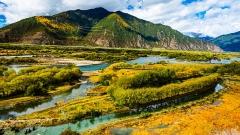
Tibet is home to countless breathtaking natural landscapes, among which Namcha Barwa Peak stands out as a legendary masterpiece of nature. Known as one of China’s most beautiful snow-capped mountains, the 7782-meter-high Namcha Barwa features a towering triangular peak covered in perennial snow. What makes it most famous worldwide is its stunning sunset scenery, attracting countless photography enthusiasts around the globe to pursue the dream of Namcha Barwa Sunset Photography Tibet. Unlike ordinary mountain sunsets, the sunset glow over Namcha Barwa is changeable and sacred, from soft golden light to gorgeous rose-red halo, paired with the winding Yarlung Zangbo River and alpine villages, creating an unparalleled visual feast. This professional photography guide will comprehensively share the best shooting seasons, top shooting locations, professional camera settings, composition skills and travel tips to help every photographer capture the perfect Namcha Barwa sunset moment in Tibet.
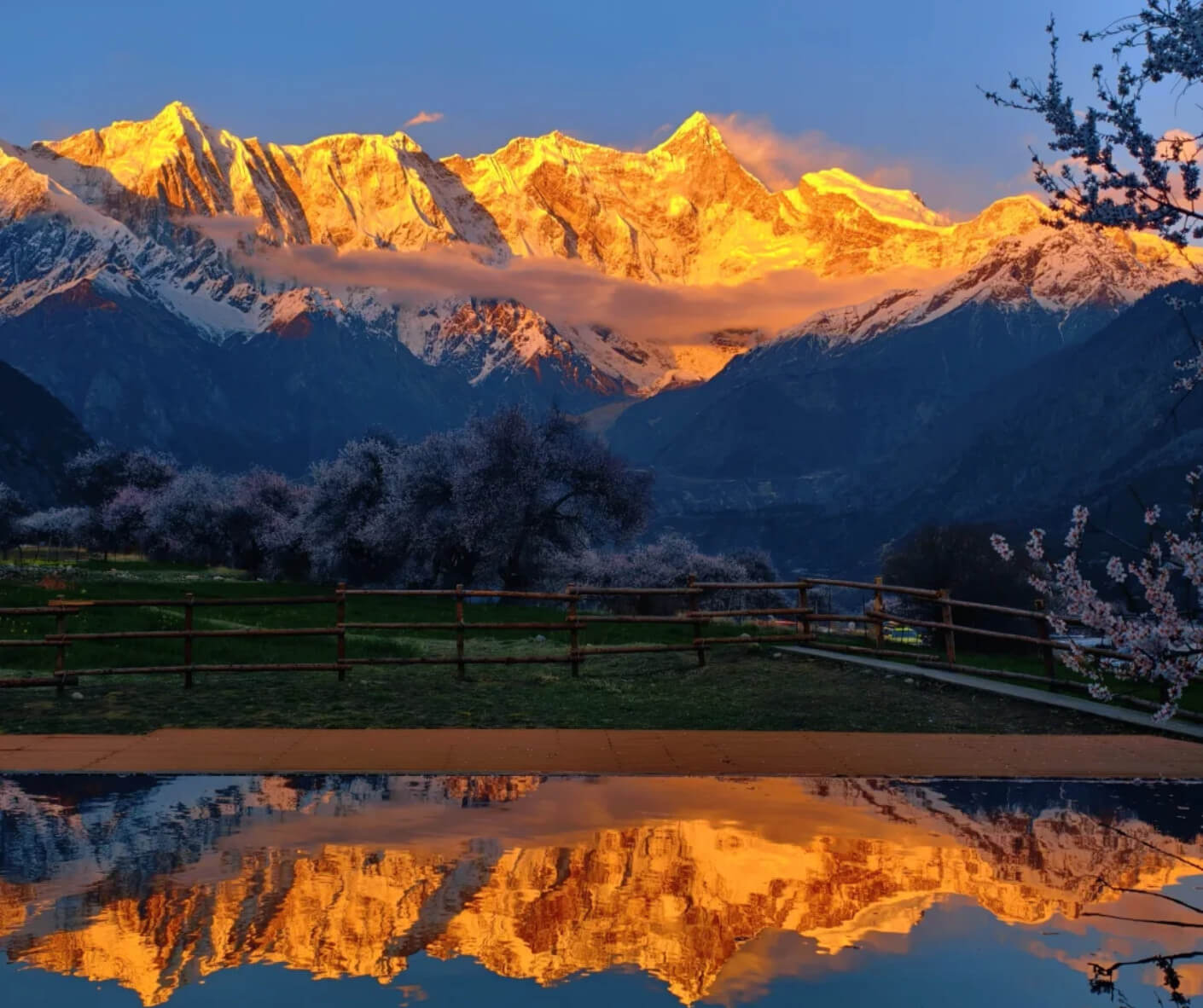
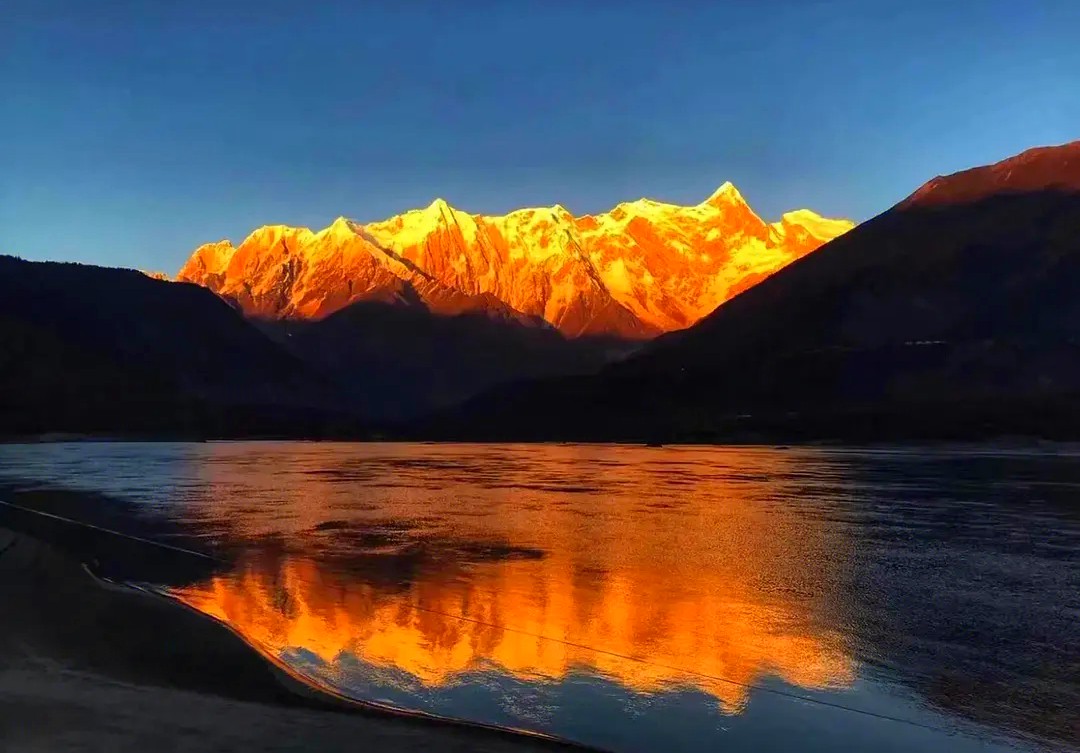
Namcha Barwa Sunset
Why Is Namcha Barwa Sunset Photography in Tibet So Popular?
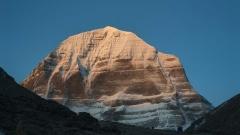
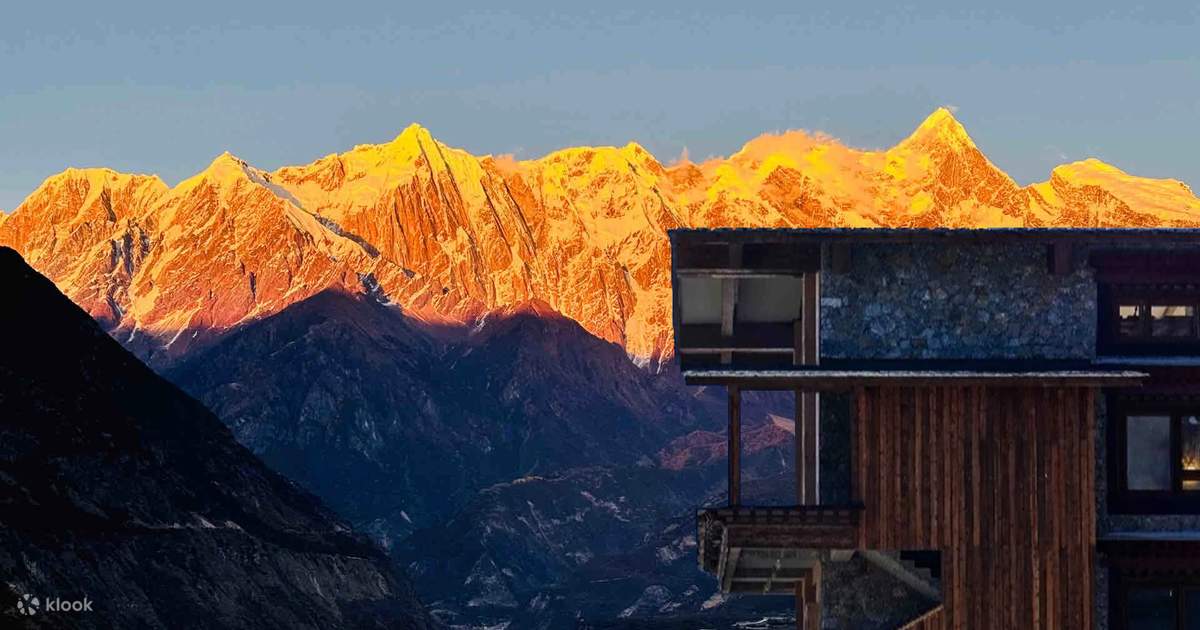
Namcha Barwa Peak is located in Nyingchi, southeastern Tibet, known locally as the “Shy Girl Peak“. It earns this reputation because it is shrouded in clouds and mist all year round, revealing its true face only on rare clear days. Locals have a saying that “Namcha Barwa hides its face nine times out of ten”, which means witnessing its full appearance is a matter of great luck. The sunset moment is the most valuable viewing window of the whole day. As the sun sets slowly, the thick clouds surrounding the peak gradually disperse, and the warm sunset light sweeps over the snow-covered peak, gilding the silver-white snow layer with brilliant golden radiance, forming the famous “sunset golden mountain” spectacle.
Compared with other snow mountain sunsets in Tibet, Namcha Barwa sunset Tibet has unique aesthetic advantages. First, its independent triangular peak has a neat and grand outline, with strong geometric beauty under the rendering of sunset glow. Second, it is surrounded by the Yarlung Zangbo Grand Canyon, the world’s deepest canyon. The overlapping mountains, flowing river water, scattered Tibetan villages and rolling alpine forests form a rich layered scene, avoiding the monotonous sense of single snow mountain shooting. In addition, the high altitude and ultra-clean air of Tibet make the sunset light purer and more layered. The gradient colors from golden yellow, orange red to lavender blue in the sky can bring extremely rich shooting materials, which is why snow mountain sunset photography here has become a top check-in theme for landscape photographers worldwide.
Best Seasons & Time for Namcha Barwa Sunset Photography
The shooting effect of Namcha Barwa sunset is greatly affected by seasons and weather, so figuring out the best time to shoot Namcha Barwa sunset Tibet is the core of successful landscape photography. Choosing the right time is the premise of capturing high-quality works. Different seasons present completely different sunset styles, and mastering the time rule can greatly improve the success rate of photography.
1. Prime Shooting Seasons
The best period for Namcha Barwa sunset photography Tibet is from October to April of the next year, which is the dry season of Nyingchi. During this period, there is less rainfall, low cloud and fog density, high air transparency, and the probability of the peak fully exposed is as high as 80%, making it the golden window for shooting sunset golden mountains.
Among them, winter (December to February) is the most recommended season. The winter sky in Nyingchi is extremely clear, with almost no thick clouds. The soft warm light creates perfect Namcha Barwa golden hour sunset, and the snow on the peak is thicker and whiter. The contrast between golden light and silver snow is strong, and the shooting effect is the most shocking. Autumn (October-November) has cool weather and sparse vegetation. The golden forest belt at the foot of the mountain echoes the sunset snow peak, adding a warm autumn texture to the photos. Spring (March-April) has unique scenery too. The peach blossoms in Nyingchi bloom all over the mountains, and the pink peach blossoms, green river water and golden snow peaks under the sunset form a fresh and romantic picture, suitable for creative landscape photography.
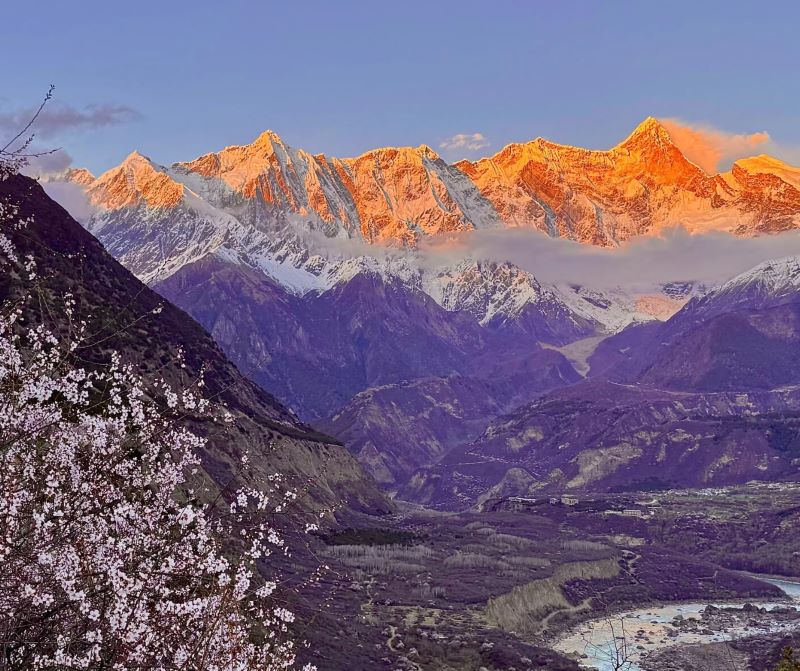
Peach Blossom Season at Mount Namcha Barwa
It is not recommended to shoot from July to September, which is the rainy season in Tibet. The clouds and fog are dense all day long, and Namcha Barwa Peak is almost hidden in the fog. The chance of seeing the sunset golden mountain is extremely low, and the shooting risk is high.
2. Exact Shooting Time Window
The sunset light change of Namcha Barwa is extremely fast, and the best shooting duration is only 20 to 30 minutes. Photographers must arrive at the shooting position in advance to prepare. In winter, the sunset time in Nyingchi is about 18:30-19:30, and the golden mountain effect is most obvious from 18:50. In spring and summer, the daytime is longer, and the sunset window is delayed to 19:30-20:00.
Professional photography tips: Arrive at the shooting spot at least 1 hour in advance to set up equipment and adjust parameters. The best shooting moment is 20 minutes before and after sunset. At this time, the sun’s angle is low, the light is soft and not harsh, and the peak presents layered golden orange. After the sun sets completely, the sky will turn into a tender blue tone, and the golden snow peak against the blue sky can shoot high-level blue-hour works.
Top 5 Shooting Locations for Namcha Barwa Sunset in Tibet
Choosing a suitable shooting location determines the composition and layering of the work. Combined with the terrain characteristics and landscape matching degree of Namcha Barwa scenic area, we have sorted out the five most classic and practical shooting spots, covering grand full-view shots and artistic close-up shots, to meet different photography needs. For travelers planning Namcha Barwa Tibet travel for sunset photography, these viewpoints are must-visit destinations to capture breathtaking snow mountain sunset scenes.
1. Suosong Village (Core Classic Spot)
Suosong Village is recognized as the best location for Namcha Barwa sunset photography Tibet. Located on the north bank of the Yarlung Zangbo River, the village faces Namcha Barwa Peak directly with no shelter in the whole process. Standing in the village, you can have a panoramic view of the complete triangular peak. The biggest advantage of this spot is the rich foreground resources: Tibetan dwellings, green farmland, flowing river water and floating prayer flags can be used as natural foregrounds to increase the story and layering of photos. Shooting the sunset here, the golden snow peak is reflected in the river water, and the smoke of Tibetan villages curls up, forming a strong sense of integration of humanity and nature, which is very suitable for large-scale landscape works.
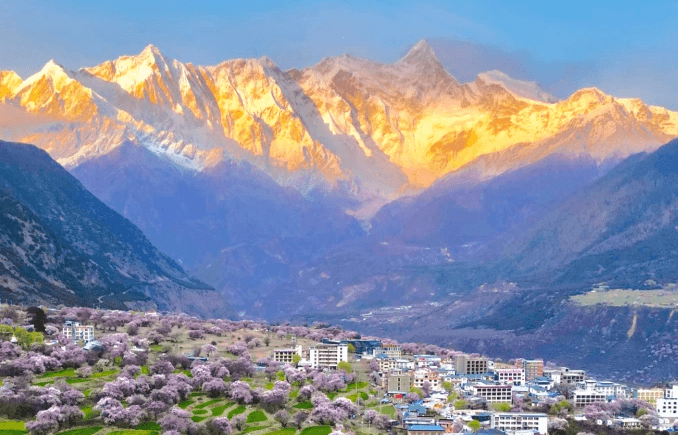
2. Sejila Mountain Pass (Grand Overlook Shot)
Located on the 318 National Highway with an altitude of 4728 meters, Sejila Mountain Pass is a classic open shooting spot. It overlooks Namcha Barwa from a high altitude, with rolling green mountains and sea of clouds as the background. The vision here is extremely open, which can capture the grand scene of the snow peak stretching across the sky. The prayer flags fluttering in the wind at the pass are the most distinctive foreground elements. The combination of colorful prayer flags, golden sunset snow peak and vast sky has strong Tibetan regional characteristics, suitable for shooting atmospheric wide-angle works.
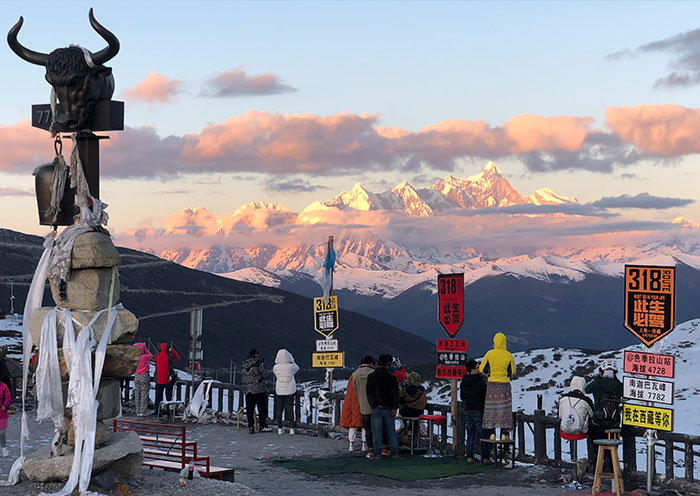
Sejila mountain pass
3. Gongzun Demu Manor (Quiet Creative Spot)
This is a niche high-quality shooting spot less known by tourists. Close to the bank of the Yarlung Zangbo River, the terrain here is flat and open. You can shoot the close-up of Namcha Barwa Peak with the river as the foreground. There are few people here and no random shooting obstacles. The river surface is calm at sunset, which can form a perfect water reflection of the golden mountain. The picture is clean and dreamy, very suitable for minimalist creative photography and detail shooting of snow peaks.
4. Yarlung Zangbo Grand Canyon hydrophilic platform
As an official viewing platform of the scenic area, it has a moderate shooting distance and stable terrain. It is suitable for photography beginners. The platform is close to the canyon river valley, with dense forests and stacked mountains as the middle scene. The sunset light penetrates the cloud gap and sprinkles on the snow peak and canyon, forming a rich light and shadow hierarchy. It is easy to shoot high-quality works without complicated composition skills.
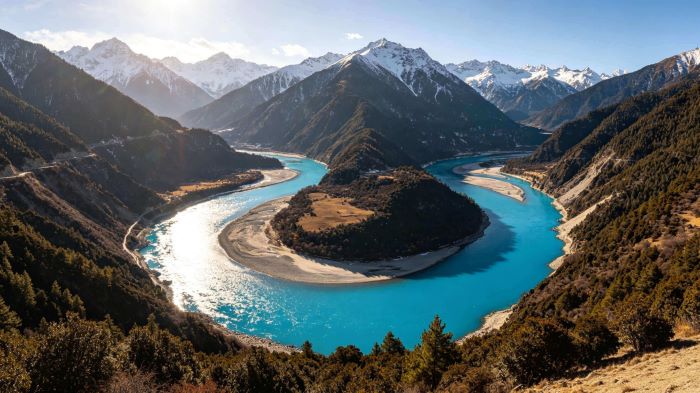
Yarlung Tsangpo grand canyon viewing platform
5. Daduka Ruins (Humanistic Landscape Shot)
Daduka Ruins have ancient Tibetan cultural relics as the foreground. The vicissitudes of ancient ruins contrast with the grand and sacred snow peaks, adding a unique historical and cultural texture to the sunset photos. The shooting angle here is slightly overlooking, which can integrate the canyon, ruins, villages and snow peaks into one frame, with full content and strong story sense.
If you want to visit all these iconic viewpoints without spending hours researching routes and accommodation, our tailor‑made Namcha Barwa photography tour covers Suosong Village, Sejila Pass and Yarlung Zangbo Grand Canyon. Designed for landscape photographers, this travel itinerary arranges proper arrival times for golden‑hour shooting, local knowledgeable guides and pre‑booked village stays, so you can focus fully on Namcha Barwa sunset photography rather than logistical arrangements.
Day 1: Arrival in Lhasa
Day 2: Lhasa – Basum Tso – Nyang River – Nyingchi (390 km)
Day 3: Nyingchi – Lulang – Ranwu Lake – Bomi (380 km)
Day 4: Bomi – Laigu Glacier – Yalong Glacier – Nyingchi(300 km)
Day 5: Nyingchi – Kading Valley – Lhasa (460 km)
Day 6: Lhasa City Tour: Potala Palace – Jokhang Temple – Barkhor Street
Day 7: Lhasa – Yamdrok Lake – Karola Glacier – Shigatse
Day 8: Shigatse – Tingri – Gyatso La Pass – Everest Base Camp – Basong Village
Day 9: Everest Base Camp – Gawula Pass – 318 Highway – Shigatse
Day 10: Shigatse – Tashilhunpo Monastery – Lhasa
Day 11: Lhasa – Namtso Lake – Northern Tibetan Grasslands – Lhasa
Day 12: Departure from Lhasa
Professional Camera Settings & Photography Skills
Namcha Barwa sunset light changes rapidly, and the light contrast between sky and snow peak is large. Reasonable parameter setting and composition skills are the key to improving the quality of works. The following professional skills are summarized for landscape photography enthusiasts.
1. Equipment Selection
For Namcha Barwa sunset photography Tibet, a telephoto lens above 200mm is essential, which can compress the space, highlight the outline and details of the snow peak, and make the golden mountain more prominent in the picture. A wide-angle lens (16-35mm) is used for shooting grand panoramic scenes and integrating foreground and background. In addition, a stable tripod is a must-have equipment. The sunset light is dim, and the shutter speed needs to be reduced to ensure the clarity of the picture and avoid blurring caused by hand shaking. It is recommended to bring a gradient gray mirror to balance the light and shadow difference between the bright sky and the dark mountain view, effectively preventing overexposure of the sky and underexposure of the mountain body.
Namcha Barwa Sunset
2. Core Parameter Settings
Shooting mode: Manual mode (M mode) is recommended to freely control parameters. Aperture: F8-F11, which can ensure the overall definition of the picture and rich depth of field. Shutter speed: Adjust according to the light, 1/100s-1/200s in the early sunset stage, and appropriately reduce to 1/30s-1/80s in the late blue hour. ISO: Try to keep it below 200 to ensure the picture is clean and reduce noise. White balance: 4500K-5500K, which can restore the warm golden tone of the sunset and avoid color deviation.
3. Advanced Composition Skills
First, foreground embellishment method: Make full use of local characteristic elements such as prayer flags, river water, Tibetan villages, peach blossoms and forests as the foreground to enrich the picture hierarchy and enhance the Tibetan style. Second, three-point composition: Place the peak line of Namcha Barwa on the three-point line of the picture to make the picture balanced and comfortable. Third, dynamic cloud scene matching: The clouds around the snow peak are changeable. You can use slow shutter to record the flowing track of clouds, adding a dynamic sense to the static snow peak. Fourth, gradient color capture: Grasp the color change process of the sunset, from golden yellow to orange red, and finally to blue purple, and record the whole gradient process to form a group of continuous and rich works.
Tibet Travel & Photography Precautions
1. Weather and luck preparation: Namcha Barwa is cloudy and foggy all year round. It is recommended to stay in Suosong Village for 2-3 days to increase the chance of encountering a perfect sunset golden mountain. Check the local real-time weather and cloud map before shooting, and give priority to shooting on days with low cloud cover.
2. Plateau adaptation: Nyingchi has an altitude of about 3000 meters, and the mountain pass shooting spot is over 4700 meters. Avoid strenuous exercise when shooting to prevent altitude sickness. Keep warm in winter, as the temperature drops rapidly after sunset, and prepare cold-proof equipment and battery warmers to prevent camera battery loss.
3. Environmental protection and regional customs: All shooting spots in Tibet need to protect the ecological environment, do not litter, and do not trample on alpine vegetation. Respect local Tibetan customs, do not shoot villagers and religious facilities without permission, and maintain a polite shooting attitude.
4. Time reserve: The sunset golden mountain duration is extremely short. It is necessary to complete equipment debugging and composition confirmation in advance to avoid missing the best shooting moment due to temporary adjustment.
Conclusion
Namcha Barwa sunset photography Tibet is not only a simple landscape shooting, but also a sacred encounter with the most beautiful snow mountain in Tibet. The rare sunset golden mountain, layered canyon scenery, strong Tibetan humanistic customs and changeable sky colors jointly create unique photography charm. From choosing the best shooting season and niche viewing spots to mastering professional parameter settings and composition skills, every detail determines the presentation effect of the work.
For every photography enthusiast who pursues extreme beauty, going to Tibet to wait for a Namcha Barwa sunset is a precious travel and photography experience. With sufficient preparation and patient waiting, you will surely capture the stunning moment when the “shy girl peak” is covered with golden glow, and record the most shocking natural beauty on the Qinghai-Tibet Plateau.