
Tibetan Buddhist art is filled with figures that can look mysterious, peaceful, or even frightening to first-time visitors. These figures are often described as “Buddhist gods,” but they do not all have the same role. Some are Buddhas representing enlightenment, some are bodhisattvas associated with compassion, wisdom, or power, while others are guardian deities who protect Buddhist teachings. Learning to recognize their poses, hand gestures, objects, colors, and expressions can make a visit to a Tibetan monastery far more meaningful. This guide introduces ten important figures and explains what they represent and how travelers can identify them.
Key Points About Buddhist Gods
- Buddha Shakyamuni is the historical Buddha and the central figure of Buddhist teachings.
- Maitreya is regarded as the future Buddha who will appear in a future age.
- Avalokiteshvara, Manjushri, and Vajrapani represent compassion, wisdom, and power respectively.
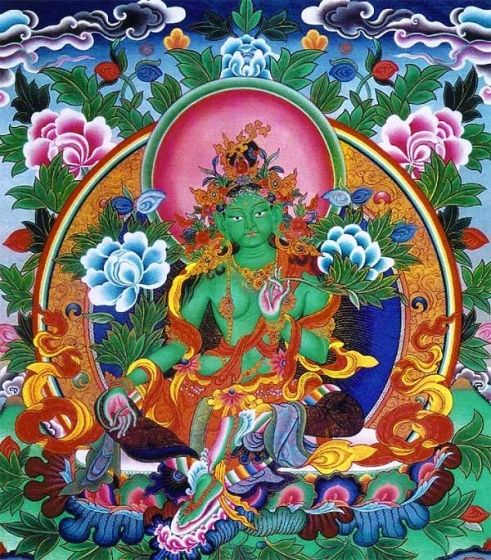
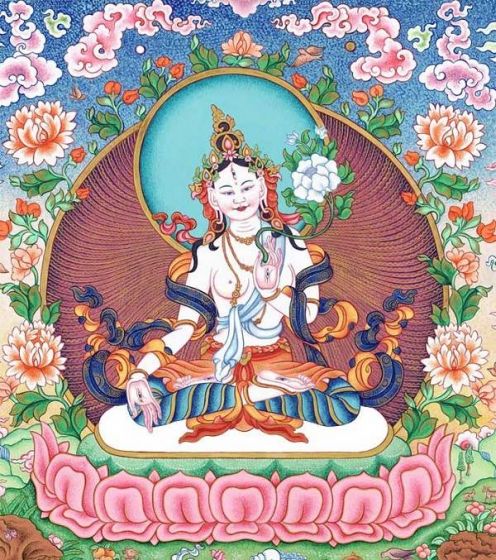
- Tara is a female bodhisattva and protector, commonly represented in Green Tara and White Tara forms.
- Mahakala and Palden Lhamo are important wrathful guardian deities associated with protecting Buddhist teachings.
- Padmasambhava, also known as Guru Rinpoche, is especially important in Tibetan Buddhism and is closely associated with the Nyingma tradition.
- Tsongkhapa was the historical founder of the Gelug school of Tibetan Buddhism.
- Buddhist figures can often be identified through mudras, crowns, lotus flowers, weapons, robes, facial expressions, and symbolic objects.
- The term “Buddhist gods” is useful for general travel searches, but many of these figures are more accurately understood as Buddhas, bodhisattvas, teachers, or protective deities.
What Are Buddhist Gods In Tibetan Buddhism?
The expression “Buddhist gods” can be slightly misleading because Tibetan Buddhism does not have one simple category equivalent to gods in many other religions. Instead, Tibetan Buddhist traditions include Buddhas, bodhisattvas, enlightened teachers, and protective deities, each with different spiritual functions.
For travelers visiting Tibet, the easiest way to understand Buddhist iconography is to look at what each figure represents. A peaceful Buddha may symbolize enlightenment, while a bodhisattva can embody qualities such as compassion or wisdom. Wrathful figures, despite their frightening appearance, are generally associated with protection and the forceful removal of obstacles or negative attitudes.
The following ten figures are particularly useful to recognize when visiting Tibetan monasteries, temples, and museums.
1. Buddha Shakyamuni: The Historical Buddha
Buddha Shakyamuni is the historical Buddha and the central teacher of Buddhism. He is traditionally associated with the fourth age in the Buddhist concept of successive earthly Buddhas.
Compared with many Tibetan Buddhist figures, Shakyamuni is often portrayed relatively simply. He usually has a calm expression, a meditative posture, and an enlightenment aura around his head. His hair is commonly represented as dark blue or blue-black.
One of his most recognizable features is the Bhumisparsha mudra, or “earth-touching gesture.” His right hand reaches toward the ground while his left hand holds a begging bowl. The gesture recalls the moment when the Buddha called the earth to witness his determination to attain enlightenment.
When represented in a traditional composition, Shakyamuni may also appear alongside his principal disciples.
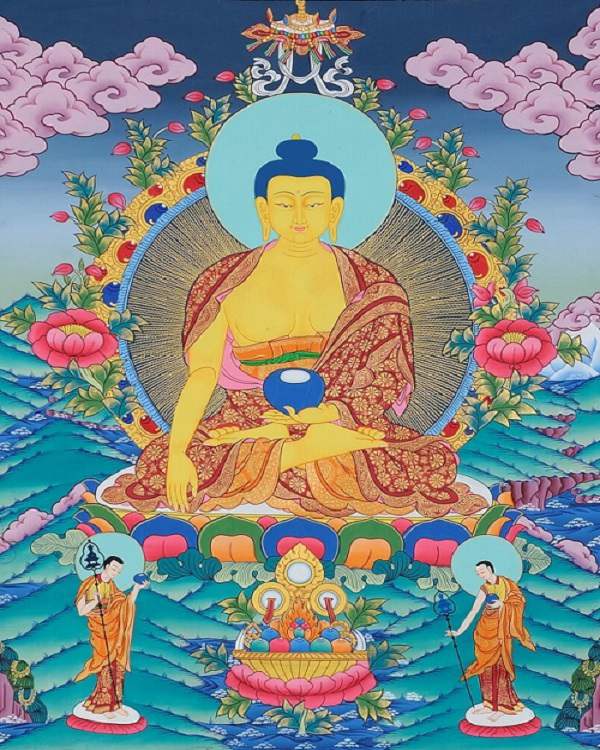
Buddha Shakyamuni
2. Maitreya: The Future Buddha
Maitreya is regarded as the future Buddha. In Buddhist tradition, Shakyamuni is associated with the present earthly age, while Maitreya is expected to appear in a future age as a teacher who renews the Buddhist path.
Maitreya is particularly easy to identify because of his unusual seated position. Rather than sitting fully cross-legged, he is often shown in the “European posture,” with both feet resting on the ground. This posture suggests readiness to rise and act.
He may also wear a crown and be surrounded by floral imagery. His associated hand gesture is the Dharmachakra mudra, symbolizing the turning of the wheel of Buddhist teaching.
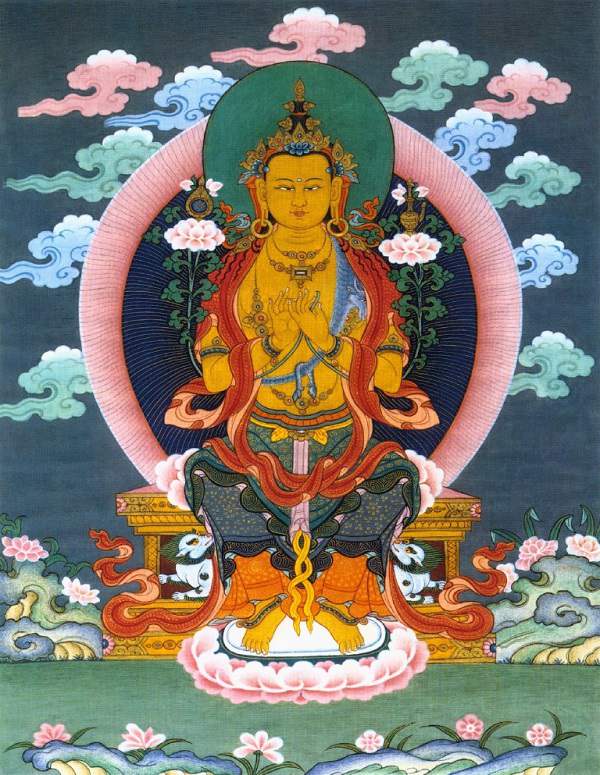
Buddha Maitreya
3. Avalokiteshvara: The Bodhisattva Of Compassion
Avalokiteshvara, known in Tibetan as Chenrezig, is the bodhisattva associated with compassion and is particularly important in Tibetan Buddhism. Bodhisattvas are enlightened beings who remain engaged with the world to help others progress toward liberation.
Avalokiteshvara can appear in numerous forms. One of the most distinctive is the eleven-headed, thousand-armed form. Eyes represented on the palms symbolize compassionate awareness extending in every direction.
Another important identifying feature is Amitabha Buddha, who may appear in Avalokiteshvara’s crown or at the top of the multiple heads.
Avalokiteshvara is especially significant in Tibetan religious culture, where the Dalai Lama is traditionally regarded as a manifestation of this bodhisattva.
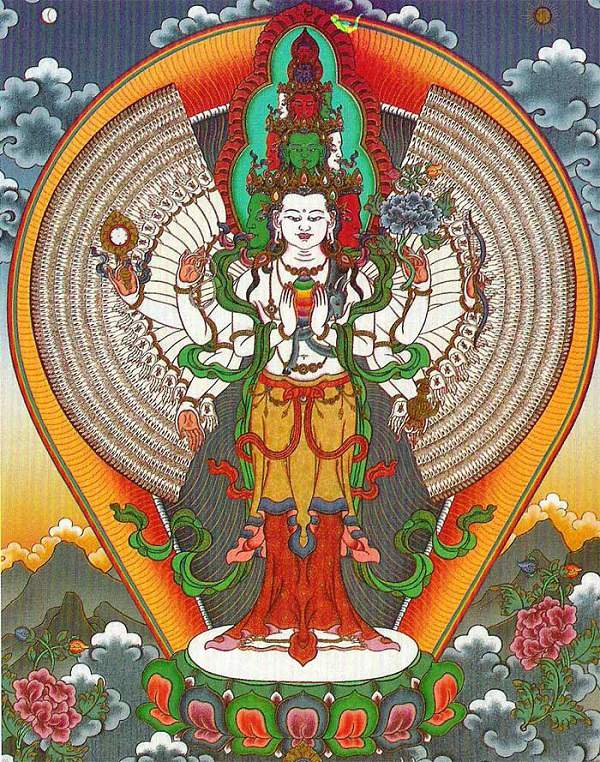
Avalokiteshvara
4. Manjushri: The Bodhisattva Of Wisdom
Manjushri represents wisdom and learning. Because of this association, he has particular significance for scholars, students, and people seeking knowledge and intellectual understanding.
His most recognizable symbol is the sword of wisdom. The sword represents the ability to cut through ignorance and confusion. He may also be shown with a Buddhist text resting on or beside a lotus flower.
If you see a peaceful Buddhist figure holding a distinctive sword alongside a lotus-supported book, Manjushri is one of the first identities to consider.
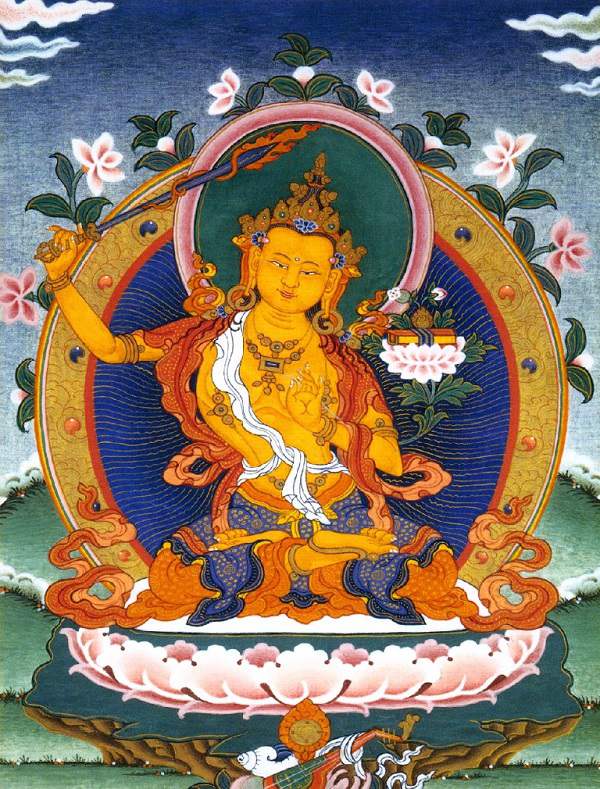
Manjushri
5. Mahakala: The Wrathful Guardian
Mahakala belongs to the category of Dharmapalas, or protectors of Buddhist teachings. Unlike the peaceful appearance of Shakyamuni or Manjushri, Mahakala is usually represented with an intense and frightening appearance.
His wrathful appearance should not simply be interpreted as evil or destructive. Within Tibetan Buddhist symbolism, such imagery can express the forceful protection of Buddhist teachings and the destruction of negative or harmful attitudes.
Different manifestations of Mahakala exist, so his appearance varies. Common attributes can include a skull cup, a ritual cleaver or vajra-related weapon, multiple eyes, a crown of five skulls, and a tiger-skin garment. These dramatic symbols represent the transformation and overcoming of negative mental states.
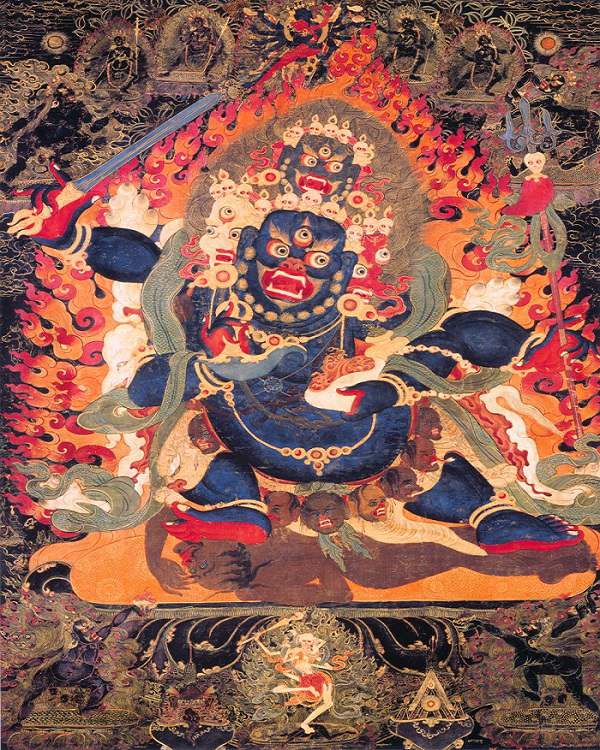
Mahakala
6. Tara: The Female Bodhisattva And Protector
Tara, known in Tibetan as Dolma, is one of the most recognizable female figures in Tibetan Buddhist art. She is associated with protection and compassion and is traditionally represented in several colors, including green, white, blue, red, and yellow.
Two of the best-known forms are Green Tara and White Tara.
Green Tara is often shown with one leg extended toward a lotus, suggesting readiness to respond to those who need help. White Tara is generally shown in a more meditative posture and is distinguished by additional eyes, including an eye on her forehead and eyes represented on her hands and feet.
Her hand positions can also convey different symbolic meanings, including protection and generosity.
7. Padmasambhava: Guru Rinpoche
Padmasambhava, widely known as Guru Rinpoche, occupies a special position in Tibetan Buddhism. He is traditionally associated with the establishment of Buddhism in Tibet and is particularly important to the Nyingma school, the oldest of the major Tibetan Buddhist traditions.
Guru Rinpoche is relatively easy to recognize. He is commonly depicted wearing a distinctive hat with upturned sides and often has a beard, a feature that makes him stand out from many other figures in Tibetan Buddhist art.
He may hold a skull cup in his left hand and a vajra in his right. A ritual staff with a trident-like tip is often held against his left arm.
For travelers interested in Tibetan Buddhist history, recognizing Guru Rinpoche is especially useful because his image appears throughout monasteries and religious sites across Tibet.
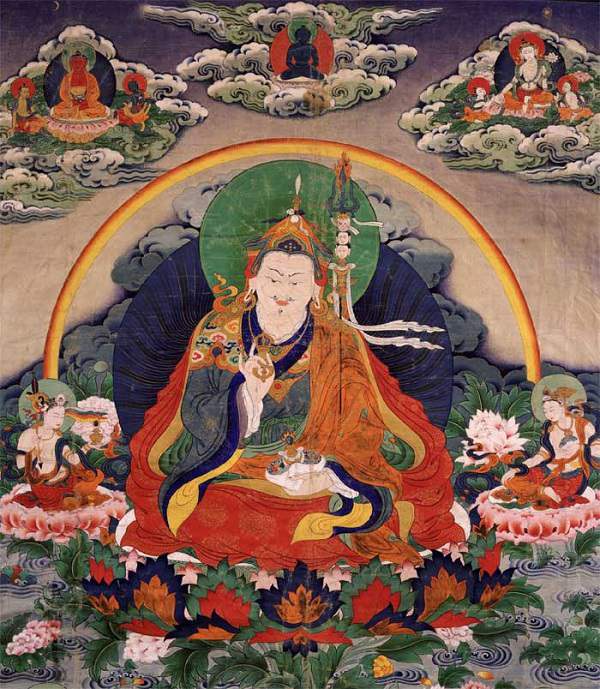
Padmasambhava
8. Palden Lhamo: The Female Guardian Deity
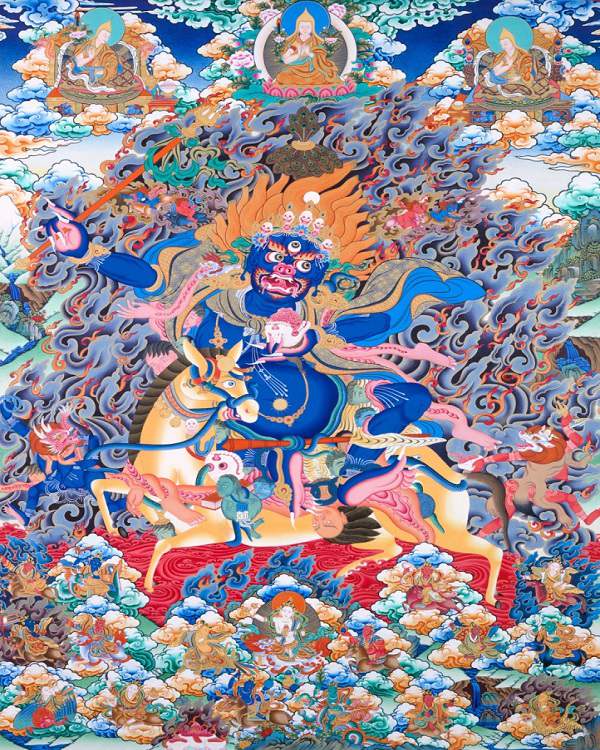
Palden Lhamo is a powerful female guardian deity and is traditionally counted among the Dharmapalas. She has a particularly strong association with the Gelug school of Tibetan Buddhism and is traditionally regarded as a protector connected with Lhasa and the Dalai Lama.
Her appearance is intentionally dramatic. She is often shown riding a mule through a sea of blood, surrounded by frightening symbolic imagery. Her dark body, flaming features, skull imagery, and garland of severed heads can initially seem shocking to visitors unfamiliar with Tibetan Buddhist iconography.
Rather than representing cruelty for its own sake, this wrathful imagery expresses the fierce determination of a protector. Her appearance is designed to communicate power, fearlessness, and the destruction of obstacles.
Palden Lhamo
9. Tsongkhapa: Founder Of The Gelug School
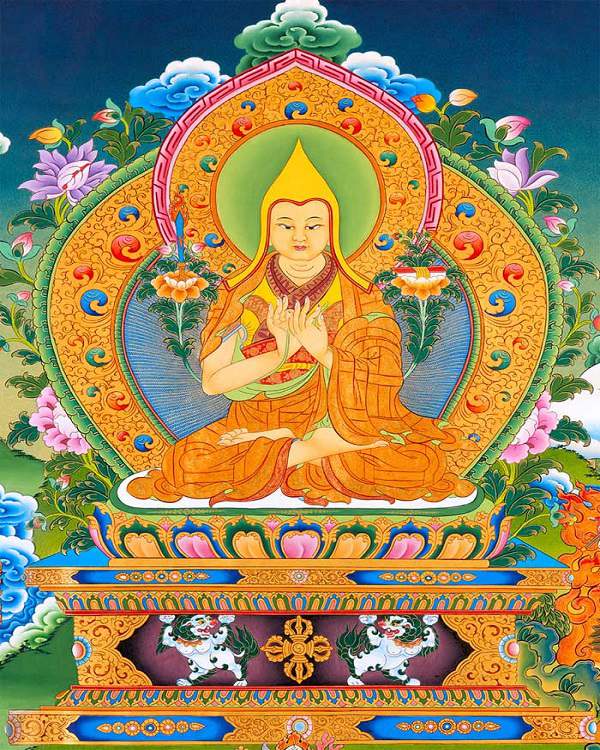
Tsongkhapa was a historical Tibetan religious teacher and the founder of the Gelug school of Tibetan Buddhism.
He is one of the easier figures to identify because of his distinctive monastic appearance. He is commonly shown wearing the characteristic yellow hat associated with the Gelug tradition.
His hands may form the Dharmachakra mudra, representing the turning of the wheel of Buddhist teaching. On either side of him, lotus flowers may support a sword and a Buddhist text, linking Tsongkhapa with the themes of wisdom and learning.
His importance can be seen throughout Lhasa, particularly at major Gelug monasteries such as Sera and Drepung.
Tsongkhapa
10. Vajrapani: The Bodhisattva Of Power
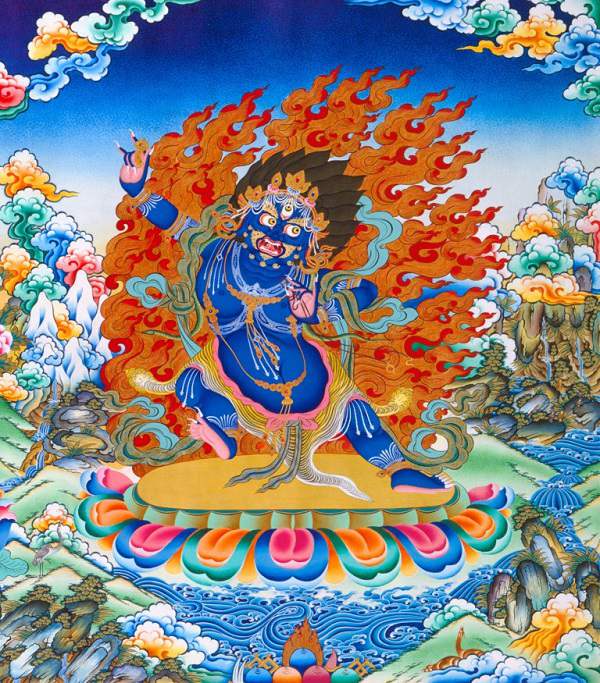
Vajrapani is associated with power and spiritual strength. He is traditionally regarded as one of the three major protective bodhisattvas associated with the Buddha, alongside Avalokiteshvara, representing compassion, and Manjushri, representing wisdom.
Vajrapani often appears in a wrathful form, surrounded by flames. He may wear a crown and tiger skin, hold a vajra, or thunderbolt-like ritual object, and carry a lasso used symbolically to restrain adversaries of Buddhist teachings.
His fierce appearance makes him easy to confuse with other wrathful deities. The vajra and his characteristic posture are useful clues when identifying him.
Vajrapani
How To Recognize Buddhist Deities In Tibetan Art
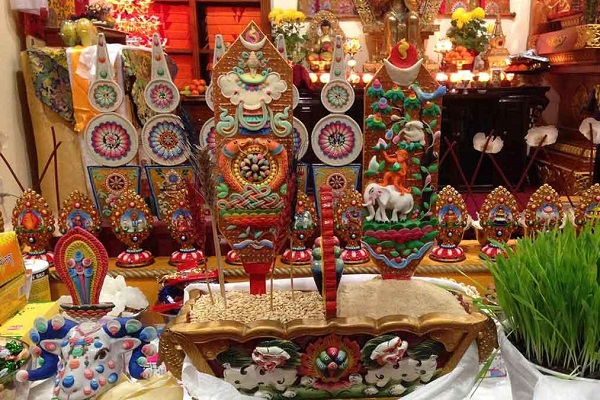
Understanding a few basic visual clues can transform the experience of visiting a Tibetan monastery. Instead of seeing a collection of unfamiliar statues, you can begin to understand the symbolic language behind them.
Look At The Hand Gestures
Hand gestures, known as mudras, are among the most useful identification tools. Shakyamuni’s earth-touching gesture, for example, tells a story about his enlightenment. The Dharmachakra mudra is associated with teaching and the turning of the Buddhist wheel.
Pay Attention To Objects
Objects held by a figure can reveal its identity. Manjushri’s sword points to wisdom, Tara’s lotus imagery is associated with her different manifestations, and Vajrapani’s vajra represents spiritual power.
Notice The Facial Expression
Peaceful and wrathful appearances have different symbolic functions. A serene Buddha may communicate enlightenment and inner calm, while a terrifying guardian may represent powerful protection against negative forces.
Study The Surrounding Figures
Tibetan Buddhist art frequently presents several figures together. Their positions and relationships can provide important clues. Avalokiteshvara, Manjushri, and Vajrapani, for example, may be understood through their respective associations with compassion, wisdom, and power.
Where Can You See These Buddhist Figures In Tibet?
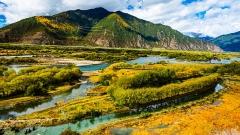
Travelers can encounter Tibetan Buddhist iconography throughout the region, from major temples in Lhasa to remote monasteries in mountain valleys.
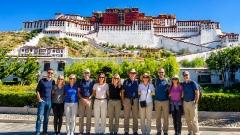
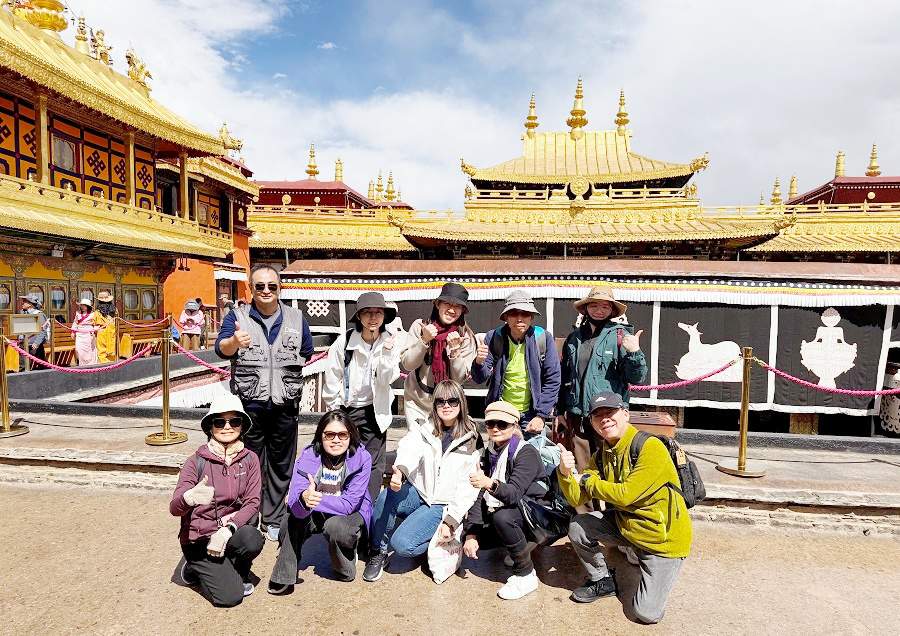
Jokhang Temple is one of the most important religious sites in Lhasa and provides an excellent introduction to Tibetan Buddhist culture. The surrounding Barkhor area is also an important pilgrimage center.
Sera Monastery is particularly famous for its traditional Buddhist philosophical debates, while Drepung Monastery offers a deeper look into the history of the Gelug tradition and monastic education.
Beyond Lhasa, travelers can encounter Buddhist art and religious traditions in monasteries throughout Shigatse, the Yarlung Valley, the Mount Everest region, and other parts of Tibet. Remote monasteries can be especially rewarding for travelers who want to see how religious traditions remain connected with local communities.
How Should Travelers Behave In Tibetan Monasteries?
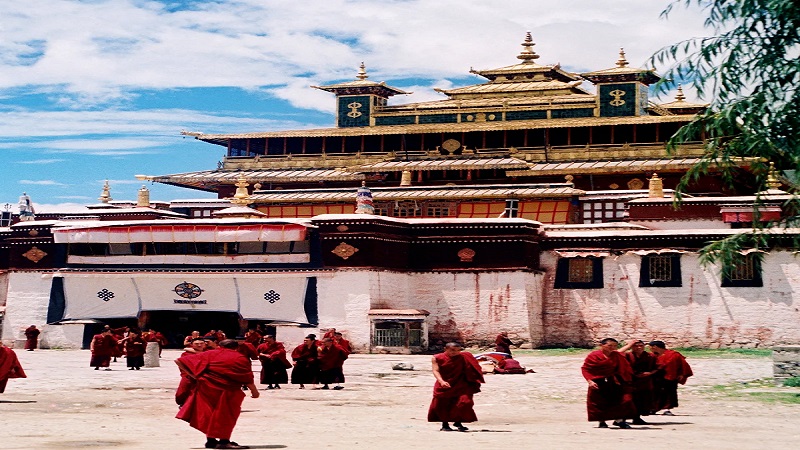
Tibetan monasteries are active religious institutions rather than simply tourist attractions. Visitors should therefore treat them as sacred spaces.
Dress modestly, speak quietly, and follow instructions from monastery staff or guides. Photography rules vary between locations, and some prayer halls prohibit photography entirely. Never photograph monks without permission, particularly during private or solemn religious activities.
When walking around temples, stupas, and prayer wheels, follow local instructions regarding direction. Avoid touching sacred objects unless you are invited to do so, and never interrupt people who are praying or performing religious practices.
A respectful approach allows visitors to observe Tibetan Buddhist culture without turning religious activities into a spectacle.
Why Understanding Buddhist Deities Makes A Tibet Trip More Meaningful
For international travelers, learning about Tibetan Buddhist figures before visiting Tibet can make temples and monasteries much easier to understand. A statue that initially looks unfamiliar can become a visual representation of compassion, wisdom, power, protection, or enlightenment once its symbols are understood.
The most useful figures to remember are Shakyamuni for the historical Buddha, Maitreya for the future Buddha, Avalokiteshvara for compassion, Manjushri for wisdom, Vajrapani for power, Tara for compassionate protection, Padmasambhava for the development of Tibetan Buddhism, and Mahakala and Palden Lhamo as powerful guardians. Tsongkhapa, meanwhile, is essential for understanding the Gelug tradition.
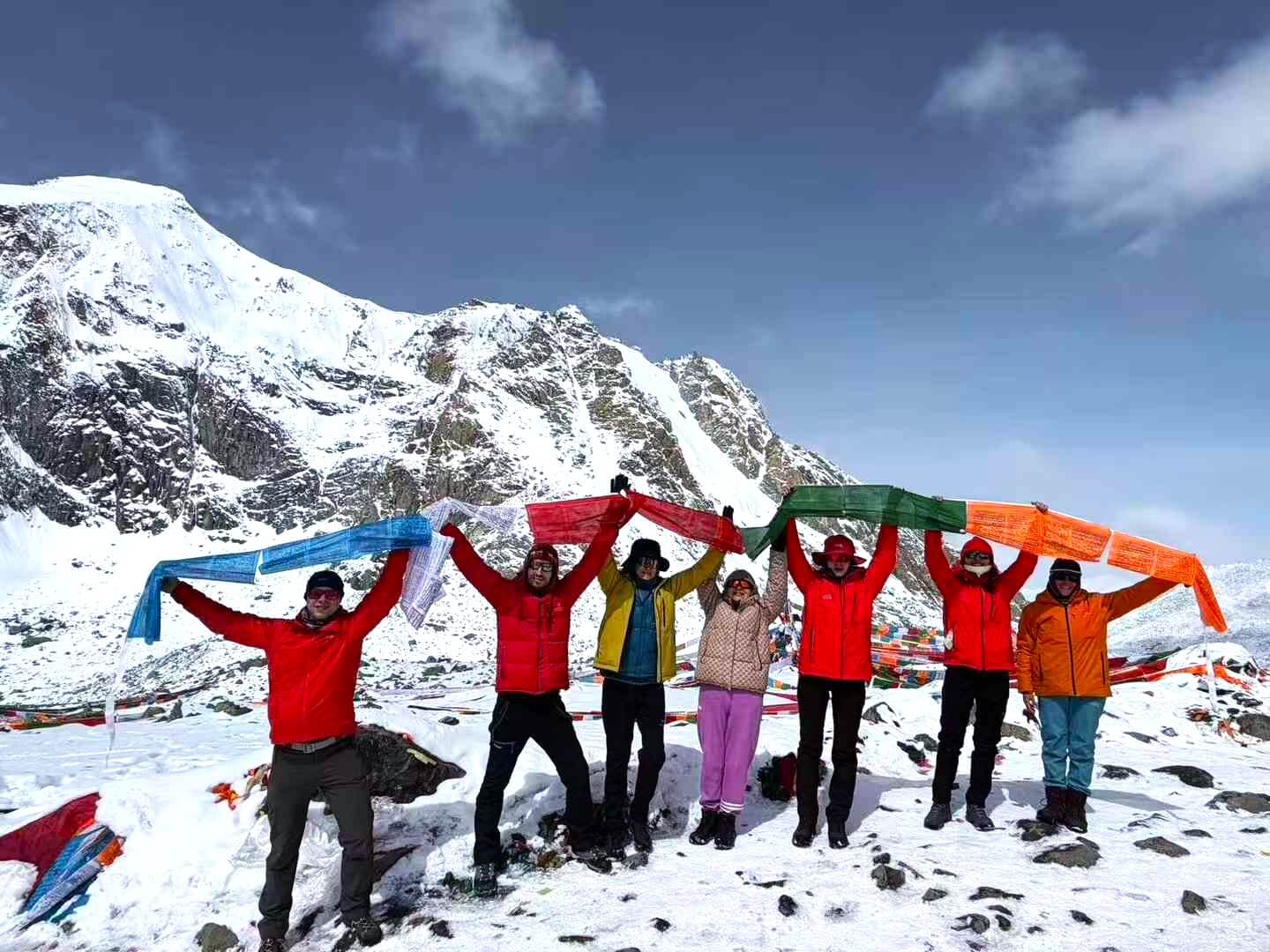
For travelers planning to explore these traditions in person, Tibet Yulong Travel can help arrange Tibet tours that combine Lhasa’s major temples and monasteries with destinations such as Shigatse, Everest Base Camp, or Mount Kailash. With local guides and organized transportation and permits, travelers can experience Tibetan Buddhist culture while gaining a clearer understanding of the religious traditions behind the places they visit.
Quick FAQs About Buddhist Gods
Are Buddhist gods the same as gods in other religions?
Not exactly. “Buddhist gods” is a convenient general term, but Tibetan Buddhism includes different categories such as Buddhas, bodhisattvas, teachers, and protective deities.
Who is the most important Buddhist figure?
Buddha Shakyamuni is the historical Buddha and the central teacher of Buddhism. However, Tibetan Buddhist traditions include many other highly important figures with different roles.
Who is the Buddhist god of compassion?
Avalokiteshvara, known as Chenrezig in Tibetan, is the major bodhisattva associated with compassion.
Who is the Buddhist god of wisdom?
Manjushri is the bodhisattva traditionally associated with wisdom and learning.
Who is the female Buddha in Tibetan Buddhism?
Tara is one of the most important female enlightened figures in Tibetan Buddhism. Green Tara and White Tara are among her best-known forms.
Why do some Tibetan Buddhist deities look frightening?
Wrathful imagery often symbolizes powerful protection and the destruction of obstacles or negative mental states rather than evil.
What is Guru Rinpoche?
Guru Rinpoche is the Tibetan name commonly used for Padmasambhava, a foundational figure in Tibetan Buddhism and particularly important to the Nyingma tradition.