
Lake Manasarovar is one of the most extraordinary destinations in western Tibet, where deep-blue water, snow-covered mountains, vast highland landscapes, and ancient pilgrimage traditions come together. Located at 4,588 meters above sea level in Ngari Prefecture, the lake is closely associated with Mount Kailash and holds profound significance for several religious traditions. For international travelers, visiting Manasarovar is not simply a sightseeing experience—it is a journey into one of the most remote and spiritually significant landscapes on the Tibetan Plateau.
Key Takeaways
- Chinese name: 玛旁雍错 (Mǎpáng Yōngcuò)
- Location: Ngari Prefecture, western Tibet
- Altitude: 4,588 meters (15,050 feet)
- Distance from Lhasa: Approximately 1,300 km (808 miles)
- Recommended visit: 1–3 hours for sightseeing, or longer for hiking and pilgrimage
- Best travel season: April to October
- Main attractions: Lake Manasarovar, Chiu Gompa, Chugu Gompa, Mount Kailash, and Rakshastal
- Kora: The pilgrimage circuit around the lake is approximately 90 km and generally takes 3–4 days on foot.
- Altitude preparation: The lake is extremely high, so travelers should allow time to acclimatize before reaching Ngari.
- Permits: International travelers require the appropriate Tibet travel documents and additional permits for the Ngari region.
Where Is Lake Manasarovar In Tibet?
Lake Manasarovar is located in Ngari Prefecture in the far west of the Tibet Autonomous Region. It lies in one of the most remote areas of the Tibetan Plateau, close to Mount Kailash and Lake Rakshastal.
At approximately 4,588 meters above sea level, Manasarovar is considerably higher than most famous alpine lakes around the world. Its remote location is part of its appeal: the landscape feels enormous, open, and almost untouched, with snow-covered mountains rising beyond the blue waters and highland plains extending toward the horizon.
For travelers starting from Lhasa, the journey is a major overland adventure rather than a simple day trip. The distance is approximately 1,300 kilometers, and the route passes through important Tibetan destinations such as Shigatse and Saga before reaching the Kailash-Manasarovar region.
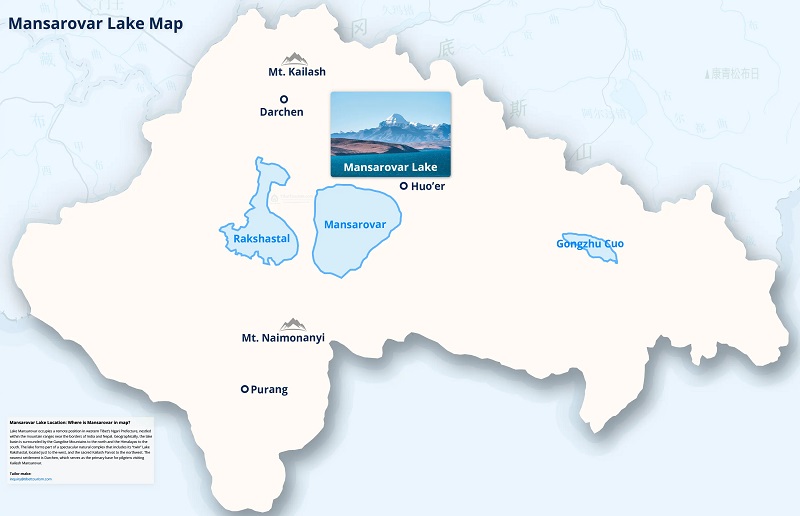
Mansarovar Lake Map
Why Is Lake Manasarovar Sacred?
Lake Manasarovar is regarded as one of the holiest lakes in Tibet and has profound religious significance, particularly within Hinduism and Buddhism. Its spiritual importance is closely connected with Mount Kailash, which rises nearby.
For pilgrims, the lake is not simply a beautiful natural attraction. It is a sacred landscape associated with purification, devotion, prayer, and spiritual merit. Pilgrims may visit the lake as part of a larger pilgrimage to Mount Kailash, while others come specifically to experience its religious atmosphere.
This spiritual significance also explains why visitors are expected to behave respectfully around the lake. Activities that might be acceptable at an ordinary tourist lake, such as swimming or bathing, are not appropriate here.
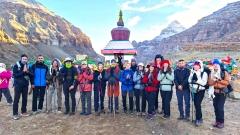
What Does Lake Manasarovar Look Like?
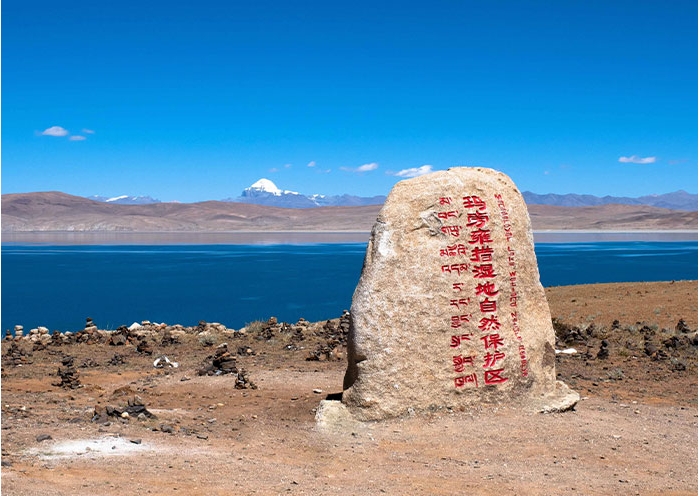
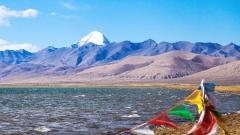
The first impression of Manasarovar is often its intense blue color. Under clear Tibetan skies, the water can appear almost sapphire-like, creating a dramatic contrast with the surrounding brown and golden plateau.
On clear days, snow-covered peaks can be reflected across the lake, producing some of the most memorable scenery in western Tibet. The combination of high-altitude sunlight, exceptionally clear air, distant mountains, and expansive water gives the landscape a distinctive sense of scale.
The appearance of the lake changes throughout the day. Morning light can produce soft reflections, while afternoon sunlight creates stronger contrasts between the blue water and surrounding mountains. Wind can also transform the surface from a mirror-like reflection into waves within minutes.
The Best Places To Visit Lake Manasarovar
Although there are several monasteries around the lake, two locations are particularly worthwhile for travelers: Chiu Gompa and Chugu Gompa.
Chiu Gompa
Chiu Gompa is dramatically positioned on a hill overlooking the northwestern side of Lake Manasarovar. From the monastery area, travelers can enjoy expansive views over the lake and the surrounding highland landscape.
Its location close to the main road also makes Chiu Gompa relatively convenient to visit during a standard Lake Manasarovar itinerary. The elevated viewpoint is particularly attractive for panoramic photography.
However, the orientation means that getting both Lake Manasarovar and Mount Kailash into the same photograph can be difficult from some viewpoints.
Chugu Gompa
Chugu Gompa sits close to the southern shore of Lake Manasarovar and faces toward Mount Kailash. This makes it particularly appealing to photographers hoping to capture the sacred mountain together with the lake.
The major disadvantage is accessibility. The road to Chugu Gompa is rough and largely unpaved, so reaching it can take considerably longer than visiting places immediately beside the main highway.
If road conditions and your itinerary allow, however, the combination of lakeshore scenery and mountain views can make the journey worthwhile.
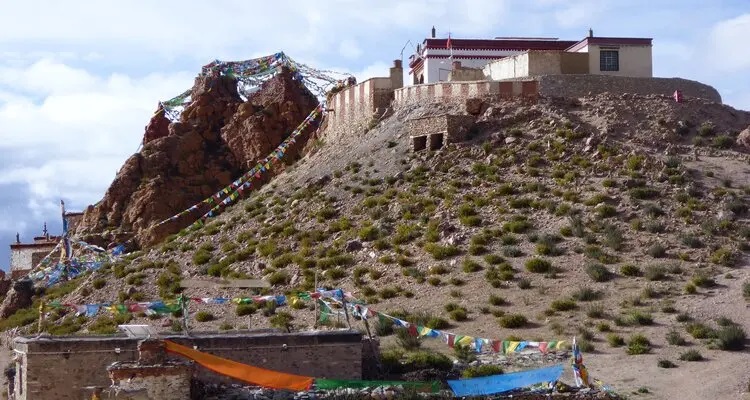
Chiu Gompa
Can You Do A Kora Around Lake Manasarovar?
Yes. Lake Manasarovar has a pilgrimage route of approximately 90 kilometers around its shores.
For religious pilgrims, completing the circuit is a meaningful spiritual practice. Some travelers undertake the lake kora after completing or alongside a pilgrimage to Mount Kailash.
A full walking circuit generally takes around three to four days, depending on the route, walking speed, weather, physical condition, and conditions along the trail.
The route is not simply a scenic hike. It can involve rough terrain, streams, changing weather, strong winds, and high-altitude conditions. During periods of heavy rain, some streams can become difficult to cross even where bridges or other crossings exist.
A Short Lakeside Walk
You do not need to complete the entire kora to experience Lake Manasarovar.
For travelers who simply want to appreciate the landscape, a two- or three-hour walk near Chiu Gompa or Chugu Gompa can provide a much closer connection with the lake. Walking beside the water allows you to appreciate its color, surrounding mountains, reflections, and peaceful atmosphere at a slower pace than a vehicle tour.
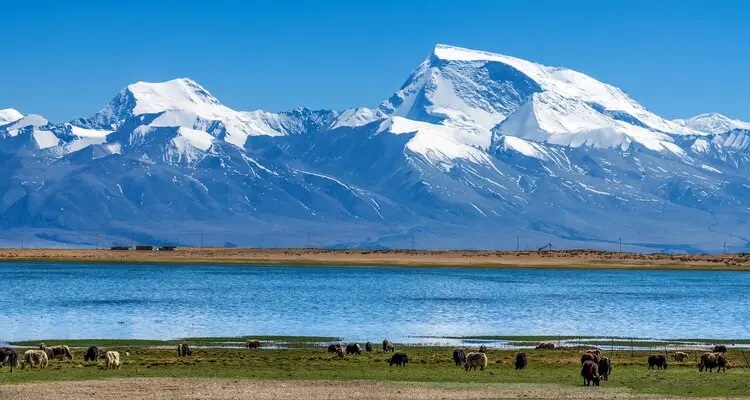
Lake Manasarovar
What Can You Do Besides Sightseeing at Lake Manasarovar?
The Kailash-Manasarovar region has several natural hot springs, and hot spring facilities can also be found around Baga Township.
After several days of driving across the plateau, soaking in warm spring water can be a welcome way to relax. The experience is particularly appealing because of the contrast between the cold, windy high-altitude environment and naturally warm water.
Availability and facilities vary by location, so travelers should confirm arrangements with their tour operator before planning a hot spring visit.
When Is The Best Time To Visit Lake Manasarovar?
The most suitable travel period is generally April through October, when conditions are more favorable for sightseeing and overland travel.
April To June
Spring and early summer often bring clear skies and good visibility. These conditions can be particularly favorable for photographers hoping to capture Mount Kailash and Lake Manasarovar in the same landscape.
Temperatures are still cold because of the altitude, but daytime conditions can be comfortable when the sun is out.
July To August
Summer is influenced by the Tibetan Plateau’s monsoon weather. Rain is possible, although conditions can change quickly.
The landscape can appear especially dramatic during this period, but travelers should be prepared for changing weather and occasional wet or muddy road conditions.
September To October
Early autumn is another excellent period for visiting. The weather can be relatively stable, skies are often clear, and the cooler conditions are suitable for hiking and pilgrimage.
The combination of clear mountain views and autumn landscapes makes this a particularly attractive period for photographers and travelers planning a kora.
November To March
Winter is much more challenging. Ngari experiences extremely cold conditions, and snow and frozen roads can make travel difficult. Many local businesses, restaurants, and accommodation facilities may operate on a limited basis or close during the coldest months.
For most international visitors, the warmer travel season is a more practical choice.
What Permits Do Foreign Travelers Need?
Because Lake Manasarovar is located in the remote Ngari region near sensitive border areas, international travelers cannot simply travel there independently like they might visit an ordinary tourist destination in China.
Travelers generally need a Tibet Travel Permit, together with additional permits required for the Ngari and border areas, such as the Alien’s Travel Permit and Military Permit where applicable.
These arrangements are normally handled by an authorized Tibet travel agency as part of an organized itinerary. Travelers should provide their passport and visa information well in advance so that the necessary documentation can be arranged.
How To Prepare For The High Altitude?
Altitude is one of the biggest challenges of visiting Lake Manasarovar.
At 4,588 meters, the lake is higher than many travelers have ever experienced. The air contains significantly less oxygen than at sea level, and strong winds can make the environment feel even colder.
Do not underestimate the altitude simply because you are traveling by vehicle rather than climbing a mountain.
Allow Time To Acclimatize
A gradual journey from Lhasa through Shigatse and Saga provides more time for your body to adjust to increasing elevation.
Avoid planning an extremely demanding hike immediately after arriving at high altitude. Give yourself time to rest, stay hydrated, eat appropriately, and monitor how your body feels.
Pack For Wind And Cold
A windproof outer layer, warm mid-layers, hat, gloves, sunglasses, sunscreen, and comfortable walking shoes are essential. Even during the warmer travel season, temperatures can drop rapidly after sunset.
Because the plateau sun is intense, sun protection is also particularly important.
Can You Drink Or Swim In Lake Manasarovar?
Although the water is famously clear, visitors should not drink directly from Lake Manasarovar. Water that looks exceptionally clean is not necessarily safe to consume without appropriate treatment.
Swimming and bathing in the lake should also be avoided. Beyond practical safety concerns, Manasarovar is a sacred lake, and entering the water for recreational purposes would conflict with local religious customs.
The best way to appreciate the lake is to admire it from the shore, walk respectfully along its edge, and allow the landscape itself to become part of the experience.
Lake Rakshastal: The Dark Counterpart To Manasarovar
Just a few kilometers west of Lake Manasarovar lies Rakshastal, also known as Lhanag-tso.
The two lakes create one of the most striking contrasts in the Kailash region. Manasarovar is associated with sacred purity and spiritual significance, while Rakshastal is traditionally associated with a darker mythology.
Rakshastal is a saltwater lake at roughly 4,574 meters. Its barren surroundings and deep-blue water give it a stark, almost otherworldly appearance.
Many travelers visit both lakes on the same day because their proximity makes it possible to appreciate their contrasting landscapes and cultural meanings together.
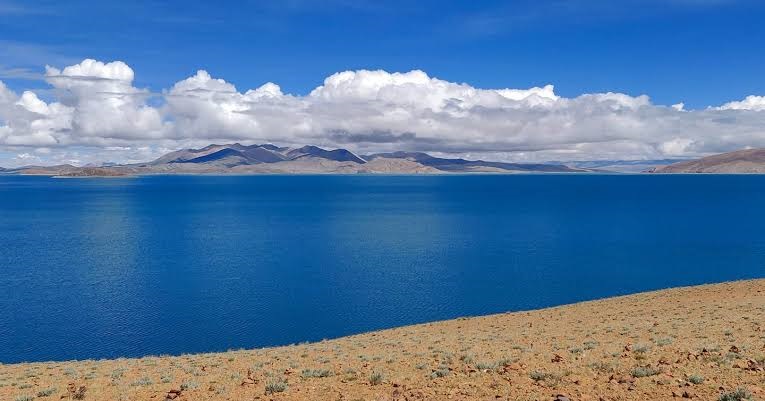
Lake Rakshastal
Mount Kailash And Lake Manasarovar
For many travelers, Lake Manasarovar cannot be separated from Mount Kailash.
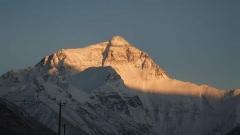
The sacred mountain rises nearby and is revered across several religious traditions. Pilgrims travel enormous distances to reach this remote corner of the Tibetan Plateau and perform the famous Kailash Kora around the mountain.
If you are not planning the full pilgrimage, you can still visit Lake Manasarovar, Rakshastal, and viewpoints around Mount Kailash as part of an overland journey through western Tibet.
For those undertaking the Kailash Kora, Baga Township and Darchen are important bases for arranging accommodation, transportation, and other logistical needs.
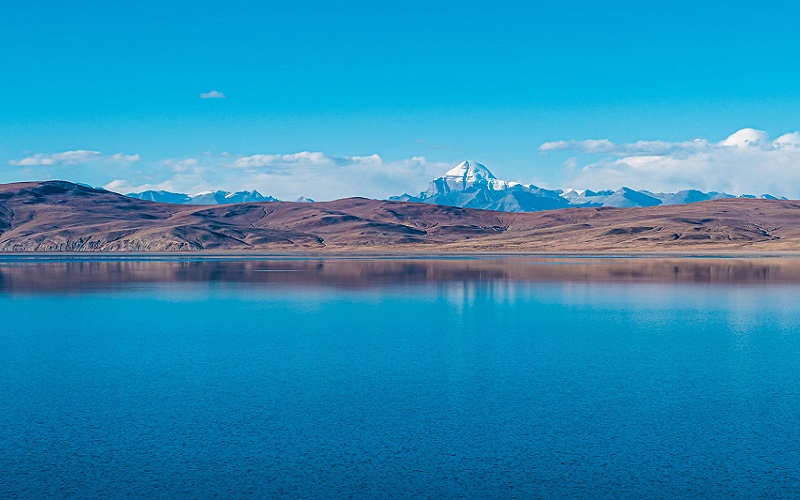
Mount Kailash And Lake Manasarovar
How To Get To Lake Manasarovar From Lhasa
For most international travelers, the journey begins in Lhasa.
A practical itinerary takes several days and allows travelers to gradually travel westward across the Tibetan Plateau. A typical route may look like:
- Day 1: Lhasa → Shigatse
- Day 2: Shigatse → Saga
- Day 3: Saga → Lake Manasarovar / Baga area
The exact itinerary can vary depending on road conditions, permits, accommodation, sightseeing stops, and whether you are continuing to Mount Kailash.
Rather than treating the journey as a long transfer, it is worth considering the road itself part of the experience. The route crosses vast highland scenery, remote settlements, mountain passes, rivers, and landscapes that change dramatically from one day to the next.
A Suggested Lake Manasarovar Itinerary
If your main goal is sightseeing rather than completing the full lake kora, one to two days in the Manasarovar area can provide a good introduction.
A typical arrangement could include:
- Day 1: Arrive in the Manasarovar region, visit Chiu Gompa, enjoy views of the lake, and continue toward Baga Township.
- Day 2: Visit Lake Manasarovar and Rakshastal, explore viewpoints around Mount Kailash, and continue the journey toward Darchen or the next destination.
If you plan to undertake the lake kora or Mount Kailash Kora, considerably more time is required. Your itinerary should also include sufficient rest days and contingency time for weather and road conditions.
Why Lake Manasarovar Belongs On A Western Tibet Journey
Lake Manasarovar is much more than a beautiful alpine lake. It brings together several defining elements of western Tibet: extreme altitude, immense landscapes, sacred mountains, ancient pilgrimage traditions, remote monasteries, and the distinctive culture of the Tibetan Plateau.
For international travelers, the journey is demanding but rewarding. The long road from Lhasa, the thin air, the cold winds, and the remoteness are all part of what makes arriving at Manasarovar feel so significant. Standing beside its deep-blue waters with the mountains rising in the distance provides a perspective that is difficult to find anywhere else in the world.
Plan Your Lake Manasarovar Journey With Tibet Yulong Travel
A visit to Lake Manasarovar requires more planning than a typical Tibet sightseeing trip because of the long distances, high altitude, restricted travel areas, permits, road conditions, and limited infrastructure in western Tibet. Tibet Yulong Travel can arrange customized journeys from Lhasa to Lake Manasarovar, Mount Kailash, and the surrounding attractions, including transportation, accommodation, permits, and guided sightseeing. Whether you want a shorter visit to Manasarovar or a longer pilgrimage combining the lake with the Kailash Kora, a carefully designed itinerary can make this remote journey safer, more comfortable, and more rewarding.
Frequently Asked Questions About Lake Manasarovar
Where Is Lake Manasarovar Located?
Lake Manasarovar is in Ngari Prefecture in western Tibet, approximately 1,300 kilometers from Lhasa and close to Mount Kailash and Rakshastal.
How High Is Lake Manasarovar?
Lake Manasarovar sits at approximately 4,588 meters (15,050 feet) above sea level.
How Long Should I Spend At Lake Manasarovar?
For basic sightseeing, one to three hours may be enough. Travelers planning hiking, photography, or pilgrimage activities should allow considerably more time.
How Long Does The Lake Manasarovar Kora Take?
The approximately 90-kilometer pilgrimage circuit generally takes around three to four days on foot, depending on conditions and the individual traveler.
What Is The Best Month To Visit Lake Manasarovar?
April through October is generally the most practical travel period. April to June and September to October can be particularly attractive for clear mountain views and outdoor activities.
Can Foreigners Visit Lake Manasarovar?
Yes, international travelers can visit Lake Manasarovar, but travel to western Tibet requires the appropriate visa, Tibet Travel Permit, and additional permits for restricted areas. Travelers must also follow the regulations governing organized travel in Tibet.