
✨ Highlights:
- 🛣️ Updated winter road information: Clear breakdown of the latest Namtso winter road condition, including icy roads, black ice risks and temporary winter closures.
- 🚗 Complete route guidance: Detailed Lhasa to Namtso winter driving road condition analysis covering highways, high‑altitude passes and lakeside roads.
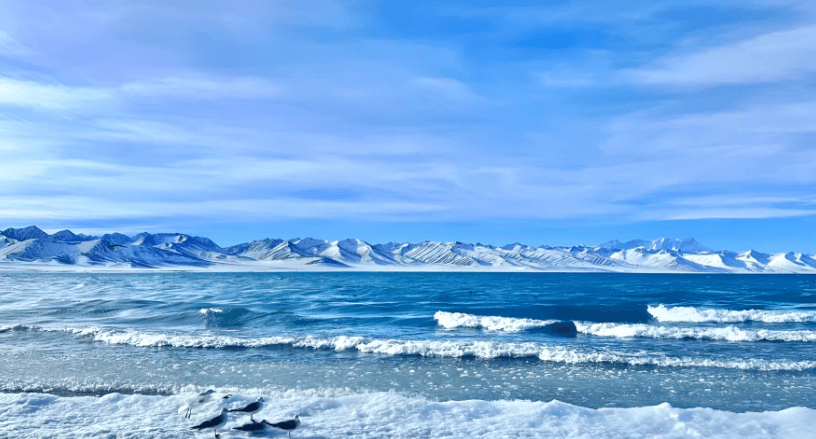
- ❄️ Winter scenery introduction: Guide to witnessing breathtaking Namtso frozen lake blue ice scenery and famous frozen ice bubble landscapes.
- ⛰️ Practical travel advice: Professional vehicle requirements, driving skills and safety tips for a reliable Tibet winter road trip.
- 📘 One‑stop travel solution: All‑round Namtso blue ice bubble viewing travel guide with real road factors, FAQs and winter itinerary tips.
The winter Namtso blue ice tour has become one of the most sought-after niche travel experiences in Tibet. Unlike the bustling summer peak season, winter Namtso presents a breathtaking fairyland of pure blue ice, frozen lake bubbles, snow-capped Nyenchen Tanglha Mountains, and unobstructed starry skies. This stunning Namtso frozen lake blue ice scenery attracts countless travel enthusiasts every year. However, Winter Namtso blue ice tour road condition is the top concern for all travelers, self-driving enthusiasts, and photography lovers planning this unique trip.
Winter road access to Namtso Lake features icy surfaces, sudden snowfalls, high-altitude pass restrictions, and temporary road closures, making it vastly different from summer travel. This comprehensive guide details the latest winter road conditions, route breakdown, potential risks, driving tips, and travel FAQs to help you enjoy a safe and smooth Namtso blue ice journey in Tibet’s cold season.
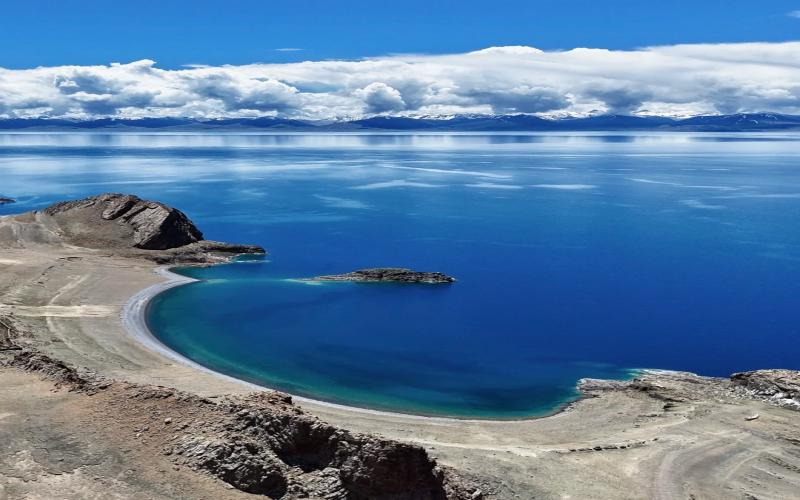
Namtso Lake
The winter Namtso blue ice tour has become one of the most sought-after niche travel experiences in Tibet. Unlike the bustling summer peak season, winter Namtso presents a breathtaking fairyland of pure blue ice, frozen lake bubbles, snow-capped Nyenchen Tanglha Mountains, and unobstructed starry skies. However, Winter Namtso Blue Ice Tour road condition is the top concern for all travelers, self-driving enthusiasts, and photography lovers planning this unique trip. Winter road access to Namtso Lake features icy surfaces, sudden snowfalls, high-altitude pass restrictions, and temporary road closures, making it vastly different from summer travel. This comprehensive guide details the latest winter road conditions, route breakdown, potential risks, driving tips, and travel FAQs to help you enjoy a safe and smooth Namtso blue ice journey in Tibet’s cold season.
Overview of Winter Namtso Blue Ice Tour Road Condition
Namtso Lake, one of Tibet’s three holy lakes, is located in Damxung County, northern Tibet, at an altitude of 4,718 meters. The winter blue ice period generally runs from late November to early March every year, which is the best window to witness the stunning transparent blue ice and frozen ice bubble landscapes. For travelers following a Namtso blue ice bubble viewing travel guide, confirming real-time road accessibility is always the first preparation step. During this period, the entire scenic area enters a low-tourist season, with ultra-low crowds and pristine natural scenery, but road conditions become extremely challenging due to high altitude and extreme cold weather.
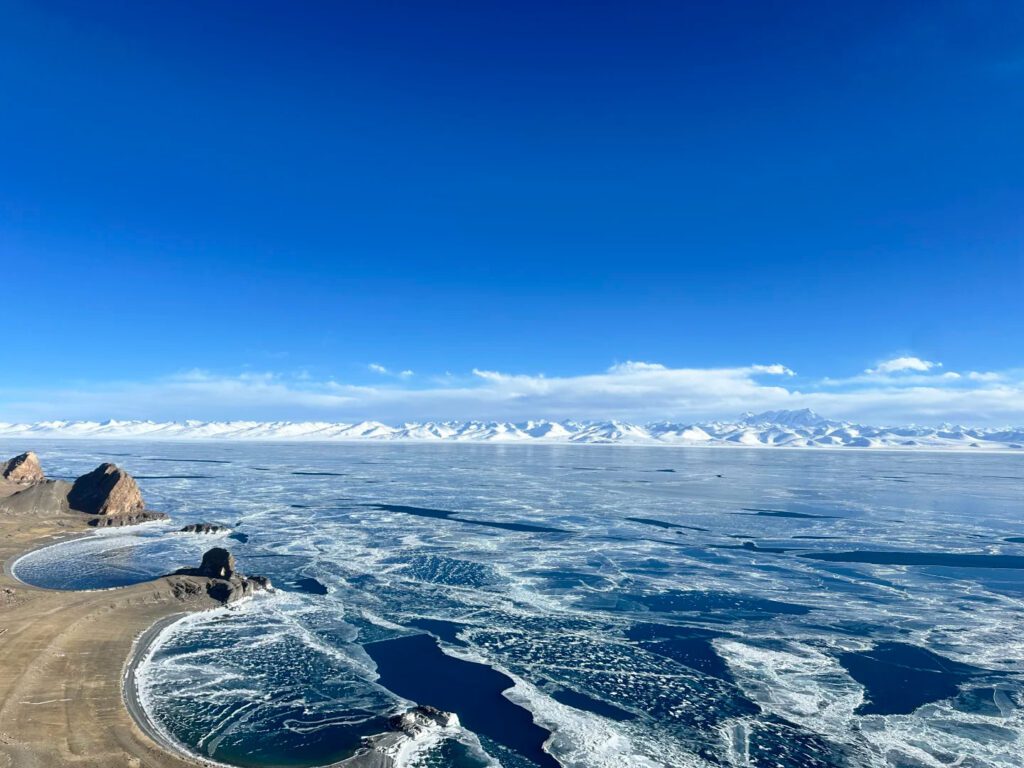
The Beauty of Frozen Namtso Lake
The main road from Lhasa to Namtso Scenic Area is a combination of national highways and mountain county roads. In winter, the overall Namtso winter road condition is characterized by frequent snow coverage, hidden black ice, slippery road surfaces, and occasional temporary closures. Most road sections are paved asphalt roads with good basic conditions, but high-altitude passes and shaded road sections are prone to freezing and snow accumulation. Unlike summer’s rainy muddy roads, winter Namtso roads suffer from low-temperature freezing, which greatly reduces road friction and brings higher driving risks. Moreover, sudden winter snowstorms in northern Tibet may lead to short-term road blockages, requiring travelers to adjust their itineraries flexibly.
Detailed Route & Sectional Winter Road Conditions (Lhasa to Namtso)
The classic winter Namtso blue ice tour route is Lhasa → National Highway 109 → Damxung County → Nagenla Pass → Namtso Scenic Area Entrance → Lake Shore Blue Ice Viewing Spot. The total distance is about 240 kilometers, with a driving time of 4 to 5 hours in winter (longer than summer due to slow safe driving). A clear understanding of Lhasa to Namtso winter driving road condition is essential for avoiding travel delays and safety hazards. The road conditions vary greatly across different sections, as detailed below.
1. Lhasa to Damxung County (National Highway 109): Stable and Accessible
This 160-kilometer section belongs to the main trunk National Highway 109, with fully paved, wide, and flat road surfaces. It is the most stable section for the winter Namtso blue ice tour. Road maintenance teams carry out daily snow removal and de-icing work in winter, so the road is basically open normally on sunny days. The temperature in this section is relatively mild compared with high-altitude mountain passes, with rare long-term snow accumulation and no serious freezing problems. Even on snowy days, the road can be cleared in a short time, ensuring basic traffic passage. This section is suitable for all types of vehicles, including ordinary sedans and SUVs.
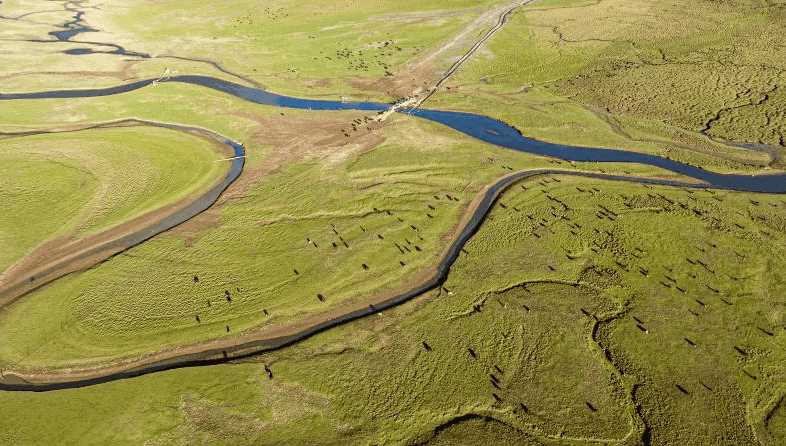
View of A Rag Wetland in Damxung County
2. Damxung County to Nagenla Pass (5,190m): High-Risk Icy & Snowy Section
After leaving Damxung County, the road gradually ascends to Nagenla Pass, the most critical and dangerous section of the entire winter route, and the core area that affects winter Namtso blue ice tour road safety. As the highest point on the way to Namtso, Nagenla Pass features extremely low temperatures, strong winds, and frequent sudden snowstorms in winter. The road surface here is covered with residual snow all year round, and shaded road sections form invisible black ice, which is the main cause of skidding and traffic accidents in winter.
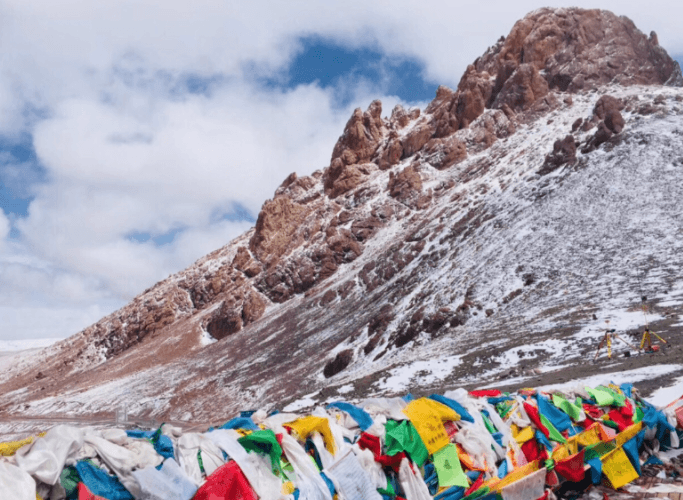
Nagenla Pass
In December, January, and February (the peak blue ice viewing period), the pass temperature often drops below -15°C. Daytime sunshine may melt surface snow slightly, while night low temperatures quickly freeze the road into smooth ice. Local road authorities often implement temporary traffic control during heavy snowfall, closing the pass for 3 to 6 hours for snow removal and de-icing. This section is narrow in parts with continuous curves and steep slopes, posing extremely high driving risks for two-wheel-drive vehicles.
3. Nagenla Pass to Namtso Lake Shore: Slippery Local Sections
After crossing Nagenla Pass, the road descends gradually to the Namtso scenic area entrance and lake shore viewing spots. The overall road condition improves, with fewer steep slopes and curves. However, the lake area is windy all year round, and the humid lake air causes frequent road freezing. Local road sections near the lake shore are covered with thin ice and floating snow all day long. In addition, some roadside sections are close to snowfields, and blowing snow may cover the road surface, leading to unclear road boundaries. It is worth noting that the scenic area’s internal viewing roads are not regularly cleared of snow in winter, so travelers must drive slowly and avoid off-road driving to prevent vehicle trapping.
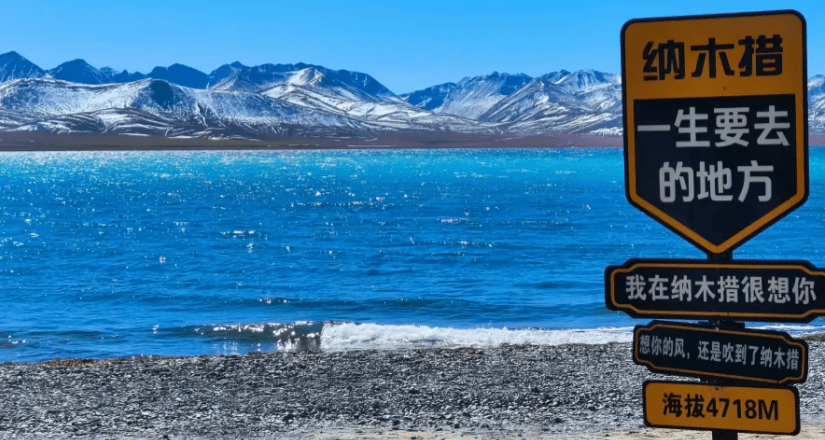
Key Factors Affecting Winter Namtso Road Conditions
1. Extreme Low Temperature & Black Ice Formation
The biggest hidden danger of winter Namtso road conditions is widespread black ice. High altitudes and ultra-low temperatures make the road surface freeze rapidly. Black ice is transparent and almost invisible to the naked eye, especially on shaded mountain roads and night driving sections. It greatly reduces tire friction and easily causes vehicle skidding and tail-flicking. Even on sunny days, black ice still exists in shaded sections, becoming the primary threat to winter travel safety.
2. Sudden Snowstorms & Temporary Road Closures
Winter in northern Tibet features volatile weather. Clear sunny days can suddenly turn into heavy snowstorms, which can cover the entire road in a short time and block mountain passes. From December to February, Namtso scenic area and Nagenla Pass may face temporary road closures multiple times every month. The closure time is unpredictable, usually lasting several hours to one day, which is the main reason for itinerary delays for winter blue ice tour travelers.
3. Seasonal Scenic Area Access Restrictions
Different from full opening in summer, Namtso Scenic Area implements seasonal management in winter. In case of extreme snow and ice weather, the scenic area will suspend ticket sales and close access roads to ensure tourist safety. Even if the highway is open, the internal lake shore viewing roads may be closed, affecting blue ice viewing arrangements. Travelers must confirm the latest opening status before departure.
Professional Driving & Travel Tips for Winter Namtso Blue Ice Tour
1. Vehicle Selection & Essential Equipment
Considering the harsh winter road environment of Namtso, four-wheel-drive (4WD) vehicles are strongly recommended for winter travel, while ordinary two-wheel-drive sedans are not advised. All vehicles must be equipped with anti-skid chains, which are mandatory for passing Nagenla Pass in snowy and icy weather. In addition, prepare vehicle antifreeze, low-temperature diesel, and tire pressure detection tools to avoid vehicle failure caused by ultra-low temperatures. It is best to choose a professional local chartered car or small group tour with experienced plateau drivers, who are more familiar with winter road changes and emergency disposal.
2. Travel Time & Itinerary Arrangement
Winter Namtso blue ice viewing is only suitable for daytime travel. It is strictly forbidden to drive at night, as night temperatures drop sharply, road ice thickens, and visibility is extremely poor. The best departure time is 8:00–9:00 in the morning, ensuring crossing Nagenla Pass during the warmest noon period with the lowest ice and snow risk. Reserve sufficient flexible time for the itinerary to cope with temporary road closures and waiting for snow removal. Do not pursue one-day round trips in a hurry to avoid night driving risks.
3. Safety Taboos & Notes
Never walk or park on the frozen Namtso lake surface. Although the lake freezes completely in winter, the ice thickness is uneven, and local thin ice areas may collapse, causing safety accidents. Drive at a constant low speed on icy roads, avoid sudden braking and sharp turns, and keep a safe distance from the vehicle ahead. In addition, the high-altitude lake area has severe hypoxia and strong winds. Travelers should carry oxygen supplies and cold-proof equipment to prevent altitude sickness and frostbite, and reduce strenuous outdoor activities.
For travelers unfamiliar with the complex Namtso winter road condition, joining our local guided winter Namtso blue ice tour is the safest choice. We monitor real-time Lhasa to Namtso winter driving road condition, arrange professional drivers and full-safety itineraries, allowing you to fully enjoy the stunning Namtso frozen lake blue ice scenery without road worries.
Day 1: Arrival in Lhasa
Day 2: Lhasa – Basum Tso – Nyang River – Nyingchi (390 km)
Day 3: Nyingchi – Lulang – Ranwu Lake – Bomi (380 km)
Day 4: Bomi – Laigu Glacier – Yalong Glacier – Nyingchi(300 km)
Day 5: Nyingchi – Kading Valley – Lhasa (460 km)
Day 6: Lhasa City Tour: Potala Palace – Jokhang Temple – Barkhor Street
Day 7: Lhasa – Yamdrok Lake – Karola Glacier – Shigatse
Day 8: Shigatse – Tingri – Gyatso La Pass – Everest Base Camp – Basong Village
Day 9: Everest Base Camp – Gawula Pass – 318 Highway – Shigatse
Day 10: Shigatse – Tashilhunpo Monastery – Lhasa
Day 11: Lhasa – Namtso Lake – Northern Tibetan Grasslands – Lhasa
Day 12: Departure from Lhasa
FAQs About Namtso Winter Blue Ice Tour Road Conditions
F1. Is the road to Namtso open every day in winter?
No. The road is normally open on sunny and cloudy days, but temporary closures will be implemented immediately in case of heavy snow, strong winds, or extreme low temperatures. The opening status is real-time dynamic, so travelers must check the latest road condition information one day in advance.
F2. Can self-driving tours go to Namtso for blue ice viewing in winter?
Self-driving is allowed but not recommended for novice drivers. Only experienced plateau drivers with 4WD vehicles and anti-skid chain installation skills are suitable for self-driving. Most tourists choose local professional chartered cars for a safer and more worry-free trip.
F3. What is the best month for Namtso blue ice tour with stable road conditions?
January to early February is the best blue ice viewing period with the most complete blue ice and ice bubble landscapes. Although the road conditions are the harshest during this period, choosing sunny days to travel can effectively avoid road risks and capture the most stunning winter scenery.
Final Thoughts
The Namtso winter blue ice tour is one of the most rewarding choices for a memorable Tibet winter road trip, offering rare and exclusive Tibet travel experience with unparalleled visual shocks that cannot be matched by other seasons. With gorgeous frozen blue ice and delicate ice bubble landscapes, it is the core highlight of every Namtso blue ice bubble viewing travel plan.
Although the overall Namtso winter road condition is complex and risky in cold months, with reasonable itinerary planning, correct vehicle selection, and standardized driving operations, travelers can completely avoid potential dangers and safely appreciate the purest blue ice fairyland on the Tibetan plateau. Always prioritize travel safety, pay close attention to real-time road conditions and weather changes, and your winter Namtso blue ice journey will become an unforgettable travel memory.