
✨Highlights:
- ❄️ Witness rare seasonal blue‑ice wonders on a Tibet winter blue ice lake tour, featuring glass‑like ice surfaces, ice cracks and frozen bubbles only available December‑February.
- 📍 Explore top blue‑ice destinations: Pumoyongtso, Namtso Lake and Laigu Glacier blue‑ice cave, covering south, north and east Tibet.
- 📸 Get practical tips from a photography guide for Tibet winter blue ice lake** for lighting, camera settings and cold‑weather equipment protection.
- 🗓️ Follow the precise seasonal window: best time to see blue ice lakes in Tibet runs from mid‑December to late February when ice is thick and vividly coloured.
- 🗺️ 12‑day complete itinerary combines blue‑ice lakes, marine glaciers, Everest Base Camp and iconic Tibetan cultural sites.
- ✅ Gradual altitude‑adaptation design ensures safe Tibet frozen blue‑ice lake travel, ideal for first‑time plateau visitors and photography lovers.
- 🏷️ Enjoy off‑season perks: fewer crowds, clear sunny skies and cost‑effective travel for a peaceful Tibet blue ice lake winter tour.
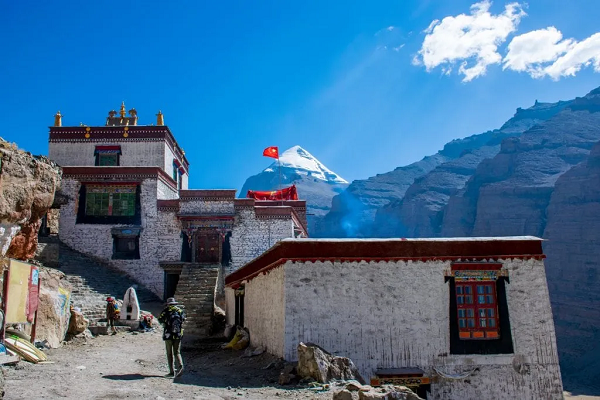
A Tibet winter blue ice lake tour ranks among the most exclusive and visually stunning winter travel experiences on the Qinghai-Tibet Plateau. Far from the bustling summer tourist season, winter transforms Tibet into a serene, pristine frozen paradise, where high-altitude alpine lakes solidify into crystal-clear blue ice fields dotted with natural ice cracks, frozen bubble clusters, and glass-like ice surfaces. A Tibet frozen blue‑ice lake travel experience differs completely from conventional plateau tours, offering unique icy landscapes that only appear during the coldest months of the year.
This in-depth guide elaborates on every detail you need to know, covering the best time to see blue ice lakes in Tibet, professional itinerary planning, essential travel tips, and a practical photography guide for Tibet winter blue ice lake, helping you craft a seamless and unforgettable winter plateau adventure.
Why Choose a Tibet Blue Ice Lake Winter Tour?
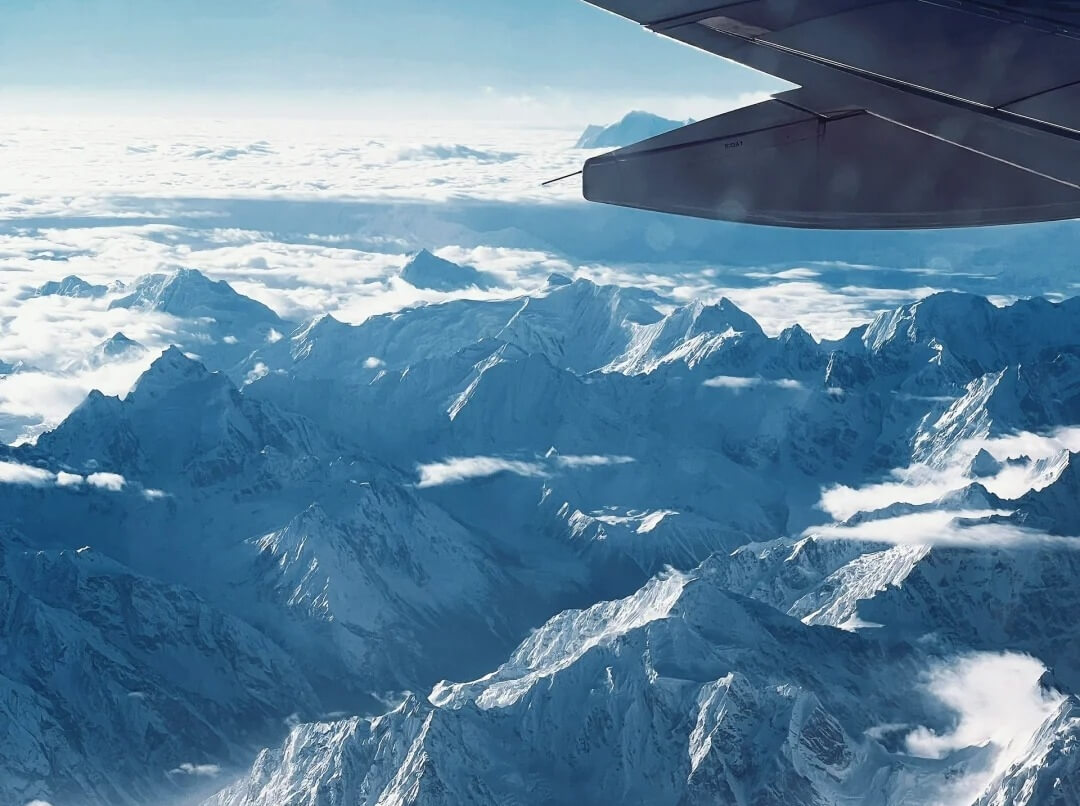
Most travelers limit their Tibet trips to summer, chasing turquoise open waters and alpine wildflowers, yet they overlook the region’s most breathtaking seasonal scenery. A Tibet blue ice lake winter tour boasts unparalleled advantages that make it a top choice for niche travelers, landscape photographers, and outdoor enthusiasts worldwide. Unlike crowded summer tours, winter Tibet features sparse crowds, ultra-clean air, and unobstructed panoramic views of snow-capped mountains and frozen blue lakes, delivering a peaceful and immersive travel experience impossible to replicate in peak seasons.
Weather conditions form the core charm of winter plateau travel. From late autumn to early spring, Tibet enters a long sunny period with minimal rainfall and extremely low air humidity. Intense plateau sunlight penetrates the thin atmosphere, refracting through thick lake ice to form vivid gradient sapphire hues. The pure blue sky, white snow-capped peaks, and transparent blue ice form a high-contrast visual feast. Additionally, winter belongs to Tibet’s tourist off-season, with most scenic spots launching preferential admission policies, and local accommodation, charter cars, and catering costs dropping significantly. Travelers can enjoy high-quality plateau travel at a more cost-effective price while capturing exclusive frozen landscape footage.
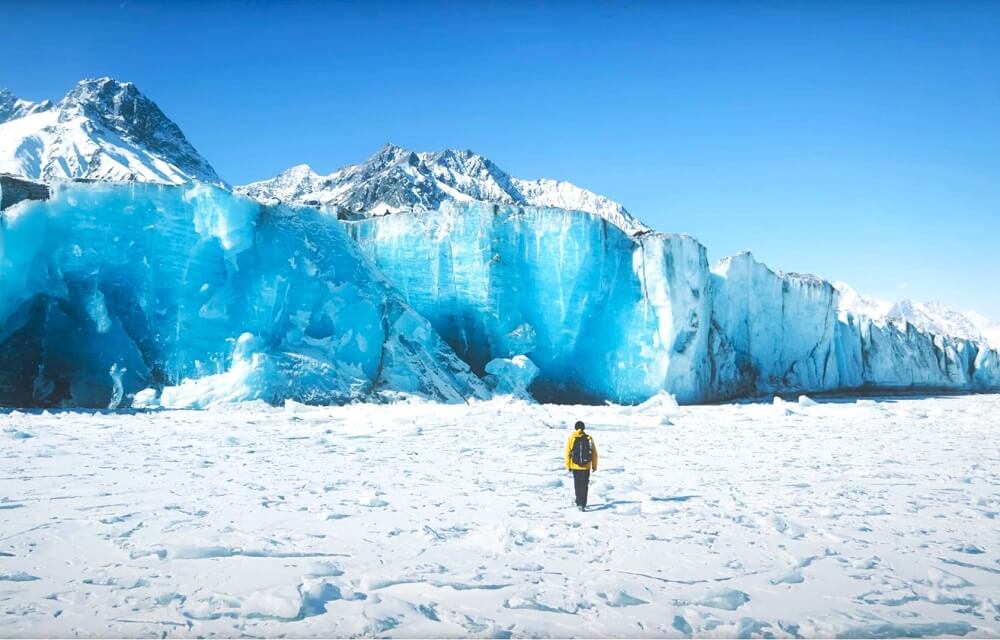
Laigu Glacier
Most importantly, the blue ice scenery of Tibet is strictly seasonal and time-limited. The stable, flawless blue ice layer only forms when temperatures remain persistently low, making every Tibet frozen blue‑ice lake travel journey a rare and precious seasonal encounter. For travelers tired of conventional scenic tours, this winter-specific frozen wonderland brings a completely fresh plateau travel experience.
Best Time to See Blue Ice Lakes in Tibet: Precise Seasonal Window
Mastering the accurate viewing period is the primary premise of a successful Tibet winter blue ice lake tour. Many travelers fail to witness perfect blue ice scenery due to improper travel timing, as the formation of plateau blue ice is strictly restricted by altitude, temperature, and water depth. For travelers planning a winter trip, clarifying the exact viewing cycle is essential.
The credible and optimal viewing period for Tibet blue ice lakes December to February, which covers the entire stable freezing season of Tibet’s alpine lakes. In early December, temperatures across the plateau gradually drop below zero, and low- and medium-altitude lakes begin to freeze initially. However, the ice layer is thin and unstable at this stage, with pale and uneven blue tones, making it unsuitable for walking or professional photography.
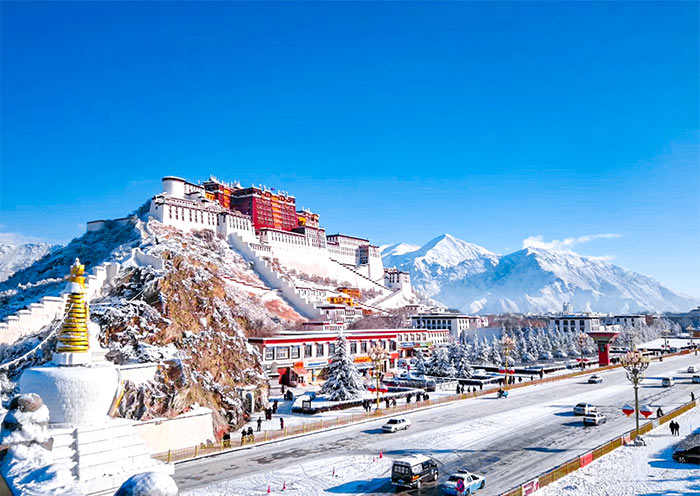
Potala Palace
From mid-December to late February, continuous low temperatures lock the lake surfaces completely. The ice thickness of mainstream scenic lakes exceeds 50 centimeters, forming solid, transparent blue ice with saturated and uniform color. This period marks the peak viewing season, with the most complete ice cracks, frozen bubbles, and glass ice landscapes, perfectly suitable for sightseeing and shooting. By early March, the plateau temperature rises rapidly, the ice layer begins to melt and crack, the blue ice color fades, and potential safety hazards appear on the ice surface, officially ending the annual blue ice viewing season.
In terms of daily travel time, sunny days are always the best choice. The strong direct sunlight of plateau winters maximizes the refraction effect of blue ice, presenting the most vivid and layered sapphire color. Cloudy or snowy days will weaken the ice color saturation and affect the overall viewing and shooting effect.
Top Must-Visit Blue Ice Lakes for Tibet Winter Tour
Dozens of alpine lakes are scattered across the Qinghai-Tibet Plateau, but only a handful of high-quality lakes can form standard pure blue ice landscapes in winter. These classic scenic spots cover southern, northern, and eastern Tibet, adapting to different travel cycles and travel needs, and are the core destinations of the Tibet Blue Ice Lake winter tour.
1. Pumoyongtso Lake: Beginner-Friendly Blue Ice Fairyland
Located in Langkazi County, Shannan City, Pumoyongtso is the most approachable blue ice lake in Tibet and the preferred destination for first-time Tibet frozen blue‑ice lake travel. Sitting at an altitude of 5010 meters, the lake is surrounded by rolling Himalayan snow mountains, with a quiet and holy terrain. During the peak Tibet blue ice lakes December to February window, the entire lake freezes thoroughly, forming wide and flat blue ice fields.
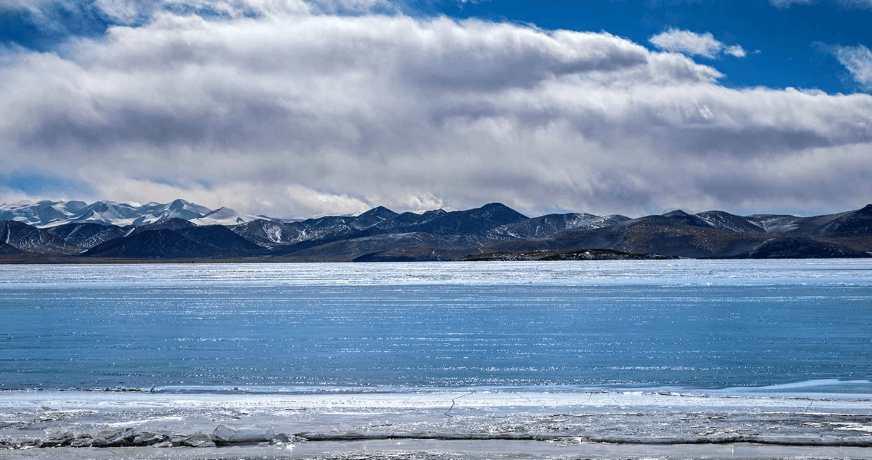
The blue ice of Pumoyongtso features distinct layered gradients, transitioning from light sky blue to deep sapphire under sunlight. Naturally formed radial ice cracks and clustered frozen air bubbles are evenly distributed on the ice surface, creating a magical natural artistic scene. With smooth road conditions and a short driving distance from Lhasa, it is very suitable for one-day or two-day leisure blue ice tours, friendly to travelers with no high-altitude travel experience.
2. Namtso Lake: Grand Plateau Blue Ice Field
As one of Tibet’s three holy lakes, Namtso presents a magnificent and shocking frozen scene in winter. The endless lake surface freezes into a vast blue ice field, stretching continuously to the foot of the Nyenchen Tanglha Snow Mountains. Affected by winter temperature differences and strong plateau winds, huge irregular ice cracks split the ice surface, with stacked blue ice blocks forming a grand glacier landscape, known as the most powerful blue ice scenery in northern Tibet.
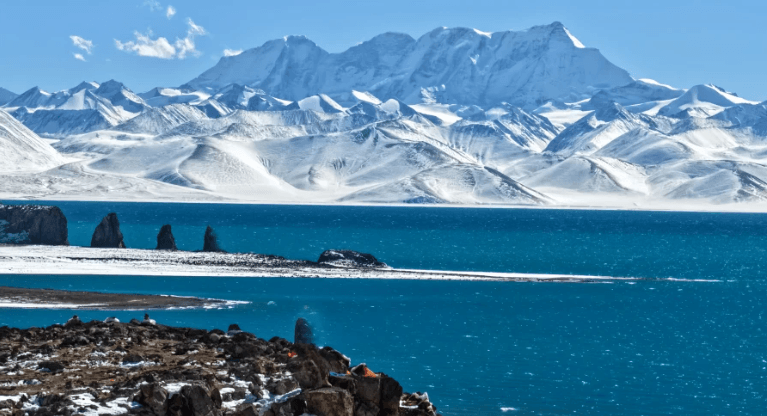
The blue ice viewing period of Namtso fully covers Tibet blue ice lakes from December to February. In the off-season, there are almost no tourists, allowing travelers to enjoy the vast and quiet frozen world alone. The integration of snow-capped mountains, blue sky, and blue ice creates an unparalleled plateau winter landscape, which is a must-visit spot for landscape photography lovers.
3. Laigu Glacier Blue Ice Lake: Niche Blue Ice Cave Secret Land
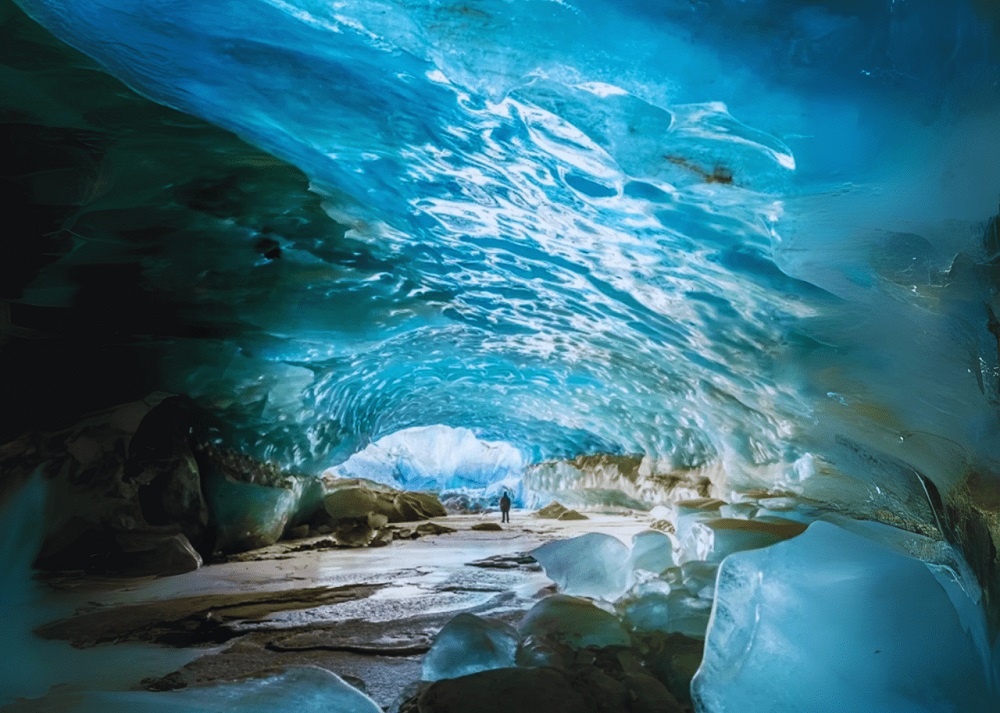
For travelers pursuing niche and exclusive scenery, the Laigu Glacier blue ice lake in eastern Tibet is the top choice. As a rare marine glacier in China, its downstream lake forms pure crystal blue ice after freezing in winter, and the unique blue ice cave landscape cannot be seen at other open lake scenic spots. The ice here is more transparent and bright, showing dreamy fluorescent blue under light refraction, bringing an extreme visual impact.
Photography Guide for Tibet Winter Blue Ice Lake: Capture Premium Frozen Landscapes
Most travelers join a Tibet winter blue ice lake tour not only for sightseeing but also to shoot exclusive winter plateau frozen landscapes. A professional photography guide for Tibet’s winter blue ice lake can help you avoid common shooting mistakes and capture high-definition, high-saturation blue ice works.
First, grasp the best shooting light time. The plateau winter light is softest and most golden within one hour after sunrise and before sunset. At this time, the sunlight slants on the blue ice surface, weakening harsh highlights and enriching the ice layer’s color hierarchy, making the blue ice warmer and more vivid. Midday direct sunlight is suitable for shooting high-saturation pure blue ice panoramic scenes, which are clean and shocking.
Second, choose reasonable shooting angles. For large blue ice fields in Namtso, use wide-angle lenses to capture the grand panoramic view of snow mountains and frozen lakes. For delicate scenes such as Pumoyongtso’s ice bubbles and ice cracks, use medium telephoto lenses for close-up shooting to highlight the texture and details of blue ice. When shooting blue ice caves of Laigu Glacier, properly increase exposure to restore the fluorescent blue texture of the ice caves and avoid dark and dull pictures.
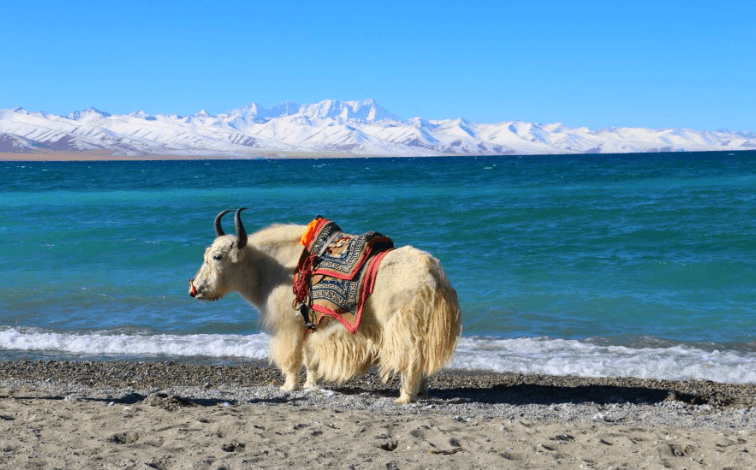
White Yak in Namtso Lake
In addition, equipment cold protection is crucial. The winter plateau temperature is extremely low, which easily causes camera and battery power loss. It is necessary to prepare professional equipment thermal insulation covers and spare batteries. It is recommended to wear polarized lenses during shooting to filter ice surface reflected light, effectively improving picture clarity and color saturation.
Classic 12 Days Tibet Winter Blue Ice Lake Tour Route
This curated 12‑day Tibet winter blue ice lake tour offers a complete and in‑depth plateau winter travel experience, perfectly covering the best blue ice landscapes, ancient monasteries, holy lakes, and Everest base camp scenery. Designed for travelers who want to explore the most beautiful frozen scenery during Tibet blue ice lakes December to February, this route arranges altitude adaptation reasonably, avoids severe altitude sickness, and integrates classic winter lake views, grand glaciers, snow mountain passes, and cultural Tibetan landmarks. Whether you are planning a sightseeing trip or looking for a professional photography guide for Tibet winter blue ice lake shooting journey, this classic itinerary fully meets your needs and reveals why winter is thebest time to see blue ice lakes in Tibet.
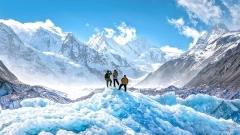
12-Day Tibet Winter Blue Ice Tour: Lhasa, Nyingchi, Everest Base Camp & Namtso – Leisure Route for Beginners
Day 1: Arrival in Lhasa
Day 2: Lhasa – Basum Tso – Nyang River – Nyingchi (390 km)
Day 3: Nyingchi – Lulang – Ranwu Lake – Bomi (380 km)
Day 4: Bomi – Laigu Glacier – Yalong Glacier – Nyingchi(300 km)
Day 5: Nyingchi – Kading Valley – Lhasa (460 km)
Day 6: Lhasa City Tour: Potala Palace – Jokhang Temple – Barkhor Street
Day 7: Lhasa – Yamdrok Lake – Karola Glacier – Shigatse
Day 8: Shigatse – Tingri – Gyatso La Pass – Everest Base Camp – Basong Village
Day 9: Everest Base Camp – Gawula Pass – 318 Highway – Shigatse
Day 10: Shigatse – Tashilhunpo Monastery – Lhasa
Day 11: Lhasa – Namtso Lake – Northern Tibetan Grasslands – Lhasa
Day 12: Departure from Lhasa
Day 1: Arrival in Lhasa
Arrive in Lhasa and check into a high‑altitude friendly hotel. The whole day is reserved for body adaptation to prepare for the upcoming tibet frozen blue‑ice lake travel. Avoid strenuous exercise to help your body acclimatize smoothly to the plateau environment.
Day 2: Lhasa – Basum Tso – Nyang River – Nyingchi (390 km)
Start the winter blue ice journey from Lhasa. Drive along the Nyang River and stop to admire the quiet winter water scenery. Visit Basum Tso, one of the most beautiful winter lakes in southeastern Tibet, and enjoy the snow‑covered forest and lake scenery before arriving in Nyingchi for overnight stay.
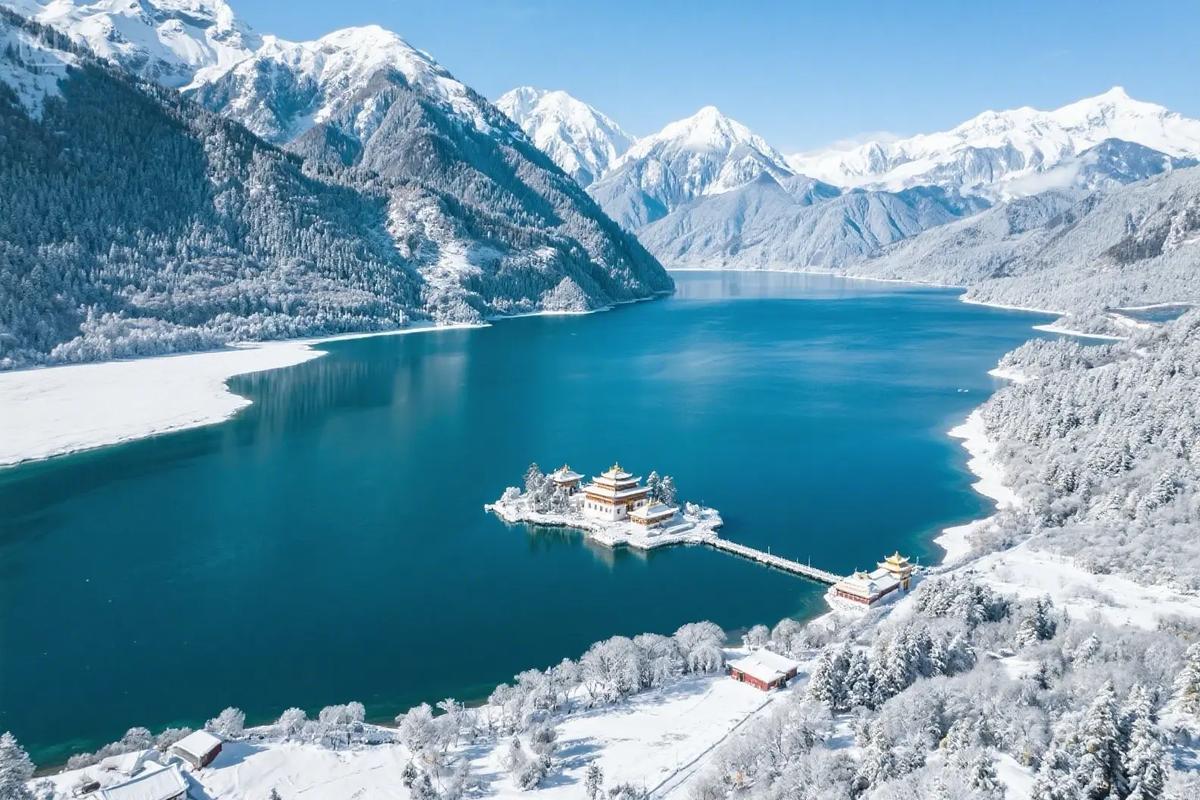
Basum Tso
Day 3: Nyingchi – Lulang – Ranwu Lake – Bomi (380 km)
Travel through the fairy‑tale Lulang forest area in winter. Continue eastward to Ranwu Lake, a famous seasonal blue water lake. In winter, the lake surface presents clear blue tones against snow mountains, creating a primitive and pure plateau winter picture. Stay overnight in Bomi, the gateway to glacier sightseeing.
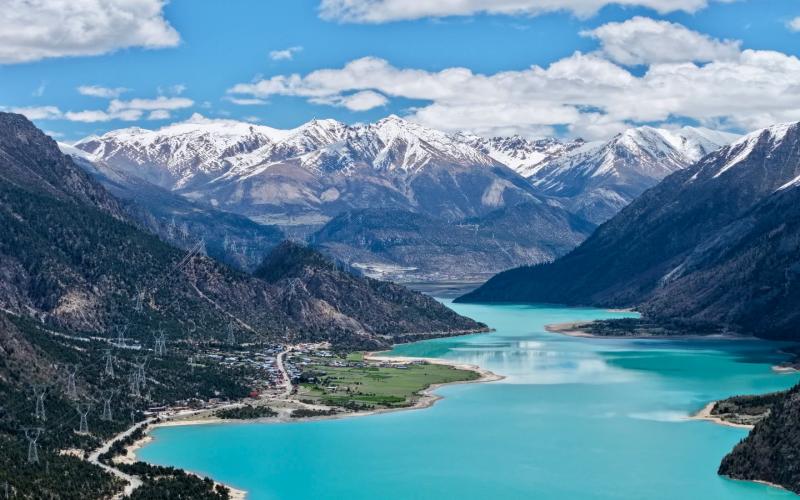
Ranwu Lake
Day 4: Bomi – Laigu Glacier – Yalong Glacier – Nyingchi (300 km)
This is the core highlight of the Tibet blue ice lake winter tour. Explore Laigu Glacier and Yalong Glacier, two world‑class marine glaciers famous for crystal blue ice and hidden blue ice caves. Walk on the frozen glacier lake surface, capture rare winter blue ice textures, and take stunning blue ice photography with professional shooting angles and soft winter plateau light.
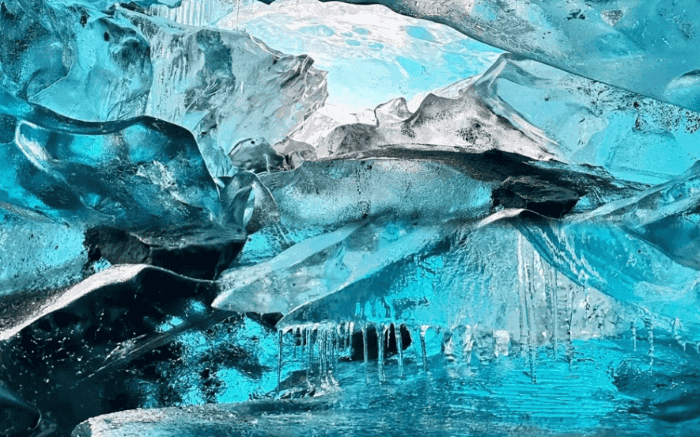
Yalong Glacier
Day 5: Nyingchi – Kading Valley – Lhasa (460 km)
Visit Kading Valley to view winter waterfalls and valley snow scenery, then drive back to Lhasa. Complete the southeastern Tibet blue ice and glacier exploration and prepare for the classic holy lake and snow mountain route in central and western Tibet.
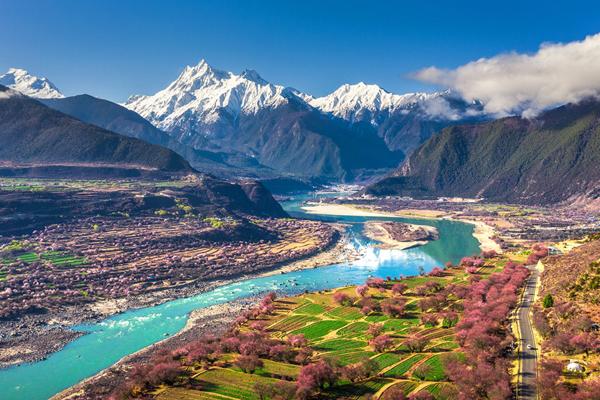
Nyingchi Peach Blossoms
Day 6: Lhasa City Tour: Potala Palace – Jokhang Temple – Barkhor Street
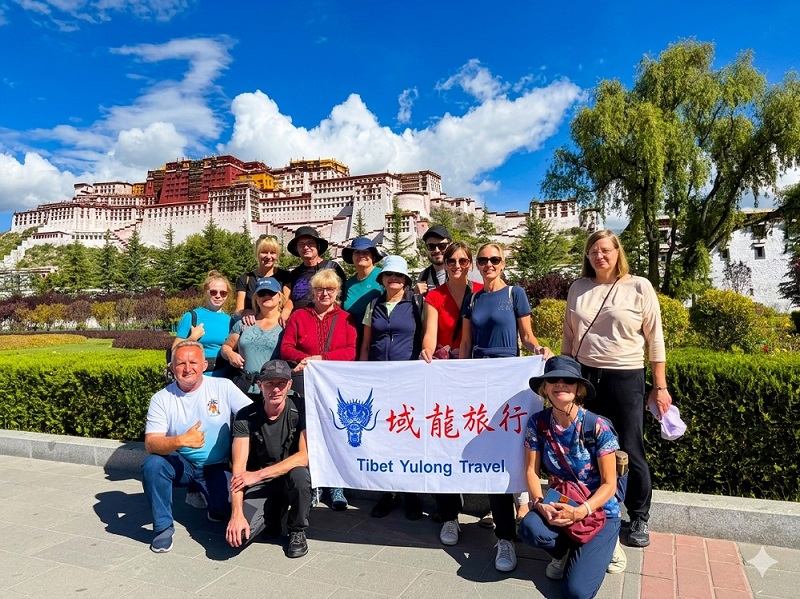
Immerse yourself in Tibet’s profound cultural heritage. Visit the iconic Potala Palace, sacred Jokhang Temple, and walk through Barkhor Street to experience local Tibetan customs, balancing natural winter scenery with humanistic exploration on this Tibet winter blue ice lake tour.
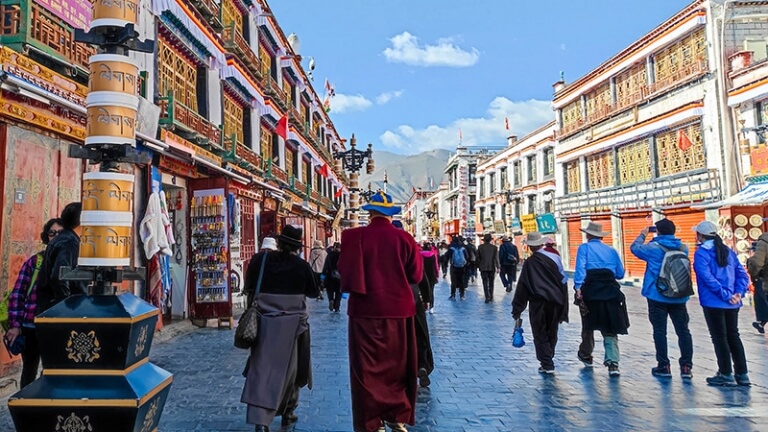
Barkhor Street
Day 7: Lhasa – Yamdrok Lake – Karola Glacier – Shigatse
Head south to visit Yamdrok Lake in winter. The quiet frozen lakeside and snow mountain shoreline present a different winter charm. Pass by Karola Glacier to enjoy the grand icy glacier landscape, then proceed to Shigatse for accommodation.
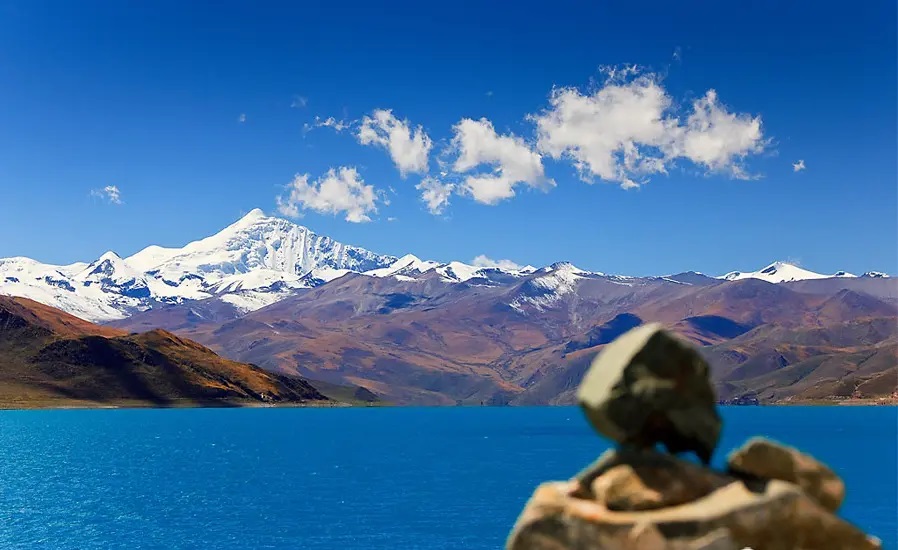
Yamdrok Lake
Day 8: Shigatse – Tingri – Gyatso La Pass – Everest Base Camp – Basong Village
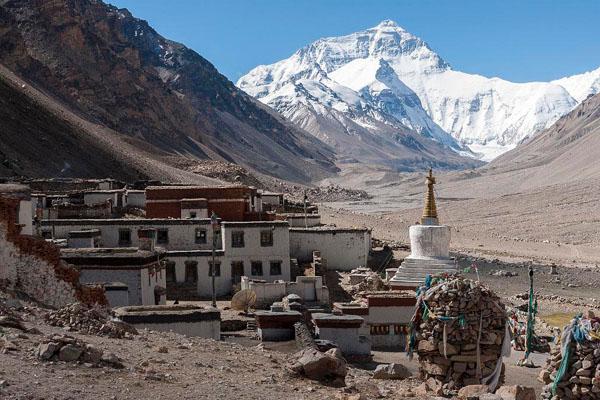
Drive towards the world’s highest mountain area. Cross the famous Gyatso La Pass with panoramic snow mountain views and finally arrive at Everest Base Camp. Enjoy the pure winter snow‑capped Everest scenery and stay overnight in Basong Village to experience the quiet highland village night.
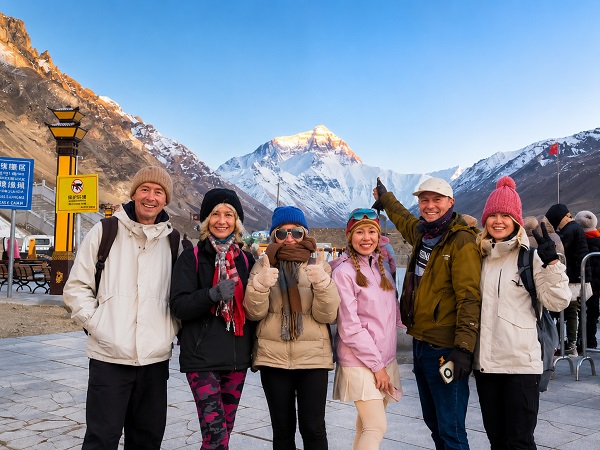
Everest Base Camp
Day 9: Everest Base Camp – Gawula Pass – 318 Highway – Shigatse
Watch the sunrise over Everest in the early morning, then cross Gawula Pass to overlook countless snow peaks. Travel along the legendary 318 National Highway, appreciate diverse winter plateau landscapes, and return to Shigatse.
Day 10: Shigatse – Tashilhunpo Monastery – Lhasa
Visit Tashilhunpo Monastery, one of Tibet’s most important Tibetan Buddhist temples, to feel solemn religious culture. After the cultural tour, drive back to Lhasa.
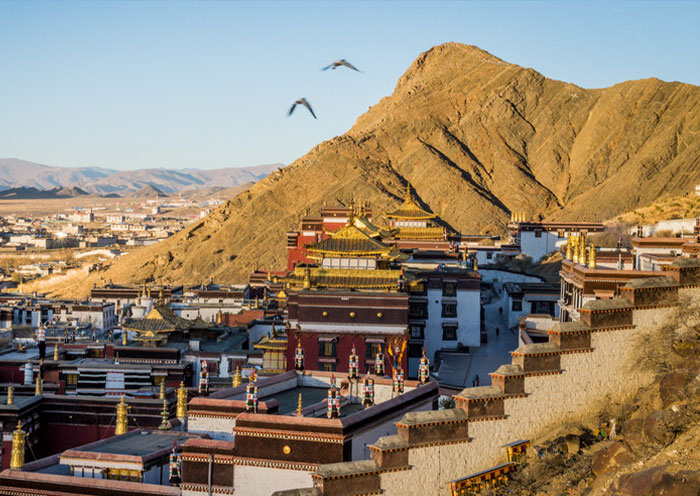
Tashilhunpo Monastery
Day 11: Lhasa – Namtso Lake – Northern Tibetan Grasslands – Lhasa
Experience the grand northern Tibet frozen landscape. Visit Namtso Lake in winter, the most famous holy blue ice lake on the northern plateau. The vast frozen ice field, natural ice cracks, and snow mountain reflections perfectly interpret the core charm of Tibet frozen blue‑ice lake travel. Traverse the snow-covered northern Tibetan grasslands before returning to Lhasa.
Day 12: Departure from Lhasa
Conclude your unforgettable Tibet winter blue ice lake tour. This 12‑day in‑depth journey covers southeast glaciers, classic blue ice lakes, Everest snow scenery, and Lhasa cultural landmarks, offering the most comprehensive winter plateau travel experience during the prime tibet blue ice lakes december to february season.
FAQs About Tibet Winter Blue Ice Lake Tour
Q1: What is the best time to see blue ice lakes in Tibet?
A: The optimal viewing window is Tibet blue ice lakes December to February. Mid-January to late February is the peak period with the thickest ice layer, most saturated blue color, and the most complete natural ice landscapes.
Q2: Is a Tibet blue ice lake winter tour suitable for photography beginners?
A: Absolutely yes. With the help of a professional photography guide for Tibet winter blue ice lake and stable winter light conditions, beginners can easily capture high-quality blue ice landscape works.
Q3: Is Tibet frozen blue‑ice lake travel safe for first-time plateau travelers?
A: It is safe with reasonable altitude adaptation and standardized scenic area sightseeing. Choosing classic leisure routes and avoiding strenuous exercise can effectively adapt to the high-altitude winter environment.
Final Thoughts
The Tibet winter blue ice lake tour is a unique winter travel feast that allows every traveler to escape from worldly noise and immerse themselves in the pure frozen holy land of the Qinghai-Tibet Plateau. Through reasonable arrangement of travel time based on the best time to see blue ice lakes in Tibet, mastering professional shooting skills with a complete photography guide for Tibet winter blue ice lake, and experiencing the exclusive scenery during Tibet blue ice lakes December to February, you will gain an unforgettable Tibet blue ice lake winter tour experience. If you are pursuing niche, pure, and shocking winter travel scenery, thistibet frozen blue‑ice lake travel journey will definitely exceed your expectations.