
Mount Kailash, also known as Kailash Parvat, is one of the most mysterious and sacred mountains in Asia. Rising to about 6,638 meters in western Tibet, it is revered by Hindus, Buddhists, Jains, and followers of the Bon tradition. Unlike many famous Himalayan peaks, Mount Kailash has never been officially climbed in modern times. Its distinctive shape, spiritual importance, remote location, and centuries of legends have made it a fascinating destination for pilgrims and international travelers alike.
Key Points At A Glance
- Mount Kailash is located in western Tibet, China, in Ngari Prefecture.
- Kailash Parvat stands about 6,638 meters (21,778 feet) high.
- The mountain is sacred in Hinduism, Buddhism, Jainism, and Bon.
- Hindus traditionally regard Kailash as the abode of Lord Shiva and Goddess Parvati.
- Tibetan Buddhist traditions associate it with Mount Meru, the cosmic center of the universe.
- Mount Kailash cannot be climbed, and modern visitors undertake the sacred Kora around the mountain instead.
- The approximately 52–53 km Mount Kailash Kora normally takes around three days for organized travelers.
- Drolma La Pass, at about 5,630 meters, is the highest and most demanding section of the Kora.
- Popular legends include the mountain’s unusual shape, the supposed face of Shiva, its perpetual snow, and stories of unexplained phenomena.
- These mysterious stories should be distinguished from scientifically verified facts.
- Nearby highlights include Lake Manasarovar, Rakshastal, Darchen, Tirthapuri, and important monasteries.
- For international visitors, a Kailash journey requires preparation for high altitude, remote conditions, permits, transportation, and changing weather.
What Is Kailash Parvat?
Mount Kailash, widely known as Kailash Parvat in South Asian traditions, is one of the most recognizable sacred mountains in the world. Rising dramatically from the remote landscape of western Tibet, it has attracted pilgrims, explorers, photographers, and travelers for centuries.
The mountain is located in Ngari Prefecture of the Tibet Autonomous Region of China, within the Gangdise or Transhimalayan mountain system. Its summit reaches approximately 6,638 meters above sea level. Although it is not among the world’s highest mountains, its extraordinary religious importance makes it far more significant than its elevation alone would suggest.
For Hindus, Mount Kailash is traditionally regarded as the abode of Lord Shiva and Goddess Parvati. Tibetan Buddhists associate the mountain with Mount Meru, the sacred cosmic mountain at the center of Buddhist cosmology. The Bon tradition also considers the region profoundly sacred, while Jain traditions connect the area with spiritual liberation.
This unusual convergence of religious traditions is one of the main reasons Kailash Parvat remains so fascinating to international visitors.
Unlike ordinary tourist attractions, Mount Kailash is not a place where travelers simply arrive, take photographs, and leave. The mountain is approached with a strong sense of reverence. For many visitors, the journey itself is as important as the destination.
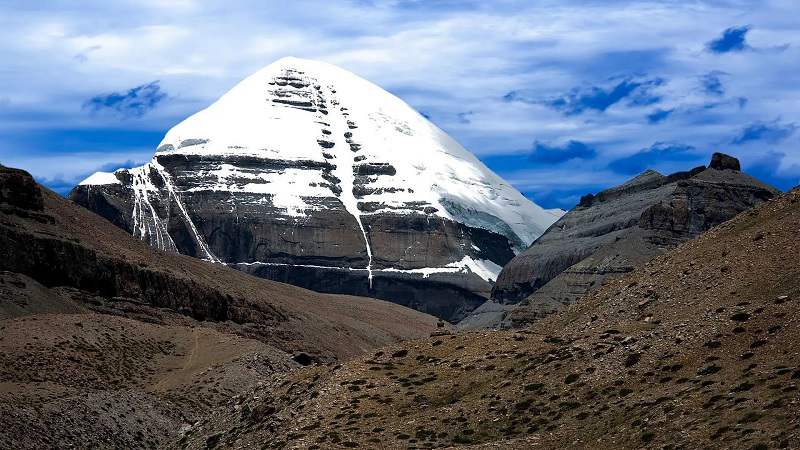
Kailash Parvat
Where Is Kailash Parvat Located?
Mount Kailash is situated in western Tibet, China, relatively close to the borders of Nepal and India. Its remote location is one of the defining characteristics of the region.
The nearest major settlement for the pilgrimage around the mountain is Darchen, a small high-altitude town that serves as the traditional starting point for the Mount Kailash Kora.
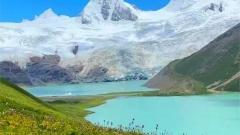
The mountain stands within a vast landscape of high plateaus, glaciers, lakes, valleys, and snow-covered peaks. Nearby Lake Manasarovar and Rakshastal add another dimension to the scenery and religious significance of the region.
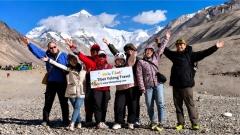
For travelers approaching from Lhasa, the journey usually crosses some of the most spectacular landscapes in Tibet. Depending on the itinerary, travelers may visit places such as Shigatse, Mount Everest Base Camp, Saga, Lake Manasarovar, and Darchen before reaching Kailash.
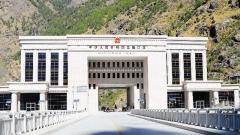
Another popular approach is from Kathmandu, Nepal, entering Tibet through the Gyirong border area. This route allows international travelers to combine Nepal and Tibet in one overland journey.
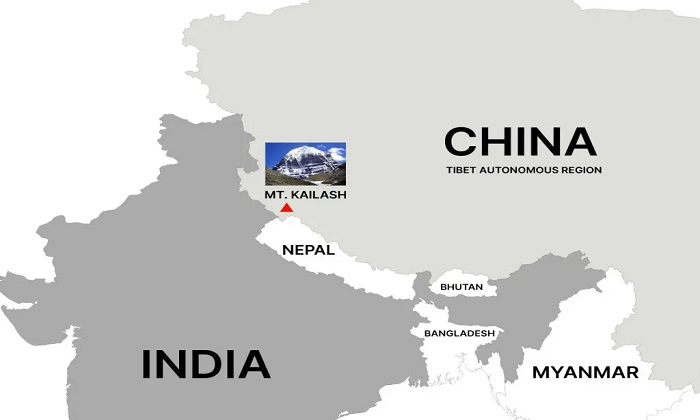
Kailash Parvat Location Map
How High Is Kailash Parvat?
The elevation of Mount Kailash is approximately 6,638 meters (21,778 feet) above sea level.
At first glance, this may seem surprisingly low compared with Mount Everest, which reaches 8,848.86 meters. However, altitude is only one part of the challenge in the Kailash region.
The mountain is located on the Tibetan Plateau, where the surrounding landscape is already extremely elevated. Visitors can therefore experience significant altitude-related difficulties even before reaching the mountain itself.
The Mount Kailash Kora reaches its highest point at Drolma La Pass, approximately 5,630 meters above sea level. For many travelers, crossing this pass is physically more demanding than simply viewing Mount Kailash from Darchen.
The combination of thin air, steep terrain, cold temperatures, strong winds, and remoteness makes physical preparation particularly important.
Why Is Kailash Parvat So Mysterious?
The mystery surrounding Kailash Parvat comes from several different sources. Some are rooted in ancient religious traditions, some come from the mountain’s unusual appearance, and others developed through modern travel stories and popular culture.
It is important to distinguish between spiritual belief and scientific evidence. Claims that watches stop, people suddenly age, or supernatural energy exists around the mountain are frequently repeated online, but they have not been established as scientific facts.
The mountain’s genuine mystery does not require exaggerated claims. Its remote location, distinctive geometry, religious significance, and prohibition on climbing already make Mount Kailash exceptionally unusual.
The Mountain Of Many Names
Kailash is known by different names across religious and linguistic traditions.
The Sanskrit name Kailāsa is associated with the mountain’s ancient religious identity. In Tibetan, it is commonly known as Kang Rinpoche, meaning “Precious Snow Jewel.” Different traditions have developed their own names and interpretations, reflecting the mountain’s importance across cultures.
These different names are more than linguistic variations. They reveal how several religious traditions have independently incorporated the same landscape into their sacred geography.
For international travelers, learning these names can make the experience of visiting the Kailash region much more meaningful.
The Sacred Home Of Lord Shiva
Perhaps the most widely known belief surrounding Kailash Parvat comes from Hinduism.
According to Hindu tradition, Mount Kailash is the abode of Lord Shiva, one of the principal deities of Hinduism. Shiva is traditionally depicted as residing on the mountain in meditation with his consort, Goddess Parvati.
This belief explains why Mount Kailash has attracted Hindu pilgrims for generations. For devotees, visiting the mountain is not simply a sightseeing experience. It is an opportunity to approach one of the most sacred places associated with Shiva.
The mountain’s inaccessible summit reinforces this sense of sacredness. Rather than conquering the peak, pilgrims traditionally show respect by traveling around it.
Kailash Parvat And Mount Meru
Tibetan Buddhist traditions associate Mount Kailash with Mount Meru, the mythical cosmic mountain described in Buddhist cosmology.
Mount Meru is understood as the center of the universe in traditional Buddhist cosmology. Kailash is therefore sometimes described as a physical representation of this cosmic center.
This idea contributes to descriptions of Mount Kailash as the “center of the universe” or “axis of the world.”
These expressions should be understood within their religious and cosmological context rather than as claims about the mountain’s literal geographical position on Earth.
Nevertheless, the symbolism is powerful. Kailash becomes more than a mountain: it represents the meeting point between the earthly and spiritual worlds.
Why Has Mount Kailash Never Been Climbed?
One of the biggest questions surrounding Kailash Parvat is surprisingly simple: Why has nobody officially climbed to the summit?
There have been discussions and reported proposals involving Mount Kailash, but unlike Everest and many other major peaks, Kailash does not have an established tradition of modern summit expeditions.
The primary reason is not simply technical difficulty. Climbing Mount Kailash is prohibited because of its religious significance.
For followers of the traditions that regard the mountain as sacred, climbing to the summit would be deeply disrespectful. The mountain is treated as a sacred object rather than a mountaineering objective.
This is an important distinction for international travelers. The fact that Mount Kailash remains unclimbed is not necessarily evidence that it is physically impossible to summit. Instead, its status is closely connected to religious beliefs, local customs, and restrictions surrounding the mountain.
The Legend Of Milarepa and Kailash Parvat
One of the most famous stories associated with the mountain concerns the Tibetan Buddhist yogi Milarepa.
According to Tibetan Buddhist tradition, Milarepa was a highly accomplished spiritual practitioner and poet who became involved in legendary contests and spiritual encounters connected with Mount Kailash.
Stories about Milarepa and another religious figure, Naro Bönchung, are deeply embedded in Tibetan religious tradition. Different versions of the story exist, and they should be understood as part of Tibetan sacred literature rather than as documented mountaineering history.
The story contributes to Kailash’s mysterious reputation because it presents the mountain not as an object to conquer, but as a place where spiritual power takes precedence over physical strength.
For modern visitors, the more important lesson is that Mount Kailash belongs to a very different cultural framework from conventional climbing destinations.
The Kailash Parvat Kora: Walking Around The Sacred Mountain
Since climbing the summit is prohibited, the traditional way to experience Mount Kailash is through the Kora, or sacred circumambulation.
The standard outer Kora begins near Darchen and covers approximately 52–53 kilometers, depending on the route and measurement used. Most organized itineraries divide the trek into three days.
The first section generally leads from Darchen toward Dirapuk Monastery, with increasingly impressive views of the mountain.
The second day is traditionally considered the most demanding. Travelers cross Drolma La Pass, the highest point of the Kora, before descending toward the area around Zutulpuk Monastery.
The final section is comparatively easier and eventually returns travelers toward Darchen.
For pilgrims, walking around Kailash can be an act of devotion, prayer, purification, and spiritual reflection. Some pilgrims complete the Kora while reciting mantras, turning prayer wheels, or performing full-body prostrations along the route.
For international visitors who are not religious pilgrims, the Kora can still be a profound cultural and physical experience.
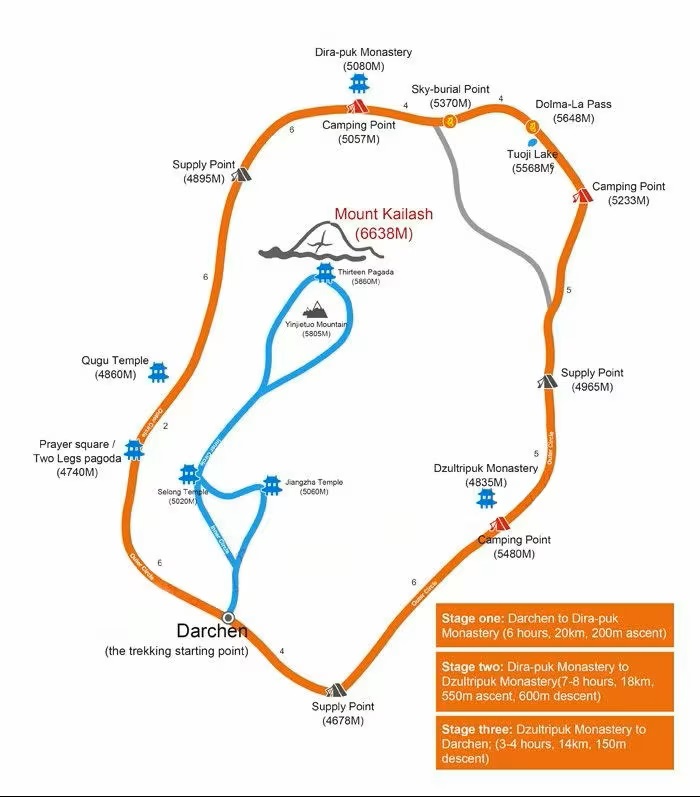
Map of Kailash Parvat Kora
The Four Religions Of Kailash Parvat
Few mountains have such a diverse sacred identity.
Hinduism
For Hindus, Mount Kailash is traditionally the home of Lord Shiva and Goddess Parvati. Lake Manasarovar, located nearby, is also one of the most revered pilgrimage destinations.
Buddhism
Tibetan Buddhists regard Kailash as a sacred place associated with Buddhist cosmology and Mount Meru. The mountain is also connected with important Tibetan Buddhist stories and pilgrimage traditions.
Jainism
In Jain tradition, Mount Kailash is associated with Rishabhanatha, the first Tirthankara, and the attainment of spiritual liberation.
Bon
The indigenous Tibetan Bon tradition also considers the Kailash region sacred. Bon pilgrimage traditions have their own interpretations of the mountain and its spiritual landscape.
The coexistence of these four traditions is perhaps one of the most remarkable aspects of Mount Kailash.
The Mysterious Shape Of Kailash Parvat
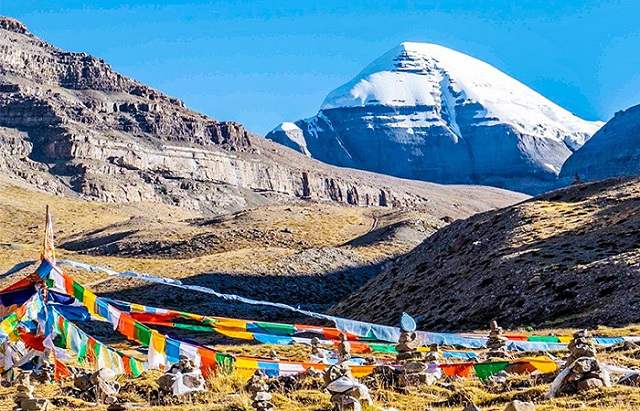
Another reason Kailash looks unusual is its distinctive shape. The mountain rises sharply above the surrounding landscape, with broad faces and relatively symmetrical lines that can give it an almost architectural appearance from certain viewpoints. This has led to comparisons with pyramids and temples. Some modern stories even claim that Mount Kailash is an artificial structure.
However, there is no reliable scientific evidence that Mount Kailash is a man-made pyramid. Its striking appearance is better understood as the result of geological processes, erosion, glaciation, and the mountain’s particular structure.
That does not make the mountain less impressive. In fact, seeing Kailash emerge from the surrounding Tibetan plateau often provides a much stronger explanation for its legendary reputation than any supernatural theory.
Does The Snow On Mount Kailash Never Melt?
Another popular claim is that the snow on the summit of Kailash never melts.
The mountain’s summit remains snow-covered for much of the year, and its high elevation means that permanent or long-lasting snow and ice are natural features of the landscape.
However, saying that the snow never melts at all is an exaggeration.
The appearance of the mountain changes according to season, weather, sunlight, and viewing conditions. Photographs taken at different times can therefore make Kailash appear dramatically different.
The white summit nevertheless contributes strongly to the mountain’s visual identity and to its Tibetan name, Kang Rinpoche, the Precious Snow Jewel.
When Is The Best Time To Visit Kailash Parvat?
The most suitable travel period generally falls during the warmer months when roads and trekking conditions are more favorable.
For many international travelers, May to October is the practical travel season, although conditions can vary considerably from month to month.
Late spring and autumn can offer clear skies and excellent mountain visibility. Summer can bring occasional rain, while higher elevations can remain cold even when lower areas are relatively comfortable.
Regardless of the month, travelers should remember that the Kailash region is extremely high and remote. Weather can change quickly, and conditions around Drolma La can be particularly challenging.
What Should International Travelers Prepare For?
A Mount Kailash journey is very different from a standard holiday in a major Chinese city.
The altitude is the first major consideration. Travelers should allow time to acclimatize and should never underestimate symptoms associated with high altitude.
Physical preparation is also important because the Kora involves long walking days and a high mountain pass.
Travelers should pack warm and layered clothing, sun protection, sturdy walking shoes, personal medicines, water, snacks, and other essential supplies appropriate for a remote high-altitude environment.
Respect for local culture is equally important. Visitors should follow instructions at monasteries and pilgrimage sites, avoid littering, ask before photographing people, and treat religious practices with sensitivity.
Mount Kailash
Why Kailash Parvat Remains One Of The World’s Greatest Mountain Mysteries
The mystery of Kailash Parvat does not depend on whether watches stop, people age unusually fast, or the mountain is secretly a man-made pyramid. Those stories are fascinating, but they are not established scientific facts.
The deeper mystery is much more tangible.
A 6,638-meter mountain stands alone above the Tibetan landscape, revered by several major religious traditions, surrounded by sacred lakes and connected to some of Asia’s great river systems. Its summit remains outside the world of conventional mountaineering, while thousands of pilgrims instead walk around its base in prayer.
That combination of Kailash Parvat’s height, remote location, religious significance, distinctive appearance, and centuries of mythology explains why Mount Kailash continues to fascinate people from around the world.
For travelers, the most meaningful way to understand Kailash may not be to ask whether every legend is literally true. Instead, it is to experience the landscape, learn the traditions, walk the Kora, and appreciate why generations of people have regarded this extraordinary mountain as sacred.
Exploring Kailash Parvat With Tibet Yulong Travel
For international visitors who want to experience Kailash Parvat, the Mount Kailash Kora, Lake Manasarovar, and western Tibet, careful local planning can make a significant difference.
Tibet Yulong Travel focuses on Tibet travel services for international visitors, including Mount Kailash and Lake Manasarovar journeys. A locally based team can help travelers understand the route, prepare for high-altitude travel, arrange the required travel documents and permits, and coordinate transportation and accommodation across the remote Ngari region.
A Mount Kailash journey is not simply about reaching a mountain. It is about traveling through one of the world’s highest landscapes and entering a cultural environment where geography, religion, mythology, and everyday life have been intertwined for centuries.