
✨ Highlights:
- 🏔️ Witness Everest at its clearest — Late autumn delivers post-monsoon skies with exceptional visibility for unobstructed views of the world’s highest peak
- 🛣️ Epic overland journey — Drive the legendary Friendship Highway from Lhasa to Everest Base Camp, passing sacred lakes, ancient monasteries, and high-altitude passes
- 📸 Photographer’s paradise — Golden light on snow-capped peaks, crisp blue skies, and minimal crowds create perfect conditions for stunning Himalayan photography
- 🏛️ Rich cultural immersion — Explore Potala Palace, Jokhang Temple, Tashilhunpo Monastery, and Rongbuk Monastery — the highest monastery on Earth
- 🌌 Stargazing at 5,200m — Experience breathtaking night skies and the Milky Way from Everest Base Camp with zero light pollution
- 🍂 Perfect weather window — October offers mild daytime temperatures and dry conditions before winter’s deep freeze sets in
A Tibet late autumn overland tour with Everest Base Camp is widely regarded as one of the most spectacular road trips on the planet. Stretching from the sacred capital of Lhasa across the Tibetan Plateau to the foot of Mount Everest, this journey combines breathtaking natural scenery, profound cultural experiences, and the thrill of standing at the base of the world’s tallest mountain.
For travelers seeking the definitive Lhasa to Everest Base Camp overland route highlights, late autumn delivers the complete package — clear skies, golden light, and a landscape transformed by the season. The monsoon rains have just cleared, leaving behind exceptionally clear skies and crisp, dry air that makes the Himalayan peaks appear closer and more dramatic than at any other time of year. Unlike the cloudy summer months when Everest often hides behind a veil of mist, late autumn reliably delivers those postcard-perfect views that travelers dream of.
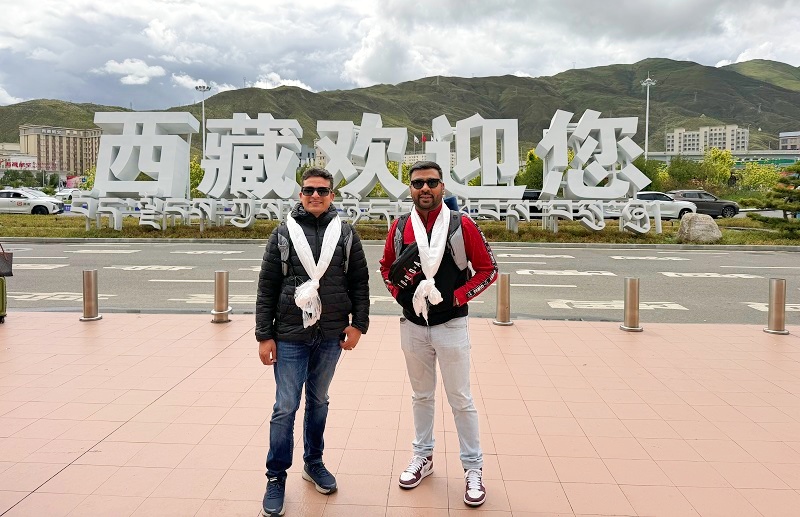
Welcome to Lhasa
The overland approach adds an extra dimension to the experience. Rather than flying directly to a destination near Everest, driving allows you to gradually acclimatize to the altitude while witnessing the landscape transform before your eyes. From lush valleys to high-altitude grasslands, from turquoise sacred lakes to barren lunar-like terrain, every kilometer brings something new and awe-inspiring.
Why Late Autumn Is the Best Season for This Journey
Unbeatable Visibility and Weather
The single biggest reason to choose late autumn for your Everest Base Camp overland tour is the weather. Following the summer monsoon, the atmosphere clears dramatically, resulting in some of the clearest skies you’ll ever see. In October, visibility at Everest Base Camp regularly exceeds 200 kilometers, meaning you can see not just Everest but an entire panorama of 8,000-meter peaks stretching across the horizon.
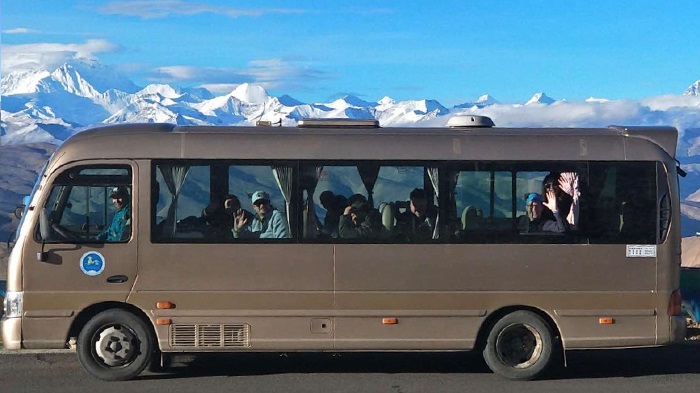
Tibet Travel Vehicles
The weather statistics tell the story. During October at Everest Base Camp, average daytime temperatures hover around 12–16°C (54–61°F), while nighttime lows drop to approximately -5 to -7°C (23–19°F). Precipitation is minimal — typically less than 20mm for the entire month — meaning you’re unlikely to encounter rain or snow that could disrupt your travel plans. By November, temperatures drop further (daytime highs around 7°C / 45°F, nighttime lows of -12°C / 10°F), but the skies remain crystal clear.
Fewer Crowds, More Serenity
While October is considered peak season for Tibet Everest Base Camp tours, the crowds are still significantly smaller than during the summer months of July and August. By late October, the tourist numbers begin to thin out noticeably, allowing you to enjoy iconic sites like Potala Palace and Everest Base Camp with far more space and tranquility.
This is particularly valuable at Everest Base Camp itself, where having fewer people around means you can fully absorb the majesty of the mountain without jostling for position or waiting for photo opportunities. The quiet of the high plateau, broken only by the wind and the distant creak of glaciers, is an essential part of the experience.
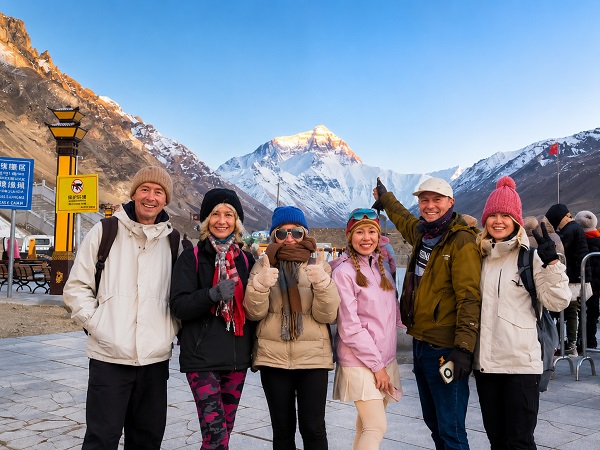
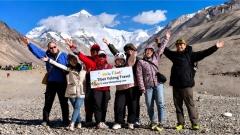
Guests taking photos at Everest Base Camp
Golden Light and Photography Opportunities
For photographers, late autumn is nothing short of magical. The low angle of the autumn sun bathes the Himalayan peaks in a warm, golden glow during sunrise and sunset, creating those iconic “golden mountain” shots that grace travel magazine covers. The crisp, dry air also means sharper, clearer photos with better contrast and color saturation.
A Tibet Everest Base Camp photography tour in autumn has become increasingly popular among landscape photographers, and for good reason. From the first glimpse of Everest at Gawula Pass to the sunset at Rongbuk Monastery and the sunrise at Base Camp, every moment feels perfectly staged for photography. The golden hues of the high-altitude grasslands, the deep blue of the plateau skies, and the brilliant white of the snow-capped peaks create a color palette that photographers dream of.
The Classic Overland Route: Lhasa to Everest Base Camp
A typical Tibet late autumn overland tour with Everest Base Camp follows a well-established route that takes approximately 8–10 days round-trip from Lhasa. The journey follows the legendary Friendship Highway (China National Highway 318), which connects Lhasa with Kathmandu, Nepal, passing through some of Tibet’s most spectacular scenery.
Route Overview
Day 1: Arrive in Lhasa: Airport / Train Station Pick-up & Hotel Check-in
Day 2: Discover Lhasa – Potala Palace, Jokhang Temple & Barkhor Street
Day 3: Lhasa to Shigatse: Yamdrok Lake, Karola Glacier
Day 4: Shigatse to Everest Base Camp: Gyatso La, Gyawu La, Sunset at Everest
Day 5: Everest Base Camp to Shigatse: Mt. Everest Sunrise
Day 6: Shigatse – Tashilhunpo Monastery – Lhasa
Day 7: Lhasa to Namtso and Back: Namtso Lake, Northern Tibet Grasslands
Day 8: Lhasa Departure: Transfer to Airport or Train Station
The total driving distance from Lhasa to Everest Base Camp is approximately 650 kilometers, but the journey takes 3–4 days because of the slow mountain roads, frequent scenic stops, and the need for gradual altitude acclimatization. This is not a journey to rush — the drive itself is the destination.
Day-by-Day Itinerary
Day 1: Arrive in Lhasa – Airport Pick-up & Check-in
Your Tibet late autumn overland tour with Everest Base Camp begins today. Upon arrival at Lhasa Gonggar Airport or Railway Station, your guide transfers you to the hotel. Spend the rest of the day resting and acclimatizing to the 3,650m altitude — take it easy and drink plenty of water.
Day 2: Discover Lhasa – Potala Palace, Jokhang Temple & Barkhor Street
Explore Lhasa’s spiritual heart. Morning visit to the Potala Palace — the iconic winter palace of the Dalai Lama and a UNESCO World Heritage Site filled with sacred chapels and gilded statues. Afternoon at the Jokhang Temple, Tibet’s holiest shrine, followed by a stroll around bustling Barkhor Street and its pilgrim circuit.
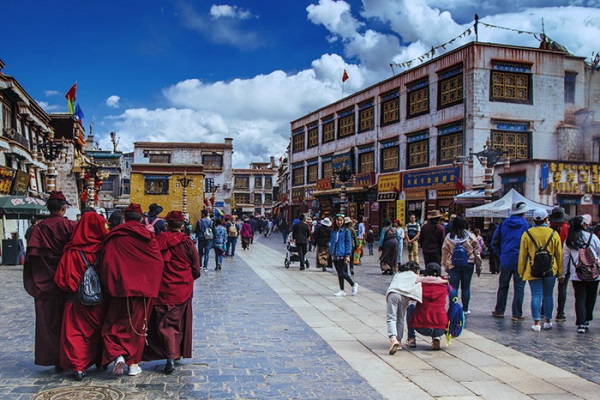
Barkhor Street
Day 3: Lhasa to Shigatse – Yamdrok Lake, Karola Glacier
Begin the overland journey toward Everest. Cross Gampa La Pass (4,794m) for the first stunning view of Yamdrok Lake — a turquoise sacred lake winding through snow-capped mountains. Continue west past the dramatic Karola Glacier spilling down to the roadside. Arrive in Shigatse (3,840m) by evening.
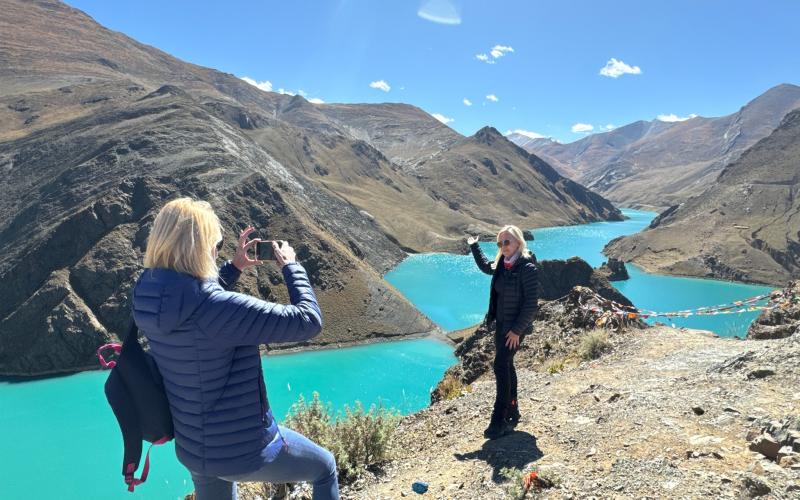
Yamdrok lake
Day 4: Shigatse to Everest Base Camp – Sunset at Everest
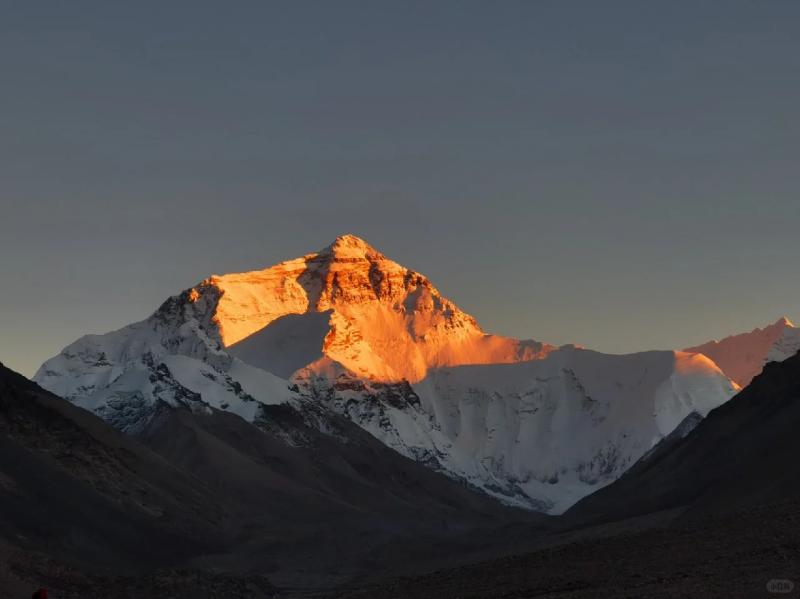
The highlight day: drive along the G318 Highway, crossing Gyatso La and Gyawu La Pass (5,198m) for a panorama of five 8,000-meter peaks. Descend into the Rongbuk Valley, passing Rongbuk Monastery — the world’s highest monastery. Reach Everest Base Camp (5,200m) and witness the golden sunset on Everest’s north face. The Everest Base Camp north face overland tour from Tibet lets you drive right to the mountain base.
Day 5: Everest Base Camp to Shigatse – Everest Sunrise
Wake early for the magical sunrise over Mount Everest as the summit glows gold. For photographers, the best Everest Base Camp Tibet sunrise sunset photography spots include the Rongbuk Monastery ridge and the Base Camp prayer flag viewpoint. After breakfast, drive back to Shigatse, retracing the scenic high-altitude route.
Day 6: Shigatse – Tashilhunpo Monastery – Lhasa
Morning visit to Tashilhunpo Monastery, the traditional seat of the Panchen Lama, featuring giant gilded stupas and the towering Maitreya Buddha statue. Then drive back to Lhasa along the Friendship Highway, passing Yamdrok Lake once more for fresh autumn perspectives. Arrive in Lhasa by evening.
Day 7: Lhasa to Namtso Lake & Back
Day trip to Namtso Lake (4,718m), one of the world’s highest saltwater lakes. Drive across the golden Northern Tibet Grasslands of the Changtang Plateau, cross Nagen La Pass (5,190m), and descend to the deep blue lake framed by snow-capped Nyenchen Tanglha mountains. Walk the shore and visit Tashi Dor Island before returning to Lhasa.
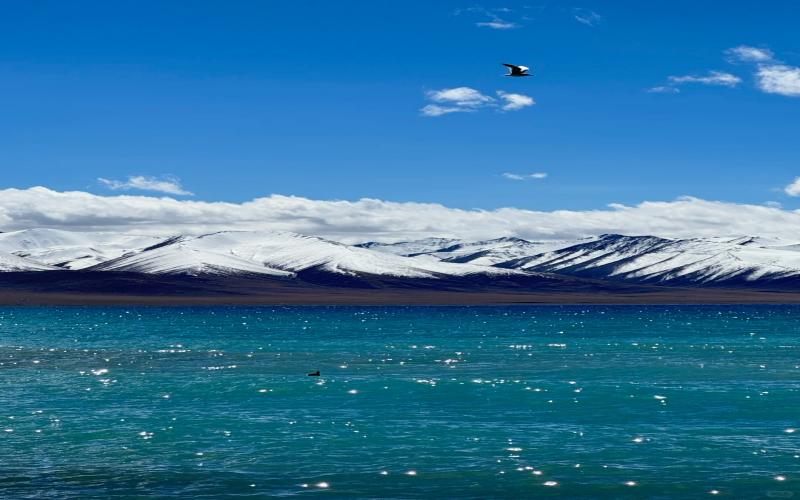
Namtso Lake
Day 8: Lhasa Departure
Your unforgettable journey concludes. After breakfast, transfer to Lhasa Airport or Railway Station for your onward trip. Carry home memories of sacred monasteries, turquoise lakes, golden Everest sunrises, and the vast beauty of the Tibetan Plateau.
Top Attractions Along the Route
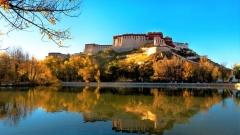
Potala Palace
The iconic symbol of Tibet, this 13-story palace contains over 1,000 rooms, 10,000 shrines, and 200,000 statues. The golden roofs and whitewashed walls are especially beautiful in the clear light of late autumn.
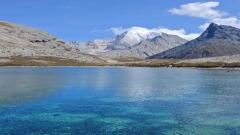
Yamdrok Lake
One of Tibet’s three sacred lakes, Yamdrok’s turquoise waters wind through the mountains like a giant jade dragon. In autumn, the golden hills surrounding the lake create a stunning color contrast.
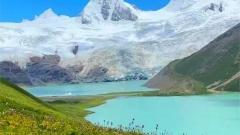
Karo La Glacier
A massive glacier that descends to within touching distance of the highway. The late autumn light makes the blue ice glow with otherworldly beauty.
Tashilhunpo Monastery
The largest monastery in Shigatse and the traditional seat of the Panchen Lama. The monastery’s giant Maitreya Buddha statue is one of the largest gilded statues in the world.
Gawula Pass
At 5,198 meters, this pass offers one of the most spectacular panoramic views in the Himalayas, with five 8,000-meter peaks visible on a clear day.
Rongbuk Monastery
The highest monastery in the world, dramatically situated at the foot of Everest’s north face. The monastery has been a spiritual and logistical base for Everest climbers for over a century.
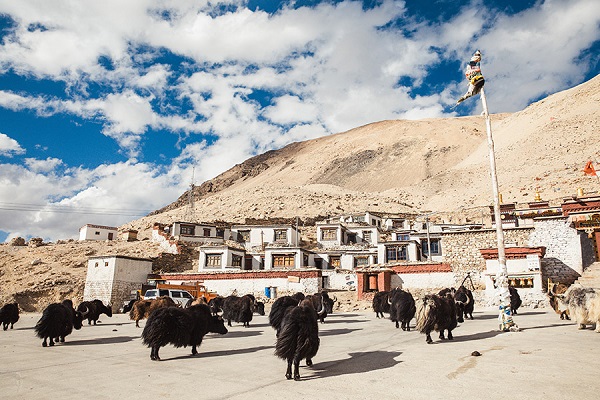
Everest Base Camp
The ultimate destination of the journey. Standing at 5,200 meters, looking up at the 8,848.86-meter summit of Mount Everest, is an experience that stays with you forever.
Weather and What to Pack
Late Autumn Weather Conditions
Late autumn (October to early November) offers some of the best weather of the year for a Tibet Everest Base Camp overland tour. Here’s what you can expect:
– Daytime temperatures: 10–16°C (50–61°F) at lower elevations, 0–8°C (32–46°F) at Everest Base Camp
– Nighttime temperatures: -5 to -12°C (23–10°F) at Everest Base Camp
– Precipitation: Very low, typically less than 20mm for the month of October
– Sunshine: Abundant, with clear blue skies on most days
– Wind: Can be strong at high passes and Everest Base Camp, especially in the afternoon
Essential Packing List
– Warm clothing: Thermal base layers, fleece jacket, down jacket, windproof and waterproof outer shell
– Headwear: Warm beanie hat, sun hat, neck gaiter or scarf
– Handwear: Warm gloves (preferably two layers)
– Footwear: Sturdy, waterproof hiking boots with good insulation
– Sleeping gear: Warm sleeping bag rated to at least -10°C (14°F) for the night at Everest Base Camp
– Sun protection: High-factor sunscreen, lip balm with SPF, UV-protective sunglasses
– Medications: Altitude sickness medication (Diamox), painkillers, basic first aid kit, any personal medications
– Electronics: Camera with extra batteries (batteries drain quickly in cold weather), power bank, phone
– Documents: Passport, Tibet Travel Permit, Alien Travel Permit, other required permits
– Miscellaneous: Water bottle or hydration system, energy snacks, headlamp, daypack
Altitude Sickness: Prevention and Management
Altitude sickness is a serious concern on any Tibet overland tour with Everest Base Camp. The journey takes you from 3,650 meters in Lhasa to over 5,200 meters at Everest Base Camp, and proper acclimatization is essential.
Prevention Tips
– Ascend gradually: The standard itinerary with two days in Lhasa, then stops in Gyantse, Shigatse, and Tingri before Everest is designed for proper acclimatization
– Stay hydrated: Drink at least 3–4 liters of water per day
– Avoid alcohol and smoking: Both worsen altitude sickness
– Eat light, high-carbohydrate meals: Your body uses more energy at altitude
– Take it easy: Don’t overexert yourself, especially in the first few days
– Consider medication: Diamox (acetazolamide) can help prevent altitude sickness — consult your doctor before your trip
Symptoms to Watch For
Mild symptoms include headache, dizziness, nausea, fatigue, and difficulty sleeping. These are common at altitude and usually improve with rest and acclimatization. However, if symptoms worsen or if you experience severe headache, vomiting, shortness of breath at rest, or confusion, you must descend immediately — these can be signs of life-threatening altitude sickness.
Permits and Logistics
A Tibet late autumn overland tour with Everest Base Camp requires several permits and careful logistical planning. As of 2026, independent travel in Tibet is not permitted — all travelers must be part of an organized tour with a licensed Tibetan travel agency.
Required Permits
1. Tibet Travel Permit: The basic permit required for all travel in Tibet
2. Alien Travel Permit: Required for travel outside Lhasa, including to Shigatse and Everest
3. Border Permit: Required for the Everest region, which is near the Nepal border
4. Military Permit: Sometimes required for certain border areas

Documents for foreigners entering Tibet
Your tour operator will arrange all necessary permits, but you’ll need to provide passport details well in advance (usually at least 15–20 days before your trip).
How to Get There
Most travelers fly to Lhasa from major Chinese cities like Beijing, Shanghai, Chengdu, or Guangzhou. There are also flights from Kathmandu, Nepal. Alternatively, you can take the Qinghai-Tibet Railway to Lhasa, which is a spectacular journey in its own right and allows for more gradual altitude acclimatization.
Planning Your Tibet Late Autumn Everest Tour
When planning your tour, timing is everything. Here are some key considerations:
Best Time in Late Autumn
– Early to mid-October: The sweet spot — excellent weather, good visibility, and still relatively mild temperatures. This is the most popular time, so book early.
– Late October: Still great weather and visibility, with fewer crowds. Temperatures are colder, especially at night, but still manageable with proper gear.
– Early November: Clear skies continue, but temperatures drop significantly. The yak tent accommodations at Everest Base Camp typically close in late October, so you’ll need to stay in more basic guesthouses or bring extra warm gear.
Tour Duration
We recommend allowing at least 8–10 days for the complete Lhasa–Everest–Lhasa circuit. This gives you enough time for proper acclimatization, leisurely exploration of the sites, and some buffer time in case of weather delays or road conditions.
Choosing a Tour Operator
Selecting a reputable, experienced Tibetan tour operator is crucial for a safe and enjoyable trip. Look for operators with:
– Proper licensing from the Tibet Tourism Bureau
– Experienced English-speaking Tibetan guides
– Well-maintained vehicles with experienced drivers
– Good reviews from past travelers
– Transparent pricing with no hidden fees
Conclusion
A Tibet late autumn overland tour with Everest Base Camp is more than just a trip — it’s a journey to the roof of the world that will stay with you for a lifetime. From the spiritual atmosphere of Lhasa to the turquoise waters of Yamdrok Lake, from the ancient monasteries of Gyantse and Shigatse to the overwhelming majesty of Mount Everest, every moment of this journey is filled with wonder.
Late autumn is the perfect time to experience this incredible adventure. The clear skies, golden light, and crisp mountain air create ideal conditions for both sightseeing and photography, while the gradual overland approach allows you to acclimatize safely and witness the full spectrum of Tibet’s diverse landscapes.
Whether you’re a seasoned traveler seeking your next great adventure, a photographer chasing the perfect shot, or simply someone who dreams of standing beneath the world’s highest mountain, this journey delivers a truly unforgettable experience.
The road to Everest is long, and the altitude is high, but the reward — standing beneath the towering north face of the world’s highest peak under a sky so clear and blue it seems to go on forever — is more than worth the journey.