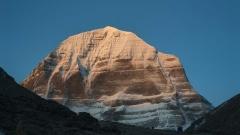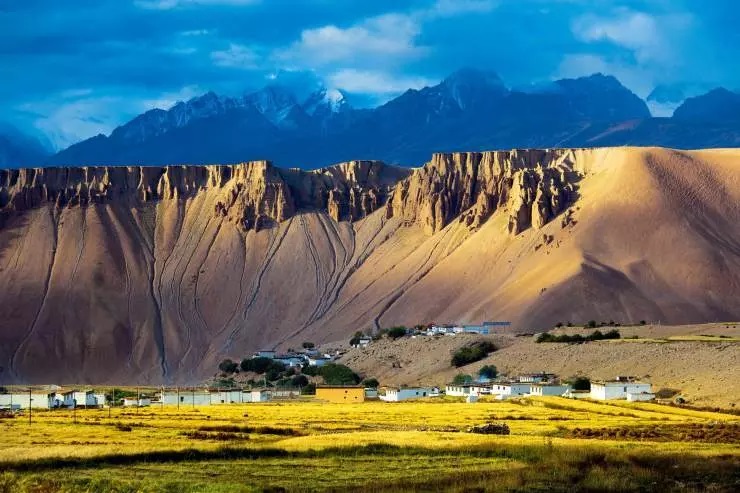

From late September to early November, Tibet enters a p eriod of extraordinary beauty. The summer monsoon fades away, the skies become intensely blue, the air turns dry and transparent, and the landscape transforms into a breathtaking combination of golden forests, turquoise lakes, snow-covered mountains, and ancient monasteries illuminated by warm sunlight. Autumn is widely considered one of the best seasons for Tibet travel because it combines comfortable weather, excellent visibility, fewer crowds, and unforgettable scenery.
Key Takeways
- Autumn is one of the best seasons to visit Tibet because of its stable weather, clear skies, comfortable daytime temperatures, and exceptional visibility.
- The Tibetan landscape transforms into a spectacular “three-color world” of golden forests, deep blue lakes, and snow-white Himalayan peaks.
- Nyingchi, Lhasa, Yamdrok Lake, Namtso Lake, and Mount Everest Base Camp are among the best destinations for an autumn Tibet tour.
- Autumn provides some of the best photography conditions of the year, with golden sunlight, sharp mountain views, and colorful landscapes.
- Travelers can experience authentic Tibetan culture during the harvest season, including traditional festivals, farming activities, and monastery rituals.
Why Autumn Is The Best Season To Visit Tibet?
Many travelers wonder when is the best time to visit Tibet. While every season offers a different experience, autumn has a unique combination of natural beauty and travel comfort that is difficult to match.
During summer, Tibet receives more rainfall because of the influence of the Asian monsoon. Although the plateau becomes greener and more vibrant, clouds and occasional rain can reduce visibility, especially for travelers hoping to see distant Himalayan peaks.
By autumn, the weather becomes much more stable. The heavy summer clouds disappear, leaving behind the famous Tibetan blue sky. Mountains appear clearer, lakes reflect the surrounding landscape like mirrors, and long-distance views become dramatically improved. This is especially important for destinations such as Mount Everest Base Camp, Namcha Barwa, Yamdrok Lake, and Namtso Lake, where clear weather can completely transform the travel experience.
Autumn is also a comfortable season for exploring Tibet’s cultural sites. The daytime temperature in Lhasa and lower-altitude regions is generally pleasant, allowing visitors to walk through monasteries, old towns, and scenic areas without the intense summer heat or extreme winter cold.
However, Tibet’s famous saying “one day sees four seasons” remains true. The difference between daytime and nighttime temperatures can be significant, especially at higher elevations. Warm sunshine during the day may be followed by freezing temperatures after sunset, so proper clothing preparation is essential.
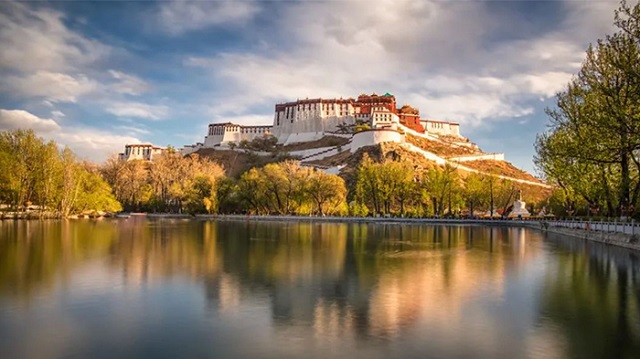
Potala Palace in Autumn
Tibet’s Autumn Weather: Clear Skies And Comfortable Exploration
The autumn travel season in Tibet usually begins in late September and continues into early November. During this period, most regions experience dry weather, abundant sunshine, and excellent visibility. In Lhasa, located at approximately 3,650 meters above sea level, autumn days are usually comfortable for sightseeing. Temperatures often allow travelers to explore attractions such as the Potala Palace, Jokhang Temple, and Barkhor Street on foot.
The biggest advantage of autumn weather is not simply temperature—it is the quality of the atmosphere. The air becomes exceptionally clear, allowing travelers to see mountain ranges, valleys, and lakes in incredible detail.
For photographers, hikers, and nature lovers, this clarity creates some of Tibet’s most dramatic scenery. Snow peaks stand sharply against dark blue skies, prayer flags appear brighter, and landscapes seem almost unreal because of the strong contrast between colors.
At night, temperatures can drop below freezing in high-altitude destinations such as Namtso Lake, Nagqu, and Everest Base Camp. Travelers should prepare for cold mornings and evenings even when daytime conditions feel pleasant.
The best strategy is dressing in layers:
- A thermal base layer for warmth
- A fleece sweater or lightweight down jacket for insulation
- A windproof outer jacket for protection against plateau winds
This flexible approach allows travelers to stay comfortable throughout changing conditions.
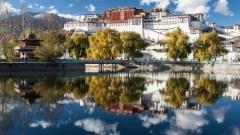
The Golden Season: Tibet’s Three-Color Autumn Landscape
Autumn transforms Tibet into a spectacular world of three dominant colors: gold, blue, and white.
Golden Forests And Valleys
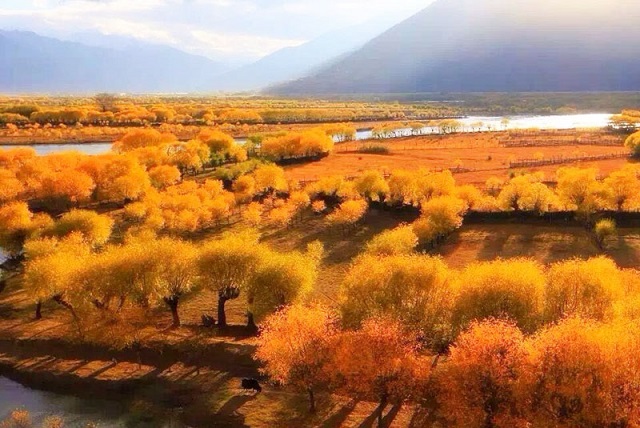
The golden color of autumn is most impressive in eastern Tibet, especially Nyingchi. Rivers, forests, and valleys that are green during summer gradually become covered with shades of yellow, orange, and red.
Poplar trees, willow forests, larch trees, and alpine vegetation create breathtaking scenery along roads and riverbanks. The Niyang River Valley becomes one of Tibet’s most beautiful autumn landscapes, where golden forests surround winding rivers and snow-covered mountains rise in the distance.
The countryside around Lhasa also becomes more attractive during this season. Parks, monastery gardens, and riverside areas are filled with golden leaves, creating a peaceful atmosphere that perfectly matches Tibet’s spiritual character.
Blue Lakes Under Endless Skies
The second color of Tibetan autumn is blue.
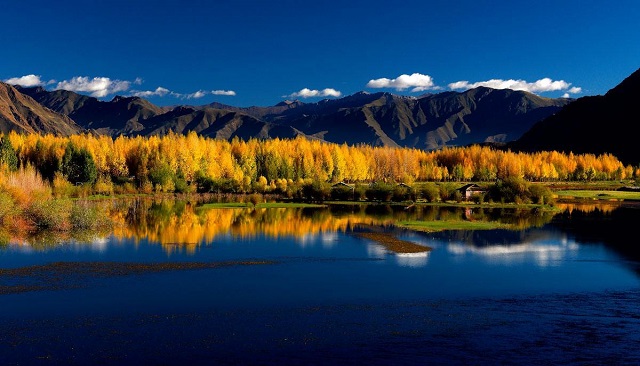
The high-altitude lakes of Tibet become even more spectacular when reflected against cloudless autumn skies. Yamdrok Lake, Namtso Lake, and Basong Tso appear in shades ranging from turquoise to deep sapphire blue.
Yamdrok Lake is particularly famous during autumn. From the mountain pass above the lake, visitors can see the bright blue water winding through golden valleys like a giant turquoise ribbon. The contrast between the lake, grasslands, and snow-covered mountains creates one of the most iconic views in Tibet.
White Snow Peaks Against Golden Valleys
The third color is white.
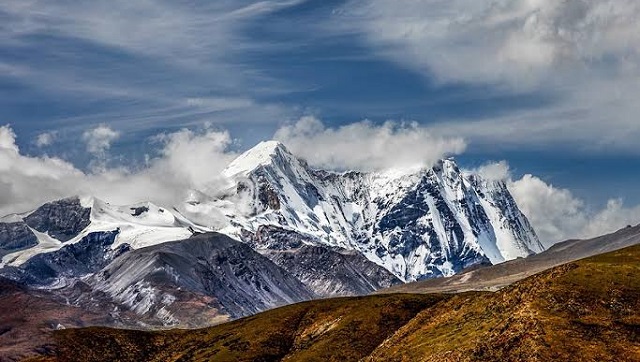
As autumn progresses, early snowfall begins to decorate the Himalayas and Nyenchen Tanglha mountain range. Snow-covered peaks create a stunning contrast with golden forests and grasslands below.
This combination of autumn colors and winter snow is one of Tibet’s greatest visual experiences. Travelers can often see forests, glaciers, lakes, and snow mountains within the same journey.
Why Autumn Is Perfect For Photography In Tibet
For photographers, autumn is arguably the most rewarding season to capture Tibet.
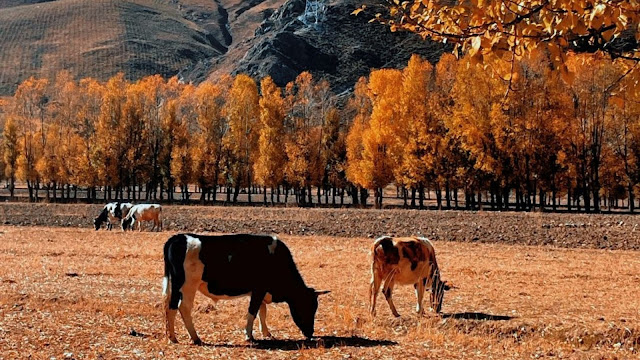
The sunlight during this period has a special quality. Because the sun sits lower in the sky compared with summer, it creates softer golden tones and longer shadows. Landscapes appear more three-dimensional, and portraits benefit from warm natural lighting.
The famous “golden hour” effect lasts longer, giving photographers more opportunities to capture dramatic scenes.
Some of the best photography subjects in autumn include:
- Golden poplar forests around Nyingchi
- Sunrise over Mount Namcha Barwa
- The reflection of mountains in Basong Tso
- Pilgrims walking around Jokhang Temple
- Prayer flags against deep blue skies
- Sunset views of Yamdrok Lake
- Mount Everest glowing under morning sunlight
A wide-angle lens is useful for capturing Tibet’s enormous landscapes, while a telephoto lens helps photograph distant peaks, monasteries, and wildlife.
A polarizing filter is also highly recommended because it enhances the contrast of Tibetan skies and reduces reflections from lakes.
Photography Tips For Capturing Autumn Tibet
Autumn Tibet is a paradise for photographers, but preparation makes a significant difference.
Best Shooting Times
The most beautiful light usually appears:
- Early morning after sunrise
- Late afternoon before sunset
During these periods, mountains receive warm golden light, shadows become softer, and landscapes appear more dramatic.
Recommended Photography Equipment
Useful equipment includes:
- Wide-angle lens for mountains and lakes
- Telephoto lens for distant peaks and wildlife
- Tripod for sunrise and sunset photography
- Polarizing filter for enhancing lake reflections
Respect Photography Etiquette
Tibet is a deeply spiritual region.
When photographing:
- Ask permission before taking close portraits of local people
- Avoid disturbing religious activities
- Follow photography rules inside monasteries
- Respect pilgrims and monks
A meaningful Tibet photograph is not only about scenery—it is about capturing the connection between people, culture, and landscape.
Autumn Culture In Tibet: Harvest, Festivals, And Local Traditions
Autumn in Tibet is not only a season of natural beauty. It is also an important cultural period for Tibetan communities.
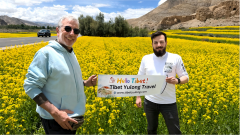
After months of farming, Tibetan villages enter the harvest season. Barley and wheat fields turn golden, and families gather together to collect crops. For visitors, this provides a rare opportunity to see traditional rural life beyond the famous monasteries and landscapes.
Wangguo Festival: Celebrating The Harvest
One of Tibet’s most meaningful autumn-related celebrations is the Wangguo Festival, also called the Ongkor Festival.
The festival dates back more than 1,500 years and celebrates the end of the farming season. The name means “walking around the fields,” reflecting the tradition of villagers circling their farmland while praying for a successful harvest.
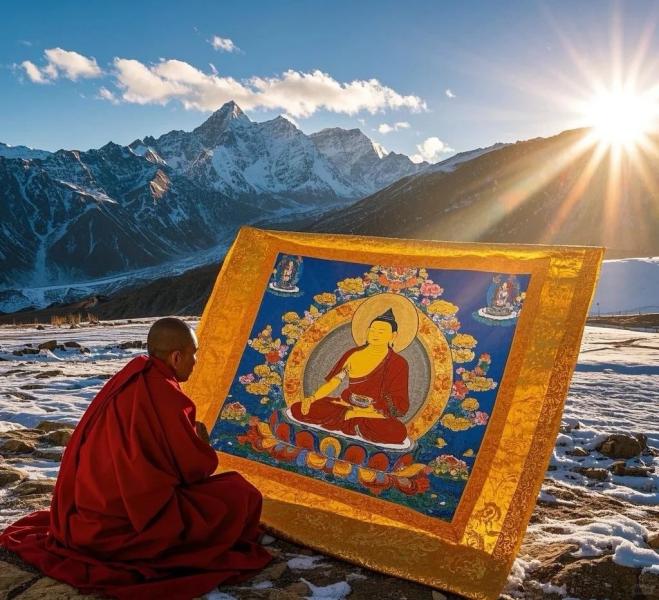
During the festival, local people wear traditional Tibetan clothing and carry scriptures, thangkas, and symbolic harvest decorations. The celebration often includes horse racing, Tibetan opera, singing, dancing, and community gatherings.
For international travelers, experiencing Wangguo Festival offers something far beyond sightseeing. It provides a chance to witness Tibetan culture as a living tradition connected deeply with agriculture, spirituality, and community.
Everyday Autumn Life In Tibetan Villages
Outside festivals, autumn is also a time when visitors can observe ordinary Tibetan life.
Farmers work together in fields, monasteries become more active with religious offerings, and families prepare for the coming winter. Butter lamps shine inside temples, and villages become places of warmth and celebration before the colder months arrive.
Best Places To Visit Tibet In Autumn
To fully experience Tibet’s autumn beauty, travelers should explore beyond Lhasa and include different regions with unique landscapes.
Lhasa: The Golden Spiritual Heart Of Tibet
Lhasa is the natural starting point for most Tibet journeys.
At an altitude of approximately 3,650 meters, the city combines Tibetan culture, history, and spirituality. Autumn is an ideal time to explore its famous landmarks because the weather is comfortable and the atmosphere is especially peaceful.
The Potala Palace becomes even more impressive surrounded by golden autumn trees. The contrast between the white-and-red palace walls and the yellow leaves creates one of the most recognizable images of Tibet.
Norbulingka, the former summer palace of the Dalai Lamas, is another autumn highlight. Its gardens become filled with golden trees, quiet pathways, and beautiful palace architecture.
Recommended experiences in Lhasa:
- Walk the kora around Jokhang Temple with pilgrims
- Drink sweet tea at a traditional teahouse
- Visit Sera Monastery and watch the famous monk debates
- Photograph the Potala Palace surrounded by autumn colors
Nyingchi: The Switzerland Of Tibet
If one destination represents Tibetan autumn scenery, it is Nyingchi.
Located in southeastern Tibet at a relatively lower altitude, Nyingchi has forests, rivers, glaciers, and snow mountains. It is often called the “Switzerland of Tibet” because of its dramatic alpine scenery.
The best autumn colors usually appear from late September to October, although some valleys remain beautiful into November.
Niyang River Valley
The Niyang River Valley is one of the most beautiful autumn routes in Tibet.
The journey itself is the attraction. Along the highway, golden forests line the riverbanks, mountains rise in the background, and every turn reveals a new landscape.
Basong Tso Lake
Basong Tso is often described as the “Little Switzerland of Tibet.” The lake combines turquoise water, golden forests, snow-covered mountains, and Tibetan villages. Because it sits at a lower altitude compared with many other Tibetan lakes, it is also easier for many travelers to adapt.
Visitors can enjoy boat rides, viewpoints, and peaceful walks around the lake.
Namcha Barwa And Yarlung Tsangpo Grand Canyon
Autumn provides one of the best opportunities to see Namcha Barwa clearly. This legendary peak is famous because clouds often hide its summit. During autumn’s stable weather, visitors have a much higher chance of witnessing the mountain illuminated by sunrise.
Staying overnight in Suosong Village is one of the best ways to experience this magical moment.
Yamdrok Lake And Namtso Lake: Tibet’s Sacred Waters
The sacred lakes of Tibet are among the most unforgettable destinations in autumn.
Yamdrok Lake, located south of Lhasa, is famous for its bright turquoise color and dramatic mountain surroundings. In autumn, golden grasslands surround the lake, creating a perfect contrast between blue water and golden land.
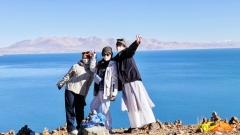
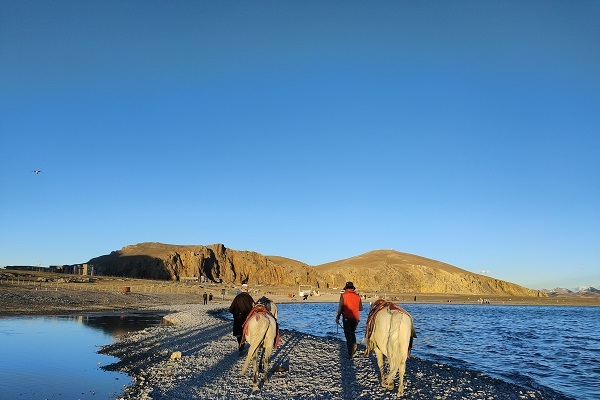
Namtso Lake, one of the highest saltwater lakes in the world, offers a more dramatic experience. The vast lake stretches toward the horizon, while the Nyenchen Tanglha Mountains form a powerful backdrop. Although the nights are extremely cold, autumn days provide some of the clearest views of this sacred landscape.
Mount Everest Base Camp: The Ultimate Autumn Adventure
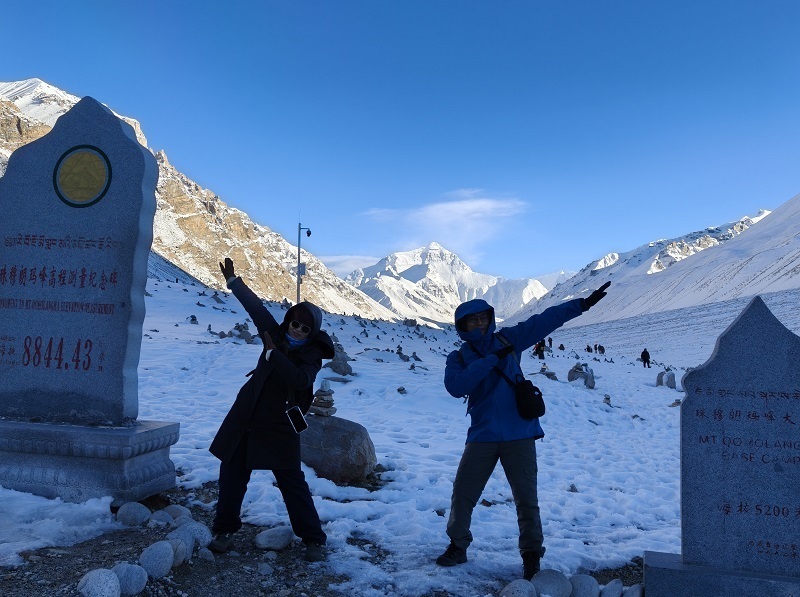
For travelers seeking adventure, autumn is one of the best times to visit Everest Base Camp.
After the summer monsoon season, visibility improves significantly. On clear days, Mount Everest rises dramatically above the surrounding Himalayan landscape. The journey to Everest Base Camp itself is unforgettable. Travelers cross high mountain passes, visit Tibetan villages, and experience some of the most spectacular scenery on Earth.
The mornings are usually the best time to see Everest because the sky is often clearer before afternoon winds and clouds develop.
Recommended 10-Day Tibet Autumn Itinerary
For international travelers visiting Tibet for the first time, a balanced itinerary should combine natural landscapes, Tibetan culture, and gradual altitude adaptation.
Day 1: Arrival In Chengdu
Most international travelers enter Tibet through mainland Chinese gateway cities such as Chengdu. Spend time resting, preparing travel documents, and adjusting before entering the plateau.
Day 2-4: Nyingchi, Namcha Barwa, And Lulang
Begin the journey in Nyingchi, one of the most comfortable regions of Tibet because of its relatively lower altitude and forest-covered landscapes.
Explore:
- Niyang River Valley
- Lulang Forest
- Basong Tso Lake
- Namcha Barwa viewpoints
- Tibetan villages surrounded by autumn forests
Starting in Nyingchi allows travelers to experience spectacular scenery while gradually adapting to altitude.
Day 5: Nyingchi To Lhasa
Travel toward Lhasa through one of Tibet’s most scenic routes. Along the way, enjoy mountain passes, rivers, valleys, and changing landscapes.
Day 6: Explore Lhasa
Visit the cultural heart of Tibet:
- Potala Palace
- Jokhang Temple
- Barkhor Street
- Sera Monastery
Autumn is an especially beautiful time to explore Lhasa because the golden sunlight creates a peaceful atmosphere around the city’s historic sites.
Day 7: Lhasa To Yamdrok Lake
Cross mountain passes and visit Yamdrok Lake, one of Tibet’s most sacred lakes.
The autumn scenery here is unforgettable: deep blue water, golden grasslands, glaciers, and snow-covered mountains create a landscape that represents the spirit of the Tibetan plateau.
Day 8: Namtso Lake Adventure
Travel north to Namtso Lake and experience one of Tibet’s most dramatic natural environments.
The combination of the sacred lake, golden plains, and the Nyenchen Tanglha Mountains creates an atmosphere of extraordinary silence and beauty.
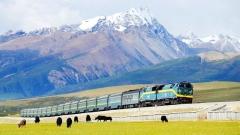
Day 9: Lhasa To Qinghai-Tibet Railway
For travelers with enough time, taking the Qinghai-Tibet Railway is a memorable way to leave Tibet.
The journey across the plateau offers views of:
- Vast grasslands
- Snow mountains
- Wildlife areas
- Remote Tibetan landscapes
Day 10: Arrival And Departure
Continue your journey from Xining or another mainland Chinese city.
This route combines Tibet’s most famous highlights while allowing enough time for altitude adjustment and relaxation.
Essential Packing Guide For Tibet In Autumn
Packing correctly is one of the most important parts of preparing for Tibet.
The plateau climate changes quickly. A sunny afternoon can become a freezing evening within a few hours.
Clothing
The best approach is a layering system.
Recommended clothing:
- Thermal underwear as a base layer
- Fleece sweater or wool layer
- Lightweight down jacket
- Windproof waterproof outer jacket
- Comfortable hiking pants
- Warm hat, gloves, and scarf
This allows you to adjust easily between warm daytime sightseeing and cold mountain evenings.
Shoes And Walking Equipment
Many Tibet attractions involve walking on uneven surfaces, stone paths, monastery courtyards, and mountain trails.
Bring:
- Comfortable walking shoes
- Hiking boots for outdoor routes
- Extra socks
- Small backpack for daily excursions
Sun Protection
The Tibetan plateau receives extremely strong sunlight because of the high elevation.
Essential items include:
- High SPF sunscreen
- Sunglasses with UV protection
- Lip balm
- Sun hat
Even when temperatures feel cool, UV exposure can be intense.
Altitude Sickness Prevention Tips
Altitude is one of the biggest concerns for first-time visitors to Tibet.
Lhasa itself is already above 3,600 meters, and destinations such as Everest Base Camp and Namtso Lake are much higher.
Helpful advice:
Take Time To Adapt
Do not rush immediately after arrival.
Spend your first days walking slowly, drinking enough water, and allowing your body to adjust.
Stay Hydrated
Dry plateau air can cause dehydration quickly. Drink water regularly and avoid excessive alcohol during the first days.
Sleep Well
Good rest helps your body adapt. Avoid overexertion immediately after arriving.
Consider A Lower-Altitude Arrival
Some travelers choose to begin their Tibet journey in Nyingchi because it has a lower elevation than Lhasa and offers a gentler introduction to the plateau environment.
Tibet Travel Permits And Transportation Information
International visitors cannot travel independently throughout Tibet. A Tibet Travel Permit is required, and travelers must arrange their journey through an authorized travel agency.
Additional permits may be required for certain areas, including:
- Mount Everest Base Camp
- Border regions
- Some remote areas of western Tibet
A professional Tibet travel company can arrange:
- Tibet Travel Permit
- Transportation
- Hotels
- Local guides
- Border permits when required
Booking early is recommended, especially during the autumn high season.
Money, Internet, And Daily Travel Tips
The official currency used in Tibet is the Chinese Yuan (RMB).
Travelers should carry some cash because:
- Credit cards are not accepted everywhere
- Remote areas may have limited payment options
- Small shops and local restaurants may prefer mobile payments or cash
Internet access is available in major cities such as Lhasa and Nyingchi, but remote mountain areas may have weaker connections.
For international visitors, purchasing a local SIM card or arranging mobile data in advance can make travel easier.
Respecting Tibetan Culture During Your Journey
Tibet is not simply a scenic destination. It is a region with a deep spiritual identity.
Visitors should respect local customs:
- Walk clockwise around monasteries, stupas, and mani stones
- Remove hats and sunglasses when entering temples
- Avoid touching religious objects
- Ask permission before photographing people
- Use respectful gestures when pointing toward sacred items
Small acts of respect create more meaningful interactions with local communities.
Hidden Autumn Gems Beyond The Classic Routes
Although Lhasa, Nyingchi, and Everest receive the most attention, Tibet still has many less-known autumn treasures.
Nyingchi’s Autumn Villages
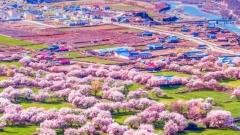
Many travelers know Nyingchi for its famous spring peach blossoms, but autumn reveals another side of these villages. Places such as Gala Village and nearby Tibetan settlements become peaceful worlds of golden fields, colorful trees, and traditional farming landscapes.
Visitors can experience rural Tibet at a slower pace, away from large crowds.
Markam’s Ancient Salt Fields
Located in eastern Tibet near the Sichuan border, Markam is famous for its traditional salt production. In autumn, the white salt terraces contrast beautifully with golden mountains and deep blue skies.
The journey is long, but for travelers seeking authentic and less-visited Tibet, it offers a completely different experience.
Yangbajain Hot Springs
After several days of high-altitude exploration, Yangbajain Hot Springs provide a relaxing escape. Imagine sitting in warm mineral water while surrounded by snow-covered mountains and watching the autumn sunset over the plateau.
It is one of Tibet’s most unique experiences.
Why Tibet Yulong Is A Great Choice For Your Autumn Journey
For international travelers who want a well-organized and authentic Tibet experience, choosing a professional local travel company can make the journey smoother and more enjoyable.
Tibet Yulong Travel specializes in customized Tibet tours for overseas visitors, offering carefully designed routes that combine Tibet’s cultural heritage, natural landscapes, and local experiences.
An autumn Tibet tour with Tibet Yulong can include classic destinations such as Lhasa, Nyingchi, Yamdrok Lake, Namtso Lake, and Everest Base Camp, while also helping travelers manage important details such as permits, transportation, accommodation, and altitude planning.
For first-time visitors, the greatest value of a professional Tibet travel service is not only convenience. It is the ability to experience Tibet more deeply—with knowledgeable local guidance, carefully selected routes, and opportunities to discover places beyond ordinary sightseeing.
Autumn Is Tibet At Its Most Beautiful
A Tibet autumn journey is more than a holiday. It is an experience of entering a landscape where nature, spirituality, and human tradition exist together. During this golden season, Tibet reveals a rare balance. The weather is comfortable, the skies are clear, the mountains are visible, and the landscapes are painted with unforgettable colors.
You may walk through golden forests in Nyingchi, watch pilgrims circle ancient temples in Lhasa, stand beside turquoise lakes beneath snow-covered peaks, or witness the first sunlight touching Mount Everest.
But perhaps the greatest gift of traveling Tibet in autumn is the feeling of silence. The plateau encourages travelers to slow down. The vast landscapes create space for reflection. The warmth of Tibetan communities adds meaning beyond the scenery.
The golden season does not last forever. Leaves eventually fall, winter arrives, and the plateau returns to its quiet frozen beauty. But for a few precious weeks each year, Tibet becomes a world of golden valleys, blue skies, and shining mountains—a destination that stays in your memory long after you leave.