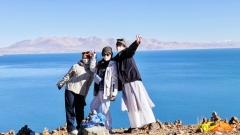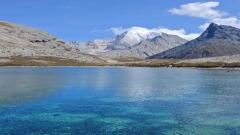

Driving along National Highway G219 (The Xinjiang-Tibet Highway)—often dubbed the “Sky Road”—travelers emerge from rugged mountain passes and desert gravel plains to be greeted by a vast expanse of shimmering blue water: Pangong Tso (Pangong Lake).
In Tibetan, Pangong Tso means “Long-Necked Swan” or “Enchanting Narrow Lake.” Sitting high on the plateau, it captivates visitors not only with its striking alpine hues but also with its unique geographic and ecological character.
Key Takeaways
- Geographic & Cross-Border Wonder: Pangong Tso (also known as Pangong Lake) is a long, narrow alpine lake located in Rutog County, Ngari Prefecture, Tibet. Approximately two-thirds of the lake lies within China, while the remaining western third extends into Indian-administered Kashmir.
- The “Dual Salinity” Phenomenon: The lake features a rare water quality contrast—the eastern portion inside China consists of clear, sweet freshwater that supports rich aquatic life, whereas the western end turns saline, bitter, and barren.
- Wildlife Sanctuary: Home to the famous Bird Island, the lake attracts tens of thousands of migratory birds—including bar-headed geese and brown-headed gulls—every spring and summer (May to July) for breeding and nesting.
- Unrivaled Road Trip Experience: National Highway G219 runs directly along the shore of Pangong Tso, where the lake shifts through brilliant shades of turquoise, navy, and emerald under the high-altitude sun.
Geographic Marvel: A Transboundary Lake with Dual Salinity
Situated at an elevation of approximately 4,240 meters, Pangong Tso stretches over 150 kilometers from east to west while remaining extraordinarily narrow from north to south (shrinking to just 40 meters at its narrowest point). It resembles a bright blue ribbon woven between the Karakoram and Gangdise mountain ranges.
A Cross-Border Alpine Lake
Pangong Tso is an international boundary lake. Roughly two-thirds of its total surface area lies inside Rutog County in Ngari, Tibet, while the remaining western section extends into the Ladakh region.
The Mysterious “East-Fresh, West-Saline” Water Quality
The most fascinating natural aspect of Pangong Tso is its dual-salinity composition:
Eastern Section (Inside China): Fed continuously by snowmelt from surrounding high peak glaciers and freshwater rivers, the eastern waters remain fresh, clear, and sweet. This environment fosters abundant aquatic vegetation and native fish species, such as the Schizothorax (Pangong naked carp).
Western Section (Controlled by India): Lacking major freshwater inflows and subject to high evaporation rates, the water gradually transitions into saline and alkaline water. In this section, fish cannot survive, and the shoreline is largely barren.
This striking contrast—teeming with life on one end while desolate on the other—makes Pangong Tso a rare hydrological marvel.
Top Highlights and Experiences at Pangong Tso
The Avian Paradise of Bird Island
Scattered across the Chinese sector of Pangong Tso are several small islets, the most famous being Bird Island. Thanks to the abundant freshwater fish, lush vegetation, and natural isolation from land predators, these islands serve as a vital sanctuary for high-altitude migratory birds. From May to July each year, tens of thousands of migratory birds—such as bar-headed geese, brown-headed gulls, crested grebes, and ruddy shelducks—gather here to nest and hatch their young. Seeing flock after flock take flight against the deep blue sky is a breathtaking wildlife spectacle.
Ever-Changing Lake Colors
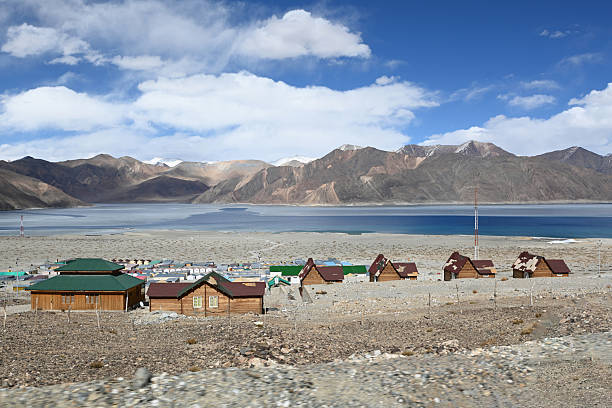
Due to the extreme clarity of the air and water, Pangong Tso reflects sunlight with extraordinary radiance. Depending on the time of day, cloud cover, and seasonal shifts, the water transforms through shades of deep navy, sapphire, turquoise, and emerald green, set against a backdrop of distant snow-capped peaks.
Scenic Lakeside Driving on G219
A long stretch of National Highway G219 runs directly alongside the banks of Pangong Tso. Driving down this smooth asphalt road with rugged plateau mountains on one side and gleaming waters on the other provides a scenic, refreshing break from the long drive across the plateau.
Practical Travel Tips for Visiting Pangong Tso
Best Time to Visit: May through September offers the best weather and conditions. Visit between May and July to watch migratory birds on Bird Island, or come in August and September for clear skies and vibrant water colors. Winter brings ice formations, but temperatures plummet and snow can block mountain passes.
Permit & Identity Requirements: Because Pangong Tso is located in a sensitive border region, all visitors must carry their original ID/Passport (plus Tibet Travel Permit for international travelers) and a Border Travel Permit specifying “Ngari Prefecture” and “Rutog County.”
Ecological Protection: The high-altitude ecosystem here is extremely fragile. Please pack out all personal trash. When viewing wildlife near Bird Island, keep a respectful distance and never disturb nesting birds or touch eggs.
Sun Protection & Altitude Preparation: The lake sits above 4,240 meters, where winds can be strong and UV radiation intense. Bring a windproof jacket, warm layers, sunglasses, high-SPF sunscreen, and maintain a steady pace to prevent altitude sickness.