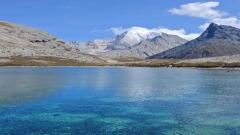
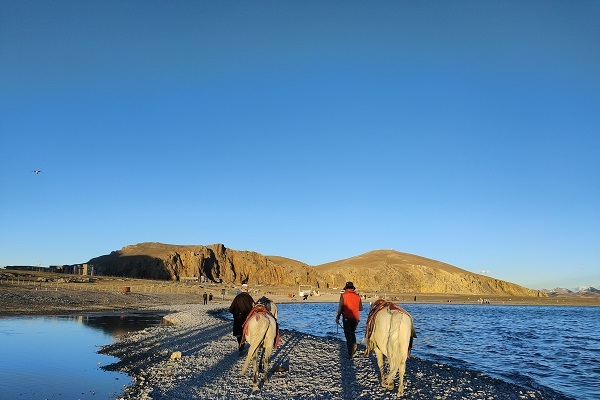
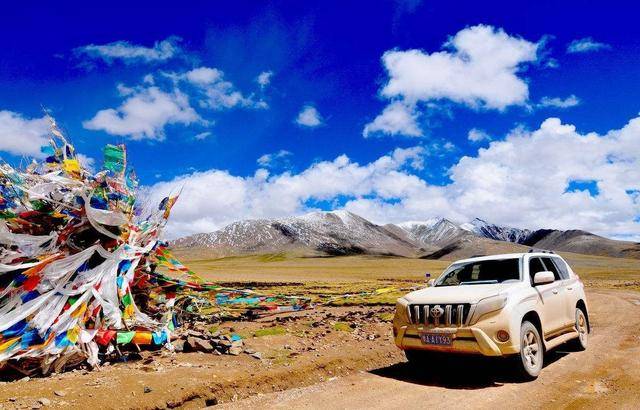
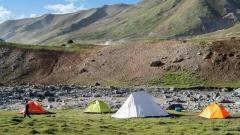
To truly understand the history of Tibet, one must begin with the geological epic of the land itself. During the Paleozoic and Mesozoic eras, hundreds of millions of years ago, the Qinghai-Tibet Plateau did not exist. Instead, the area was submerged under a vast ocean known as the Tethys Ocean.
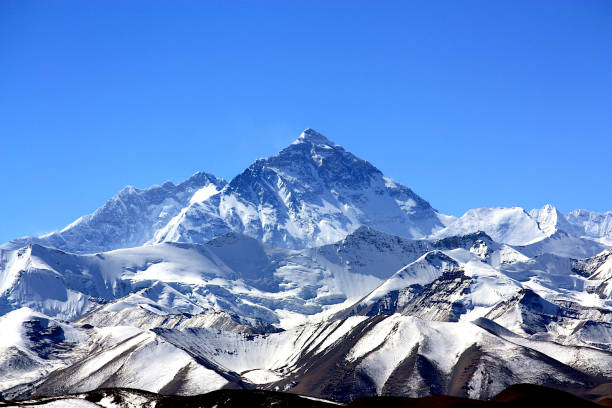
Approximately 50 million years ago during the Eocene epoch, the Indian Plate drifted rapidly northward and collided violently with the Eurasian Plate—one of the most dramatic continental collisions in Earth’s history. The immense compression caused the Earth’s crust to fold, fracture, and uplift significantly. Over tens of millions of years of tectonic activity, glacial erosion, and river carving, the seabed was pushed more than 4,000 meters above sea level. This created the “Roof of the World” and the “Third Pole of the Earth,” crowning the planet with the Himalayas and Mount Everest.
Today, marine fossils of shellfish, ammonites, and fish are frequently discovered in high-altitude strata across Ngari and Tingri. Suspended high in the mountains, these ancient relics stand as silent witnesses to the dramatic transformation of an ocean into the world’s highest plateau.
Key Takeaways
-
Geological Origins: Hundreds of millions of years ago, the region was the ancient Tethys Ocean. Tectonic collisions between the Indian and Eurasian plates raised the seabed, forming the “Roof of the World.”
-
Etymological Evolution: Native Tibetans historically referred to their land as “Bod.” In the Tang Dynasty, it was named “Tubo.” During the Yuan and Ming Dynasties, it was called “Ü-Tsang.” It was officially designated as “Xizang” (Tibet) during the Kangxi and Qianlong reigns of the Qing Dynasty.
-
Dawn of Civilization: Early humans settled along the Yarlung Tsangpo River, eventually giving rise to the ancient Yarlung tribes and the native Bon religion.
-
Glory of the Tibetan Empire: In the 7th century, Songtsen Gampo unified the plateau, created the Tibetan script, introduced Buddhism, built the Potala Palace and Jokhang Temple, and forged marriage alliances with the Tang Dynasty.
-
Central & Regional Governance: The Yuan Dynasty established the Xuanzheng Yuan (Bureau of Buddhist and Tibetan Affairs) to formally incorporate Tibet under central administration. The Qing Dynasty introduced the Imperial Resident Minister (Amban) and the Golden Urn system, shaping modern Tibetan geopolitical administration.
The Evolution of Names: Where Does “Tibet” Come From?
The name “Tibet” and its Chinese counterpart “Xizang” were not formed overnight; they evolved through indigenous endonyms, foreign transliterations, and imperial decrees across millennia:
1. Native Tibetan Endonym: “Bod”
Since ancient times, native Tibetans have referred to their land and ethnicity as “Bod” or “Bod Yul” (meaning “Land of Bod”). In the Tibetan language, this ancient root represents home and heritage. As the term spread through Sanskrit, Arabic, and neighboring steppe languages, it was transliterated into Tibet, Tibat, or Tobot—the direct etymological origin of the English word Tibet.
2. Tang Dynasty Period: “Tubo”
In historical Chinese records of the Tang Dynasty, the powerful regime established on the snowy plateau was referred to as “Tubo” (pronounced Tu-bo or Tu-fan). The character “Bo” was a direct phonetic rendering of the native term “Bod.” The prefix “Tu”is widely believed by linguists to stem from ancient Qiang, Turkic, or Mongolic honorifics used to signify a “great,” “high,” or “mighty” tribe or kingdom.
3. Yuan and Ming Dynasties: “Ü-Tsang”
During the Yuan and Ming Dynasties, the central government divided the region for administrative purposes. The central-western territories (modern-day Lhasa and Shigatse) were collectively called “Ü-Tsang”:
“Ü” : Derived from the Tibetan word Dbus, meaning “center” or “core region” (referring to the Lhasa area).
“Tsang” : Derived from the Tibetan word Gtsang, referring to the region along the upper reaches of the Yarlung Tsangpo River (the Shigatse area). Together, “Ü-Tsang” represented the core heartland of Tibet.
4. Qing Dynasty Official Naming: “Xizang”
During the reign of Emperor Kangxi in the Qing Dynasty, official court documents began adopting the term “Xizang”:
“Xi” : Denoted its geographic location on the southwestern frontier of China.
“Zang” : Borrowed from the traditional regional name “Tsang” (as in Ü-Tsang), while carrying literary connotations of “purity,” “treasure,” and “sanctuary” in the Chinese language.
In 1793 (the 58th year of the Qianlong reign), the Qing court promulgated the Twenty-Nine Articles for the Better Governing of Tibet. This official administrative statute formally codified “Xizang” as the official name of the region, a designation that continues to be used in Chinese today.
Early Civilization & The Tibetan Empire: The Rise of a High-Altitude Power
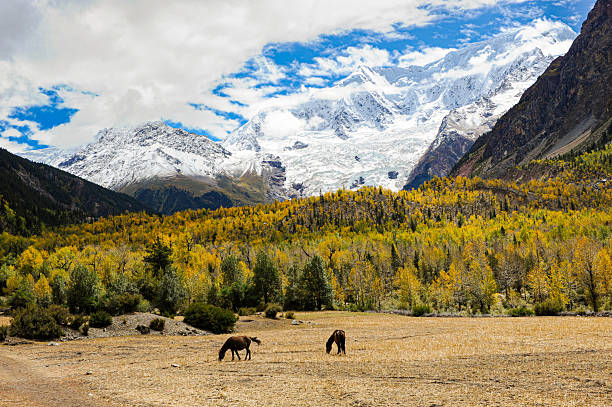
Long before written history, human activity flourished on the plateau during the Paleolithic and Neolithic periods, as evidenced by archaeological sites like Chokhorgyel in Lhasa, Karuo in Chamdo, and Lamig in Nyingchi. Ancient civilizations such as Zhangzhung emerged, nurturing the indigenous shamanistic tradition known as Bon.
1. Songtsen Gampo and Unification (7th Century AD)
Through migration and integration along the Yarlung Tsangpo River valley, the Yarlung tribe gradually grew in strength. In the early 7th century AD, the 32nd Tsenpo (King), Songtsen Gampo, unified the warring tribes across the plateau. He established the unified Tibetan Empire (Tubo) and moved the capital from Yarlung to Lhasa (then known as Asa or Rasa).
To transform the tribal confederation into a sophisticated empire, Songtsen Gampo introduced foundational reforms:
Creation of Tibetan Script: He dispatched his minister, Thonmi Sambhota, to India to study linguistics. Drawing from Indian scripts, Sambhota created the classical Tibetan writing system consisting of 30 consonants and 4 vowels.
Introduction of Buddhism & Cultural Exchange: Songtsen Gampo pursued strategic diplomatic alliances, marrying Princess Bhrikuti of Nepal and Princess Wencheng of the Tang Dynasty. The princesses brought sacred Buddhist statues (including the 12-year-old life-sized statue of Sakyamuni now enshrined in the Jokhang Temple), scriptures, advanced architectural techniques, calendar systems, medical treatises, and agricultural crafts.
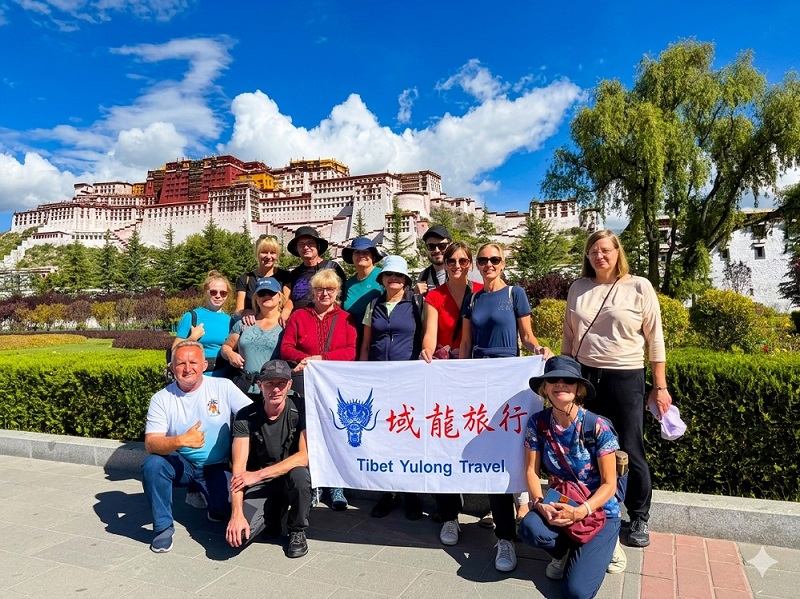
Construction of Sacred Monuments: He commissioned the original Red Mountain Palace (the predecessor of the Potala Palace) as well as the Jokhang and Ramoche Temples, laying the spiritual foundation for Tibetan Buddhism.
2. The Tang-Tibet Alliance and Imperial Collapse (8th–9th Centuries)
At its peak in the 8th century, the Tibetan Empire expanded its influence across Central Asia and the Hexi Corridor, engaging in both conflict and diplomacy with the Tang Dynasty. In 823 AD, the two empires erected the famous Tang-Tibet Peace Treaty Pillar outside the Jokhang Temple in Lhasa, declaring eternal friendship with the phrase “mindful of mutual assistance in times of distress, refraining from pillage and war.”
However, in the mid-9th century, the last Tsenpo, Langdharma, initiated a severe persecution of Buddhism. This triggered intense social unrest and religious backlash. Following Langdharma’s assassination in 842 AD, succession disputes and peasant rebellions fractured the empire, plunging Tibet into four centuries of fragmentation and local warlordism.
The Later Diffusion & Theocracy: Yuan, Ming, Qing, and Modern Times
Despite political fragmentation, Tibetan Buddhism experienced a major resurgence after the 10th century (known as the “Later Diffusion”). Influential Indian masters like Atisha traveled to Tibet, leading to the rise of major sects including the Sakya, Kagyu, and Gelug schools, which reshaped Tibetan society into a unique theocratic structure.
1. Yuan Dynasty (13th Century): Central Administrative Integration
In 1247 AD, Sakya Pandita met with the Mongol prince Koden in Liangzhou (modern-day Wuwei, Gansu) for historic summits that established the framework for Tibet’s inclusion into the imperial fold. Upon founding the Yuan Dynasty, the central government created the Xuanzheng Yuan to oversee Buddhist affairs and administrative governance in Tibet, appointing Phags-pa (fifth leader of Sakya) as Imperial Preceptor and establishing the Sakya administrative authority.
2. Ming Dynasty (14th–16th Centuries): Multiple Titles & The Gelug Renaissance
The Ming court adopted a policy of granting multiple titles to various religious leaders across Tibet, conferring honors upon Grand Dharmarajas to maintain regional stability. During this era, the religious reformer Je Tsongkhapa revitalized monastic discipline and founded the Gelug school (Yellow Hat sect). He built Ganden, Sera, and Drepung monasteries, establishing Gelug as the predominant Buddhist tradition in Tibet.
3. Qing Dynasty (17th–19th Centuries): Institutional Governance
In 1642, the 5th Dalai Lama established the Ganden Phodrang government with the support of the Khoshut Khanate. The Qing emperors Shunzhi and Kangxi formally conferred imperial titles upon the Dalai Lama and Panchen Lama, legitimizing their spiritual and temporal authority.
To safeguard Tibet’s borders, the Qing court dispatched troops to repel Dzungar invasions and Gurkha incursions. In 1727, the Qing government appointed the Amban (Imperial Resident Minister) to supervise local administration. In 1793, Emperor Qianlong issued the Twenty-Nine Articles for the Better Governing of Tibet, establishing the Golden Urn system to regulate the recognition process of reincarnated Living Buddhas and formalizing central legal and military supervision over Tibet.
4. Modern Era (20th Century to Present)
In the mid-20th century, the 17-Point Agreement was signed in 1951, marking the peaceful integration of Tibet. Feudal serfdom was abolished during the 1959 democratic reforms, and the Tibet Autonomous Region (TAR) was officially established in 1965, ushering the ancient plateau into an era of modern infrastructure development and cultural preservation.
The Enduring Legacy of the Snowland
The history of Tibet is an epic woven from geological wonders, rich cultural synthesis, and deep spiritual traditions. From the ancient waves of the Tethys Ocean to the imperial grand vision of Songtsen Gampo, and down to the endless streams of pilgrims circling the Jokhang Temple today, Tibet remains a land of profound historical resonance and timeless fascination.