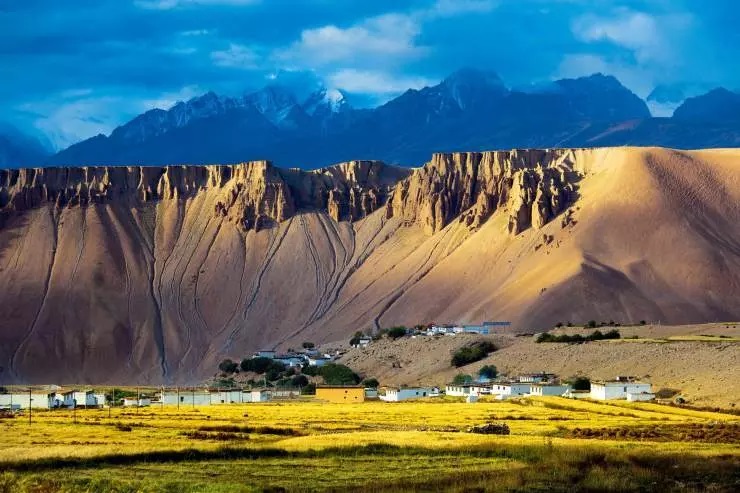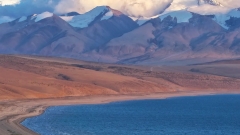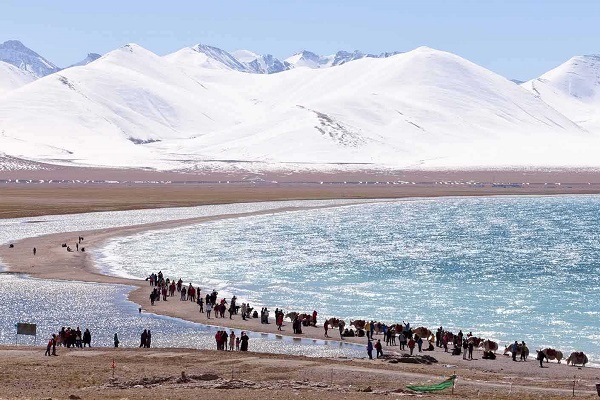

If National Highway G318 is China’s scenic avenue, National Highway G317 (Northern Sichuan-Tibet Highway) is a soul-stirring highway of Tibetan culture and rugged wilderness. Starting from the Chengdu Plain, G317 traverses Aba and Garze prefectures, crosses the Jinsha River into Chamdo and Nagqu in Tibet, and finally arrives in Lhasa. Along the way, it gathers majestic Buddhist sanctuaries, cliffside monasteries, centuries of living heritage, and untouched glacial peaks. Here is your complete guide to G317!
Key Takeaways
- Fusion of Culture & Wilderness: Unlike the scenic G318 South Route, the G317 North Route is renowned for its deep Tibetan Buddhist heritage, rich Kham history, and rugged, untamed landscapes, making it the ultimate overland route for off-the-beaten-path explorers.
- Four Must-Visit Highlights:
- Cultural & Spiritual: Seda Larung Gar Buddhist Academy (advance reservation required) and Dege Sutra Printing House (a living cultural treasure).
- Hidden Mountain Wonders: Zizhu Temple (a ancient Bon monastery perched on cliffside peaks) and Sapu Sacred Mountain (featuring iconic geometric pyramid-shaped glaciers).
- Higher Altitude Challenge: G317 runs at a higher average altitude than G318, crossing multiple high mountain passes. Travelers must plan a gradual acclimatization schedule.
- Itinerary & Vehicle Preparation: Allocate 8 to 10 days for the journey. A 4WD SUV with good ground clearance is strongly recommended for off-highway detours (such as mountain roads to Sapu Mountain or Zizhu Temple).
Why Choose G317 into Tibet? Deep Culture & Uncrowded Routes
Ultimate Tibetan Buddhist & Cultural Journey: G317 crosses the historic heartland of Kham culture and eastern Tibetan religious centers. It houses the world’s largest Tibetan printing house, ancient Bon cliffside temples, and sprawling red monastic valleys.
Avoid the Crowds, Experience Tranquility: Compared to the heavy traffic on G318 during peak summer months, G317 sees significantly fewer vehicles and tourists, allowing you to enjoy the quiet majesty of a true plateau road trip.
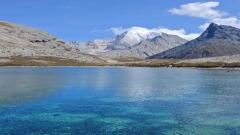
Cluster of Sacred Glaciers & Secret Valleys: In addition to cultural sites, G317 hides world-class natural landforms like Sapu Sacred Mountain and river canyons that rival polar landscapes.
Selected Highlights & Recommended Stops Along G317
Heading west along G317, the following key stops and destinations are absolute must-visits:
Aba & Garze Section: Red Monastic Valleys & Cultural Treasures
Wenchuan ➔ Lixian ➔ Barkam:
Taoping Qiang Village & Zhuokeji Headman’s Official Manor: Experience unique Qiang stone watchtowers and Gyarong Tibetan headman culture—a perfect transition zone upon leaving the Chengdu Plain.
Seda Larung Gar Buddhist Academy (Recommended Stop: 1 Day | Alt. ~4,000m):
Highlights: Thousands of vibrant red monastic houses cascade down the valley walls. Wrapped in morning mist or glowing under night skies, it offers an unforgettable visual and spiritual experience. (Note: Real-name advance booking via official channels is required for entry.)
Garze County (Recommended Stop: 1 Day | Alt. ~3,300m):
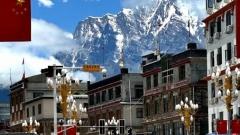
Highlights: Framed by snow peaks, Garze County features the famous Garze Monastery and sweeping views of the Daxue Mountain Range—an ideal stop to rest and restock before entering Tibet proper.
Dege County (Major Highlight Stop | Alt. ~3,200m):
Dege Sutra Printing House: Known as a “living cultural fossil” and the treasury of Tibetan culture. It still preserves traditional hand-carved woodblock printing techniques for classic Tibetan texts. Stepping inside feels like stepping back in time.
Chola (Que’er) Mountain: Once known as the “most dangerous pass” on the Sichuan-Tibet route (alt. 5,050 meters), the mountain is now bypassed by a tunnel, though its surrounding glaciers and snow peaks remain awe-inspiring.
Chamdo & Nagqu Section: Eastern Tibet & Sacred Mountains
Crossing the Jinsha River Bridge brings you officially into the Tibet Autonomous Region:
Jonda ➔ Chamdo City (Recommended Stop: 1 Day | Alt. ~3,200m):
Chambaling Monastery: The largest Gelugpa monastery in eastern Tibet, situated at the confluence of the Angqu and Zaqu rivers. Its murals and butter sculptures are exquisite.
Dengqen County: Cliffside Sanctuary—Zizhu Temple (Major Highlight Stop | Alt. ~4,800m):
Highlights: Perched high atop six jagged mountain peaks, Zizhu Temple is one of the largest and oldest Bon religion monasteries in Tibet. Its halls clinging to sheer cliffs resemble a sky palace. Drive carefully up the steep mountain switchbacks.
Biru County: Geometric Glacial Wonder—Sapu Sacred Mountain (Major Highlight Stop | Alt. ~4,700m):
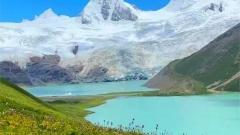
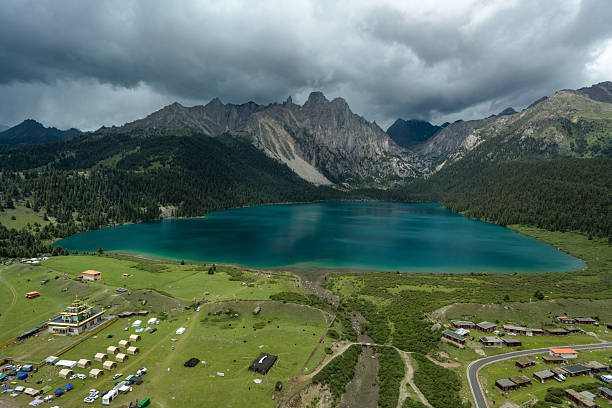
Highlights: A hidden gem that has surged in popularity in recent years! Sapu features near-perfect geometric isosceles triangular peaks. At its base lies a pristine glacial lake (Sapu Mutso) where hanging glaciers break off directly into turquoise waters.
Nagqu ➔ Damxung ➔ Namtso (Shengxiang Tianmen) ➔ Lhasa:
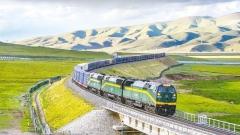
Driving past Biru, you enter the vast Changtang Grassland. Upon reaching Nagqu, merge onto the Qinghai-Tibet Highway (G109) heading south, visit Namtso Lake along the way, and complete your journey in Lhasa.
Classic 9-Day / 8-Night G317 Itinerary
This itinerary balances cultural depth with a gradual pace for altitude acclimatization:
Day 1: Chengdu ➔ Wenchuan ➔ Lixian ➔ Barkam (Acclimatize to altitude)
Day 2: Barkam ➔ Guanyinqiao ➔ Seda (Visit Larung Gar)
Day 3: Seda ➔ Luhuo ➔ Garze County
Day 4: Garze ➔ Chola Mountain ➔ Dege (Visit Dege Sutra Printing House)
Day 5: Dege ➔ Cross Jinsha River into Tibet ➔ Jonda ➔ Chamdo City
Day 6: Chamdo ➔ Riwoche ➔ Dengqen (Visit Zizhu Temple)
Day 7: Dengqen ➔ Baqen ➔ Biru County (Overnight near Sapu Mountain or in town)
Day 8: Biru (Explore Sapu Sacred Mountain & Glaciers) ➔ Nagqu City
Day 9: Nagqu ➔ Damxung ➔ View Mt. Nyenchen Tanglha ➔ Arrive in Lhasa
Practical Travel Advice & Driving Precautions for G317
Altitude Sickness Prevention & Preparation
The average elevation along G317 (especially in Seda, Dengqen, Biru, and Nagqu) is higher than G318, requiring passes over 4,500 meters.
Pacing: Avoid strenuous exercise during the first three days. Try to sleep at lower-altitude towns whenever possible (e.g., Barkam, Garze, Chamdo).
Essentials: Carry portable oxygen canisters, Ibuprofen (for altitude headaches), and keep insulated flasks with warm water handy throughout the drive.
Vehicle Selection & Road Safety
Vehicle Choice: While the main G317 highway is fully paved and in good condition, side routes to hidden gems like Zizhu Temple and Sapu Sacred Mountain involve gravel roads and steep mountain switchbacks. A 4WD SUV with good ground clearance is strongly recommended.
Fuel & Spare Tires: Gas stations can be spaced far apart in remote sections; refuel whenever your tank drops below half. Ensure you carry a full-size spare tire and jack kit.
Respecting Local Religious Customs
G317 passes through deeply spiritual regions:
When entering temples (e.g., Dege Printing House, Chambaling, Zizhu Temple), remove hats and sunglasses. Note that Bon temples (like Zizhu Temple) walk counter-clockwise around prayer wheels and shrines, unlike Tibetan Buddhist temples which walk clockwise—always respect local traditions.
Do not take photos inside main prayer halls or of monks without explicit permission.
Border Permits & Documents
Checkpoints are frequent across Chamdo and Nagqu. Carry your Original Passport at all times. If your travel plans extend to Everest Base Camp or Mount Kailash (Ali), make sure your Border Travel Permit is secured in advance.