“Sit on that train to Lhasa, to see the majestic Potala Palace…”
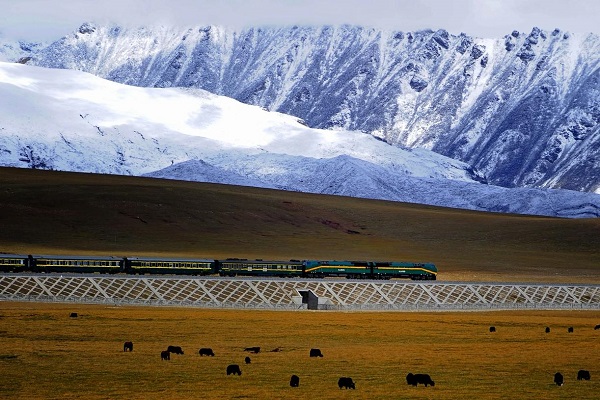
Hailed as the “Sky Road,” the Qinghai-Tibet Railway is the highest and longest plateau railway project in the world. For travelers longing to visit Tibet, taking the train is more than just transportation—it is a spiritual, bucket-list pilgrimage through some of Earth’s most awe-inspiring wilderness.
Currently, several major cities across mainland China offer direct passenger train services to Lhasa. Here is your comprehensive guide to train routes, schedules, onboard facilities, and scenic highlights for planning your dream train journey to Tibet!
Key Takeaways
Major Gateway Cities: Direct trains to Lhasa depart from 6 major hubs across China: Beijing, Shanghai, Guangzhou, Chengdu, Chongqing, and Xining.
The Golden Transfer Hub — Xining: Every Tibet-bound train passes through Xining Station, where passengers switch to high-altitude oxygen-supplied trains. It offers the shortest rail route to Lhasa (~20-21 hours) and the best ticket availability.
Four Epic Scenic Highlights: The journey passes Qinghai Lake, the Kunlun Mountains, the Hoh Xil Nature Reserve, Tanggula Pass (the world’s highest railway point at 5,072m), Cona Lake, and the Nyenchen Tanglha Mountains.
Why Take the Train?: Offers budget-friendly rates, aids in gradual high-altitude acclimation, and showcases breathtaking alpine landscapes unreachable by plane.
Major Train Routes to Tibet Across China
No matter which city you depart from, all trains eventually converge at Xining Station—the official starting point of the high-altitude Qinghai-Tibet Railway—before heading south through Golmud and Tanggula Pass into Lhasa.
1. Xining ➔ Lhasa (Z21 / Z6801, approx. 20–21 hours)
Highlights: The shortest and most scenic rail stretch! Xining is the true gateway of the Qinghai-Tibet Railway. Trains departing Xining travel through the most stunning alpine landscapes during daytime hours.
Best For: Travelers with limited time who want a shorter train ride, or those flying/taking high-speed rail into Xining first.
2. Beijing ➔ Lhasa (Z21, approx. 40 hours)
Highlights: The most popular route for international travelers. Departing from Beijing West Railway Station, the train traverses Shijiazhuang, Taiyuan, Lanzhou, and Xining across the heartland of northern China.
Best For: First-time visitors combining a “Beijing + Tibet” multi-destination tour.
3. Shanghai ➔ Lhasa (Z264, approx. 47 hours)
Highlights: A grand transcontinental journey. Starting from eastern China’s coastal metropolis, the train sweeps across Jiangnan water towns, central plains, and plateau mountain ranges.
Best For: Travelers with flexible schedules who want to experience the dramatic landscape shift from sea level to the Roof of the World.
4. Guangzhou ➔ Lhasa (Z264 Connection / Z224, approx. 52–53 hours)
Highlights: The longest distance rail route into Tibet. Traveling from southern China’s Pearl River Delta through Hunan, Hubei, Henan, and Shaanxi before ascending into Tibet.
Best For: Travelers arriving via Hong Kong, Macau, Guangzhou, or Southeast Asia.
5. Chengdu / Chongqing ➔ Lhasa (Z322 / Z223, approx. 36–40 hours)
Highlights: Connecting the gateway region of Sichuan and Chongqing through Northwest China along ancient Silk Road routes into Tibet.
Best For: Food lovers and culture enthusiasts combining panda tours or spicy cuisine in Sichuan/Chongqing with a Tibet adventure.
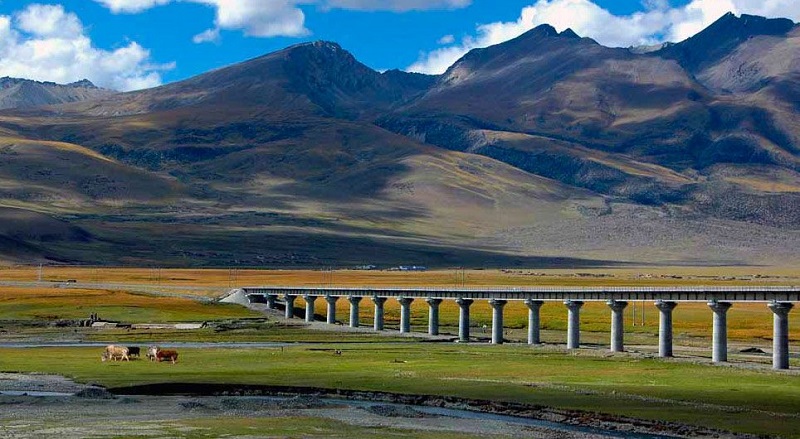
4 Unmissable Scenic Wonders Along the Qinghai-Tibet Railway
Once your train passes Xining, the legendary scenery of the Qinghai-Tibet Plateau unfolds right outside your window:
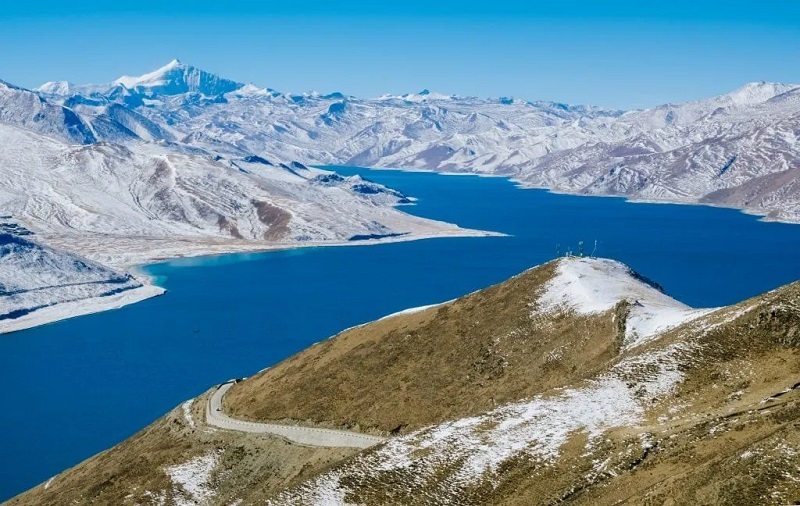
Qinghai Lake: Shortly after leaving Xining, the train skirts along the shores of Qinghai Lake, the largest inland saltwater lake in China, reflecting deep blue skies and surrounding mountains.
Hoh Xil Nature Reserve & Kunlun Mountains: Crossing the Kunlun Pass (4,767m), the train enters the remote Hoh Xil wilderness. Lucky passengers can spot Tibetan antelopes and wild donkeys running across the high plains.
Tanggula Pass (5,072 meters / 16,640 feet): The highest railway pass on Earth! Outside lies an endless world of permanent snowcaps and towering glaciers.
Cona Lake & Nyenchen Tanglha Range: Located near Amdo, Cona Lake is one of the highest freshwater lakes in the world, running parallel to the tracks just meters away. As you approach Lhasa, the snow-draped peaks of the Nyenchen Tanglha Range line the horizon.
Onboard Facilities & High-Altitude Oxygen Systems
Trains running on the Qinghai-Tibet Railway are custom-built for high-altitude conditions with state-of-the-art oxygen systems:
Dual Oxygen Supply: After Golmud, centralized pressuring oxygen pumps into the carriages to elevate overall oxygen levels. Additionally, individual oxygen outlets are located at every seat and berth for personal tubing access.
Cabin Types:
Soft Sleeper (Recommended): 4 berths per lockable compartment. Offers maximum privacy, space, and comfort for long journeys.
Hard Sleeper: 6 berths per open compartment (Upper, Middle, Lower). Great value for budget travelers and meeting fellow passengers.
Hard Seat: Not recommended for multi-day trips to Tibet due to fatigue and higher risk of altitude sickness.
Practical Booking & Travel Advice
Peak Season Ticket Booking: Train tickets (especially Soft Sleepers) are in high demand during peak season (May to October). Booking through an authorized travel agency well in advance is highly recommended.
Permits for International Visitors: Foreign passport holders must present a valid Tibet Travel Permit (TTB) original document prior to boarding Tibet-bound trains.
Packing Essentials: High-altitude sun is intense and air inside the train can be dry. Pack hydrating skincare items, sunscreen, a thermal thermos for hot water, and high-energy snacks.
Riding the Qinghai-Tibet Railway turns every kilometer into a living masterpiece. Choose your departure city, pack your bags, and embark on this unforgettable journey to the Roof of the World!