
✨ Highlights:
- 🌞 28 Clear Days — October brings near-zero rainfall across Tibet, with stable, dry weather perfect for sightseeing and trekking.
- 🏔️ Best Everest Visibility — Post-monsoon skies deliver the clearest mountain views of the year; Everest reveals itself at sunrise and sunset.
- 🍂 Golden Autumn Foliage — Poplar and willow valleys turn brilliant yellow and orange, contrasting with turquoise lakes and snow peaks.
- 🌡️ Big Day-Night Swings — Lhasa days are a pleasant 16–17°C, but nights drop to 0°C; layering is non-negotiable.
- 📄 Permit Mandatory — Foreigners need a Tibet Travel Permit (14–30 days processing) and must travel with a licensed guide.
- 🫁 Altitude First — Spend 2–3 days acclimatizing in Lhasa (3,650 m) before heading to Everest Base Camp (5,200 m).
- 👥 Fewer Crowds After Oct 8 — Post-Golden Week means quieter monasteries, lower hotel rates, and more authentic experiences.
- 📸 Photographer’s Dream — Extended golden hour, deep blue skies, and harvest-season pilgrim scenes make October ideal for shooting.
October is widely regarded as one of the finest months to visit Tibet. The monsoon rains have retreated, the skies turn a piercing sapphire blue, and the autumn foliage paints the valleys in gold and crimson. For foreign travelers considering a journey to the Roof of the World, understanding Tibet October weather and travel tips for foreigners is essential for a safe, comfortable, and unforgettable experience.
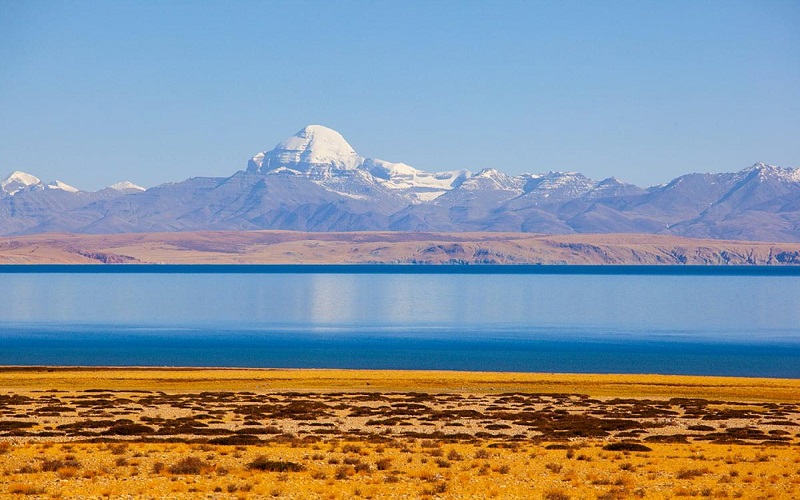
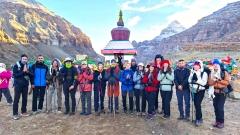
Mount Kailash
In this comprehensive October Tibet travel guide, we break down everything you need to know: region-by-region temperatures, what to pack, how to obtain the mandatory Tibet Travel Permit, altitude sickness prevention, the best destinations in October, and practical advice from seasoned Tibet travel experts. Whether you are visiting Tibet in October for the first time or returning for another adventure — dreaming of standing before the Potala Palace, trekking to Everest Base Camp, or circumnavigating sacred Mount Kailash — October offers conditions that make it all possible.
Why October Is One of the Best Months to Visit Tibet
Stable, Dry Weather. The Southwest Monsoon has fully withdrawn by October. Rainfall drops to near zero across most of the plateau, meaning you can expect roughly 28 clear days out of 31 in Lhasa. This stability is a game-changer for photography, trekking, and overland travel.
- Crisp, Comfortable Daytime Temperatures. While nights grow cold, daytime highs in central Tibet remain a pleasant 15–17°C (59–63°F) — ideal for monastery visits, scenic drives, and city walks without summer’s heat or winter’s bite.
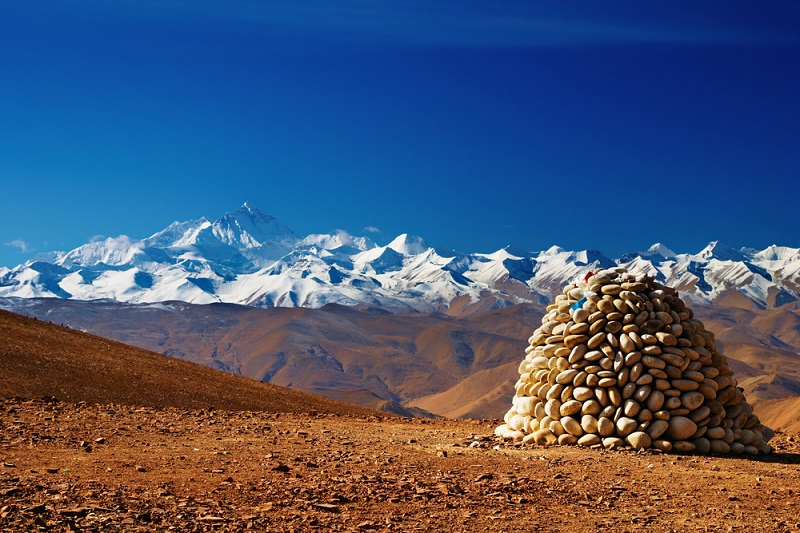
- Peak Visibility. With humidity gone and dust settled, October delivers the clearest mountain views of the year. Everest, Cho Oyu, and the entire Himalayan range reveal themselves with breathtaking clarity.
- Autumn Colors. Poplar and willow trees around Lhasa, Nyingchi, and the Yarlung Tsangpo Valley turn brilliant shades of yellow and orange, contrasting with turquoise rivers and snow peaks.
- Fewer Crowds (After Golden Week). China’s National Day Holiday (Oct 1–7) brings a brief surge of domestic tourists. From October 8 onward, crowds thin dramatically, monasteries feel more serene, and hotel rates begin to drop.
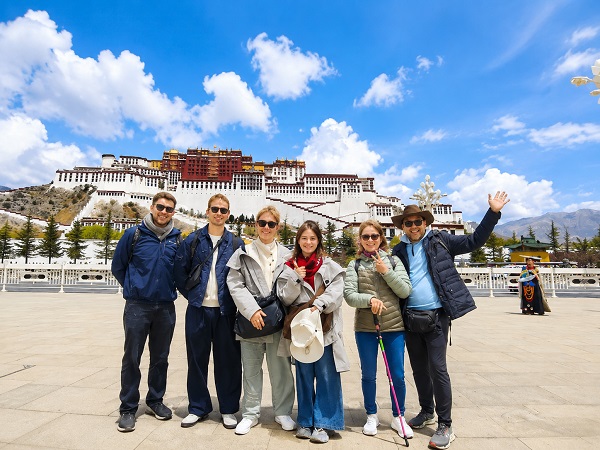
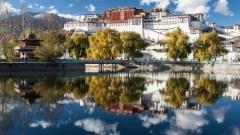
Potala Palace
Tibet October Weather: Region-by-Region Breakdown
Tibet is vast, and weather varies dramatically by altitude and location. When researching Tibet in October weather, the most important thing to grasp is how Tibet weather in October temperature shifts across elevations — a difference of just a few hundred meters can mean the gap between a pleasant autumn afternoon and a freezing night.
Lhasa (3,650 m / 11,975 ft)
In Lhasa, the average daytime high reaches 16 to 17 degrees Celsius (61 to 63 degrees Fahrenheit), while nighttime lows drop to between 0 and 2 degrees Celsius (32 to 36 degrees Fahrenheit). Total rainfall for the month is only about 8 millimeters, with fewer than two rainy days, and you can expect approximately 28 clear days. The UV index remains very high throughout the month.
Daytime in Lhasa is comfortably cool — perfect for the Barkhor Circuit, Potala Palace, or Sera Monastery. But once the sun sets, temperatures plummet. Frost is common by early morning. The intense high-altitude sun means UV radiation remains extremely strong — sunscreen (SPF 50+), sunglasses, and a hat are non-negotiable.
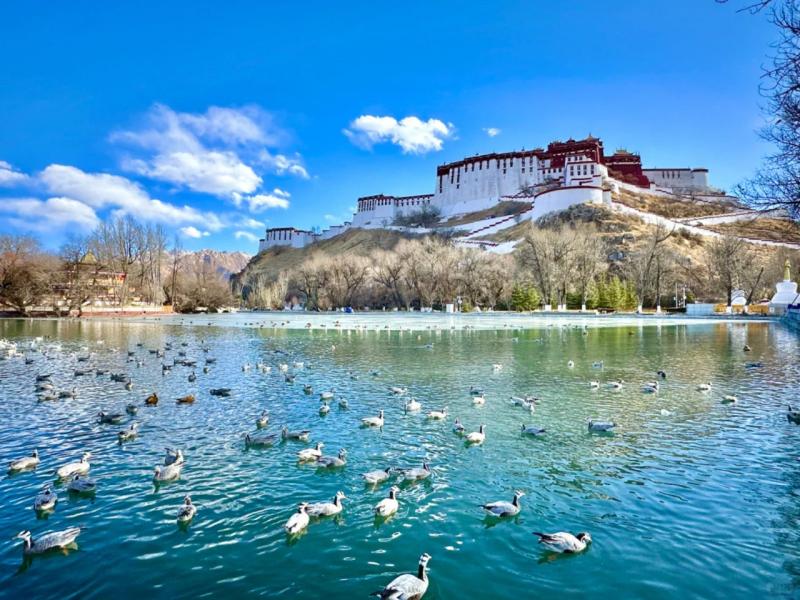
Shigatse (3,836 m / 12,585 ft)
Shigatse sees average daytime highs of 14 to 15 degrees Celsius (57 to 59 degrees Fahrenheit) and nighttime lows that dip to between minus 1 and 0 degrees Celsius (30 to 32 degrees Fahrenheit). Rainfall is minimal at roughly 4 millimeters, with around 29 clear days during the month.
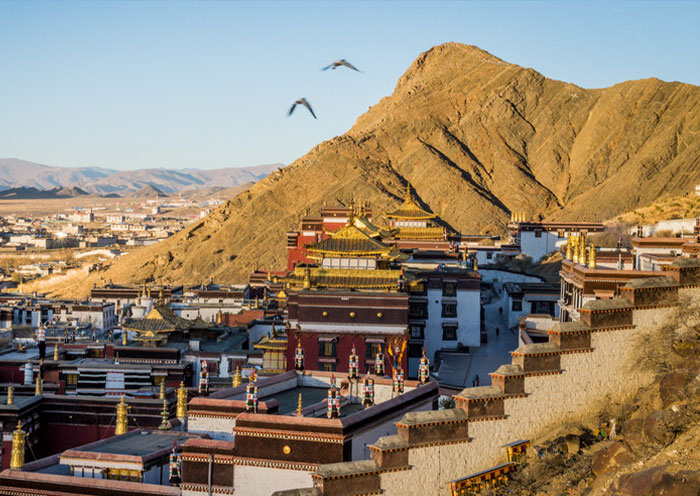
Tashilhunpo Monastery
October is excellent for visiting Tashilhunpo Monastery, seat of the Panchen Lama, with harvested barley fields and crystal-clear mountain backdrops.
Everest Base Camp (5,200 m / 17,060 ft)
At Everest Base Camp, daytime highs range from 12 to 17 degrees Celsius (54 to 63 degrees Fahrenheit), while nighttime lows plummet to between minus 8 and minus 5 degrees Celsius (18 to 23 degrees Fahrenheit). You can expect roughly 25 clear days, though wind is moderate to strong and can make conditions feel considerably colder.
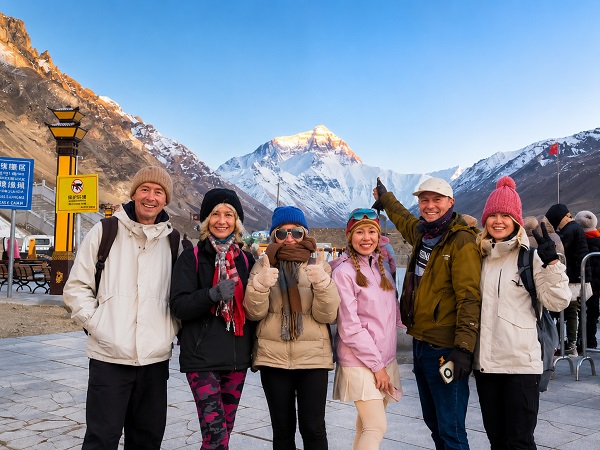
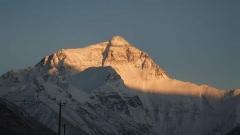
October is arguably the single best month to see Everest. Daytime can be surprisingly mild in the sun, but nights are bitterly cold — well below freezing. The reward? Unobstructed views of Everest’s north face, often with a spectacular summit plume. Sunrise and sunset at EBC are legendary, with the peak turning shades of pink and gold.
Tip: Guesthouses at Rongbuk offer basic dormitory accommodation. Bring a sleeping bag rated to at least -10°C (14°F).
Nyingchi (2,900–3,000 m / 9,500–9,840 ft)
Nyingchi has Tibet’s mildest climate thanks to lower elevation and Indian Ocean influence. Daytime highs reach 16–18°C with nights around 4–6°C. October is spectacular — the Yarlung Tsangpo Grand Canyon forests explode in autumn color, Basum Tso reflects snow peaks like a mirror, and Lunang valley offers idyllic pastoral scenery. Nyingchi is also an excellent starting point for altitude acclimatization.
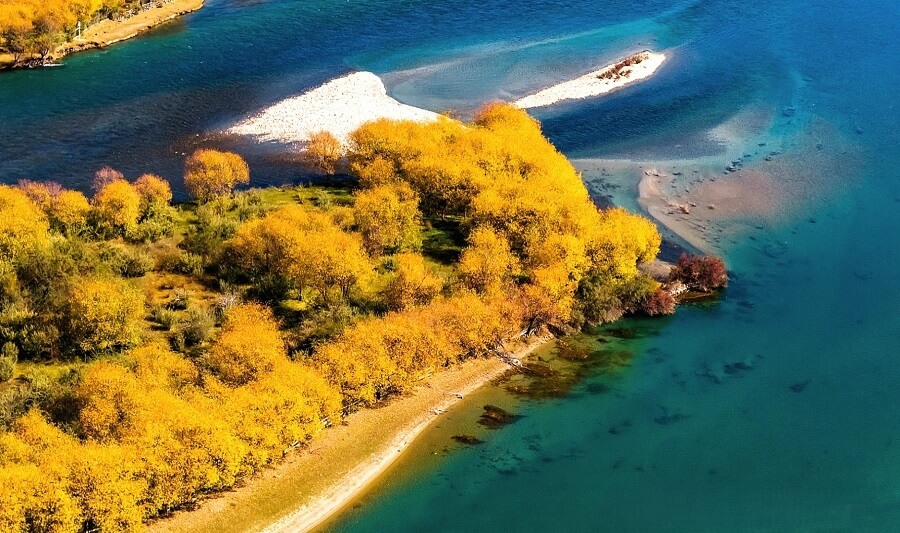
Niyang river in Nyingchi
Namtso Lake (4,718 m / 15,479 ft)
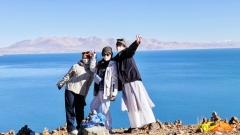
Daytime highs are only 8–10°C with nights dropping to -5°C. The lake is typically ice-free in early to mid-October, offering stunning reflections of the Nyenchen Tanglha range. By late October, however, snow can block the 5,190 m Laken La pass. If Namtso is a priority, visit in the first half of October.
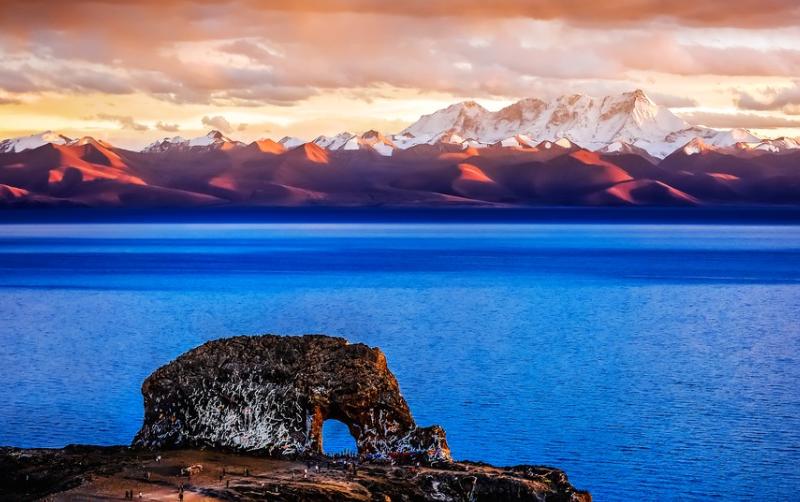
Namtso
Mount Kailash and Western Tibet
October marks the end of the trekking and pilgrimage season. Daytime temperatures hover around 8–12°C, but nights can drop to -10°C or lower. The Kailash kora is still possible in early October, but by mid-to-late October conditions become too harsh for most travelers. Go early, be well-prepared, and travel with an experienced operator.
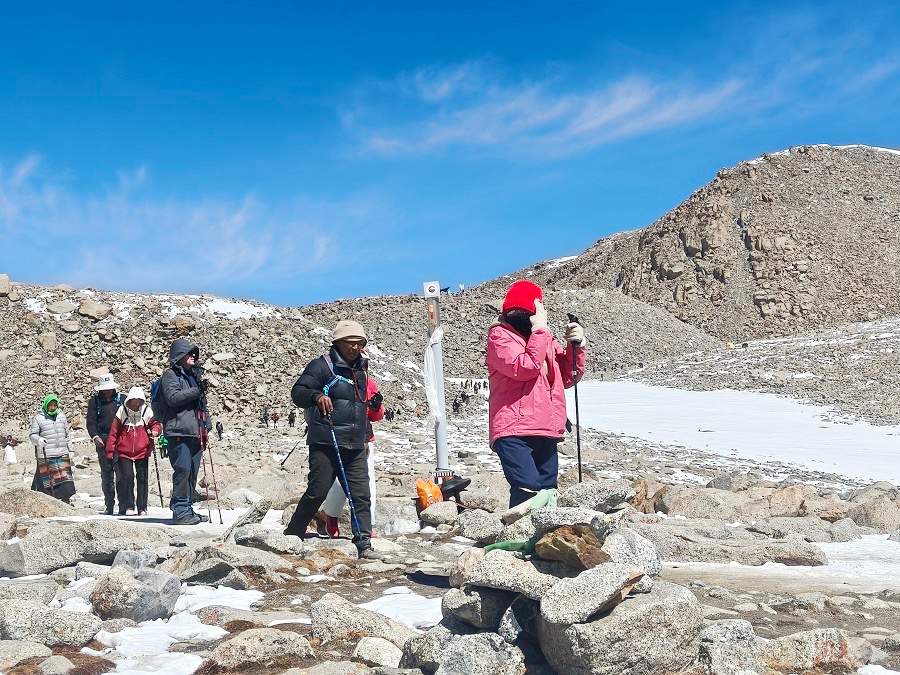
Mount Kailash Kora Tourists
What to Pack for Tibet in October
The key principle is layering — temperatures swing from warm afternoons to freezing nights.
- Clothing: Thermal base layers (merino wool, 2 sets), fleece jacket, down jacket (600+ fill power), waterproof/windproof shell, hiking pants, thermal leggings, warm beanie, insulated gloves, scarf/neck gaiter, sturdy broken-in hiking boots, camp shoes, UV 400 sunglasses.
- Health & Safety: Sunscreen SPF 50+ (UV is 40–50% stronger than sea level), lip balm with SPF, personal medications + altitude sickness medication (consult doctor), reusable water bottle (aim for 3–4 liters/day), energy snacks, basic first-aid kit.
- Electronics & Documents: Tibet Travel Permit, passport + Chinese visa (carry photocopies separately), power bank (long drives mean limited charging), camera with extra batteries (cold drains them fast — keep spares in an inner pocket), universal power adapter (China: 220V, Type A/C/I).
Tibet Travel Permits for Foreigners
For foreign travelers, entering Tibet requires strict permit compliance — one of the most important Tibet travel tips for foreigners.
Tibet Travel Permit (TTP)
- Who needs it: All non-Chinese passport holders, including foreign residents of China.
- How to get it: You cannot apply independently. It must be arranged through a licensed Tibetan travel agency as part of an organized tour.
- Processing time: Typically 14–30 days. Apply at least one month in advance.
- Cost: The permit is free but included in your tour package.
- When needed: To board any flight or train to Lhasa, and at checkpoints throughout Tibet. No permit = no boarding.
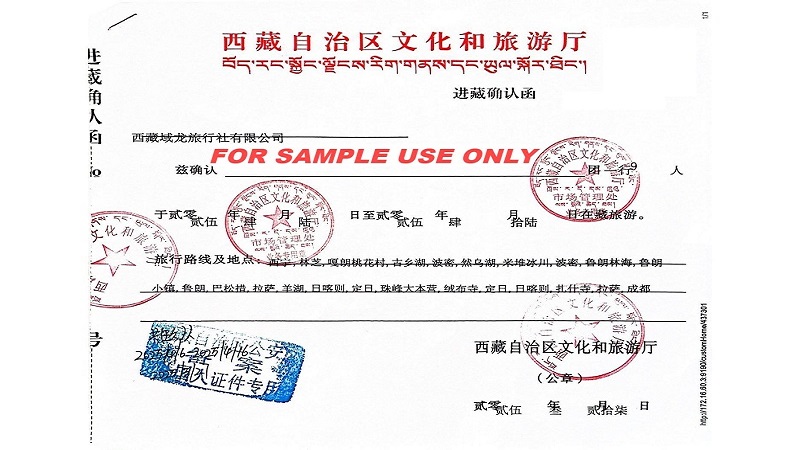
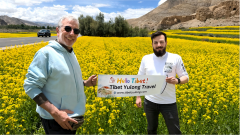
Tibet Travel Permit – Tibet Yulong
Additional Permits
The Alien’s Travel Permit (ATP) is required for visiting Everest Base Camp, Sakya Monastery, Samye Monastery, Mount Kailash, and Lake Manasarovar. A Military Permit is needed for border areas and certain parts of western Tibet, while a Border Pass is required for areas near the Nepal and India borders. Your travel agency will arrange these as part of your tour package.
October-Specific Notes
- Golden Week (Oct 1–7): Government offices have reduced processing. Submit permit applications by early September if entering in early October.
- Group requirement: Foreign travelers must be accompanied by a licensed Tibetan guide for the entire stay. Independent travel is not permitted.
Altitude Sickness in October: Prevention and Management
Altitude sickness (AMS) is the number one health concern for Tibet travelers. October’s dry, cold air can exacerbate symptoms.
- The Risk: Lhasa sits at 3,650 m — roughly 50–70% of visitors experience some AMS. Everest Base Camp at 5,200 m is well into the zone where serious illness can occur.
- Common Symptoms: Headache, fatigue, shortness of breath on exertion, nausea, dizziness, poor sleep, mild swelling. These usually resolve within 24–48 hours.
Prevention Strategies:
- Ascend gradually. Spend 2–3 days in Lhasa before higher areas. Do not exceed 4,000 m on day one.
- Rest on arrival. No shower, no alcohol, no strenuous activity.
- Hydrate aggressively. 3–4 liters of water daily.
- Avoid alcohol and smoking. Both reduce oxygen absorption.
- Eat light, carb-rich meals. Your body burns calories faster at altitude.
- Consider Diamox. Consult your doctor before departure, especially with heart/lung/blood pressure conditions.
- Sleep low. When possible, avoid sleeping at your itinerary’s highest point.
Warning Signs: If symptoms worsen — severe headache, vomiting, confusion, breathlessness at rest, rattling cough — this could signal HAPE or HACE, life-threatening conditions requiring immediate oxygen and rapid descent. Reputable agencies carry portable oxygen and guides are trained to recognize these signs.
Best Places to Visit in Tibet in October
1. Lhasa: The Spiritual Heart
Spend 2–3 days acclimatizing and exploring: Potala Palace (book ahead — daily caps apply), Jokhang Temple (Tibet’s holiest, always thrumming with pilgrims), Barkhor Street (the circular pilgrim route), Sera Monastery (famous for monk debating, Mon–Sat afternoons), and Drepung Monastery (sweeping valley views).
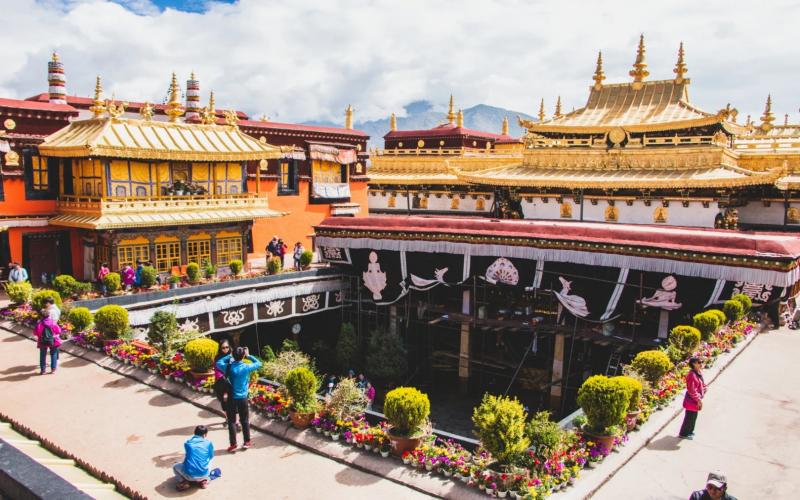
Jokhang Temple
2. Everest Base Camp
A 3–4 day overland journey via Shigatse and the Friendship Highway. Don’t miss Rongbuk Monastery (the world’s highest at 4,980 m), the EBC viewpoint for unobstructed Everest views, and sunrise at EBC — watching first light paint the summit gold is indescribable.
3. Nyingchi: Tibet’s Scenic Southeast
Yarlung Tsangpo Grand Canyon (deepest on Earth, with views of Namcha Barwa — best seen in October), Basum Tso (pristine alpine lake), Lunang (the “Switzerland of Tibet”), and Lamaling Monastery (a forested Nyingma sect gem).
4. Shigatse, Gyantse & Yamdrok Lake
Tashilhunpo Monastery houses a 26.2 m Maitreya Buddha. Nearby Gyantse features the stunning Kumbum Stupa with 108 chapels. Yamdrok Tso, one of Tibet’s sacred lakes, shimmers turquoise from the 4,794 m Kamba La pass — a standard stop on the Lhasa–Shigatse route.
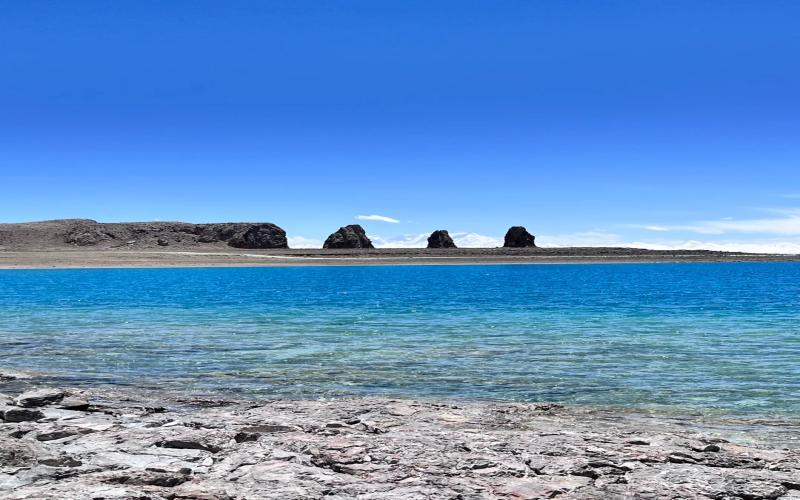
Yamdrok Lake
Practical Travel Tips for Foreigners
Book early for Golden Week. If traveling Oct 1–7, book 2–3 months ahead — prices surge 30–50%. After Oct 8, availability improves and rates drop.
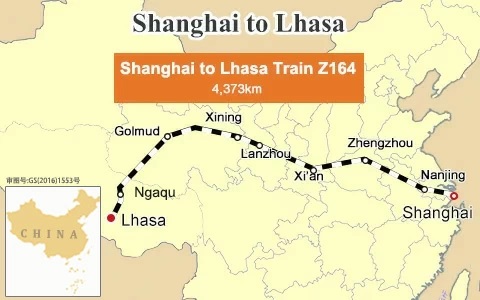
Choose your entry point. Flights from Chengdu/Xi’an/Beijing are fast but mean abrupt altitude arrival — rest immediately. The Qinghai-Tibet Railway offers gradual ascent and oxygen onboard (Beijing–Lhasa ~40 hrs). Overland entry from Nepal via Zhangmu is also possible with additional permits.
Prepare for long drives. Distances are vast — Lhasa to EBC involves 6–8 hours daily. Bring motion sickness meds and offline entertainment; cellular signal is intermittent.
Respect local customs. Remove shoes/hats in temple halls, don’t photograph without permission, walk clockwise around religious structures, never step on prayer flags or mani stones, and dress modestly (cover shoulders/knees at monasteries).
Money & connectivity. Cash is essential outside Lhasa — ATMs are unreliable. Alipay/WeChat Pay work in towns but not remote guesthouses. Buy a China Mobile/Unicom SIM in mainland China before entering. Install a VPN before arrival — Google, Facebook, WhatsApp are blocked.
Food & water. Drink only bottled or boiled water. Try momos, tsampa, yak butter tea, and thukpa. Lhasa also has excellent Nepali, Indian, and Western options. Eat at busy restaurants for freshness.
Photography Tips for October in Tibet
October is a dream month for photographers. Here is how to make the most of it.
Golden Hour is Everything. With the sun lower in the autumn sky, golden hour extends longer than in summer. Shoot Everest at sunrise (around 7:30 AM) and sunset (around 7:00 PM) when the peak turns fiery orange. Lhasa’s Potala Palace looks magical at both times — shoot from the south across the lake for reflections.
- Use a Polarizing Filter. The thin, dry air creates intense blue skies. A circular polarizer deepens the blue, reduces glare on lakes, and makes prayer flags pop.
- Protect Your Gear. Cold drains batteries 2–3 times faster than at room temperature. Carry 3–4 spares, keep them in an inner pocket, and swap frequently. Condensation can form when moving from cold outdoors to warm indoors — seal your camera in a plastic bag before entering a room and let it acclimatize.
- Capture the Culture. October is a season of pilgrimage and harvest. Monasteries are busy with devotees, and villagers are gathering barley. Ask permission before photographing people — a small tip or gift goes a long way. Early morning at Jokhang Temple offers the most authentic pilgrim scenes.
- Bring a Tripod. For sunrise/sunset at EBC and low-light monastery interiors, a sturdy tripod is invaluable. Wind at high altitudes can be strong — hang your camera bag from the center column for stability.
October vs. Other Seasons at a Glance
In terms of weather, October offers dry, clear, and stable conditions, whereas the summer months of July and August bring rain and clouds, and winter from December to February is very cold but also clear. For daytime temperatures in Lhasa, October averages 16 to 17 degrees Celsius, summer reaches 20 to 22 degrees, and winter drops to 8 to 10 degrees. Nighttime lows in Lhasa are 0 to 2 degrees in October, 10 to 12 degrees in summer, and minus 8 to minus 5 degrees in winter. Crowds are low in October after the Golden Week holiday, very high in summer, and very low in winter. Everest views are excellent in October, poor in the cloudy summer months, and good in winter though conditions are extremely cold. Prices are moderate in October, high in summer, and low in winter.
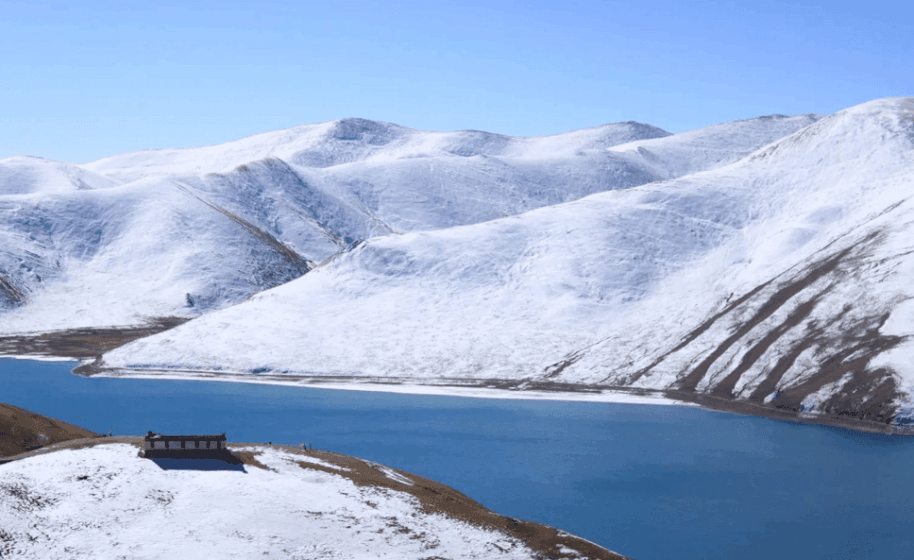
Yamdrok in Winter
October strikes the best balance of clear weather, manageable temperatures, and fewer crowds — which is why seasoned travelers and photographers consistently choose it.
Frequently Asked Questions
Q: Is October a good time to visit Tibet?
A: Yes. October offers stable dry weather, excellent mountain visibility, comfortable daytime temperatures, and fewer crowds after the National Day holiday.
Q: How cold is Tibet in October?
A: Lhasa sees 16–17°C days and 0–2°C nights. Everest Base Camp drops to -8°C at night. Layering is essential.
Q: Can foreigners travel independently in Tibet?
A: No. All foreign nationals must travel with a licensed agency, hold a Tibet Travel Permit, and be accompanied by a licensed guide.
Q: How far in advance should I book?
A: At least 1–2 months for permit processing (14–30 days). For Golden Week (Oct 1–7), book 2–3 months ahead.
Q: Can I visit Everest Base Camp in October?
A: Absolutely — October is one of the best months for EBC, with the highest probability of clear views. Prepare for very cold nights.
Q: What should I wear?
A: Layered clothing: thermal base, fleece, down jacket, waterproof shell, warm hat, gloves, and sturdy hiking boots.
Q: Is altitude sickness worse in October?
A: Not necessarily, but dry cold air can intensify symptoms. Proper acclimatization (2–3 days in Lhasa first), hydration, and gradual ascent are key.
Conclusion
We hope this Tibet October weather and travel tips for foreigners guide has given you the confidence to plan your adventure. A journey to Tibet in October is a journey to the Roof of the World at its most magnificent. The monsoon has passed, the skies are impossibly blue, the mountains stand revealed in all their glory, and autumn light transforms the landscape into a photographer’s paradise. For foreign travelers, success lies in preparation: understanding the weather, packing in layers, securing permits early, respecting altitude, and choosing a reputable local operator.
Whether you are drawn by Lhasa’s spiritual pull, Everest’s awe-inspiring presence, Nyingchi’s pristine forests, or the sacred stillness of Tibet’s high lakes, October delivers conditions that make every moment feel like a once-in-a-lifetime gift. Start planning your Tibet October adventure today — the clear skies and golden valleys are waiting.
Need help planning your Tibet trip? Our team specializes in custom Tibet tours for international travelers, with full permit handling, experienced English-speaking guides, and flexible itineraries. Contact us for a free quote.