
Timing is arguably the single biggest factor in how a Nepal or Tibet trip actually turns out. Show up during the wrong stretch and you might spend your Everest morning staring at a wall of cloud instead of the mountain itself. Show up during the right one, and you get clear skies, comfortable temperatures, and landscapes at their most photogenic. Because Tibet and Nepal sit on opposite flanks of the same mountain range but experience quite different climate patterns, “the best time to visit” isn’t a single answer — it depends on which side of the Himalaya you’re headed to, and whether you’re planning to see both. Here’s a season-by-season breakdown to help you plan a 2026 trip around the weather rather than in spite of it.
Key Takeaways
- Tibet and Nepal sit on opposite sides of Mount Everest, and their climates differ enough that timing your trip correctly makes a real difference to what you’ll actually see and experience.
- Spring (April–May) and autumn (September–November) are the two strongest windows for Tibet, while Nepal’s peak season concentrates almost entirely on October and November.
- October and November stand out as the single best months to visit both destinations together, since weather conditions align well on both sides of the Himalaya during this period.
- April, May, and September are strong secondary options, offering mild temperatures, clearer skies, and — in spring — blooming wildflowers across the mountains.
- June through August is monsoon season on both sides and generally the weakest window if seeing Everest clearly matters to you, while winter (December–February) trades some access for lower prices, fewer crowds, and remarkably clear skies.
- Combining both countries in one trip means planning around visas, a Tibet Travel Permit, a significant altitude jump between Kathmandu and Lhasa, and a two-hour-fifteen-minute time difference.
Why Timing Matters So Much In Tibet And Nepal?
Tibet, often called the Roof of the World, is the highest plateau on the planet, sitting on Everest’s northern side at an average elevation of around 4,000 meters. That altitude drives an extreme climate — long, harsh winters, short and relatively cool summers, and four sharply distinct seasons, including a summer monsoon period that brings rain to parts of the plateau.
Nepal, on Everest’s southern side, covers far more climatic ground within a much smaller area. The land drops dramatically from high Himalayan peaks down to subtropical lowlands near the Indian border, so the country moves through jungle, temperate hill country, and alpine terrain in a relatively short distance. Its climate reflects that range, running from subtropical warmth in the lowlands to genuinely alpine cold in the high country, with a monsoon that creates a clear wet and dry season split.
The upshot is that a “good month” in Tibet and a “good month” in Nepal don’t automatically overlap, even though both climates are shaped by the same monsoon system. Understanding how each side behaves throughout the year is what makes it possible to plan a trip — whether to one country or both — around genuinely good conditions rather than guesswork.
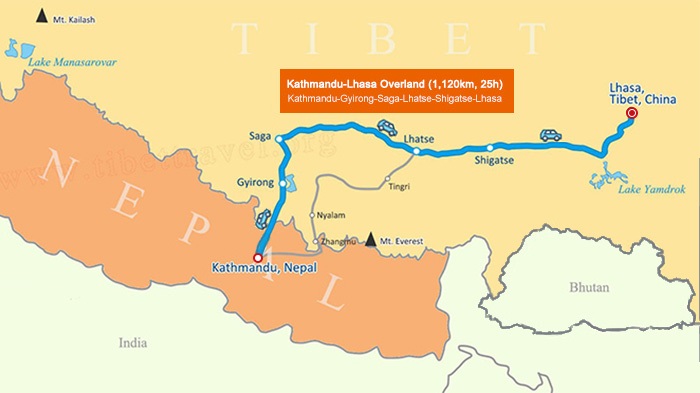
Kathmandu to Lhasa Overland Rroute
The Best Time To Visit Tibet: April Through November
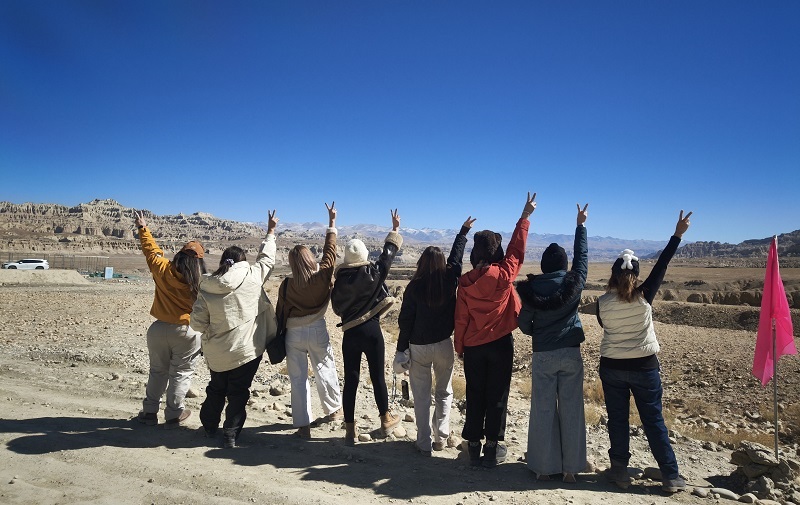
For Tibet specifically, the travel season runs broadly from April to November, with spring and autumn as the standout periods within that window.
Spring In Tibet: April To May
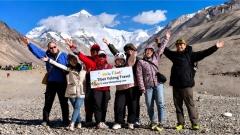
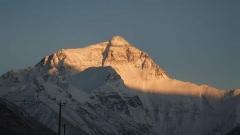
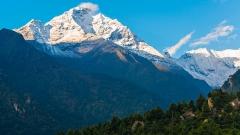
Spring effectively kicks off Tibet’s tourist season. Temperatures turn mild, skies clear, and views of Everest and the surrounding peaks tend to be especially sharp during these two months. It’s also common to find a light dusting of snow still lingering on higher ground this early in the season, which adds to the plateau’s stark, almost otherworldly beauty rather than detracting from it.
Autumn In Tibet: September To October
Autumn brings a similar pattern of clear skies and comfortable temperatures once the summer rains have passed. If anything, autumn scenery has an edge over spring — the grasslands that flourished during the rainy season are still green and full, giving the landscape a richer, more vibrant look than the sometimes starker terrain of early spring.
Both windows deliver strong Everest views and comfortable travel conditions, so the choice between them often comes down to personal preference — some travelers prefer spring’s wildflowers and residual snow, others prefer autumn’s greener, fuller landscape.
The Best Time To Visit Nepal: October And November
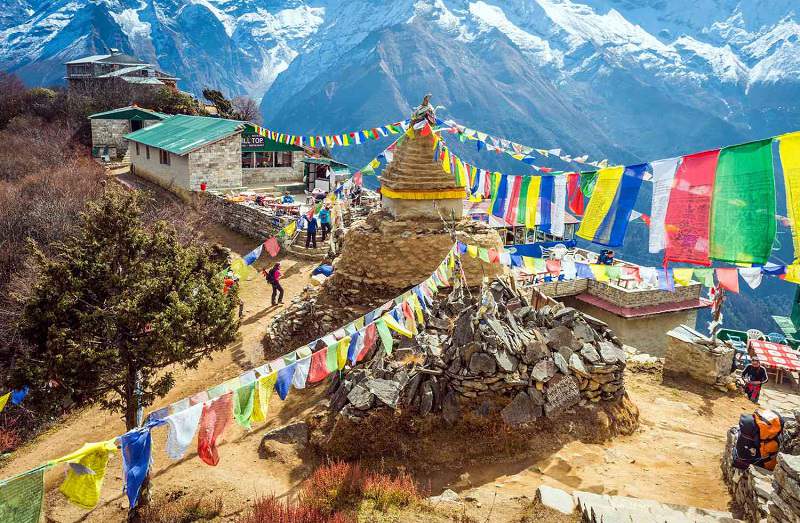
Nepal’s peak season is far more concentrated than Tibet’s, centering almost entirely on October and November. The weather during these two months is about as good as it gets across the country — pleasant temperatures, minimal rain, and consistently strong mountain views. It’s also the busiest trekking season in Nepal, since the odds of rain or snow disrupting a route are at their lowest all year.
There’s a cultural dimension worth factoring in too. Autumn is festival season in Nepal, anchored by Dashain, the country’s biggest Hindu festival, followed shortly after by Tihar. Travelers with any interest in local culture and religious tradition will find this window offers far more than clear skies — it’s when the country’s social calendar is at its most vibrant, with celebrations visible throughout cities and villages alike.
The Best Time To Visit Nepal
When To Visit Both Tibet And Nepal Together?
If your 2026 plans include both sides of the Himalaya, October and November are the months to build your trip around. Weather conditions align unusually well on both sides of Everest during this stretch, which makes it suitable not just for city sightseeing in Lhasa and Kathmandu, but for trekking and mountain travel on either side of the border as well.
In Nepal, rainfall drops close to zero during October and November, and snowfall stays minimal across most trekking regions, keeping trails accessible and views clear. On the Tibet side, the shift into cooler weather still leaves most destinations open, including Everest Base Camp on the mountain’s northern face — meaning you don’t have to sacrifice any major sights by choosing this particular window for a combined itinerary.
Other Good Months: April, May, And September
October and November aren’t your only options for a combined trip. April, May, and September also deserve serious consideration, and each brings its own advantages worth weighing.
Temperatures across both regions stay mildly warm during these months, which makes exploring cities like Lhasa and Kathmandu genuinely comfortable rather than something to push through. Rainfall stays low across the board, keeping mountain views reliably clear. And if you can time a spring visit specifically for April or May, you get a bonus most travelers don’t think to plan around: wildflowers in bloom across the slopes, adding color to landscapes that spend much of the year looking bare and rocky. It’s a relatively narrow window, but one that rewards travelers who catch it.
Months To Avoid: June, July, And August
Summer brings monsoon season to both sides of the Himalaya, and it’s generally the weakest stretch of the year for a Nepal-Tibet trip, particularly if seeing the mountains clearly is a priority.
In Nepal, summer means real heat and humidity, with lowland temperatures capable of climbing above 45°C. Tibet doesn’t see nearly as much rainfall as the southern side of the range, but it does rain through the summer months, and cloud cover tends to be thick enough that clear views of Everest and the surrounding Himalaya become noticeably less common than during the rest of the year. If witnessing Mount Everest is a central goal of your trip, this is the window to skip.
There’s also a practical consideration for anyone planning to cross overland between the two countries. Summer rainfall can trigger landslides near the Gyirong border crossing, particularly on the Nepal side, which can disrupt or delay overland travel. Anyone considering a land crossing between Tibet and Nepal during summer should factor this risk into their route planning and build in some flexibility.
Winter In Tibet And Nepal: December Through February
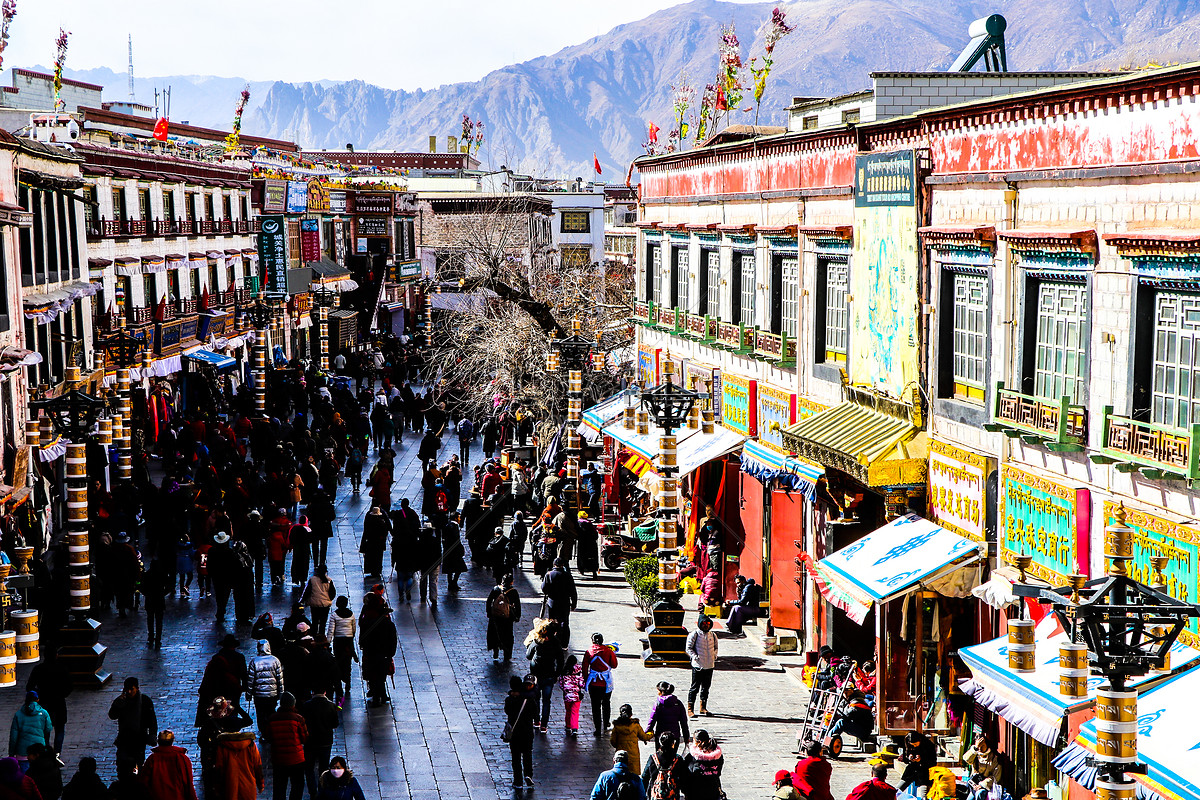
Both countries experience long winters, and at higher elevations, the cold season can stretch from late November through early March. Temperatures drop significantly during these months, but clear skies and strong sunshine are common, which still makes it possible to visit lower-altitude cities such as Lhasa, Shigatse, Kathmandu, and Pokhara without much difficulty.
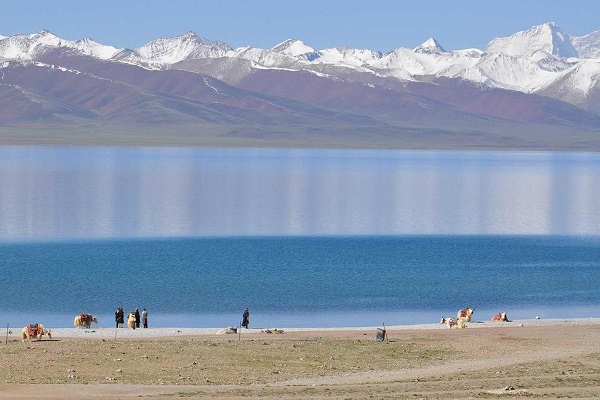
That said, winter access has real limits. A trip to Mount Kailash isn’t available during this season — the route sits above 5,000 meters, and conditions there become too extreme for safe travel. The road to Namtso Lake can also close periodically due to heavy snowfall, so it’s worth checking current local conditions before finalizing a winter itinerary.
The upside is cost. Winter is genuinely one of the best times for a budget-conscious Tibet trip, since tourist numbers drop sharply during the low season and hotels, attractions, and even flights into Tibet often come with meaningful discounts. For travelers prioritizing value over having every single destination open, a winter trip can meaningfully lower the overall cost without sacrificing much of the core experience.
Planning Logistics: Visas, Permits, And Altitude
Timing your trip well is only half the planning process for a combined Nepal-Tibet itinerary — the logistics around entry requirements and altitude deserve just as much attention.
Visa And Permit Requirements Depend On Direction Of Travel
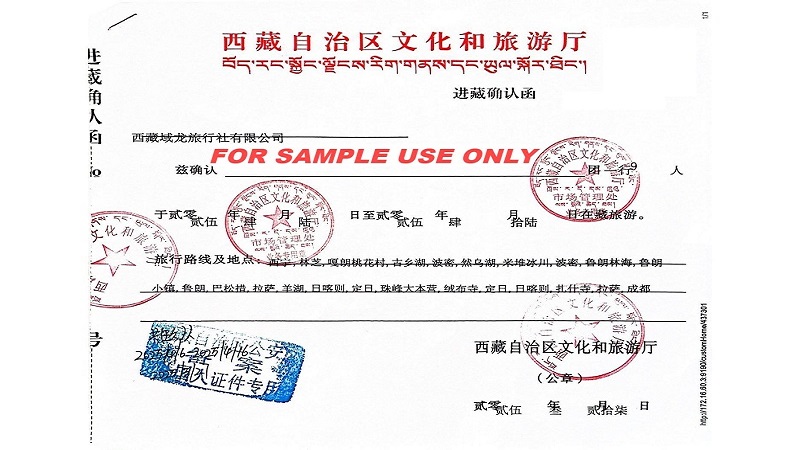
If you’re traveling from Lhasa into Kathmandu, you’ll need a Chinese visa arranged in advance, along with a Tibet Travel Permit, which can only be obtained through a licensed local travel agency rather than independently. Once your Lhasa-to-Kathmandu tour is booked, the process is usually straightforward: you provide scanned copies of your Chinese visa and passport, and your agency handles the permit paperwork from there.
Traveling in the other direction — starting in Nepal and continuing into Tibet — requires a Chinese Group Visa in addition to the Tibet Travel Permit. This Group Visa has to be applied for through the Chinese Embassy in Kathmandu rather than your home country’s embassy, so it’s worth building extra lead time into your schedule if you’re routing this way.
Entry into Nepal itself is considerably simpler. Most travelers can get a visa-on-arrival at Kathmandu’s Tribhuvan International Airport, and those crossing overland from Lhasa to Kathmandu typically receive their Nepal visa right at the land border.
Tibet Travel Permit – Tibet Yulong
The Altitude Jump Is Bigger Than It Looks On A Map
The elevation difference between the two countries is substantial and worth taking seriously. Kathmandu sits at roughly 1,400 meters, while Lhasa is at 3,650 meters — a jump large enough that altitude sickness becomes a real possibility if you move between the two too quickly. Building some breathing room into your itinerary, rather than packing it too tightly, goes a long way toward a more comfortable trip. It’s also worth speaking with a doctor about altitude sickness prevention before you travel, particularly if you have any underlying health conditions.
There’s A Two-Hour-Fifteen-Minute Time Difference
Tibet follows mainland China’s single national time zone, which puts it two hours and fifteen minutes ahead of Nepal — an unusually specific gap that catches some travelers off guard. If you’re flying between Kathmandu and Lhasa in either direction, double-check local departure and arrival times so you don’t misjudge your connections.
Local Expertise Makes A Real Difference
Because visa requirements, permit processes, and altitude planning all shift depending on which direction you’re traveling, working with an operator who has genuine on-the-ground experience in both countries tends to save a lot of headaches. Tibet Yulong maintains local expertise across both sides of the border and manages the Tibet Travel Permit process directly, helping travelers build an itinerary that accounts for seasonal timing, altitude, and border logistics rather than trying to rush through both destinations on a schedule that’s too tight to enjoy.
The Best Time To Visit Nepal And Tibet In 2026
So, when is the best time to visit Nepal and Tibet in 2026? For most international travelers, October and November are the ideal months. The weather is stable, mountain views are at their clearest, and both Tibet and Nepal offer excellent conditions for sightseeing, trekking, and overland adventures.
However, April, May, and September are also excellent choices, especially for travelers who want beautiful landscapes with fewer crowds. Summer can still be possible, but the monsoon season may affect mountain visibility and overland transportation. Winter offers a quieter and more affordable experience, although some remote high-altitude destinations may be unavailable.
Ultimately, the best season depends on your travel goals. Whether you dream of seeing Mount Everest, exploring Tibetan Buddhism, trekking in Nepal, or completing a Himalayan overland adventure, choosing the right time is the first step toward an unforgettable journey.
With professional local support from Tibet Yulong Travel, international visitors can enjoy a smoother and more comfortable Tibet-Nepal adventure, from permit preparation to border crossing and every unforgettable moment along the way.