The Butter Lamp Festival, known locally as Chotrul Duchen, stands as one of the most visually stunning and spiritually significant events in Tibetan Buddhism. Celebrated on the fifteenth day of the first month of the Tibetan lunar calendar, it marks the end of the Monlam Prayer Festival and commemorates the miracles performed by the Buddha. If you are researching the Butter Lamp Festival Chotrul Duchen Tibet what to expect, you are looking into a celebration where entire streets glow with thousands of intricate yak butter sculptures. Travelers from around the world gather in Lhasa to witness monks and artisans display towering butter lanterns depicting deities, animals, and mythological scenes. Understanding the cultural depth, logistical requirements, and respectful behavior needed for this journey ensures a profoundly rewarding experience. Preparing adequately transforms a simple sightseeing trip into an unforgettable spiritual immersion.
✨ Highlights:
- Celebrated on the 15th day of the first Tibetan lunar month.
- Features massive, intricately carved yak butter sculptures illuminated at night.
- Marks the end of the Great Prayer Festival (Monlam).
- Requires advance travel permits and high-altitude acclimatization.
- Centered primarily around Barkhor Street and Jokhang Temple in Lhasa.
Understanding the Butter Lamp Festival Chotrul Duchen Tibet What to Expect Historically
To truly grasp what you will see during the Butter Lamp Festival Chotrul Duchen Tibet what to expect, it helps to understand the historical roots of the celebration. Chotrul Duchen translates roughly to the “Festival of Miracles” or “Great Miracle Day.” According to Buddhist tradition, during the first fifteen days of the first lunar month, the Buddha displayed various miracles to defeat non-Buddhist challengers and deepen the faith of his followers. The fifteenth day represents the culmination of these miraculous feats, making it one of the holiest days in the Tibetan religious calendar.
Butter Lamp Festival
Historically, the tradition of lighting butter lamps dates back centuries in Tibet. Yak butter, a staple of the high-altitude nomadic diet, became a sacred offering due to its purity and the effort required to produce it. During the festival, monasteries across the region would craft elaborate sculptures using colored butter. These were not mere candles; they were towering works of art, sometimes reaching several meters in height, supported by wooden frameworks and detailed with pigments made from natural minerals. The historical continuity of this practice means that when you walk through Lhasa during Chotrul Duchen, you are participating in a living tradition that has survived centuries of change.
The festival also serves as the grand finale of the Monlam Chenmo, or Great Prayer Festival, which was established in the early 15th century by Tsongkhapa, the founder of the Gelug school of Tibetan Buddhism. Tsongkhapa initiated the tradition of offering butter sculptures to honor the Buddha’s miracles. Over time, this evolved into a competitive yet deeply devotional art form among the great monasteries of Lhasa, including Drepung, Sera, and Ganden. Understanding this lineage adds immense value to the visual spectacle you are about to witness.
When and Where Does the Butter Lamp Festival Take Place?
Timing your visit correctly is crucial because the festival follows the Tibetan lunar calendar rather than the Gregorian calendar. Chotrul Duchen always falls on the 15th day of the first Tibetan month, which typically corresponds to late February or March. Because the exact date shifts annually, travelers must verify the specific dates for their planned year of travel well in advance. Arriving a few days early is highly recommended, as the atmosphere in Lhasa builds progressively toward the main night of the festival.
Lhasa is the undisputed epicenter of the celebrations. While smaller butter lamp offerings occur in monasteries throughout the Tibetan plateau and even in Tibetan communities in Nepal and India, the sheer scale of the event in Lhasa is unmatched. The primary location for the festival is Barkhor Street, the ancient pilgrimage circuit that encircles the Jokhang Temple. On the night of the festival, Barkhor Street transforms into an open-air gallery of light and devotion.
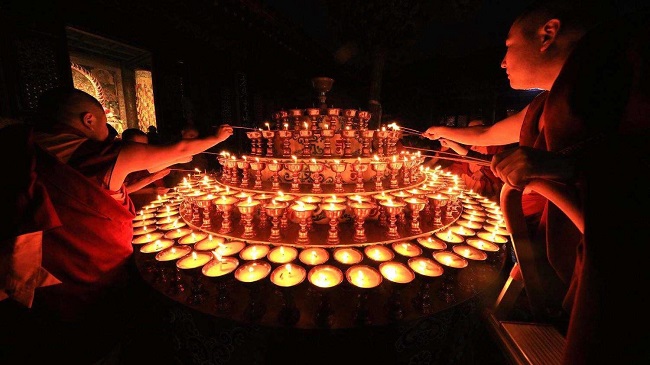
Monks from major monasteries work tirelessly in the days leading up to the event, setting up large wooden scaffolding along the street. They attach the butter sculptures to these frames. As dusk falls on the fifteenth day, thousands of traditional yak butter lamps are lit, illuminating the sculptures from below and within. The Jokhang Temple itself becomes a focal point of intense activity, with pilgrims prostrating themselves outside its doors while the golden roofs reflect the warm glow of countless flames. Planning your accommodation near Barkhor Street allows you to step out directly into the heart of the festivities without navigating complex transportation logistics late at night.
The Art of Yak Butter Sculptures: A Visual Masterpiece
When considering the Butter Lamp Festival Chotrul Duchen Tibet what to expect, the butter sculptures themselves demand special attention. This is not casual crafting; it is a rigorous, sacred discipline. The creation process begins months in advance. Monks who specialize in this art form undergo years of training. They work in unheated rooms during the freezing Tibetan winter because yak butter melts easily. The cold temperatures keep the medium pliable yet firm enough to hold intricate details.
The artists use mineral pigments to dye the butter in vibrant shades of red, blue, yellow, green, and white. They mold these colored butters into astonishingly detailed figures. You will see representations of Buddhas, Bodhisattvas, protective deities, mythical birds, dragons, flowers, and landscapes. Some sculptures depict entire narrative scenes from Buddhist sutras. The level of detail is breathtaking—individual petals on a lotus flower, the flowing robes of a deity, or the scales of a dragon are rendered with precision that rivals marble carving.
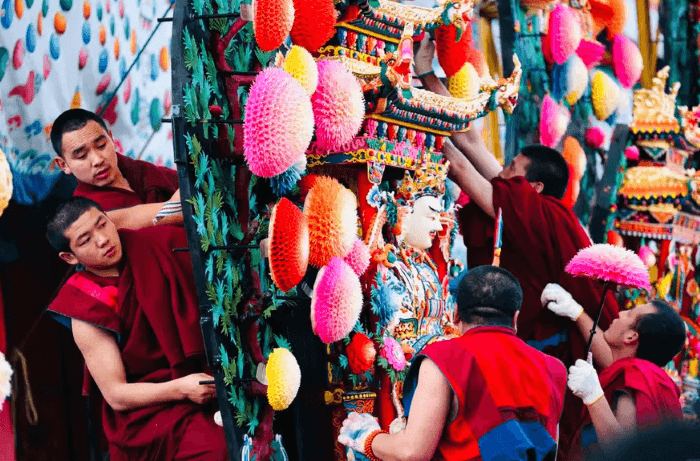
On the evening of the festival, these sculptures are mounted on large wooden frames erected along Barkhor Street. As the sun sets and the temperature drops further, the monks light the butter lamps. The effect is mesmerizing. The translucent nature of the butter allows the light to pass through the sculptures, giving them an ethereal, glowing quality. The flickering light makes the figures appear almost alive, dancing in the shadows. It is a temporary art form; once the festival ends and the sun rises, the butter melts or is respectfully distributed, emphasizing the Buddhist teaching on impermanence. Witnessing this fleeting beauty is a core reason why photographers and art lovers travel globally to attend.
Religious Significance and Spiritual Atmosphere
Beyond the visual spectacle, understanding the spiritual weight of the event is essential for anyone wondering about the Butter Lamp Festival Chotrul Duchen Tibet what to expect. For Tibetan Buddhists, lighting a butter lamp is an act of profound merit. The flame symbolizes the light of wisdom dispelling the darkness of ignorance. Offering light to the Buddhas and Bodhisattvas is believed to generate positive karma, purify negative actions, and bring blessings for future lives.
During Chotrul Duchen, it is believed that the karmic effects of all actions, both positive and negative, are multiplied millions of times. Therefore, the devotion exhibited by the local population is exceptionally intense. Pilgrims travel from remote nomadic regions, sometimes walking for weeks, to reach Lhasa for this specific day. You will see elderly Tibetans spinning prayer wheels continuously, chanting mantras like “Om Mani Padme Hum,” and performing full-body prostrations along the Barkhor circuit.
The atmosphere is thick with the scent of burning juniper incense, known as sang, and the rich, slightly sweet smell of melting yak butter. The low hum of thousands of chanting voices creates a resonant vibration that you can feel in your chest. As a visitor, you do not need to share the religious beliefs to be deeply moved by the sincerity and collective focus of the crowd. However, recognizing that this is a deeply sacred event, rather than a tourist performance, dictates how you should behave and interact with the environment.
Practical Travel Tips: Permits, Altitude, and Logistics
Traveling to Tibet requires careful logistical planning, particularly for a major event like Chotrul Duchen. First and foremost, foreign travelers cannot visit Tibet independently. You must obtain a Tibet Travel Permit, which is arranged through a registered Tibetan travel agency. Because the festival draws significant crowds, permit processing can take longer, and quotas may fill up quickly. Booking your tour several months in advance is absolutely necessary.
Altitude is another critical factor. Lhasa sits at approximately 3,650 meters (nearly 12,000 feet) above sea level. Altitude sickness is a genuine risk for visitors arriving from lower elevations. Symptoms include headaches, nausea, shortness of breath, and insomnia. To mitigate this, plan to arrive in Lhasa at least three to four days before the festival begins. Spend these initial days resting, drinking plenty of water, avoiding alcohol, and refraining from strenuous physical activity. Allow your body to acclimatize naturally. Rushing into the crowded, energetic environment of the festival while suffering from acute mountain sickness will ruin your experience and could pose serious health risks.
Accommodation in Lhasa books up rapidly around the festival. Hotels near Barkhor Street or the Jokhang Temple offer the best access but command premium prices during this period. Ensure your booking is confirmed well ahead of time. Transportation within the city center is largely pedestrian during the festival, as roads around Barkhor Street are closed to vehicles to accommodate the massive influx of pilgrims and visitors. Be prepared to walk extensively in cold weather, often late into the night. Layered clothing, thermal base layers, a heavy windproof jacket, comfortable insulated boots, gloves, and a hat are mandatory gear.
How to Respectfully Experience the Butter Lamp Festival Chotrul Duchen Tibet What to Expect
Knowing how to behave respectfully is just as important as knowing when to go. When evaluating the Butter Lamp Festival Chotrul Duchen Tibet what to expect regarding etiquette, remember that you are a guest in a deeply sacred space. Always walk clockwise around Barkhor Street and the Jokhang Temple, following the direction of the pilgrims. Walking counter-clockwise is considered highly disrespectful and disrupts the flow of religious circumambulation.
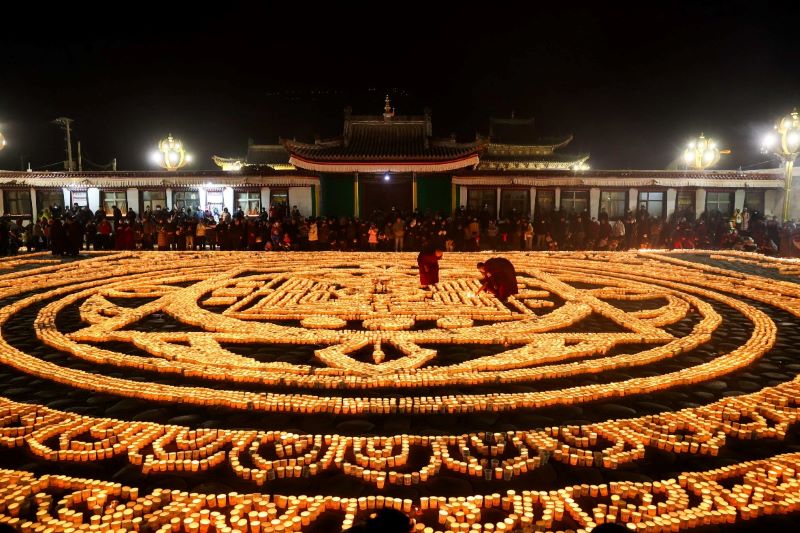
Butter Lamp Festival in tibet
Photography is generally permitted in the public streets during the festival, but strict rules apply inside temple courtyards or specific shrines. Never use a flash when photographing the butter sculptures or the monks, as it can damage the delicate butter and distract those in prayer. Always ask for permission before taking close-up portraits of pilgrims or monks. Many are deeply engrossed in prayer and may find sudden camera lenses intrusive. If someone declines, smile, nod respectfully, and move on.
Avoid stepping over religious objects, such as prayer flags laid on the ground, incense burners, or the thresholds of temples. Do not touch the butter sculptures. They are fragile, sacred offerings, and the heat from human hands can damage the intricate artwork. Keep your voice low. While the festival is bustling, it is not a carnival; it is a solemn religious observance filled with quiet joy and deep reverence. By adopting a mindful, observant posture, you enrich your own experience and show respect to the local community.
Culinary Experiences: What to Eat During the Festival
Experiencing the local cuisine is an integral part of understanding Tibetan culture during Chotrul Duchen. The cold weather and high altitude necessitate calorie-dense, warming foods. Yak butter tea, known as po cha, is ubiquitous. Made from black tea, yak butter, and salt, it tastes more like a light broth than a traditional Western tea. It provides essential hydration, warmth, and energy. Sweet milk tea is also widely available if the salty version does not suit your palate.
Momos, the Tibetan dumplings filled with yak meat, vegetables, or cheese, are a staple street food and restaurant dish. During the festival, small stalls and teahouses around Barkhor Street serve steaming plates of momos alongside thukpa, a hearty noodle soup packed with vegetables and meat that is perfect for warming up after hours outdoors. Tsampa, roasted barley flour mixed with butter tea and formed into dough balls, is the traditional daily sustenance of Tibetans and offers a genuine taste of nomadic life.
Because the festival activities extend late into the night, many local eateries keep their doors open longer than usual. Dining in a traditional Tibetan teahouse overlooking Barkhor Street provides a dual experience: enjoying authentic food while watching the river of humanity and light flowing below. Ensure you eat lightly during your first few days in Lhasa to aid in altitude acclimatization, as digestion slows down significantly at high elevations.
Navigating the Crowds and Evening Festivities
The climax of the Butter Lamp Festival occurs after dark. As the sun dips behind the mountains, the temperature plummets, but the energy on Barkhor Street surges. Thousands of people converge on the narrow, winding street. Navigating this crowd requires patience and awareness. The flow of foot traffic moves strictly clockwise, and stopping abruptly in the middle of the path can cause bottlenecks. If you wish to pause and admire a specific butter sculpture, try to step gently to the outer edge of the walkway, ensuring you do not block the pilgrims.
The illumination of the butter lamps happens gradually. Monks move swiftly along the scaffolding, lighting wick after wick. Within an hour, the street transitions from dim twilight to a brilliant, flickering corridor of gold and color. The contrast between the freezing night air and the radiant heat generated by thousands of burning butter lamps creates a unique microclimate along the street. You will hear the rhythmic chanting of monks, the murmur of prayers, and the occasional blast of long copper horns echoing from nearby monastery rooftops.
Staying aware of your surroundings is vital. Pickpocketing, while not rampant, can occur in dense crowds anywhere in the world. Keep valuables secure and close to your body. More importantly, be mindful of the fire hazard. The sculptures and lamps are made of highly flammable butter. Smoking is strictly prohibited in the vicinity, and careless movement near the displays can be dangerous. Following the guidance of local authorities and monks ensures everyone remains safe while enjoying the spectacular night.
Why Travelers Should Plan Ahead for Chotrul Duchen
Spontaneous travel to Tibet for a major religious festival is virtually impossible due to the regulatory environment and limited infrastructure. Planning ahead guarantees that your permits are secured, your flights or train tickets to Lhasa are confirmed, and your accommodations are situated optimally for festival viewing. The train journey to Lhasa, particularly the Qinghai-Tibet Railway, is an experience in itself, offering panoramic views of the high plateau, but sleeper berths sell out months in advance during peak religious seasons.
Furthermore, traveling with a knowledgeable guide enhances the experience exponentially. A local guide can explain the specific stories depicted in the butter sculptures, translate the chants you hear, and help you navigate cultural nuances that might otherwise go unnoticed. They can also assist if altitude sickness becomes problematic, ensuring you receive appropriate care quickly. Investing time in research and preparation before your departure is the difference between a stressful trip and a transformative journey.
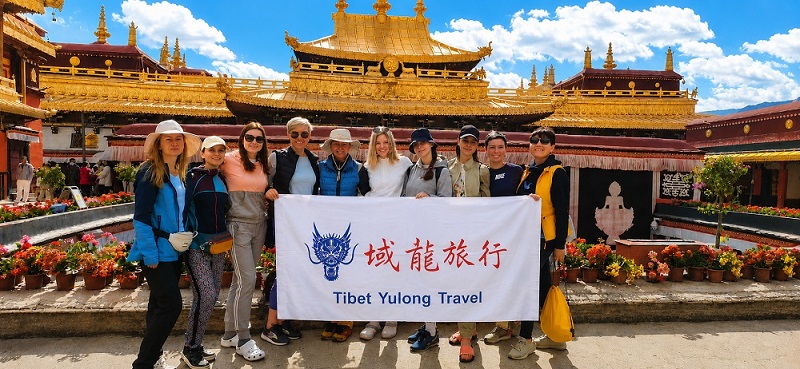
For those seeking expert guidance to navigate the complexities of visiting Tibet during this sacred time, specialized agencies make a significant difference. Tibet Yulong Travel offers comprehensive services tailored to international visitors aiming to experience authentic Tibetan culture. From securing necessary travel permits and arranging comfortable acclimatization schedules to providing deeply knowledgeable local guides who understand the spiritual significance of events like Chotrul Duchen, Tibet Yulong Travel ensures that every logistical detail is handled professionally. Their expertise allows travelers to focus entirely on absorbing the profound beauty and spiritual resonance of the Butter Lamp Festival, transforming a challenging journey into a seamless and culturally immersive adventure.
Photography Tips for Capturing the Butter Lamps
Capturing the essence of the Butter Lamp Festival requires specific photographic techniques due to the challenging lighting conditions. The primary light source is the flickering flame of the butter lamps, which creates a warm, dynamic, but low-light environment. Using a tripod is highly recommended if you want sharp images of the sculptures without relying on high ISO settings that introduce excessive noise. However, be mindful of where you place your tripod so it does not become a tripping hazard for the moving crowds.
A fast lens with a wide aperture (such as f/1.4 or f/2.8) is invaluable for gathering as much light as possible. When shooting the wide expanse of Barkhor Street illuminated by the lamps, a wider angle lens captures the scale of the event. Conversely, a telephoto lens allows you to isolate specific details of the butter sculptures—the texture of the dyed butter, the expressions on the faces of the deities, or the focused eyes of a monk lighting a wick—from a respectful distance.
Avoid using flash photography entirely. Flash flattens the beautiful ambient light created by the butter lamps, destroys the atmospheric mood, and can be disruptive or offensive to pilgrims engaged in prayer. Instead, embrace the natural interplay of light and shadow. Shooting during the “blue hour,” just after sunset but before the sky turns completely black, provides a stunning contrast between the cool twilight sky and the warm orange glow of the butter lamps. Experiment with slower shutter speeds to capture the movement of the crowds blurring past the stationary, glowing sculptures, conveying the dynamic energy of the night.