✨ Highlights:
- 🚙 Compare private vehicle tours and public transport to find suitable Tibet ground transport options for foreigners
- 📜 Understand Tibet travel permit transportation rules that shape all transport choices for overseas visitors
- 💰 Explore pros, cons and real costs of a Tibet private vehicle tour for foreign visitors
- 🚌 Learn limitations of Tibet public transport for overseas tourists and why it cannot be used for cross-plateau sightseeing
- 🗺️ Get practical guidance on private car charter in Tibet for international guests, route planning and altitude safety tips
- 🏔️ Essential advice for getting around Tibet as an overseas traveler, including permits, seasonal road risks and itinerary design
Tibet stands as one of the world’s most stunning highland travel destinations, yet travelling across this vast plateau brings unique logistical challenges. Sprawling distances, high mountain passes reaching above 5,000 metres, and special travel regulations for overseas guests all make ground transportation one of the most critical decisions before you start your Tibet journey. Many international travellers planning a trip to Lhasa, Yamdrok Lake, Shigatse or Everest Base Camp struggle to decide whether to book a private vehicle service or rely on public transport options. If you are getting around Tibet as an overseas traveler, understanding the available transport choices will help you craft a seamless and unforgettable plateau adventure.
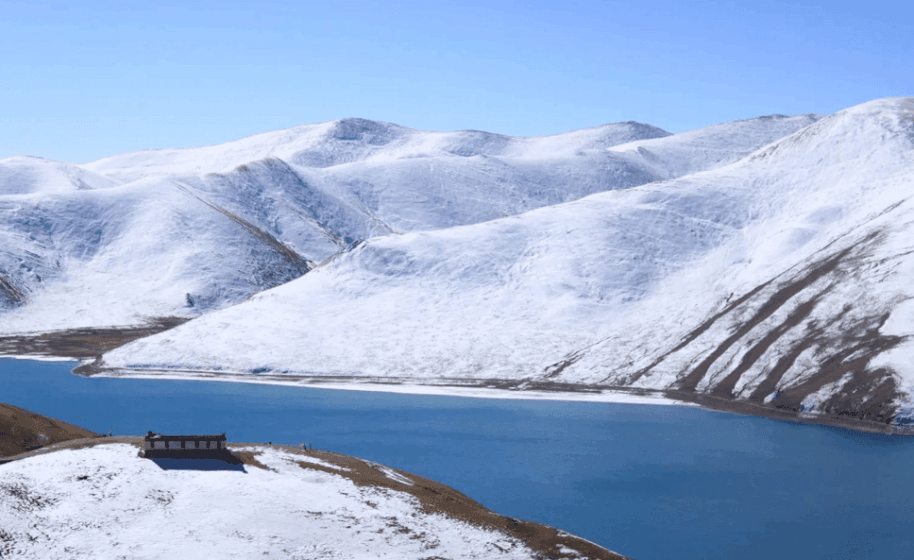
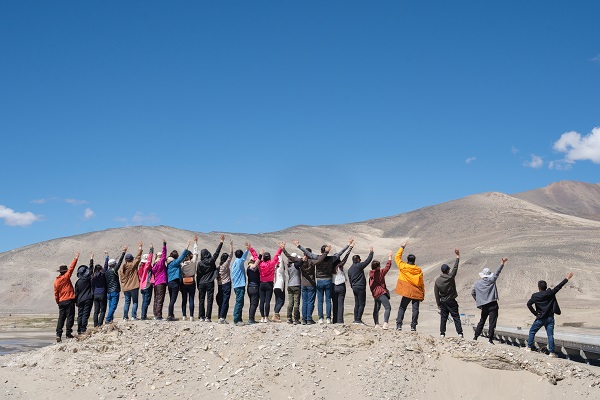
Yamdrok Lake in Winter
This in-depth guide explores ground transportation inside Tibet specifically for overseas guests. We will break down private vehicle tours with licensed local drivers and public transport services, analysing travel permits, real pricing, flexibility, comfort, safety, route coverage and practical limitations. By the end of this article, you will clearly understand which transport option matches your travel style, group size and itinerary, helping you design a smoother and more rewarding Tibet adventure.
The Golden Rule: How Travel Permits Shape Your Transport Options
Before comparing different transport methods, every overseas traveller must grasp the core regulation governing travel inside Tibet. Foreign passport holders cannot travel independently across Tibet. Solo travellers, couples or family groups are not allowed to buy bus tickets and wander freely around the plateau. Even with updated travel policies, international visitors must arrange organised tours through a registered local travel agency, accompanied by a licensed tour guide and approved transportation. It is essential to learn the Tibet travel permit transportation rules before locking in any travel plans.
All overseas guests need a Tibet Travel Permit to enter and travel within Tibet. Individual applicants cannot submit permit applications directly. This official document can only be processed by a licensed Tibet travel agency, which will submit your passport with at least six months of validity, Chinese visa and fixed travel itinerary to relevant authorities. You should start your permit application 20 to 30 days before your planned arrival date. Advanced planning is essential to avoid last-minute disruptions to your trip.
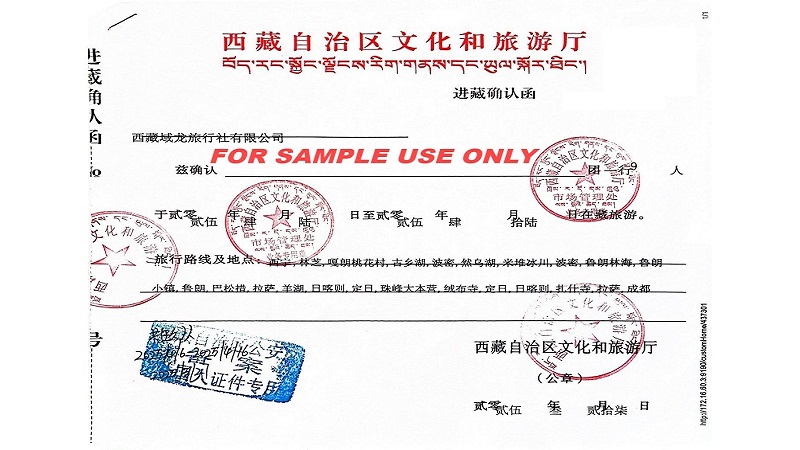
Tibet Travel Permit
This regulation directly limits your transport choices. You cannot simply rent a car and self-drive across Tibet on your own. Your realistic options are a private vehicle with a local driver arranged by your travel agency, shared small-group transport organised under an official tour package, or limited public transport services that come with major restrictions for international visitors. When reviewing Tibet ground transport options for foreigners, always keep these official requirements front of mind.
Option 1: Private Vehicle with Licensed Local Driver
How private vehicle service works
Your travel agency will assign a suitable vehicle based on your planned routes and group size. Common choices include 4WD vehicles such as Toyota Prado, comfortable SUVs or spacious business vans. Every vehicle comes with an experienced local driver familiar with plateau roads, mountain checkpoints, sudden weather changes and altitude conditions. Your licensed tour guide will travel together with you throughout the whole trip. A Tibet private vehicle tour for foreign visitors includes all these essential elements for safe high-altitude exploration.
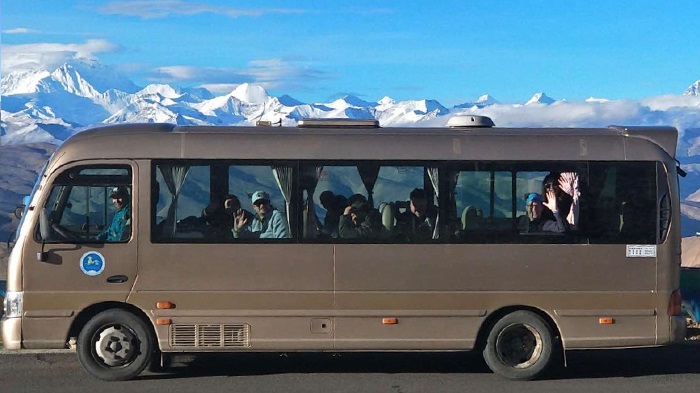
Tibet Travel Vehicles
Real cost overview
Chartering a private vehicle’s price fluctuates between peak and low travel seasons. For demanding highland routes like the Everest Base Camp northern route, a 4WD vehicle normally costs CNY 1,600 to 2,000 per day, covering driver service, fuel and road tolls. Business vans are priced around CNY 1,500 to 1,800 daily. For classic sightseeing routes, a Prado 4WD ranges from CNY 700 to 900 per day, while smaller off-road vehicles cost roughly CNY 500 to 600 each day. A full five-day Everest Base Camp private charter in peak season usually totals CNY 8,000 to 12,000 for the whole vehicle.
For overseas guests, private car charter in Tibet for international guests is almost always bundled into a complete tour package including permit handling, tour guide, accommodation and optional meals. As a reference, an 8-day private tour covering Lhasa and Everest Base Camp costs approximately USD 2,960, averaging around USD 370 per day. The cost per person drops significantly when you split the expense between two to four travellers.
Major benefits for overseas guests
Flexibility is the biggest advantage of a private vehicle tour. You can pause anytime to capture golden-hour mountain views, take breaks to ease altitude discomfort or slow down to explore quiet monasteries. This freedom is extremely valuable on the high plateau, where altitude sickness can affect travellers unexpectedly. Door-to-door pick-up and drop-off at hotels brings extra convenience, and many private tour vehicles carry oxygen supplies for high-altitude sections.
Private vehicle access covers all iconic Tibet destinations. You can reach Everest Base Camp, Namtso Lake, Yamdrok Lake and remote lesser-known monasteries, locations that are not served by regular public transport. Your travel agency also manages all checkpoint and permit paperwork, removing the stress of handling official documents during your journey.
Downsides of private vehicle travel
Private vehicle tours are the most expensive option when travelling alone. Solo international visitors will bear the full charter cost unless they join a shared small group. However, for couples, families or small groups, the premium you pay brings much higher safety, comfort and freedom, which most travellers find worthwhile on this high-altitude land.
Option 2: Public Transport Including City Buses and Intercity Coaches
How public transport operates in Tibet
Lhasa maintains a functional urban bus network with roughly 30 routes covering major city landmarks, including the Potala Palace, Jokhang Temple and Barkhor Street. City bus fares are low, at CNY 1 to 2 per trip, and services run from around 6:30 until 21:00. Intercity coaches connect Lhasa with Shigatse, Gyantse and Nyingchi. A coach ticket from Lhasa to Shigatse costs about CNY 50 to 65, and the ride takes 4.5 to 7 hours depending on road conditions. Taxis are also available within Lhasa city, with an opening fare of CNY 10 for the first three kilometres.
Key limitations for overseas guests
Although public transport is cheap and convenient for domestic Chinese travellers, it is not a practical standalone travel solution for international visitors. Three main barriers exist. First, travel regulations require overseas guests to travel under organised tours with official guides and approved transport. Public bus services do not coordinate permit checks for foreign tourists.
Second, bus schedules, station announcements and road signs are mainly in Chinese and Tibetan. Most bus drivers cannot speak English, creating major communication barriers. Third, public transport only connects town centres. There are no scheduled buses to famous scenic viewpoints. You cannot take a direct public bus to Everest Base Camp tourist camp. Even if you reach a nearby town by coach, you still need a registered vehicle to continue sightseeing. Anyone researching Tibet public transport for overseas tourists will quickly discover these critical restrictions.
Advantages of public transport
The main attraction of public transport is its low price. Short city bus rides offer an authentic glimpse into local Tibetan daily life. Many overseas travellers on guided tours choose to take short Lhasa city bus trips within their free time, as a small cultural experience. Still, public transport cannot serve as the main transport method for a full plateau sightseeing itinerary.
How to Choose Between Private Vehicle and Public Transport
A private vehicle with local driver is the right choice for several types of overseas guests. If you travel with family, elderly travellers or children, the adjustable travel pace and reliable comfort will protect visitors from altitude stress. Photographers chasing perfect sunrise and sunset views over lakes and mountain passes will benefit greatly from unlimited stopping opportunities. If your itinerary includes Everest Base Camp, Namtso, Yamdrok Lake or off-the-beaten-path monasteries, private transport is the only realistic choice.
If you are working within a tight budget and happy to follow a fixed schedule, shared small-group transport is a good alternative. Solo overseas travellers often pick this option. It remains fully compliant with Tibet travel rules and comes with a licensed guide. Public transport is only suitable if your whole trip stays within Lhasa city limits and you only want short casual rides during your free time under your guided tour arrangement.
A hybrid travel plan works well for many visitors. You can book a private vehicle for longer cross-plateau sections including Yamdrok Lake, Shigatse, Everest Base Camp and Namtso Lake. Once you return to Lhasa after long highland drives, you can explore the old town, Potala Palace and Barkhor Street on foot or take short taxi rides.
Key Travel Routes and Their Transport Requirements
Lhasa city attractions such as Potala Palace, Jokhang Temple and Barkhor Street sit close to one another. Walking or short taxi rides are enough for city sightseeing.
Yamdrok Lake sits about 100 to 115 kilometres southwest of Lhasa. The drive takes two to three hours across Kamba La Pass at nearly 5,000 metres. There is no public bus that stops at the iconic lake viewpoint, so a private vehicle is necessary for this classic day trip.
Shigatse and Tashilhunpo Monastery are roughly 300 kilometres from Lhasa. Intercity coaches connect the two cities, but overseas guests still need an organised tour and licensed guide. Travel agencies will arrange private transport rather than public coaches for foreign visitors.
Everest Base Camp is around two days’ driving distance from Lhasa on paved roads. The route includes the famous 108 hairpin bends leading to the tourist camp. Local drivers understand sudden weather changes and road conditions on this route. Shared group tours to Everest Base Camp cost CNY 1,000 to 1,500 per person, while a private vehicle gives you full control over rest stops and sunset viewing time.
Namtso Lake is located 220 to 250 kilometres north of Lhasa. The drive takes four to five hours each way, crossing Nagenla Pass at 5,190 metres, with the lake sitting at 4,718 metres above sea level. Snow can close this road in winter, making a knowledgeable local driver indispensable for safety.
Practical Travel Tips for Overseas Guests
Start your Tibet Travel Permit application 20 to 30 days before arrival and let your licensed travel agency handle all formal procedures. Always confirm your package in writing, verifying that permit service, tour guide, accommodation and transport are all included and your agency holds official registration.
If travelling with companions, split the cost of a private vehicle between two to four people to reduce individual expenses. Ask your agency whether your vehicle is equipped with oxygen supplies if your itinerary crosses mountain passes above 5,000 metres. Reserve your first one or two days in Lhasa for gentle activities to acclimatise to altitude, and build regular rest stops into every long driving section.
For trips from November to March, you will encounter fewer tour departures, icy roads and occasional temporary road closures. During this low season, a private vehicle with an experienced local driver becomes even more important to guarantee safe travel.
Frequently Asked Questions
Can foreigners rent a car and drive themselves in Tibet?
Independent self-driving without agency organisation is not permitted for overseas guests. Self-drive options are only available as part of formal organised tour packages, complete with Tibet Travel Permit, temporary driving licence and pre-approved itinerary arranged by your local travel agency.
Can overseas guests take the public bus between Lhasa and Shigatse?
The intercity coach service exists and tickets are affordable, but international visitors must travel under an organised tour with a licensed guide. Therefore, travel agencies will arrange private transport instead of public buses for foreign guests on this route.
Do overseas guests need a Tibet Travel Permit for short trips inside Tibet?
Yes. All foreign passport holders require a Tibet Travel Permit to enter and travel in Tibet, no matter how short your stay. This permit can only be obtained through a licensed local travel agency.
What is the cost difference between private vehicle and public transport in Tibet for overseas guests?
Public buses are very cheap, yet overseas tourists cannot use them as primary transport for cross-plateau sightseeing. Private vehicle charter is higher in price but fully compliant with Tibet travel permit rules and can reach remote lakes and Everest Base Camp.
Can I take a public bus from Lhasa to Yamdrok Lake as a foreign visitor?
No regular public bus runs directly to the Yamdrok Lake viewpoint. Overseas guests need a private vehicle arranged by a licensed travel agency to visit Yamdrok Lake.
Conclusion
For most overseas guests travelling across Tibet, a private vehicle with a licensed local driver is not merely a more comfortable choice. It is the practical and regulation-compliant solution for exploring the plateau’s famous natural and cultural landmarks. Public transport in Tibet offers cheap rides for local residents, yet travel permit rules, language barriers and limited coverage of scenic viewpoints make it impractical as the main transport for international visitors.
Public buses and taxis can serve as small supplementary transport options within Lhasa city, but they cannot carry you to the high mountain lakes and remote monasteries that define a Tibet trip. The best travel strategy is to partner with a licensed local travel agency to arrange your Tibet Travel Permit, tour guide and properly sized private vehicle for your group. You can travel across the highland plateau at your own pace, pause to admire spectacular scenery and rest whenever altitude requires, while your local driver handles the challenges of high mountain passes. This is the ideal way to experience the beauty of Tibet safely and comfortably.