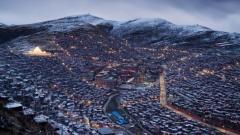
✨ Highlights:
- ⭐ Multiple Air Gateways to the Tibetan Plateau. Fly into Lhasa Gonggar or 6 regional airports including Nyingchi, Shigatse Tingri and Ngari for flexible plateau entry.
- ✈️ Top Flight Hubs from Mainland China. Chengdu is the primary gateway; frequent daily flights also run from Chongqing, Xi’an, Xining, Beijing, Shanghai and Guangzhou.
- 📜 Mandatory Permits for Foreign Visitors. International travellers need a Tibet Travel Permit arranged via qualified local agencies; border zones require an extra Border Area Permit.
- 🏔️ Altitude & Weather Travel Advice. Nyingchi Airport offers gentle low-altitude arrival; prepare for weather-related flight delays and follow plateau acclimatisation rules.
- 🗓️ Season & Booking Guidance. May–Oct is peak travel season; spring and autumn bring clearer skies, fewer crowds and better flight availability for Tibet trips.
For international travellers dreaming of the Potala Palace, sacred Namtso Lake and the vast northern plains, Tibet has long been one of Asia’s most rewarding destinations. Yet because Tibet sits on the roof of the world at an average altitude above 4,000 metres, reaching it requires careful planning. Overland routes such as the Qinghai-Tibet Railway or the Sichuan-Tibet Highway offer unforgettable scenery, but they also expose travellers to long hours on the road and rapid altitude gain, which can trigger altitude sickness even in fit visitors. Flying remains the fastest, most comfortable and safest way to reach Lhasa, and a mature domestic route network now connects Tibet to nearly every major Chinese city.
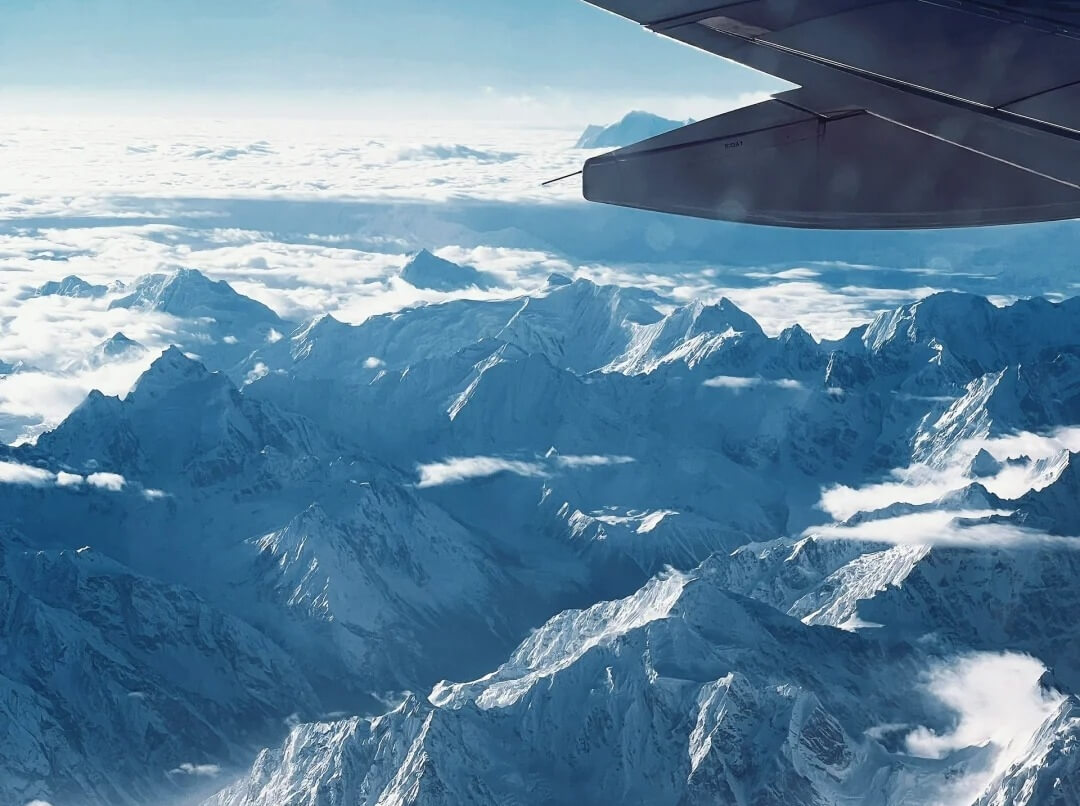
Chengdu fly to Lhasa
The good news is that modern aviation has transformed access: today, foreign tourists can fly directly into Lhasa from nearly every major Chinese city through a dense web of domestic flight connections. This guide explains which airports serve Tibet, which mainland hubs offer the most convenient flights, which airlines operate the routes, what permits every foreign visitor must arrange before boarding, and how to plan the journey for a smooth, safe and enjoyable arrival on the plateau.
Lhasa Gonggar Airport: The Main Gateway to Tibet
Almost all international visitors begin their Tibetan journey at Lhasa Gonggar Airport (IATA: LXA), located in Gonggar County, roughly 65 kilometres south of central Lhasa. Sitting at an elevation of 3,600 metres, Gonggar is one of the world’s highest international airports and has served as the unofficial gateway to Tibet since it opened in 1965.
Following the 2026 summer schedule update, Lhasa’s route network has grown to 39 domestic lines with approximately 68 flights arriving and departing every day. Ten airlines operate from Gonggar, connecting Lhasa to more than 46 cities across China. The airport also handles four international and regional routes to Kathmandu and Pokhara in Nepal, Singapore, and Hong Kong SAR. The newly expanded Terminal 3 G-island check-in area, completed in September 2026, has further smoothed the arrival experience.
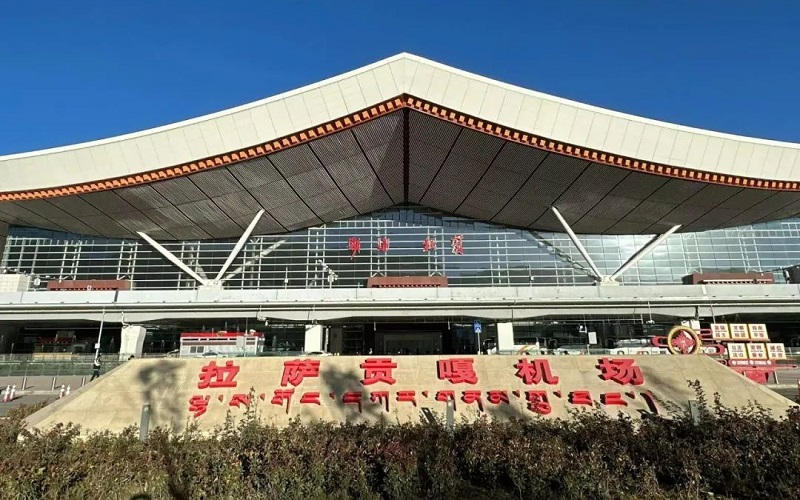
Lhasa Gonggar International Airport
From the terminal, travellers reach Lhasa by road in about one hour, crossing the Yarlung Tsangpo (Brahmaputra) valley. Most organised tours arrange a private vehicle transfer, which is the safest option because your guide can monitor early altitude-sickness symptoms on the way into the city. Taxi and airport shuttle services are also available, but for foreign passport holders the transfer is normally bundled into the tour package arranged with your travel agency.
Because Gonggar sits at 3,600 metres, the aircraft descends directly into the valley, and many passengers notice the thin, dry air as soon as they step off the plane. Drinking water, avoiding alcohol and taking a gentle first evening are more important here than at almost any other airport in China. Flight schedules are also affected by plateau weather: summer thunderstorms and winter crosswinds can cause delays, so allowing a buffer between your international arrival and your first Tibetan domestic flight is strongly advised.
Major Domestic Flight Hubs Connecting to Lhasa
Chengdu: The Number-One Gateway
Chengdu, the capital of Sichuan Province, is by far the busiest and most flexible entry point for Tibet. Flights land at both Chengdu Shuangliu (CTU) and Chengdu Tianfu (TFU), with roughly five daily services from Shuangliu alone to Lhasa. Combined with Tianfu, Chengdu offers up to a dozen departures a day, operated by Tibet Airlines, Sichuan Airlines, Air China and West Air.
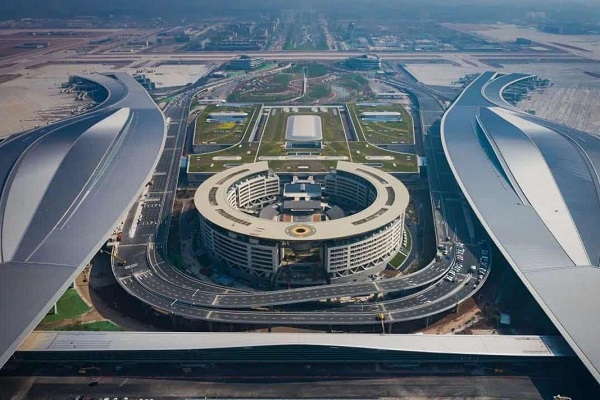
TianFu international Airport in Chengdu
The flight takes around two hours, making it the shortest and most frequent link between mainland China and Tibet.
Because Chengdu is also a major international hub with direct flights from Europe, North America, Southeast Asia and the Middle East, most foreign travellers route through Chengdu as their first stop. The city is well suited to a two-day pre-trip break: its laid-back atmosphere, excellent Sichuan cuisine and proximity to the giant panda breeding centre make it an easy place to recover from a long intercontinental flight before the climb to the plateau.
Chongqing, Xi’an and Xining: High-Frequency Trunk Routes
Chongqing Jiangbei (CKG), Xi’an Xianyang (XIY) and Xining Caojiabao (XNN) form the second tier of Lhasa’s trunk network. Each sees multiple daily flights operated by Tibet Airlines and China Southern, with flight times ranging from two hours (Chongqing) to two and a half hours (Xi’an) and a little over two hours (Xining). Xining is particularly popular among travellers concerned about altitude, because it sits at 2,200 metres and allows a gentler two-day acclimatisation stop before the dramatic climb to Lhasa. Xi’an, home to the Terracotta Army, is a natural add-on for visitors who want to combine ancient Chinese history with Tibetan culture.
Beijing, Shanghai, Guangzhou and Other Major Cities
Direct flights also link Lhasa with Beijing Capital (PEK), Shanghai Hongqiao (SHA) and Guangzhou Baiyun (CAN), typically one or two services a day. These are ideal for travellers who have already spent time in eastern China and want to fly straight to Tibet without backtracking through Chengdu. Additional direct points include Kunming (KMG), offering several daily connections, plus seasonal or daily flights to Lijiang, Lanzhou, and increasingly smaller provincial centres including Yuncheng, Bazhong, Xuzhou and Wenzhou. Tibet’s total domestic destination network now covers 56 cities.
Regional Airports Across the Tibetan Plateau
Beyond Lhasa, six additional airports now make it possible to fly directly into other parts of Tibet, saving long overland drives and reducing high-altitude exposure on remote roads.
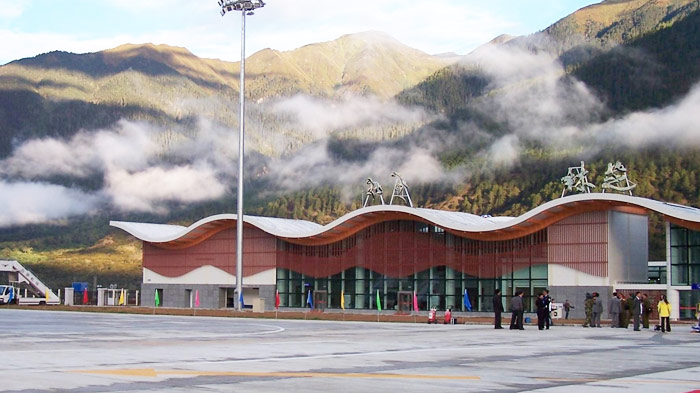
Nyingchi Mainling Airport (LZY)
Nyingchi, in the forested southeast of Tibet, is served by Mainling Airport at 2,949 metres. It is the lowest airport in Tibet and therefore the gentlest introduction to the plateau. Five airlines currently connect it to around 10 cities, including Chengdu, Chongqing, Xi’an and Guangzhou, with roughly 194 weekly flights. Flying into Nyingchi first is a classic strategy for travellers concerned about altitude sickness, because the lush, lower river valley allows a gradual upward acclimatisation before continuing to Lhasa. The flight approach over the Yarlung Tsangpo Grand Canyon, with snow peaks rising above green subtropical forest, is widely regarded as one of the most spectacular approaches in China.
Qamdo Bamda Airport (BPX)
Qamdo Bamda, at 4,334 metres, is one of the highest airports in the world. It handles around 112 weekly flights operated by three airlines to four cities, mainly Chengdu and Chongqing. It is the gateway for travellers heading to the eastern Kham region and the Ranwu Lake and Midui Glacier area. Because of its extreme elevation, flights to Qamdo are more susceptible to weather delays, so it is wise to build buffer days into any Qamdo-based itinerary.
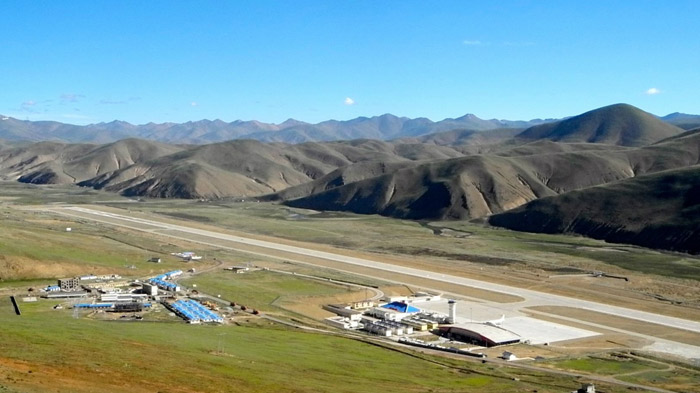
Shigatse: Peace and Tingri Airports
Shigatse, Tibet’s second-largest city, has two airports. Shigatse Peace Airport (RKZ) serves the city itself and the Tashilhunpo Monastery. The newer Shigatse Tingri Airport (DDR), opened close to the Everest (Qomolangma) region, launched a direct Tingri-Lhasa shuttle on 5 September 2026. This route dramatically cuts travel time to the Everest Base Camp area and is especially welcome for trekkers on a tight schedule.
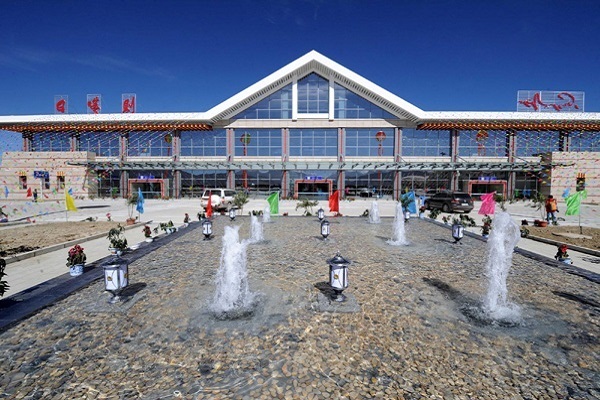
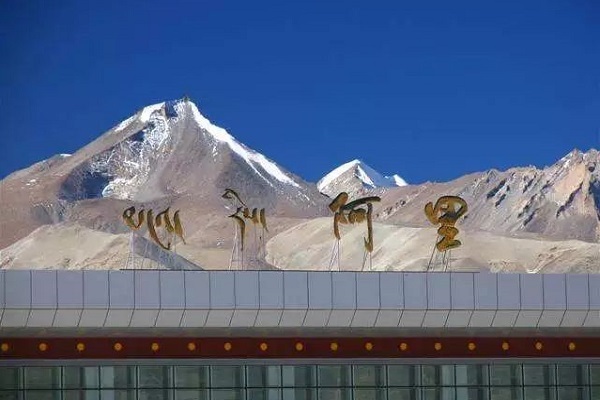
Ngari Gunsa Airport (NGQ)
Far western Ngari, the gateway to Mount Kailash and Lake Manasarovar, is linked to Lhasa by about three daily flights. A new Ngari-Hotan-Urumqi route launched on 3 September 2026 now connects Tibet’s far west with Xinjiang, opening an alternative Silk Road-style entry corridor for adventurous travellers. Note that Ngari lies deep in border territory, so both the Tibet Travel Permit and a Border Area Permit are mandatory.
Airlines Operating Tibet Routes
Several carriers dominate the Tibet domestic network. Tibet Airlines (TV), based in Lhasa, is the largest operator and flies the widest range of provincial connections. Sichuan Airlines (3U), Air China (CA), China Eastern (MU) and China Southern (CZ) provide the trunk services from Chengdu, Chongqing, Xi’an, Beijing, Shanghai and Guangzhou. West Air (8L), a Chongqing-based low-cost carrier, is notable for having launched the Lhasa-Singapore route in December 2024, Tibet’s second international air link after the long-standing Kathmandu service. Himalaya Airlines (H9) operates the Monday-to-Saturday Lhasa-Kathmandu service, with a flight time of roughly one and a half hours.
For booking, domestic Chinese flights are sold through the airlines’ own websites, major online travel agencies such as Trip.com and Fliggy, and at airport counters. Foreign passport holders can book online, but it is simpler to have your Tibet travel agency handle both the flight bookings and the permit applications in one go, because the permit number must be produced at check-in.
Essential Permits Every Foreign Visitor Needs
This is the single most important administrative point for international travellers: simply buying a plane ticket is not enough. Foreign passport holders, as well as visitors from Taiwan, must obtain a Tibet Travel Permit, formally the Aliens’ Travel Permit, before flying to Tibet.
The permit can only be arranged through a registered and qualified Chinese travel agency – independent travel is not permitted. You must provide clear scans of your passport and your valid Chinese visa, and the agency will submit the application to the Tibet Tourism Bureau. It is strongly recommended to submit your documents at least 15 days before departure, and earlier still during the peak summer season from June to September. Permits are typically issued as a small printed letter, which your guide carries and presents at hotel check-in, scenic-area entrances and road checkpoints.
Holders of Hong Kong or Macau Home Visit Permits can enter Tibet without a separate Tibet Travel Permit, while Taiwan compatriots use their Mainland Travel Permit. If your itinerary extends to border areas such as Everest Base Camp, Mount Kailash, Nyingchi’s border counties or the Ngari region, an additional Border Area Permit is also required, again arranged through your travel agency alongside the main permit. Your guide will carry the original permits, which are checked at roadsides, scenic-area entrances and, in some cases, at railway stations.
Best Time to Fly and Book
The peak season for Tibet is May to October, with July and August offering the warmest weather but also the highest fares and fullest flights. Spring (April to early June) and autumn (late September to October) offer clear skies, comfortable temperatures and thinner crowds, making them the most rewarding windows for travel. Winter flights are significantly cheaper and Lhasa is far quieter, though high-altitude sites such as Everest Base Camp may be closed or extremely cold. As a rule of thumb, book domestic flights to Lhasa at least one to two months in advance for summer travel, and three to four weeks ahead in the shoulder seasons.
Practical Arrival and Acclimatisation Tips
Upon arrival, avoid heavy exercise, alcohol and hot showers on your first day; drink plenty of water and let your body adjust for at least 24 hours before visiting the Potala Palace or undertaking long drives. Many travellers plan a restful first day in Lhasa, exploring the old town and the Barkhor Circuit at a gentle pace while their bodies acclimatise.
Carry your passport, Tibet Travel Permit and Border Area Permit at all times – you will need them to check in for domestic flights within Tibet and to enter most monasteries. For the most seamless experience, choose a regulated Tibet-based agency that bundles flights, permits, private guide, vehicle and accommodation into a single fixed itinerary; this is both a regulatory requirement and the safest way to manage high-altitude travel.
Conclusion
Reaching Tibet from mainland China by air has never been easier: a mature network of 39 Lhasa routes, six regional airports and multiple daily trunk services from Chengdu, Chongqing, Xi’an and Xining puts the roof of the world within comfortable reach. With the Tibet Travel Permit arranged in advance through a qualified agency, foreign tourists can fly directly into Lhasa – or into Nyingchi, Qamdo, Shigatse or Ngari – and begin their journey to one of Asia’s most extraordinary landscapes.