When most travelers think of the Tibetan Plateau, images of towering snow-capped peaks, remote monasteries, and rugged trekking trails usually come to mind. Yet, beneath this dramatic landscape lies a surprisingly relaxed urban culture that many visitors completely overlook. Understanding how locals unwind offers a deeper connection to the region than any guidebook itinerary. The leisure life in Lhasa is defined by a deliberate slowness, where time seems to stretch out under the high-altitude sun. For the people who call this city home, relaxation is not an occasional luxury squeezed into a busy weekend; it is woven into the very fabric of their daily existence. To truly appreciate Lhasa, you have to step away from the scheduled tours and observe how its residents spend their afternoons, share their meals, and enjoy their neighborhoods.
Key points
Teahouse Culture: Traditional teahouses act as community living rooms where locals spend hours socializing over butter tea or sweet tea.
Spiritual Movement & Picnicking: Daily life balances peaceful walking koras around Barkhor Street with outdoor picnics (linka) and games in sunny parks.
Social Dining & Gentle Nightlife: Meals and evenings focus on connection, featuring shared foods (like momos), barley beer, live folk music, and Guozhuang circle dances.
Mindful Slow Living: Lhasa’s lifestyle prioritizes human connection, presence, and simple unhurried moments over tight schedules and productivity.
The Teahouse Culture at the Heart of Lhasa
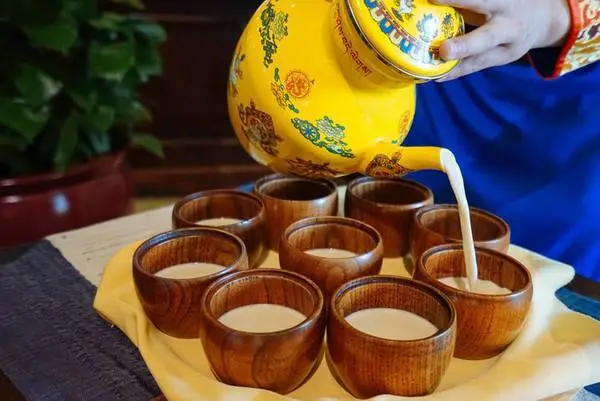
If there is one institution that defines the leisure life in Lhasa, it is the traditional Tibetan teahouse. Unlike the fast-paced coffee shops found in modern metropolises where people rush in, grab a drink, and leave, teahouses here are designed for lingering. They serve as community living rooms where friends gather, business deals are discussed in hushed tones, and strangers easily become acquaintances over a shared pot of tea. Walking into a popular teahouse in Lhasa, you are immediately greeted by the rich, earthy aroma of boiling butter tea mingling with the sweet scent of baked goods.
The seating arrangement itself encourages socialization. Long wooden benches and communal tables mean you will likely sit shoulder-to-shoulder with locals. It is common to see elderly men spinning prayer wheels while debating local news, or groups of women laughing over steaming thermoses. Sweet tea, known locally as cha ngarmo, is arguably more popular among the younger generations and those enjoying a casual afternoon. Brewed strong with black tea leaves, milk, and plenty of sugar, it provides a comforting warmth against the crisp plateau air. Ordering is simple, and the prices remain remarkably affordable, making it accessible to everyone. Spending two or three hours in a teahouse is entirely normal. No waiter will hover near your table waiting for you to finish. This unhurried atmosphere is the cornerstone of how Tibetans relax and recharge.
Strolling the Barkhor Circuit
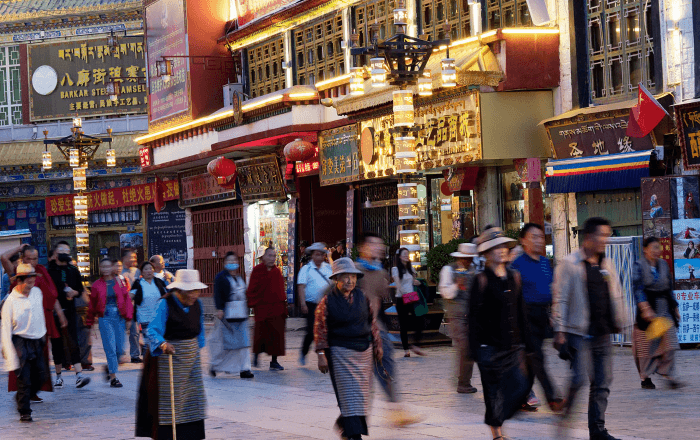
Physical activity in Lhasa rarely looks like a grueling gym session. Instead, movement is spiritual, social, and deeply relaxing. The Barkhor Street circuit, which encircles the Jokhang Temple, is the most famous walking route in the city. While tourists often visit Barkhor Street to shop for souvenirs or take photographs, for the residents of Lhasa, walking this circuit—known as a kora—is a daily ritual of both devotion and leisure.
Throughout the day, but especially in the early morning and late afternoon, you will see hundreds of locals moving clockwise around the temple. Some walk briskly, while others amble slowly, chatting with neighbors they happen to meet along the way. The rhythmic sound of footsteps, the murmur of mantras, and the gentle clinking of rosary beads create a uniquely soothing environment. Participating in or simply observing this flow of people is one of the best ways to experience the leisure life in Lhasa firsthand. It is not just about religious merit; it is a chance to get outside, breathe the thin but clean air, and feel connected to the community. Many older residents treat the Barkhor kora as their primary form of exercise, combining physical health with mental peace. You do not need to be a devout Buddhist to appreciate the calming effect of joining this ancient pedestrian loop. Just match the pace of the crowd, keep to the left to respect the clockwise direction, and let the rhythm of Lhasa guide your steps.
Picnics and Park Life Under the Plateau Sun
When the weather is favorable, the parks of Lhasa transform into vibrant hubs of outdoor relaxation. Places like Norbulingka, the former summer palace of the Dalai Lamas, and Zongjiao Lukang Park behind the Potala Palace, are favorite destinations for families and friend groups looking to escape the bustle of the streets. The concept of “linka,” which translates roughly to picnicking or enjoying a garden outing, is a cherished tradition that perfectly encapsulates the leisure life in Lhasa.
During weekends or festivals, locals set up colorful tents or lay down large rugs beneath the shade of ancient willow trees. They bring along elaborate spreads of food, large thermoses of butter tea and sweet tea, and portable speakers playing traditional music or contemporary Tibetan pop songs. Card games and dice are incredibly popular pastimes during these park gatherings. You will frequently see intense but good-natured games of Sho, a traditional Tibetan dice game, drawing small crowds of onlookers who cheer and joke with the players. Children run freely through the grass, chasing each other or playing near the ponds where ducks glide peacefully. This outdoor lifestyle is heavily dependent on the abundant sunshine that Lhasa is famous for. Known as the “Sunlight City,” the intense ultraviolet rays might require heavy sunscreen, but the warmth makes sitting outdoors comfortable even when the ambient temperature is cool. Parks offer a green sanctuary where the rigid architecture of the city softens, allowing residents to breathe deeply and enjoy nature without ever leaving Lhasa.
Food as a Social Anchor
You cannot discuss how Tibetans relax without mentioning the central role that food plays in their social lives. Dining out or cooking together is less about quickly satisfying hunger and more about sharing an experience. The culinary scene in Lhasa reflects a blend of traditional nomadic diets and influences from neighboring regions, resulting in hearty, comforting dishes meant to be savored slowly.
Momos, the beloved Tibetan dumplings filled with yak meat, cabbage, or potatoes, are a staple of casual dining. Friends will often meet at a favorite local eatery specifically to share several plates of freshly steamed momos, dipping them in fiery chili paste and garlic sauce. Thukpa, a warm noodle soup packed with vegetables and meat, is another go-to comfort food, especially on chilly evenings. Eating thukpa is a slow process, requiring you to sip the hot broth carefully while slurping the noodles, naturally forcing you to slow down your pace. Beyond traditional fare, Lhasa has developed a fascinating cafe culture that caters to the modern desire for leisure. While distinct from the old-school teahouses, these newer cafes still embrace the local philosophy of taking things easy. Young Tibetans frequently gather in these spaces to read, study, or simply watch the world go by through large glass windows. Whether it is a bowl of yak bone broth or a slice of cake, consuming food in Lhasa is always treated as an event to be enjoyed rather than a task to be completed.
Evening Rhythms and Nightlife
As the sun dips below the mountains and the sky turns a deep, bruised purple, the leisure life in Lhasa shifts into a quieter, yet equally engaging gear. The nightlife here does not revolve around loud clubs or chaotic bars. Instead, evenings are spent in cozy taverns, singing traditional folk songs, or taking peaceful night walks.
Many locals enjoy visiting neighborhood pubs or restaurants where live Tibetan music is performed. These venues range from rustic rooms with wooden stools to slightly more modern lounges. Patrons sip on chang, a mildly alcoholic fermented barley beer, or local spirits, while musicians play the dranyen, a traditional lute. Singing is a deeply ingrained part of Tibetan culture, and it is common for guests to take turns singing folk songs or modern ballads. The atmosphere is jovial, inclusive, and completely devoid of pretension. If live music is not your preference, an evening stroll through the illuminated streets offers a different kind of magic. Seeing the Potala Palace lit up against the dark mountain backdrop is a breathtaking experience, and the plazas around it fill with locals practicing traditional circle dances called Guozhuang. Anyone is welcome to join the expanding rings of dancers, whose synchronized steps create a mesmerizing display of community harmony. Participating in these dances requires no prior skill, only a willingness to follow the rhythm and smile at your fellow dancers.
Embracing the Slow Pace
To truly understand the leisure life in Lhasa, visitors must consciously adjust their internal clocks. The altitude alone demands a slower physical pace, but the cultural environment demands a slower mental one. Tibetans have mastered the art of being present. Whether they are turning a prayer wheel, sipping sweet tea, or arguing playfully over a dice game, their attention is fully anchored in the current moment.
This mindfulness is not necessarily practiced as a formal meditation technique by everyone, but rather as a natural byproduct of their lifestyle. There is a collective understanding that rushing leads nowhere good, and that human connection is far more valuable than productivity. When you arrive in Lhasa, the best thing you can do is abandon your strict checklist of tourist attractions. Allow yourself to wander aimlessly down a side street, sit on a bench in a sunlit square, or accept an invitation to share a pot of tea with someone you just met. The true essence of this remarkable city is not found at the summit of a mountain or inside a museum. It is discovered in the quiet, joyful, everyday moments of its people. By adopting even a fraction of their relaxed approach to life, you will find that your journey becomes infinitely richer, proving that the greatest souvenir you can take from Lhasa is a newfound appreciation for doing absolutely nothing at all.