
✨ Highlights:
- 💰 Fewer crowds & huge savings: Tourist numbers drop ~70% Nov‑Feb; hotels cut rates 30‑50% for budget‑friendly Tibet travel
- ❄️ World‑class frozen lake scenery: Witness surreal blue ice at Namtso, crystal clear ice at Puma Yumco and partially‑frozen turquoise Yamdrok Lake
- 🏔️ Unbeatable Himalaya visibility: Winter brings cloud‑free skies, greatly raising your chance to photograph Everest North Face
- 🛕 Cultural perks: Shorter queues at Potala Palace, authentic local pilgrim atmosphere with no summer tourist crowds
- 📋 Practical winter‑focused guidance: Ready‑to‑use 8‑day frozen‑lake itinerary, packing checklist, altitude safety rules & operator selection tips
- 📅 Critical booking note: Foreign visitors need Tibet Travel Permit; book 4‑6 weeks in advance for smooth permit processing
Most travelers picture Tibet under a summer sun — prayer flags fluttering, yaks grazing, and monasteries buzzing with pilgrims. But ask any seasoned Tibet hand, and they’ll tell you the same thing: winter is when Tibet truly reveals itself. Clear skies, fewer crowds, dramatically lower prices, and the surreal spectacle of high-altitude lakes freezing into vast blue ice sheets. A Tibet winter off-season discount tour frozen lakes itinerary isn’t just a budget option — it’s arguably the most authentic way to experience the Roof of the World.
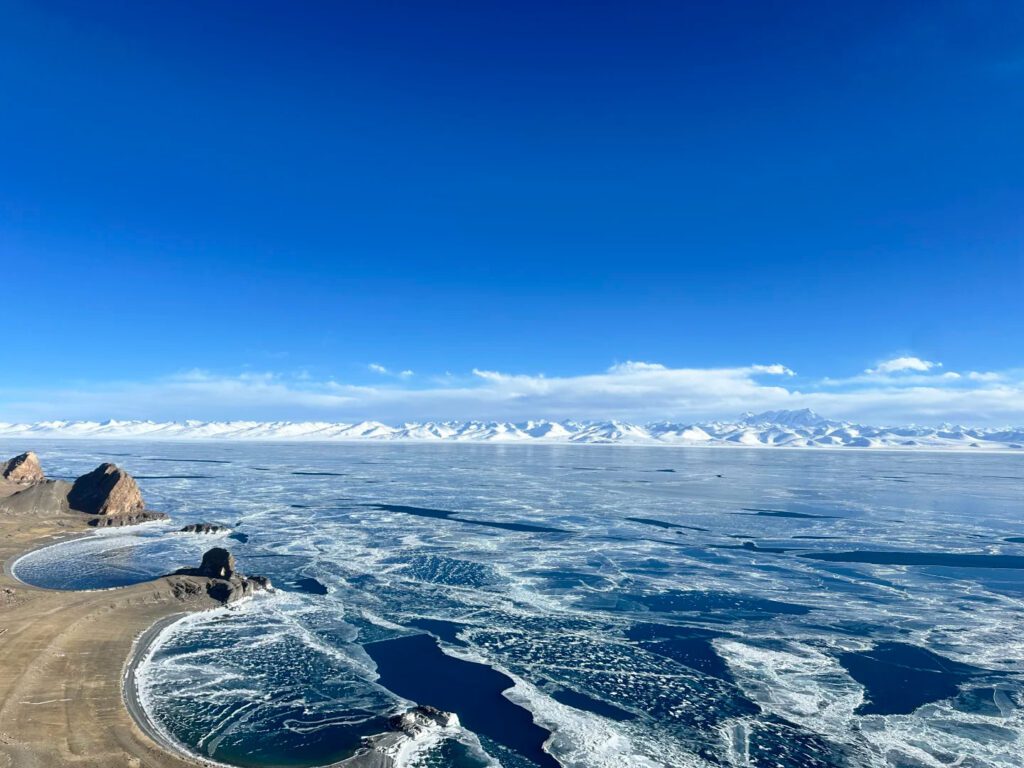
Namtso Lake
From November through February, tourist numbers drop by roughly 70%, hotel rates fall by 30–50%, and many tour operators slash package prices. Meanwhile, visibility peaks. Winter skies over Lhasa are consistently cobalt blue, and the distant Himalayan peaks — including Everest North Face — are far more likely to be cloud-free than in the monsoon months.
If you’ve been waiting for the right moment to see Tibet without draining your savings, this is your sign.
Top Frozen Lakes to Include in Your Winter Tibet Tour
1. Namtso (Lake Nam) — The Iconic Frozen Blue Ice Lake
Namtso, sitting at 4,718 meters, is Tibet’s second-largest saltwater lake and one of the three holy lakes. In summer, it’s a shimmering turquoise expanse ringed by snow-capped peaks. In winter, it transforms into something otherworldly: a 1,900-square-kilometer sheet of ice, cracked into geometric patterns and glowing pale blue beneath the sun.
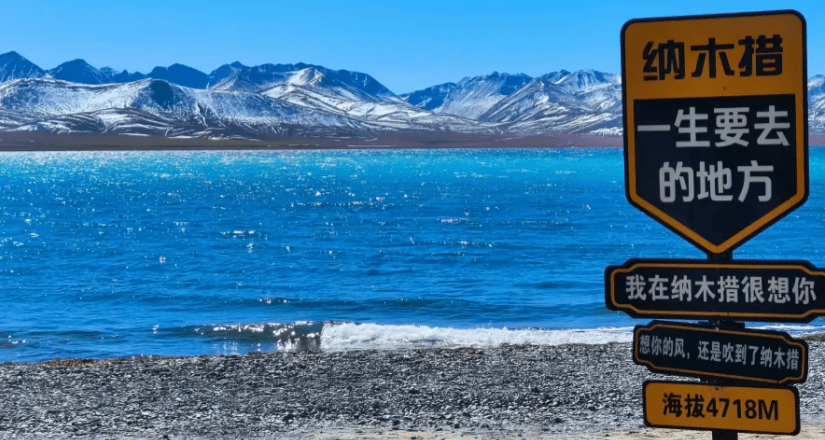
Access note: The road over Lhachen La pass (5,190m) can close after heavy snow. Most winter tours reach the southern shore viewpoint near Tashi Dor, where ice formations and the backdrop of Mount Nyenchen Tanglha are spectacular. Confirm road conditions with your operator 48 hours before departure.
2. Yamdrok Lake (Yamdrok Yumtso) — The Sapphire That Rarely Fully Freezes
Yamdrok, at 4,441 meters, is famous for its winding, scorpion-shaped shoreline and intense turquoise color. Unlike Namtso, Yamdrok’s depth and constant water movement mean it only partially freezes in the coldest months — usually late December through January. The contrast between frozen bays and open, jewel-toned water is a photographer’s dream.
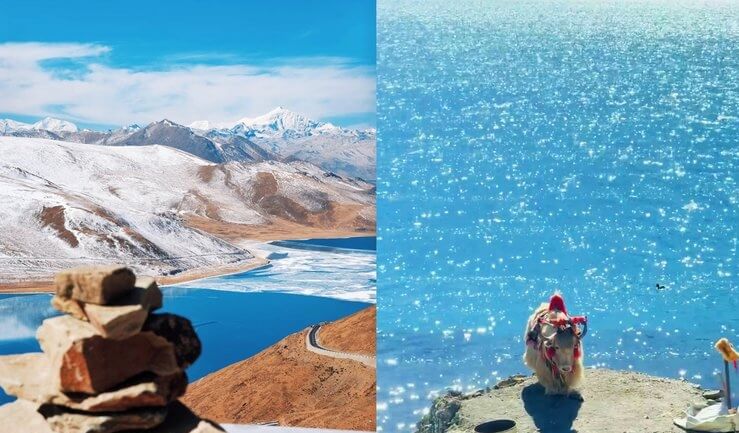
The drive from Lhasa to Yamdrok crosses Kamba La pass (4,794m), one of the most scenic viewpoints in all of Tibet. In winter, the panorama of the lake below, backed by the snow-dusted Himalayas, is simply unmatched.
3. Puma Yumco — The “Floating Blue Ice” Hidden Gem
At 5,030 meters, Puma Yumco is one of the highest lakes in the world and a rising star among winter travelers. In January and February, its surface freezes so clear that you can see deep into the ice — earning it the nickname “Tibet’s Baikal” for its dramatic blue ice and pressure ridges.
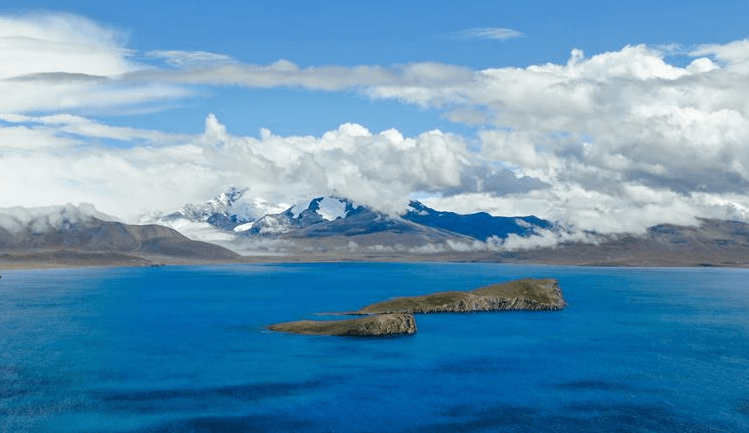
Puma Yumco is remote (roughly 6 hours from Lhasa via Yamdrok), so it’s best included in a 2–3 day extension. Very few tourists visit in winter, meaning you’ll likely have the entire lake to yourself.
4. Basum Tso — The Forested Alpine Lake
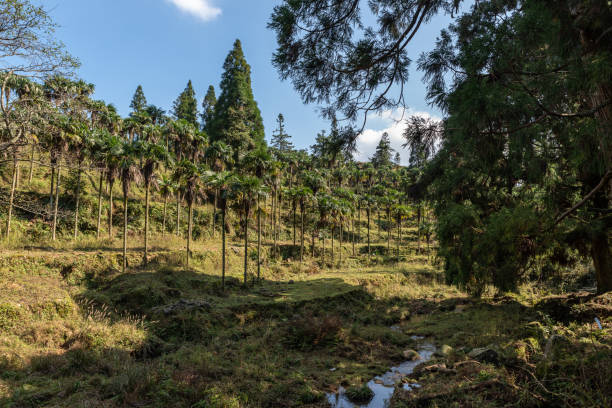
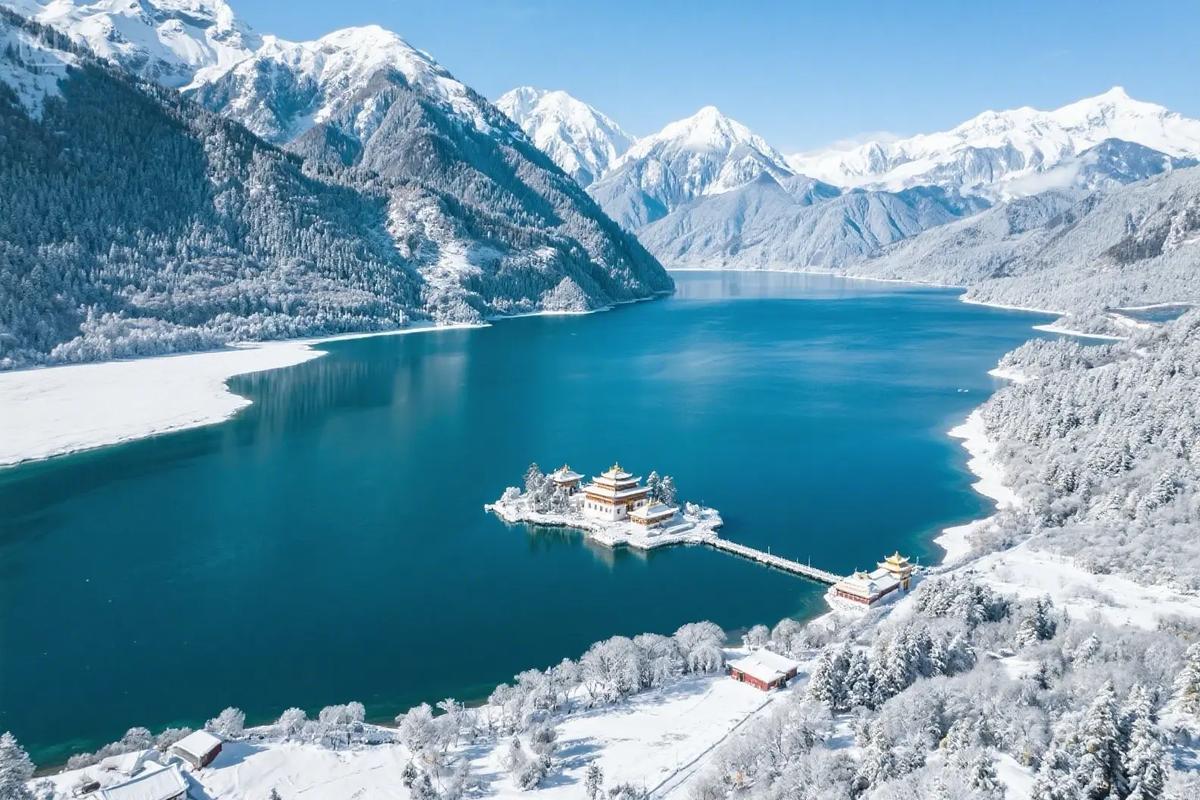
Basum Tso (3,700m) in eastern Tibet’s Nyingchi region is lower in elevation and surrounded by ancient forest. It rarely freezes completely, but its winter setting — snow-laden pines reflected in green water — offers a completely different visual character from the barren plateau lakes. It’s an excellent addition if your itinerary includes the Nyingchi or Lulang area.
How Much Can You Save on a Tibet Winter Tour?
Tibet Travel Permit fees remain constant year-round (roughly $50–80 depending on nationality), and the Chinese visa is also fixed. But every variable cost — accommodation, transport, guide, and package markup — drops significantly.
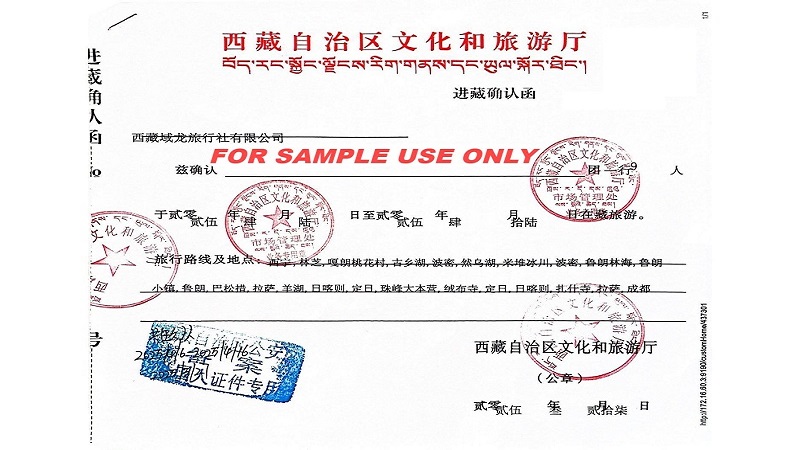
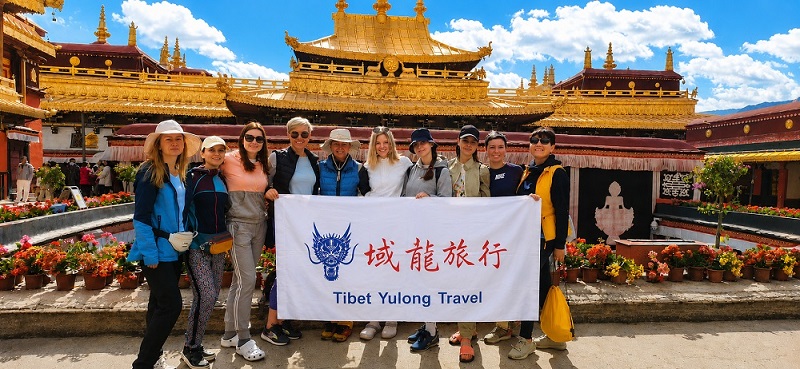
Tibet Travel Permit – Tibet Yulong
Many operators also run early-booking discounts for November and December departures, and last-minute deals in January when bookings are slowest. Combining an off-season package with a small group departure can bring an 8-day Tibet tour well under $1,000 — unthinkable in summer.
Sample 12-Day Winter Tibet Frozen Lakes Itinerary
Curated specifically for winter road conditions and high-altitude acclimatization, this 12-day Tibet Winter Off-Season Discount Tour itinerary perfectly blends profound Tibetan cultural heritage, stunning frozen alpine lakes, majestic glaciers, and the iconic Everest Base Camp view. Spanning Lhasa, Nyingchi, Shigatse, and northern Tibet’s grasslands, this well-paced route avoids rushed high-altitude travel, maximizes chances of clear winter skyline views, and covers the most photogenic frozen water landscapes of the Tibetan Plateau, delivering an authentic and unforgettable off-season Tibet travel experience.
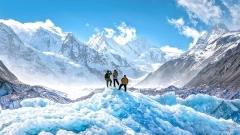
Day 1: Arrival in Lhasa
Day 2: Lhasa – Basum Tso – Nyang River – Nyingchi (390 km)
Day 3: Nyingchi – Lulang – Ranwu Lake – Bomi (380 km)
Day 4: Bomi – Laigu Glacier – Yalong Glacier – Nyingchi(300 km)
Day 5: Nyingchi – Kading Valley – Lhasa (460 km)
Day 6: Lhasa City Tour: Potala Palace – Jokhang Temple – Barkhor Street
Day 7: Lhasa – Yamdrok Lake – Karola Glacier – Shigatse
Day 8: Shigatse – Tingri – Gyatso La Pass – Everest Base Camp – Basong Village
Day 9: Everest Base Camp – Gawula Pass – 318 Highway – Shigatse
Day 10: Shigatse – Tashilhunpo Monastery – Lhasa
Day 11: Lhasa – Namtso Lake – Northern Tibetan Grasslands – Lhasa
Day 12: Departure from Lhasa
Day 1: Arrival in Lhasa | Initial Altitude Acclimatization
Arrive at Lhasa Gonggar Airport and transfer to your downtown hotel. Situated at 3,650 meters, Lhasa features mild, sunny winter weather ideal for preliminary altitude adaptation. Take the day to rest, avoid strenuous exercise, and adjust to the plateau’s dry, thin air to lay a solid foundation for the upcoming high-altitude exploration. No scenic arrangements are scheduled to prevent altitude sickness.
Day 2: Lhasa – Basum Tso – Nyang River – Nyingchi
Kick off your winter landscape journey with a drive to eastern Tibet’s Nyingchi region. Visit the renowned Basum Tso, a forest-fringed alpine lake boasting serene green water and snow-dusted pine forests in winter. Unlike the fully frozen high-altitude holy lakes, its partially icy surface paired with snow-covered woodland creates a tranquil, fairy-tale winter scenery. Continue along the picturesque Nyang River, enjoying unobstructed winter valley views, before checking into a hotel in Nyingchi for the night.
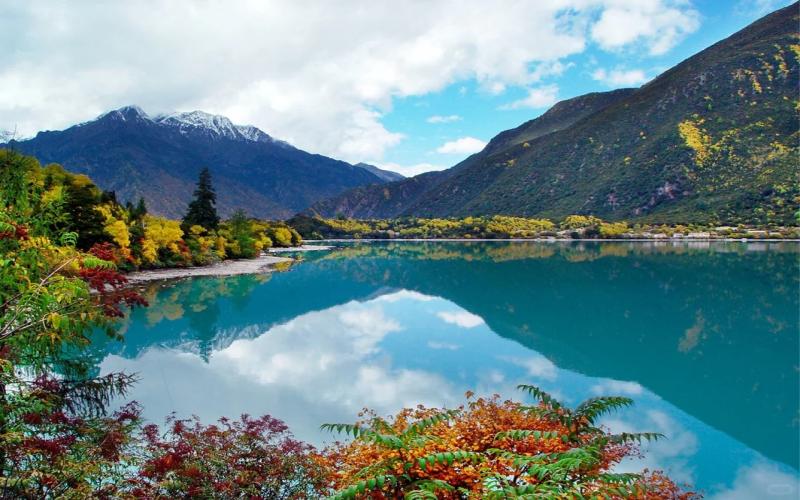
Basum Tso
Day 3: Nyingchi – Lulang – Ranwu Lake – Bomi
Travel east to the famous Lulang Forest, known as the “Jiangnan of Tibet”, where winter snow blankets the rolling forests and meadows, presenting a quiet and primitive alpine landscape. Proceed to Ranwu Lake, one of Tibet’s most stunning seasonal lakes. In winter, the lake forms a unique half-ice, half-water landscape, with turquoise open water contrasting against white ice and snow-capped surrounding mountains. Conclude the day’s tour and stay overnight in Bomi.
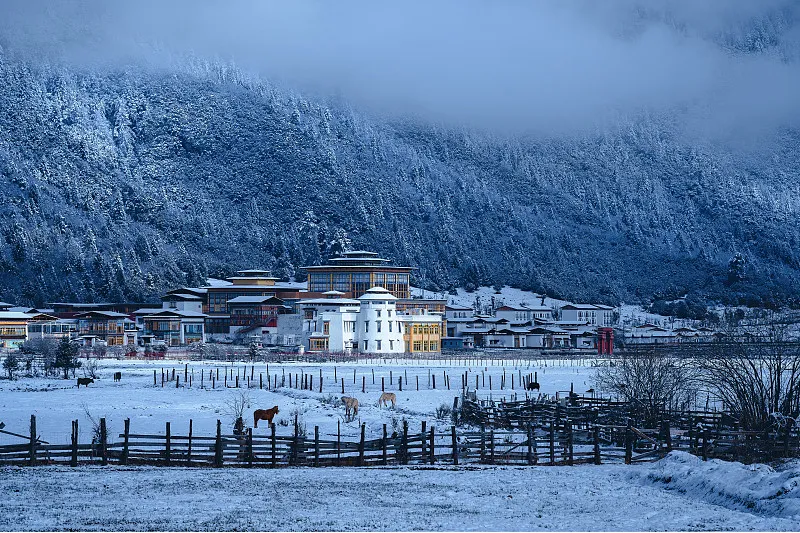
Winter Scenery of Lulang
Day 4: Bomi – Laigu Glacier – Yalong Glacier – Nyingchi
Explore two breathtaking winter glaciers on this day. Visit the magnificent Laigu Glacier and Yalong Glacier, where thick winter ice sheets, towering ice seracs, and snow-blanketed glacier valleys showcase the grandeur of plateau glaciers in the cold season. Winter’s clear skies offer unparalleled visibility, allowing you to fully appreciate the pure, primitive beauty of these alpine glaciers. After a full day of glacier exploration, return to Nyingchi for overnight accommodation.
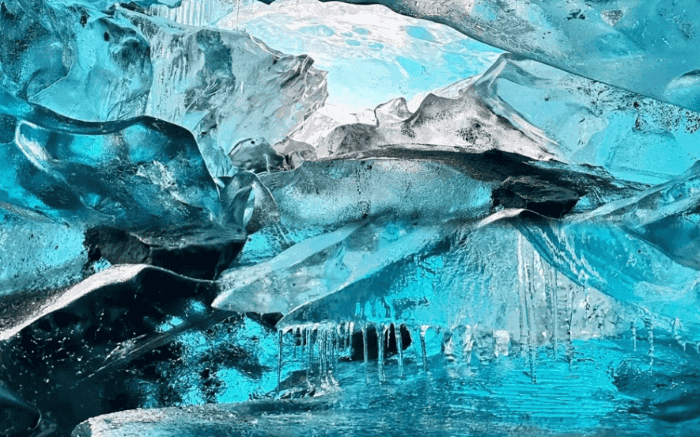
Yalong Glacier
Day 5: Nyingchi – Kading Valley – Lhasa
Discover the secluded winter charm of Kading Valley, where clear mountain streams flow through snow-laden forests and rocky valleys, forming a fresh and elegant winter mountain scene. After exploring the valley, drive back to Lhasa. The long-distance journey allows you to witness the diverse winter landscape changes from eastern Tibet’s forested valleys to the central plateau’s open terrain, completing the eastern Tibet winter landscape exploration segment of your off-season Tibet tour.
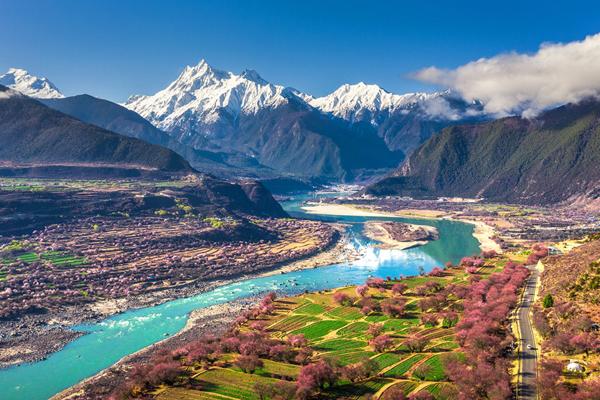
Nyingchi Peach Blossoms
Day 6: Lhasa In-depth Cultural Tour
Spend a full day immersing yourself in Lhasa’s core Tibetan culture. Visit the world-famous Potala Palace, where winter’s fewer tourists mean no long queues and a more leisurely visiting experience. Explore the ancient Jokhang Temple, the spiritual heart of Tibetan Buddhism, and wander the bustling Barkhor Street, observing local pilgrims and experiencing authentic Tibetan folk customs. End the day with a rest in Lhasa to consolidate altitude acclimatization results.
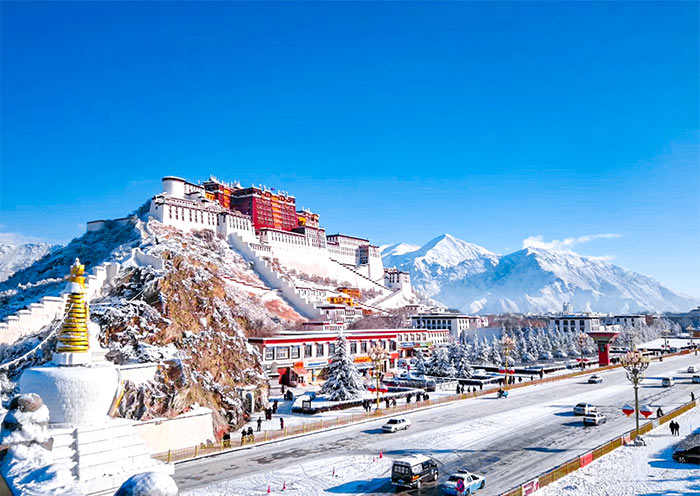
Potala Palace in winter
Day 7: Lhasa – Yamdrok Lake – Karola Glacier – Shigatse
Depart Lhasa early to head for one of Tibet’s three holy lakes — Yamdrok Lake. Cross the iconic Kamba La Pass to overlook the panoramic view of the sapphire lake. In winter, Yamdrok Lake presents a stunning half-frozen landscape, with glistening ice bays and vivid turquoise open water forming a striking visual contrast. En route, stop by the snow-covered Karola Glacier, then continue west to Shigatse, the second-largest city in Tibet, for an overnight stay at 3,840 meters.
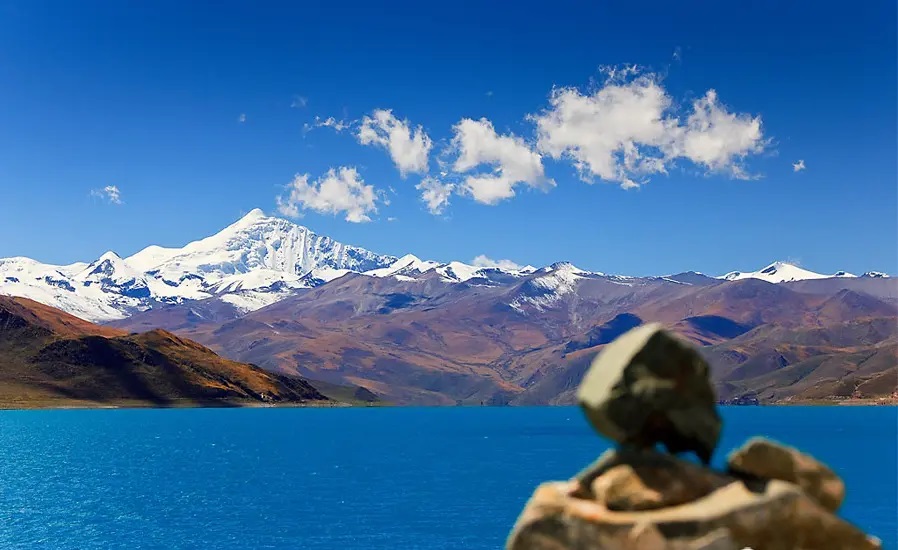
Yamdrok
Day 8: Shigatse – Tingri – Gyatso La Pass – Everest Base Camp – Basong Village
Embark on the most anticipated Everest exploration journey. Drive through Tingri County and cross the high-altitude Gyatso La Pass, which offers a panoramic view of the Himalayan mountain range. Winter’s cloud-free skies greatly boost the chance of catching a clear view of Mount Everest’s north face. Arrive at Everest Base Camp to admire the world’s highest peak wrapped in pure white snow. Stay overnight in Basong Village to avoid excessive altitude pressure and ensure a comfortable rest.
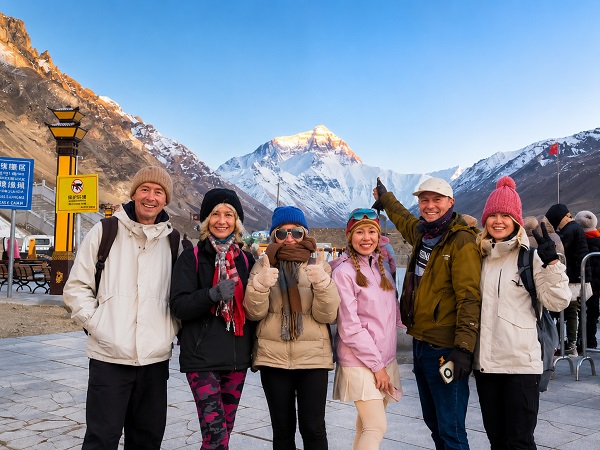
Everest Base Camp
Day 9: Everest Base Camp – Gawula Pass – 318 National Highway – Shigatse
Wake up early to watch the stunning sunrise over Mount Everest, as the golden morning light gilds the snow-capped summit, creating a breathtaking winter plateau spectacle. After enjoying the Everest scenery, return via the Gawula Pass and the scenic 318 National Highway, feasting on continuous snow mountain and valley views along the way. Return to Shigatse for a second night’s stay to further ease altitude fatigue.
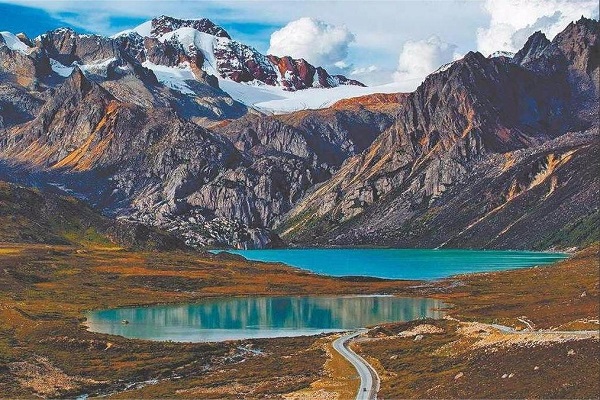
Day 10: Shigatse – Tashilhunpo Monastery – Lhasa
Visit the prestigious Tashilhunpo Monastery, home to the Panchen Lama, featuring grand Tibetan architectural styles, ancient scripture halls, and exquisite Buddha statues. Experience the solemn religious atmosphere and profound Tibetan Buddhist culture here. After the monastery tour, drive back to Lhasa, returning to a low-altitude resting environment for adequate relaxation.
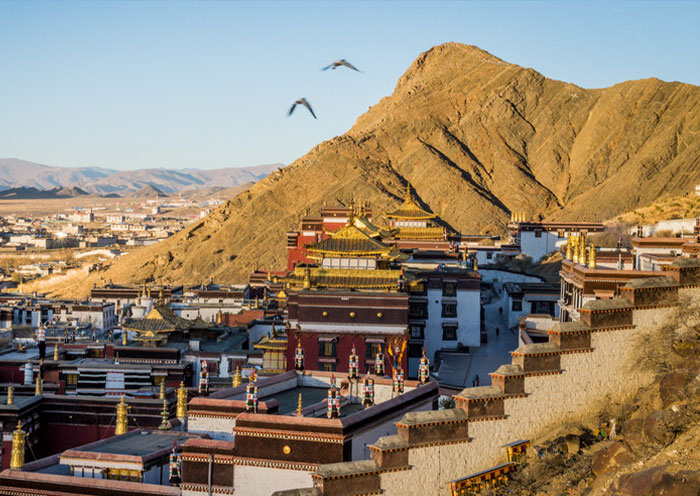
Tashilhunpo Monastery
Day 11: Lhasa – Namtso Lake – Northern Tibetan Grasslands – Lhasa
Head north to Namtso, Tibet’s iconic frozen holy lake, the highlight of this Tibet winter frozen lake tour. At an altitude of 4,718 meters, Namtso is completely frozen in winter, forming a vast blue ice sheet covered with unique geometric ice cracks. Against the backdrop of the snow-capped Nyenchen Tanglha Mountains, the icy lake presents an otherworldly winter landscape. Traverse the snow-dusted northern Tibetan grasslands, then return to Lhasa in the evening.
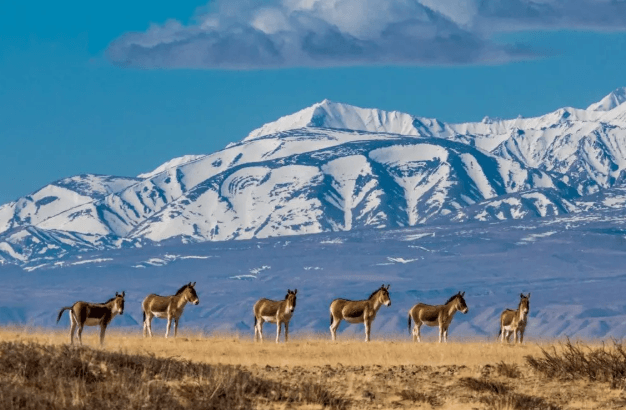
Wild animals can be seen everywhere along the road
Day 12: Departure from Lhasa
Conclude your unforgettable winter plateau journey. Enjoy a final relaxed morning in Lhasa before transferring to Lhasa Gonggar Airport for your departure flight, taking home precious memories of Tibet’s frozen lakes, snow-capped mountains and authentic cultural scenery.
This 12-day winter Tibet itinerary is fully optimized for cold-season travel conditions, with reasonable altitude elevation and route arrangement to reduce altitude sickness risks. Professional local tour operators will flexibly adjust the daily schedule according to real-time weather, road conditions, and personal travel preferences. For travelers pursuing more unique winter ice scenery, we can also extend the itinerary to include the hidden gem Puma Yumco, adding exclusive blue ice viewing experiences to your off-season Tibet tour.
What to Pack for a Tibet Winter Frozen Lakes Tour
Winter temperatures on the plateau are extreme but manageable with the right gear:
- Down jacket rated to at least -15°C (5°F)
- Thermal base layers (merino wool preferred)
- Windproof outer shell for lake viewpoints
- Insulated, waterproof boots with crampon-compatible soles
- Wool hat, gloves, and neck gaiter
- UV400 sunglasses — snow blindness is a real risk on frozen lake surface
- Sunscreen SPF 50+ and lip balm with SPF
- Reusable water bottle and high-energy snacks
- Altitude sickness medication (consult your doctor; Diamox is commonly used)
- Power bank — cold drains batteries fast, and remote areas have limited charging
Temperatures at Namtso and Everest in January commonly range from -15°C to -5°C (5°F to 23°F) during the day and can drop below -25°C (-13°F) at night. Lhasa itself is milder, with winter daytime highs around 8–12°C (46–54°F) and sunny skies.
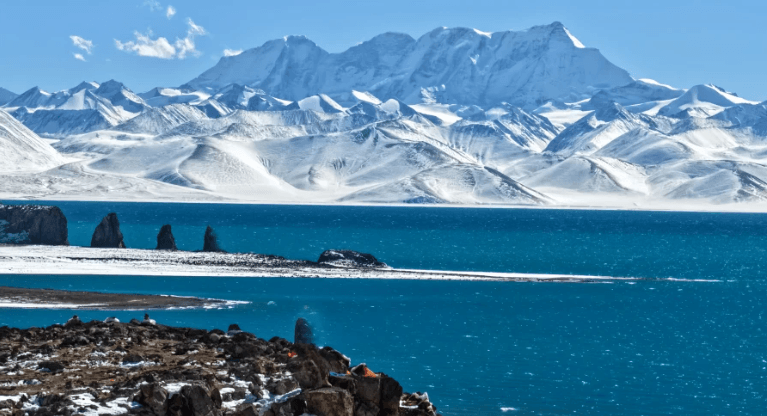
Namtso Lake
Altitude Safety in Winter: What You Need to Know
Altitude sickness (AMS) is the single biggest risk on any Tibet trip, and winter adds a layer of complexity. Cold air is drier, and the physical exertion of staying warm can accelerate fatigue. Follow these rules:
- Acclimatize in Lhasa for at least 2 full days before heading above 4,500m.
- Hydrate aggressively — aim for 3–4 liters of water daily. Heating systems dehydrate you further.
- Avoid alcohol for the first 3–4 days.
- Descend immediately if symptoms worsen (severe headache, vomiting, shortness of breath at rest, confusion).
- Carry a pulse oximeter if possible — many tour guides do.
- Choose operators with oxygen support in vehicles and at higher overnight stops.
Winter tours often spend fewer nights at extreme altitude (above 5,000m) than summer itineraries, which can actually reduce AMS risk despite the cold.
How to Choose a Reliable Tibet Winter Tour Operator
Not all operators handle winter conditions well. When comparing quotes, ask these specific questions:
- Do you operate year-round, or only in summer? Many agencies close from November to March.
- What is your backup plan if Namtso road closes? A good operator will swap in Yamdrok or Puma Yumco without penalty.
- Are your vehicles winter-equipped? Snow tires or chains are essential above 4,500m.
- Does the price include the Tibet Travel Permit and all entrance fees? Some cheap quotes exclude these.
- What is the group size? Small groups (4–8 people) offer more flexibility for frozen lake stops.
- Is there an English-speaking guide throughout? Confirm, not just in Lhasa.
Look for operators with verified reviews on TripAdvisor, Google, and travel forums. A legitimate Tibet travel agency will be registered with the Tibet Tourism Bureau and will handle your permit application — you cannot enter Tibet as an independent foreign traveler.
Frequently Asked Questions
Q: Can I visit Tibet independently in winter?
A: No. All foreign nationals require a Tibet Travel Permit and must travel with a registered tour operator, including a guide and driver. This rule applies year-round.
Q: Is it too cold to visit Tibet in winter?
A: Lhasa is surprisingly mild and sunny in winter (daytime 8–12°C). High-altitude lake areas are cold (-15°C daytime at Namtso), but with proper gear, it’s entirely manageable and far less crowded.
Q: Which frozen lake is best for photography?
A: Namtso offers the classic vast ice sheet with mountain backdrop. Puma Yumco has the clearest blue ice (similar to Lake Baikal). Yamdrok offers partial freeze with turquoise open water — all three are excellent for different reasons.
Q: When is the cheapest time to visit Tibet?
A: January and early February offer the lowest prices and fewest tourists, though some businesses close during Chinese New Year (typically late January or February). November and December offer a good balance of low prices and full services.
Q: Can I see Mount Everest in winter?
A: Yes — winter actually offers the clearest views of Everest from the north side. Base Camp is accessible year-round, though overnight tent stays are very cold.
Q: How far in advance should I book a winter Tibet tour?
A: Book 4–6 weeks ahead to secure the best off‑season rates and permit processing. Last‑minute deals exist, but permit processing takes 8–15 working days. Avoid booking less than 2 weeks before your intended arrival, as incomplete paperwork or official scheduling delays can derail your whole winter trip.
Conclusion
Summer in Tibet draws crowds for good reason, but winter unlocks a quieter, more raw version of the Roof of the World. Where peak‑season tours fight for parking spots and jostle for monastery photos, winter travelers get unobstructed Himalayan views, vast blue‑ice landscapes, and meaningful time with local pilgrims during religious festivals — all at heavily discounted rates.
A winter frozen‑lake Tibet journey does demand thoughtful preparation: respecting permit timelines, packing serious cold‑weather gear, prioritizing gradual altitude acclimatization, and picking an agency experienced in plateau winter road conditions. Snow‑related route changes are always possible, yet these small trade‑offs are part of the adventure.
If you are ready to trade busy tourist crowds for endless cobalt skies, crackling blue ice, and authentic Tibetan culture without the summer price tag, a winter Tibet tour may well become your most unforgettable high‑altitude travel memory. Reach out to a trusted local operator early to lock in your permits, preferred guide and vehicle, and start planning your icy Tibetan plateau adventure.