
For international travelers, choosing how to enter Tibet is more than a question of transportation. Your starting point affects the visa and permit process, travel time, altitude acclimatization, scenery, itinerary, and overall experience. Entering Tibet from Nepal is especially attractive for travelers who want to combine the Himalayas, Kathmandu, and an overland journey to Everest, while entering from mainland China offers more transportation choices, including flights and the famous Qinghai–Tibet Railway. This guide compares both routes so you can choose the most suitable way to begin your Tibet adventure.
Key Takeaways
- Nepal is ideal for travelers who want a Himalayan journey, especially if Everest Base Camp and an overland adventure are priorities.
- Mainland China offers greater flexibility, with numerous flights and train connections to Lhasa.
- Both routes require advance planning and Tibet travel permits for international visitors.
- Altitude acclimatization is particularly important when entering from Kathmandu, because the elevation rises rapidly.
- The best route depends on your time, interests, budget, preferred scenery, and onward travel plans.
Entering Tibet From Nepal
Nepal is one of the most popular gateways to Tibet for international travelers. Kathmandu sits on the southern side of the Himalayas, making it a natural starting point for travelers who want to combine Nepal and Tibet in one journey.
There are two main ways to enter Tibet from Nepal: flying from Kathmandu to Lhasa or traveling overland through the Gyirong border area.
The Nepal route is particularly attractive if your trip is centered on the Himalayas. A journey from Kathmandu toward Tibet can combine dramatic mountain scenery, Everest Base Camp, Tibetan monasteries, high-altitude valleys, and eventually Lhasa.
Kathmandu to Lhasa by Flight
Flying from Kathmandu to Lhasa is the fastest way to enter Tibet from Nepal.
The flight crosses the Himalayas and takes only around an hour and a half, depending on the current schedule and operating conditions. On clear days, the journey itself can be an exciting introduction to the Himalayan landscape.
However, speed comes with one major disadvantage: altitude.
Kathmandu sits at approximately 1,400 meters, while Lhasa is around 3,650 meters above sea level. You therefore move from a relatively low elevation to the Tibetan Plateau very quickly.
For this reason, travelers arriving by air from Kathmandu should plan several easy days in Lhasa rather than immediately beginning a demanding trek or long overland journey.
Flight schedules between Kathmandu and Lhasa can change seasonally. Current 2026 schedules show direct service on the route, but travelers should always check the operating airline and schedule for their exact travel date rather than relying on older travel information.
Kathmandu to Tibet by Overland Journey
For travelers who value scenery and adventure more than speed, the Kathmandu–Tibet overland route is arguably the more memorable option.
The journey typically enters Tibet through the Gyirong border area before continuing toward the Tibetan Plateau. Instead of simply arriving in Lhasa, you gradually experience the transition from Nepal’s valleys and mountains to the vast high-altitude landscapes of Tibet.
A classic itinerary can include:
- Gyirong
- Tingri
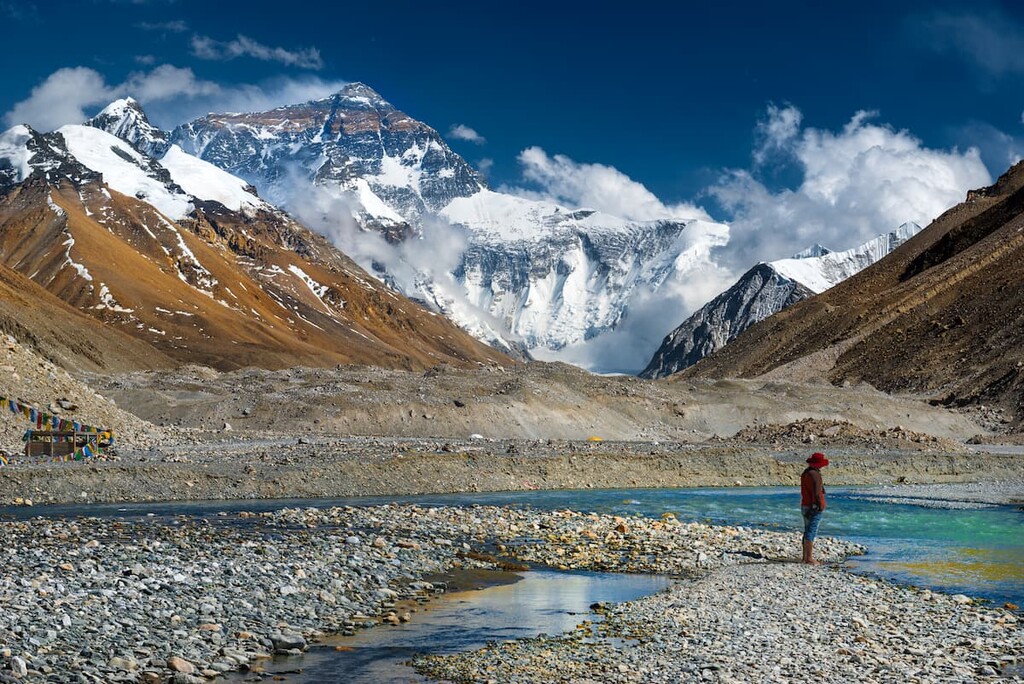
- Mount Everest Base Camp
- Rongbuk Monastery
- Shigatse
- Gyantse
- Yamdrok Lake
- Lhasa
A typical overland journey takes several days, depending on the itinerary and road conditions.
For many international visitors, the biggest advantage is that the journey becomes part of the destination. Rather than flying directly into Lhasa, you encounter Himalayan valleys, snow-covered peaks, Tibetan villages, monasteries, grasslands, and enormous plateau landscapes along the way.
If Mount Everest is one of your main reasons for visiting Tibet, this route can be particularly appealing.
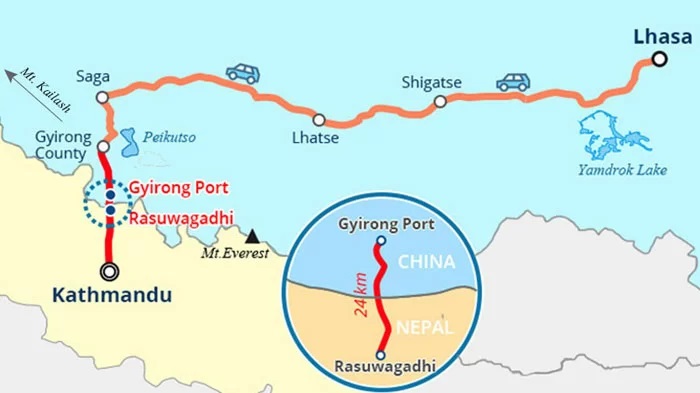
Nepal to Tibet Overland Map
Travel Documents When Entering From Nepal
The documentation process is different from entering Tibet through mainland China, so it is important to plan this route with a Tibet travel agency before departure.
International travelers entering Tibet from Nepal generally need the appropriate Tibet Travel Permit and a Group Tourist Visa or other applicable Chinese entry documentation arranged for the Nepal-to-Tibet itinerary. Requirements can change, so travelers should confirm the current procedure before making final arrangements.
If you book a Tibet tour with a local agency, the agency normally coordinates the Tibet permit and the required visa-related procedures according to your itinerary.
For travelers entering by air, your guide can arrange to meet you at Lhasa Gonggar Airport with the necessary Tibet travel documentation. For an overland journey, your Tibetan guide can meet you on the Tibetan side of the Gyirong border.
Because the procedure is different from simply entering mainland China first, do not assume that a Chinese visa obtained in your home country automatically covers every requirement for entering Tibet from Nepal.
A Typical Kathmandu–Lhasa Overland Itinerary
A 8-day itinerary can be structured approximately as follows:
- Kathmandu to Gyirong-Crossing the Border into Tibet
- Gyirong Valley-Hike to Milarepa Cave
- Gyirong to Tingri: visit Everest Base Camp
- Tingri to Shigatse: G318 Milestones & Tashilhunpo Monastery
- Shigatse to Lhasa: Karola Glaciers, Yamdrok Lakes & Historic Highway
- Lhasa Tour City Tour: visit Drepung Monastery and Sera Monastery
- Lhasa Tour City Tour: Explore The Potala Palace, Jokhang Temple & Barkhor Street
- Lhasa Departure
The exact route and sightseeing schedule should be adjusted according to road conditions, permits, seasonal accessibility, and the traveler’s acclimatization needs.
Entering Tibet From Mainland China
For many international travelers, entering Tibet through mainland China is the more flexible option.
You can first travel through major Chinese cities such as Beijing, Shanghai, Chengdu, Guangzhou, or Xining, and then continue to Lhasa by air or train.
This route works especially well for travelers who want to combine Tibet with a broader China itinerary.
For example, you could spend several days exploring Beijing before taking the train to Lhasa, visit Chengdu and its famous giant pandas before flying to Tibet, or travel to Xining and begin the Qinghai–Tibet Railway journey.
Flying to Lhasa From Mainland China
Flying is the most time-efficient way to reach Lhasa from mainland China.
Lhasa has air connections with several major Chinese cities, including Chengdu, Beijing, Shanghai, Guangzhou, Chongqing, and others. Among them, Chengdu is one of the most convenient gateways for many international travelers because of its extensive domestic connections and frequent services to Lhasa.
The actual flight time varies by departure city. Chengdu is particularly convenient, while flights from eastern or southern China naturally take longer.
The main advantage is simple: you save time.
If your entire Tibet trip is only one or two weeks, flying can give you more days to explore Lhasa, Everest, Shigatse, or other destinations.
The disadvantage is that you miss much of the overland scenery between your gateway city and Tibet.
Taking the Qinghai–Tibet Railway to Lhasa
If you have enough time, the train is one of the most rewarding ways to enter Tibet from mainland China.
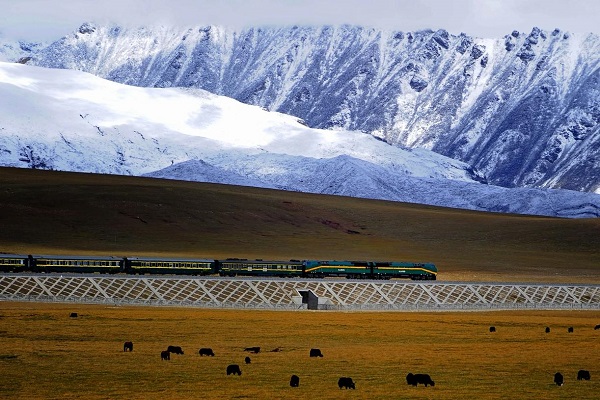
The Qinghai–Tibet Railway crosses some of the highest railway landscapes in the world, passing through vast grasslands, snow-covered mountains, high-altitude lakes, and remote wilderness.
Xining is particularly important because the Xining–Lhasa section represents the core Qinghai–Tibet Railway experience. The journey takes roughly a day, while trains from cities farther east can take considerably longer.
You can also travel from cities such as Beijing, Shanghai, Chengdu, and Guangzhou, although the journey may take more than 40 hours.
For travelers who enjoy slow travel and landscapes, the train can be an attraction in its own right.
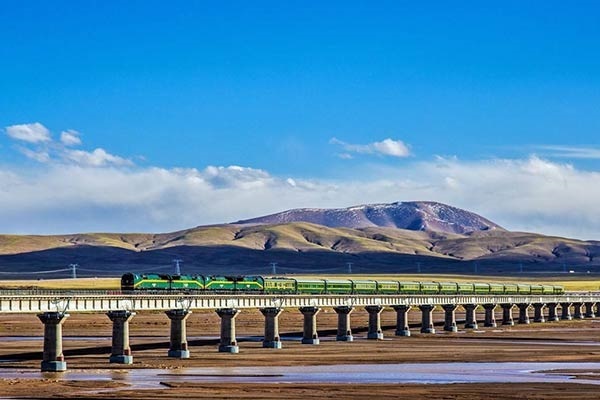
Qinghai–Tibet Train
Beijing to Lhasa by Train
Beijing is an excellent option for travelers who want to combine China’s historical highlights with Tibet.
You could spend several days visiting the Forbidden City, the Great Wall, and other major attractions before taking the train toward Lhasa.
The long railway journey allows you to watch the landscape gradually change from China’s developed eastern regions to the immense Tibetan Plateau.
Xining to Lhasa by Train
For travelers primarily interested in the railway experience, Xining is arguably the most efficient starting point.
The Xining–Lhasa journey takes approximately 21 hours and crosses the dramatic landscapes of the Qinghai–Tibet Plateau.
You can fly into Xining from another Chinese city and then board the train, reducing the amount of time spent on the railway while retaining the most scenic section of the journey.
Shanghai, Chengdu and Guangzhou to Lhasa by Train
Long-distance trains also connect Lhasa with Shanghai, Chengdu, and Guangzhou.
These journeys are much longer, often taking around two days or more. They are therefore better suited to travelers who genuinely enjoy railway travel rather than those simply looking for the fastest route to Tibet.
For travelers with limited vacation time, flying is usually more practical.
Entering Tibet Through Sichuan
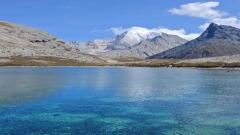
Another option for adventurous travelers is the Sichuan–Tibet Highway, particularly the G318 route from Chengdu toward Tibet.
This is not the fastest way to reach Lhasa, but it offers an extraordinary road journey through western Sichuan and eastern Tibet.
Depending on the route, travelers can encounter:
- Mount Gongga
- High mountain passes
- Alpine valleys
- Maoya Grassland
- Deep gorges
- Nyingchi
- Yarlung Tsangpo landscapes
This route is best suited to travelers who consider the road trip itself an important part of their Tibet experience.
Travel Documents When Entering From Mainland China
Travelers entering Tibet from mainland China need to meet the applicable Chinese entry requirements and obtain the Tibet Travel Permit required for foreign visitors to the Tibet Autonomous Region.
The permit is normally arranged through your Tibet travel agency after you provide the required passport and travel information.
A useful advantage of this route is that you can complete your international arrival and mainland China travel first, then continue to Tibet once the necessary Tibet travel arrangements are ready.
For remote destinations such as Everest, Mount Kailash, Lake Manasarovar, or certain border areas, additional permits may be required.
Nepal vs. Mainland China: Which Route Is Faster?
If speed is your priority, the answer is relatively straightforward.
A direct Kathmandu–Lhasa flight takes roughly 1.5 hours, while a flight from a mainland Chinese gateway may take around 2–7 hours, depending on the departure city.
However, total travel time is not just flight time. You also need to consider international connections, time spent in gateway cities, airport transfers, and permit arrangements.
For travelers who have only a limited number of vacation days, flying to Lhasa is usually the most efficient choice.
If you have two or more weeks and enjoy scenic travel, the longer routes can be much more rewarding.

Nepal vs. Mainland China: Which Is Better for Acclimatization?
This is one of the most important differences.
Entering Tibet from Kathmandu means moving from approximately 1,400 meters to Lhasa at around 3,650 meters relatively quickly. Flying makes this elevation gain particularly abrupt.
If you enter from mainland China, you have more opportunities to gradually increase your elevation, especially if you spend time in places such as Xining before taking the train.
The Qinghai–Tibet Railway also provides a gradual transition into the plateau environment, although travelers should not assume that the train completely eliminates altitude-related problems.
Regardless of the route, your itinerary should include appropriate rest and acclimatization time.
Nepal vs. Mainland China: Which Has Better Scenery?
Both are spectacular, but the scenery is different.
Nepal to Tibet is the better choice if you want the Himalayan experience. The overland route around Gyirong, Tingri, and Everest combines deep valleys, snow-covered Himalayan peaks, and some of the most dramatic mountain scenery in Asia.
Mainland China to Tibet offers greater geographic variety. The train route through Qinghai reveals enormous grasslands, alpine lakes, wildlife habitats, mountains, and high-altitude wilderness.
If you love mountains and want Everest, choose Nepal.
If you love long-distance rail travel and vast plateau landscapes, consider mainland China.
Nepal vs. Mainland China: Which Is More Convenient?
For most international travelers, mainland China offers more transportation choices.
You can fly from multiple cities, take different train routes, or incorporate Tibet into a longer China itinerary.
Nepal has fewer entry options, but its simplicity can actually be an advantage if your trip already includes Kathmandu.
For example, a traveler visiting Nepal, Bhutan, or northern India may find it logical to finish their Nepal journey in Kathmandu and continue directly into Tibet.
Nepal vs. Mainland China: Which Route Should You Choose?
| Travel Priority | Recommended Route |
|---|---|
| Fastest entry to Tibet | Nepal or mainland China by flight |
| Combine Nepal and Tibet | Nepal |
| Visit Everest on the way to Tibet | Nepal overland |
| Enjoy a Himalayan road trip | Nepal overland |
| Experience the Qinghai–Tibet Railway | Mainland China |
| Combine Tibet with a China trip | Mainland China |
| Gradual approach to the plateau | Mainland China, especially via Qinghai |
| Short vacation | Mainland China or Nepal by air |
| Scenic adventure | Nepal overland |
| First-time international visitor | Either, depending on itinerary |
Which Route Is Better for You?
There is no universal winner between the two routes.
Choose Nepal if you want to combine Kathmandu and Tibet, see the Himalayas from both sides, visit Everest Base Camp, or turn your journey into a multi-day overland adventure.
Choose mainland China if you want greater transportation flexibility, plan to visit other Chinese cities, prefer flying, or want to experience the Qinghai–Tibet Railway.
For travelers with enough time, there is also an excellent possibility: combine both. You could enter Tibet from Nepal and later leave Tibet for mainland China, or reverse the direction depending on your wider Asia itinerary and current border and travel arrangements.
Practical Tips Before Entering Tibet
Regardless of your chosen route, preparation makes a major difference.
- Book early. Tibet permits, transportation, accommodation, and popular train tickets can require advance planning, especially during peak travel periods.
- Allow time for acclimatization. Do not schedule strenuous activities immediately after reaching Lhasa.
- Carry appropriate clothing. Temperatures can change dramatically, particularly at high elevations.
- Stay hydrated. The dry Tibetan Plateau can cause dehydration more easily than travelers expect.
- Prepare for remote travel. Beyond Lhasa, some areas have limited services, so pack essential personal items and medication.
- Check current regulations. Entry requirements, border procedures, flight schedules, train schedules, and permit requirements can change. Information published several years ago may no longer be accurate.
How Tibet Yulong Travel Can Help
For international travelers, the biggest challenge is often not choosing between Nepal and mainland China but coordinating all the individual pieces of the journey.
Tibet Yulong Travel can help international visitors plan Tibet tours from either gateway, including Tibet Travel Permit arrangements, transportation, accommodation, local guides, airport or border transfers, and customized itineraries.
This is particularly useful for more complicated journeys such as Kathmandu–Tibet overland tours, Everest Base Camp trips, Qinghai–Tibet Railway journeys, and extended western Tibet itineraries.
Instead of choosing your gateway based only on flight price, consider the entire experience: Where do you want to travel before Tibet? What do you want to see on the way? How much time do you have? And how much altitude adjustment do you need?
Final Verdict: Nepal or Mainland China?
Entering Tibet from Nepal is the better choice for a Himalayan-focused adventure, particularly if Everest, Kathmandu, and overland travel are high on your list.
Entering from mainland China is the better choice for flexibility, especially if you want to combine Tibet with other Chinese destinations or experience the Qinghai–Tibet Railway.
Neither route is objectively better. The right choice depends on whether you value speed, scenery, acclimatization, railway travel, Everest, or a broader China-and-Tibet itinerary.
For most international travelers, deciding on the gateway before booking flights is one of the most important steps in building a smooth Tibet itinerary.