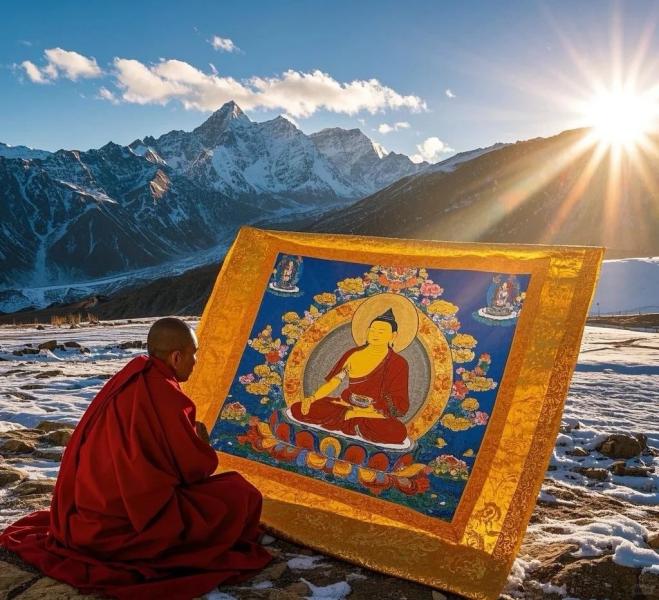

Guge Kingdom Highlights
- 🏰 Tsaparang, the Lost Capital — A 300-meter clay fortress with over 400 rooms, royal palaces and ancient temples carved into the mountainside.
- 🎨 World-Class Frescoes — Murals blending Kashmiri, Pala Indian and Central Asian styles that survived nearly 400 years of abandonment.
- ⛰️ Zanda Earth Forest — A 5,000 sq km geological wonder of wind-sculpted clay towers that looks like an alien world at sunrise.
- 🛕 Tholing Monastery — The spiritual heart of western Tibet, where the great Indian master Atisha helped revive Buddhism in 1042 AD.
- 🕳️ Dongga & Piyang Caves — Little-visited cave complexes with early Tibetan Buddhist art and stupas.
- 📸 Photographer’s Dream — Golden-hour light on the ruins is among the finest in all of Tibet.
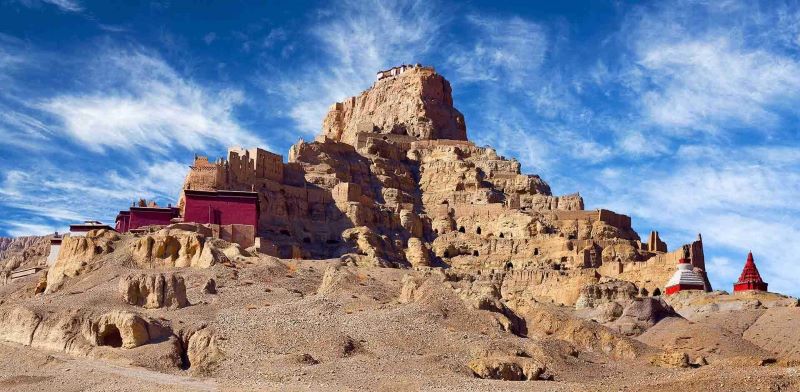
Deep in the far west of Tibet, where the Gangdise and Himalayan ranges converge and the Sutlej River carves through the high plateau, lies one of the most haunting archaeological sites on Earth: the Guge Kingdom ruins. Once the capital of a powerful Buddhist kingdom that ruled western Tibet for more than six centuries, Tsaparang now stands as a ghost city of crumbling palaces, fading murals and thousands of cliff-side caves clinging to a lone clay butte. Often called the “Pompeii of Tibet,” the site is so remote, so silent and so strangely preserved that it feels less like a ruin and more like a civilization frozen mid-breath.
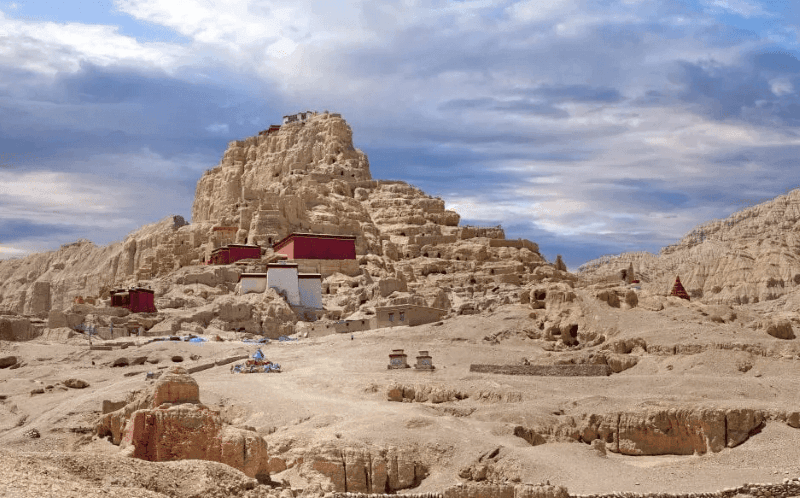
Tsaparang
For serious travelers, a Guge Kingdom ruins western Tibet tour is the crown jewel of any Ngari expedition — a journey that rewards the patient with some of the most extraordinary frescoes, the most dramatic desert scenery and the most underrated history in all of High Asia. This Guge Kingdom ruins travel guide covers everything you need to plan the trip: the kingdom’s rise and mysterious fall, the top sights, the best time to visit, permits, how to get there and sample itineraries.
A Brief History of the Guge Kingdom
The story of Guge begins with the collapse of the Tibetan Empire in the 9th century. After the assassination of the last emperor, Langdarma, and the political turmoil that followed, one branch of the royal family fled westward. Around the 10th century, the prince Kyide Nyimagon and his descendants established a new kingdom in the Ngari region of far western Tibet, founding the capital at Tsaparang.
Perched on the trade routes linking Tibet, India, Nepal and Kashmir, Guge flourished as a hub of commerce, Buddhism and art. Its golden age came in the 11th century, when King Yeshe-Ö invited the renowned Indian Buddhist master Atisha to Ngari in 1042 AD. Atisha spent three years teaching in the region, and his mission sparked the Second Diffusion of Buddhism in Tibet — a renaissance that reshaped Tibetan culture forever and made Guge a sacred center of learning.
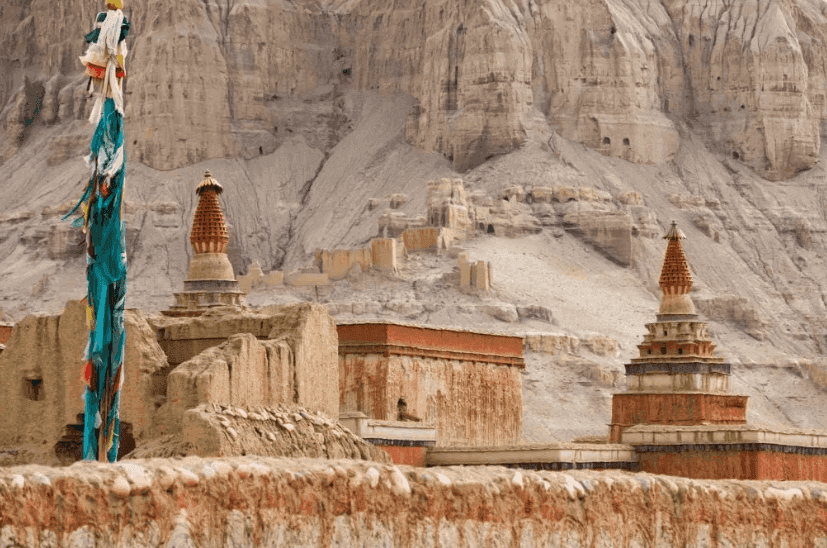
Tholing Monastery in Tada, the capital of Guge Kingdo
The kingdom prospered under roughly 16 generations of kings for over 600 years. Yet its end was as dramatic as its rise. In the mid-17th century, internal religious conflict tore the court apart — a Portuguese missionary had converted the queen and part of the royal family, scandalizing the lamas, who then invited the neighboring kingdom of Ladakh to intervene. Around 1630, the Kashmiri-Ladakhi army invaded and sacked Tsaparang. The kingdom fell, and within decades its people scattered, its temples were sealed and the sand began to bury the city. For nearly 300 years, Guge was forgotten — until Western explorers and archaeologists rediscovered the site in the early 20th century. A paper mask found in the ruins bearing Portuguese quotations from the Bible remains chilling evidence of the religious war that brought the kingdom down.
Where Are the Guge Kingdom Ruins?
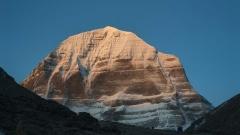
The Guge Kingdom ruins lie on the south bank of the Xiangquan River (the upper Sutlej) in Zanda County (Tsada), Ngari Prefecture, in far western Tibet. The ruins sit roughly 25 kilometers west of Zanda town and about 230 kilometers from Mount Kailash, the holiest mountain in the world. The capital of Tsaparang was built up a dramatic clay butte approximately 300 meters high, with the royal castle climbing from the river valley to the summit in terraced layers. Because the site stands at around 3,700 meters and is surrounded by the vast Zanda clay forest, it appears to rise out of an ocean of golden earth — an image no photograph fully captures.
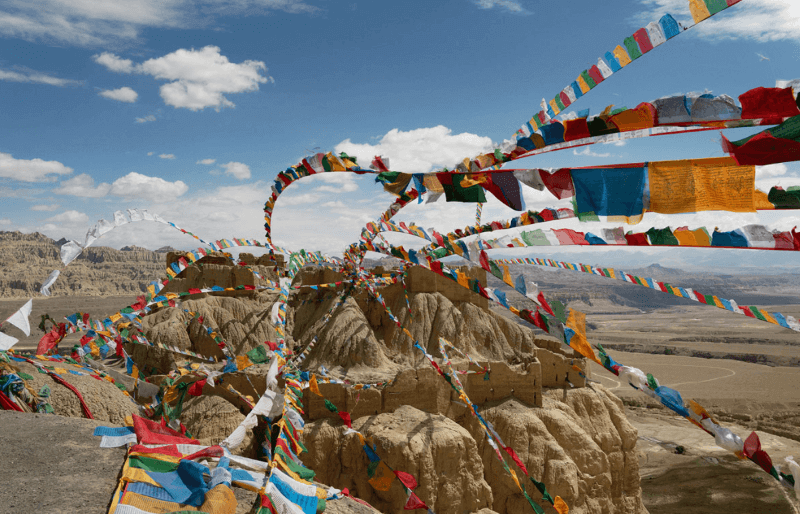
Guge Kingdom Tsaparang Tholing
Top Things to See Inside the Ruins
The Royal Palaces and Temples. The summit of the butte holds the remains of the royal residence and two of the most important structures: the Red Temple (Lhakhang Marpo) and the White Temple (Lhakhang Karpo). Both are accessible via a steep, narrow stairway and guarded by atmospheric corridors, and both contain some of the best-preserved Buddhist murals in Tibet.
The Frescoes. This is the emotional heart of the ruins. The murals blend Kashmiri, Pala-Indian and Central Asian artistic traditions, depicting mandalas, bodhisattvas, court scenes and everyday life. Look closely: some of the faces, costumes and even the color palette are strikingly different from central Tibetan art, a reminder of Guge’s role as a crossroads of cultures.
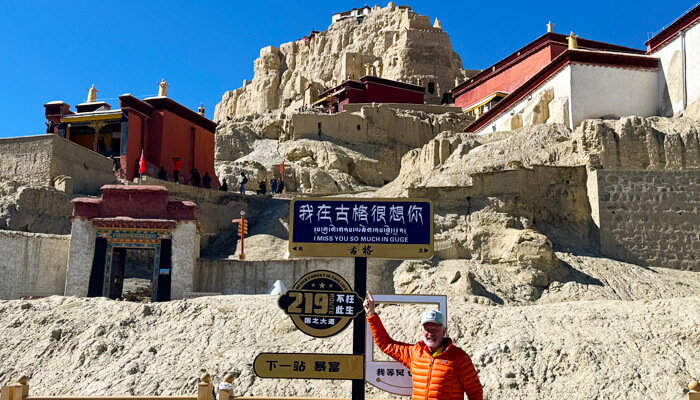
The Cliff Dwellings and Tunnels. Thousands of cave dwellings, monastic cells and storerooms are honeycombed across the cliff face, connected by a network of tunnels and staircases carved into the clay. You can wander through a surprisingly intact labyrinth and imagine the monks and officials who once lived here.
The Corpse Cave (Thousand Corpse Cave). A dark, narrow cave near the base of the fortress holds human remains and is the subject of much local legend. It is a sobering, fascinating stop — and not for the faint-hearted.
Beyond the Ruins: Zanda County and Surroundings
No western Tibet tour is complete without the wider Zanda region, which surrounds the ruins with other extraordinary sights.
Tholing Monastery. Founded in the 10th–11th century on a cliff above the Sutlej River, Tholing (“Flying in the Sky”) was once the most important Buddhist center in western Tibet and the seat of Atisha’s mission. Several original structures survive, and their frescoes are considered among the finest in Tibet.
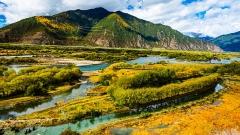
Zanda Earth Forest (Tsada Clay Forest). This vast geological park of wind- and water-eroded clay pillars, spires and canyons covers roughly 5,000 square kilometers. At sunrise and sunset the “forest” glows orange and gold — a photographer’s paradise and one of the reasons travelers add a Guge Kingdom tour to their Ngari itinerary.
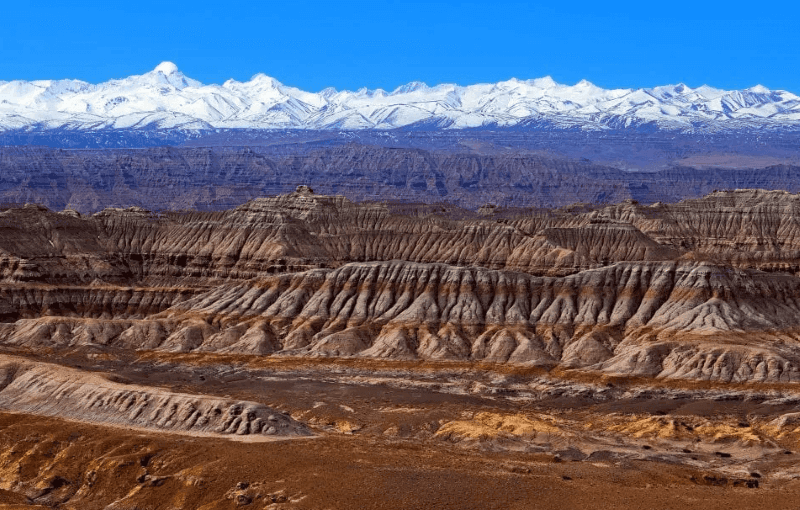
Zanda Earth Forest
Dongga and Piyang Grottoes. Around 25 kilometers from Zanda, these two ancient cave complexes contain early Buddhist murals and stupas, largely untouched and blissfully free of crowds.
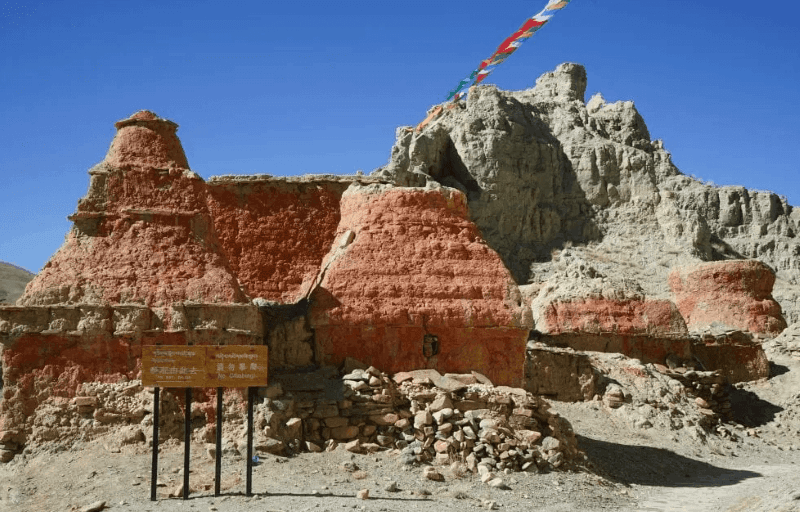
Piyang Caves
Best Time to Visit the Ruins
The best months to visit are May to June and September to early October, when skies are clearest, temperatures are comfortable and roads are most reliable. Summer (July–August) is also possible, though occasional rain can affect road conditions. Winter and early spring are extremely cold, and snow can temporarily close roads. For photography, plan to be at the ruins for sunrise (around 7:00–8:00) or late afternoon, when the low light turns the clay fortress golden. Allow two to three hours at the site, longer if you want to explore the caves and climb to the summit.
How to Get to the Ruins
There are two practical ways to reach the ruins, and both require a well-organized itinerary.
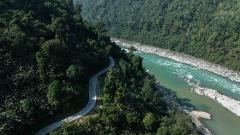
Fly to Ngari. The easiest route is to fly from Lhasa to Ngari Gunsa Airport (about 2–2.5 hours), then drive roughly 250 kilometers to Zanda County — around 6 to 7 hours of spectacular desert driving. From Zanda town, the ruins are only about 18–25 kilometers away, a 30-minute drive.
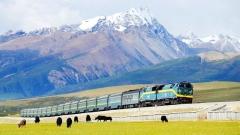
Overland from Lhasa. Adventurous travelers can join a guided overland tour from Lhasa through Shigatse, Saga and the northern highlands. This scenic route takes four to five days and lets you acclimatize gradually while crossing some of Tibet’s wildest landscapes.
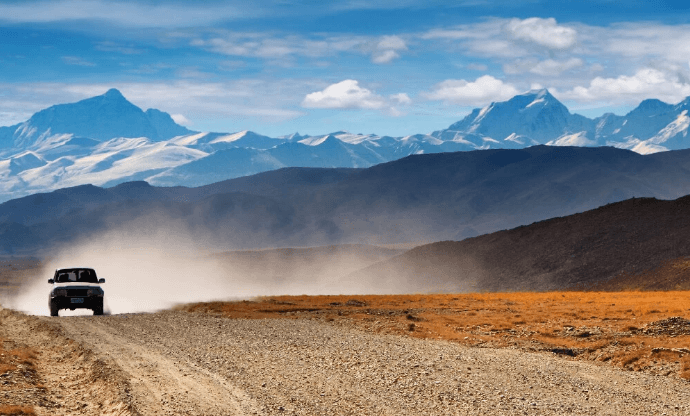
Kathmandu to Lhasa overland crossing
From Nepal. Travelers coming from Kathmandu can enter through the Gyirong border, drive through Saga and on to Zanda — a dramatic two-to-three-day journey through the Himalayas.
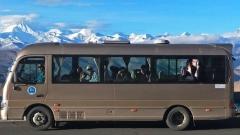
Because there is no public transport to the ruins, private tour vehicles or chartered 4WDs (SUVs) are essential. Most visitors combine the ruins with a Mount Kailash kora, a trip that typically needs 10 to 15 days in total.
Permits and Practical Tips
International visitors need several documents for any western Tibet tour, and these must be arranged through an authorized Tibet tour operator: a valid Chinese visa, the Tibet Travel Permit, the Aliens’ Travel Permit, and the Military Area Entry Permit for the Ngari border zone. Book your permits well in advance — they are tied to your confirmed itinerary and guide.
A few practical notes: Ngari is high and remote, so acclimatize in Lhasa for at least two to three days first, drink plenty of water, and carry sun protection, warm layers and a headlamp for the dark temple interiors. Facilities at the ruins are basic, so bring snacks and water. And always travel with a licensed guide who knows the site’s history and the best vantage points.
Sample 3-Day Zanda Itinerary
– Day 1: Arrive in Zanda, acclimatize; visit Tholing Monastery and catch sunset over the Zanda Earth Forest.
– Day 2: Sunrise at the ruins, in-depth exploration of palaces, temples and the Corpse Cave; afternoon at the Dongga and Piyang grottoes.
– Day 3: Morning drive to Ngari Gunsa for your flight out, or continue your overland journey toward Mount Kailash.
Frequently Asked Questions
F1: Is the Guge Kingdom tour suitable for everyone?
The climb to the summit involves steep stairs and thin air at around 3,700 meters, so it requires a reasonable fitness level. The lower temples and courtyards are easier to explore.
F2: How long should I spend in Zanda?
Two to three days is ideal to see the ruins, Tholing Monastery, the clay forest and the grottoes without rushing.
F3: Can I combine the Guge Kingdom with a Mount Kailash tour?
Yes. Zanda lies about 230 kilometers from Mount Kailash, and many travelers add the ruins to a longer western Tibet circuit.
F4: Do I need a special permit for Ngari?
Yes. In addition to the Tibet Travel Permit, the Ngari region requires an Aliens’ Travel Permit and, for border zones, a Military Area Entry Permit — all arranged through an authorized operator.
Final Thoughts
A Guge Kingdom ruins western Tibet tour is not an easy trip, and that is precisely its magic. It rewards those who make the long journey west with silence, mystery and some of the finest ancient art in Asia — all set against a landscape so vast it recalibrates your sense of scale. Whether you come for the history, the photography or the sheer romance of a lost kingdom, Guge will stay with you long after you descend the clay stairways and drive back toward the modern world.