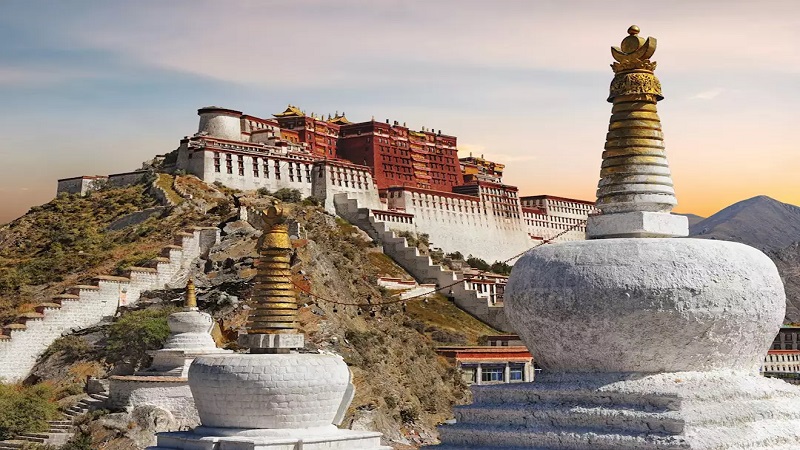

Tibet is a dream destination for many American travelers, offering the chance to explore Lhasa’s ancient monasteries, stand before Mount Everest, travel across the Tibetan Plateau, and experience one of the world’s most distinctive cultures. But before planning a trip, many US citizens ask a practical question: Can US passport holders go to Tibet? The answer is yes, although Tibet has specific entry requirements and travel regulations for international visitors. Understanding the visa, Tibet Travel Permit, guided-tour rules, and transportation options will help you plan your journey with confidence.
Key Takeaways
- US passport holders can visit Tibet, but special travel requirements apply to international visitors.
- You will need the appropriate Chinese entry documents and Tibet Travel Permit before entering the Tibet Autonomous Region.
- Foreign travelers generally need to arrange their Tibet trip through a local travel agency and guided tour.
- Additional permits may be required for destinations such as Mount Everest, Mount Kailash, and western Tibet.
Can Americans Go to Tibet?
Yes. US passport holders can travel to Tibet. There is no general nationality-based prohibition preventing Americans from visiting the Tibet Autonomous Region.
In fact, Tibet has long attracted American travelers interested in Himalayan landscapes, Tibetan Buddhism, Mount Everest, trekking, photography, and cultural exploration.
The important distinction is that being allowed to visit Tibet does not mean that a US traveler can arrange the trip in exactly the same way as an independent trip to another part of China. Foreign visitors traveling to the Tibet Autonomous Region need to follow the applicable permit and tour-arrangement requirements.
For most travelers, the simplest approach is to arrange the Tibet portion of the journey through a qualified local travel agency before departure.
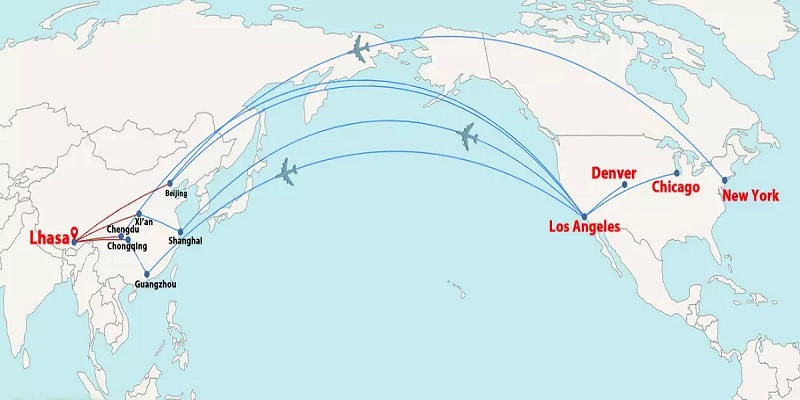
Flight Routes from the US to Tibet via Mainland China
What Documents Do US Citizens Need for Tibet?
There are two separate questions to consider: entering China and entering Tibet.
Chinese Entry Requirements
US citizens normally need a valid US passport and the appropriate Chinese entry authorization. Whether you need a Chinese visa depends on the entry policy applicable to your passport and travel circumstances at the time of your trip.
It is important not to rely on older Tibet travel articles that automatically state that every American must obtain a Chinese tourist visa. Chinese visa and visa-free policies can change. As of 2026, the published unilateral visa-free lists do not include US ordinary passport holders, so Americans should check the current Chinese entry requirements before making arrangements.
Your passport should also have sufficient validity and blank pages for your planned journey and any required documentation.
Tibet Travel Permit
The Tibet Travel Permit is the key document for foreign travelers visiting the Tibet Autonomous Region.
Unlike a normal Chinese tourist visa, it is not something that an American traveler simply applies for independently through a Chinese embassy. Your Tibet travel agency normally arranges the application and coordinates the necessary documentation with the relevant authorities.
The permit is particularly important because it is required for foreign travelers traveling to Tibet from mainland China by air or train.
If you plan to visit destinations beyond the standard Lhasa itinerary, such as Everest Base Camp, Mount Kailash, Lake Manasarovar, or border areas, additional permits may also be required.
The exact permit combination depends on your itinerary, so it is better to determine your route first and then have your local agency handle the permit process.
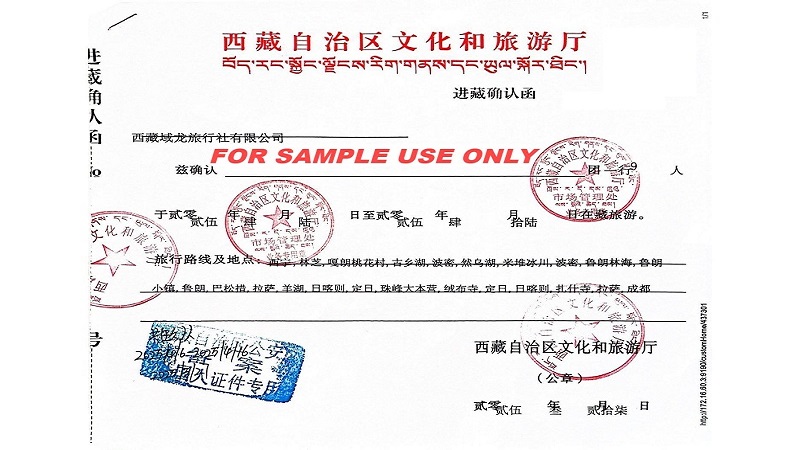
Tibet Travel Permit – Tibet Yulong
Can Americans Travel Independently in Tibet?
This is one of the most important differences between Tibet and many other destinations in China.
For international travelers, independent backpacking within the Tibet Autonomous Region is generally not available in the conventional sense. Foreign visitors normally need to arrange a guided itinerary through an authorized or qualified travel agency, with the required permits and transportation organized in advance. Chinese government guidance also provides for travel agencies to handle arrangements for foreign tourist groups traveling to areas with special access requirements.
This does not mean that you have to travel with a large group.
You can usually choose between:
- Small-group Tibet tours, which are more economical and allow you to meet other international travelers.
- Private Tibet tours, which provide more flexibility over the itinerary, accommodation, pace, and sightseeing.
- Customized journeys, designed around interests such as Buddhism, photography, trekking, Mount Kailash, or Everest.
For many American travelers, a small private group is a good compromise between flexibility and logistical convenience.
How Do Americans Get to Tibet?
Most US travelers do not fly directly from the United States to Lhasa. Instead, they first travel to a major city in mainland China and then continue to Tibet.
Flying to Lhasa
Flying is the fastest option. Depending on your international itinerary, you can connect through major Chinese gateway cities before taking a domestic flight to Lhasa.
Chengdu is particularly convenient for many Tibet itineraries because it has extensive connections with Lhasa and is also a useful place to spend a day or two before entering the plateau.
Flying saves time, which is particularly useful if your vacation is limited.
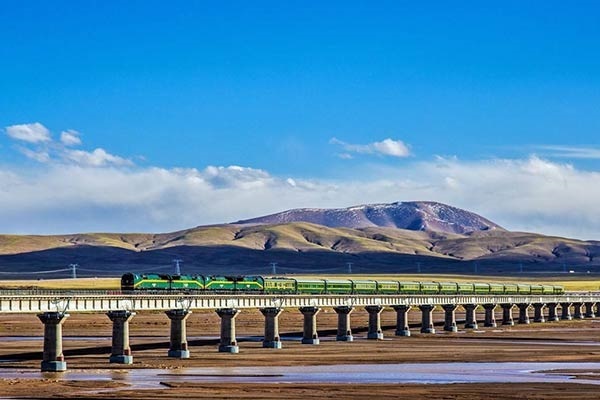
Taking the Qinghai–Tibet Railway
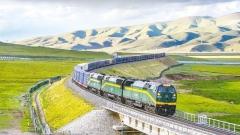
If you have more time, consider taking the Qinghai–Tibet Railway.
The train journey provides a gradual transition into the Tibetan Plateau and offers spectacular views of high-altitude grasslands, snow-covered mountains, rivers, and alpine lakes.
For travelers who enjoy scenic rail journeys, the train is more than transportation—it can become one of the highlights of the trip itself.
However, taking the train does not eliminate the need for Tibet travel permits.
Traveling from Nepal
Another popular option is to combine Tibet with Nepal.
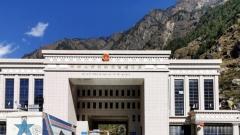
American travelers can fly to Kathmandu and then travel overland across the Himalayas toward Tibet. The route offers dramatic scenery and can include Gyirong, Everest Base Camp, Shigatse, and Lhasa.
The visa and entry procedures for travelers entering Tibet from Nepal are different from those for travelers entering Tibet through mainland China, so this route should be planned with a Tibet travel agency before departure.
What Can Americans Do in Tibet?
Tibet offers much more than mountain sightseeing. The best itinerary depends on what you want to experience.
Explore Lhasa and Tibetan Culture
Lhasa is the natural starting point for most Tibet tours.
Spend several days exploring Potala Palace, Jokhang Temple, Barkhor Street, Sera Monastery, and Drepung Monastery. These sites provide an introduction to Tibetan history, Buddhist traditions, architecture, and everyday life.
Walking around Barkhor Street is particularly rewarding because it combines religious pilgrimage with the atmosphere of the old city.
You may see pilgrims performing prostrations, turning prayer wheels, visiting temples, and shopping for traditional Tibetan goods.
Visit Mount Everest
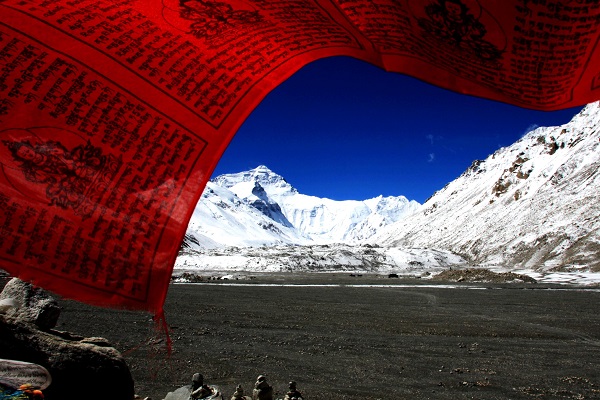
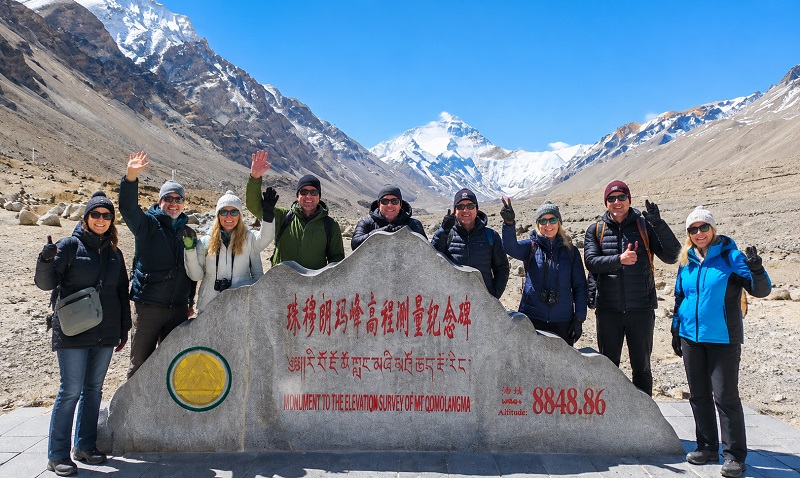
For many Americans, Mount Everest is the main reason to visit Tibet.
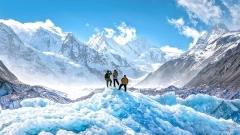
The northern side of Everest offers a spectacular perspective of the mountain, particularly around Everest Base Camp and viewpoints along the road from Tingri.
A typical Lhasa–Everest itinerary also introduces travelers to Tibetan landscapes and cultural sites along the way, including Yamdrok Lake, Gyantse, and Shigatse.
The high-altitude environment makes the journey physically demanding, so spending sufficient time in Lhasa before heading toward Everest is strongly recommended.
Travel to Mount Kailash and Lake Manasarovar
For travelers interested in spirituality and trekking, western Tibet offers a completely different experience.
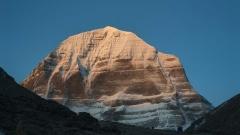
Mount Kailash is sacred to several religious traditions and attracts pilgrims from around the world. The traditional three-day kora around the mountain is one of the most challenging and meaningful trekking experiences in Tibet.
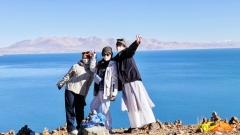
Nearby Lake Manasarovar adds another extraordinary landscape to the journey, with its deep blue water surrounded by the immense Tibetan Plateau.
A Mount Kailash trip normally requires significantly more time than a standard Lhasa tour and additional permits.
Discover Tibet’s Sacred Lakes
You do not need to travel all the way to western Tibet to experience the plateau’s spectacular lakes.
Yamdrok Lake can be visited relatively easily from Lhasa, while Namtso offers an unforgettable high-altitude landscape of turquoise water, snow mountains, and open grasslands.
These destinations are particularly attractive to photographers and travelers looking for dramatic Himalayan scenery.
Mount Everest
How Long Should Americans Spend in Tibet?
There is no single ideal length because Tibet offers very different experiences depending on your route.
For a first visit, consider the following:
| Trip length | Recommended experience |
|---|---|
| 5–7 days | Lhasa and nearby attractions |
| 8–10 days | Lhasa, Shigatse and Everest Base Camp |
| 10–12 days | Lhasa, Everest and Namtso or another extended route |
| 14–16+ days | Mount Kailash, Lake Manasarovar and western Tibet |
If this is your first time at high altitude, do not make the mistake of filling every available day with long-distance driving.
A slower itinerary gives your body more time to adapt and makes the experience considerably more comfortable.
When Is the Best Time for Americans to Visit Tibet?
Tibet can be visited throughout much of the year, but the best period depends on your destination.
April to May offers increasingly pleasant weather and generally good visibility. This can be an excellent period for sightseeing and photography.
June to August brings warmer conditions in many areas, although summer weather can be affected by rainfall, particularly in parts of the Himalayas.
September and October are especially attractive for outdoor adventures because the air is often clear and mountain visibility can be excellent.
Winter is colder and some remote tourist facilities may operate on a reduced schedule, but Lhasa itself remains accessible and can be quieter than during the main tourist season.
If your primary goal is Everest or Mount Kailash, the seasonal conditions along your specific route should be considered rather than choosing dates based only on Lhasa’s weather.
How Should Americans Prepare for Tibet’s High Altitude?
Altitude is often a bigger challenge than the distance.
Lhasa sits at roughly 3,650 meters (11,975 feet) above sea level, while destinations such as Everest Base Camp and Mount Kailash are considerably higher.
The best strategy is to give yourself time to adapt.
Spend your first days in Lhasa doing relatively light activities. Avoid immediately scheduling strenuous trekking after arriving from sea level. Drink enough water, sleep well, dress warmly, and tell your guide if you feel unwell.
A responsible itinerary should increase altitude progressively whenever possible.
Travelers should also remember that high-altitude symptoms can affect anyone, regardless of age or physical fitness.
What Is It Like to Meet Tibetan People?
One of the most memorable parts of traveling through Tibet is the opportunity to interact with local people.
You may hear “Tashi Delek”, a traditional Tibetan greeting associated with auspiciousness, goodwill, and good wishes.
At some welcoming occasions, visitors may also receive a khata, a traditional white ceremonial scarf symbolizing goodwill and respect.
When visiting Tibetan families or monasteries, cultural sensitivity is important. Ask before photographing people, follow monastery rules, dress appropriately, and avoid treating religious practices as performances created for tourists.
A respectful attitude creates much more meaningful cultural encounters.
Why Use A Local Tibet Travel Agency?
Planning a Tibet trip from the United States can involve several moving parts: international flights, Chinese entry requirements, Tibet permits, accommodation, private transportation, guides, altitude planning, and route-specific permissions.
This is where a local agency can make the process considerably easier.
Tibet Yulong Travel is a locally based Tibet travel agency that can help international visitors organize Tibet tours, including transportation, accommodation, guides, permits, and customized itineraries.
For travelers visiting Everest, Mount Kailash, Lake Manasarovar, or other restricted areas, local logistical experience is particularly valuable because the requirements and road conditions can differ considerably from a simple Lhasa sightseeing trip.
Instead of trying to coordinate every component separately from the United States, you can have the Tibet portion of the journey arranged as one integrated itinerary.
Frequently Asked Questions About Americans Traveling to Tibet
Can US Citizens Visit Tibet?
Yes. US citizens can visit Tibet, provided they meet the applicable Chinese entry requirements and Tibet travel requirements and arrange the necessary permits and tour services.
Do Americans Need a Chinese Visa for Tibet?
For ordinary US passport holders, current Chinese visa requirements should be checked before travel because entry policies can change. As of 2026, the published unilateral visa-free policy does not list the United States among the eligible countries.
Do Americans Need A Tibet Travel Permit?
Yes. Foreign travelers visiting the Tibet Autonomous Region need the applicable Tibet Travel Permit, which is normally arranged through a Tibet travel agency.
Can Americans Travel to Everest Base Camp in Tibet?
Yes. Everest Base Camp on the Tibetan side is a popular destination for international travelers, but additional permits and organized travel arrangements are required.
Can Americans Visit Mount Kailash?
Yes. American travelers can visit Mount Kailash, including the traditional kora, provided the necessary permits and travel arrangements are secured.
Can I Travel Alone in Tibet?
You can travel as a solo traveler, but that does not mean you can independently backpack around the Tibet Autonomous Region. A solo traveler can arrange a private tour with a local guide or join a small-group itinerary.
Is Tibet Safe for American Travelers?
Tibet is a popular destination for international travelers, but its high altitude, remote roads, changing weather, and limited medical resources in some areas require proper preparation. A professional local guide and well-planned itinerary can provide valuable support.
Is Tibet Worth Visiting from the United States?
Absolutely. For American travelers, Tibet offers an unusual combination of Himalayan landscapes, Tibetan Buddhist culture, high-altitude adventure, ancient pilgrimage routes, and encounters with local communities.
Whether your dream is to stand beneath Mount Everest, walk around the sacred Mount Kailash, photograph turquoise Himalayan lakes, explore Lhasa’s monasteries, or experience the Qinghai–Tibet Railway, the journey requires more preparation than an ordinary international vacation—but that is also part of what makes Tibet so distinctive.
The key is to plan early, confirm the current Chinese entry rules, arrange the required Tibet permits, allow enough time for acclimatization, and choose a reliable local travel partner. Tibet Yulong Travel can help international visitors turn these complicated arrangements into a practical, well-organized Tibet journey.