Crossing the Himalayas by road from Nepal into Tibet is one of the most spectacular overland journeys in the world. However, unlike standard international travel, entering the Tibet Autonomous Region requires specific documentation beyond a regular Chinese visa. Understanding the Tibet travel permit process for overland entry from Nepal is essential before you even think about packing your bags. Foreign travelers cannot apply for these permits independently; they must go through a registered local travel agency. The journey typically starts in Kathmandu, crosses the Gyirong border, and eventually leads to Lhasa or beyond. Because regulations are strict and frequently updated, having accurate information prevents delays, denied entry, and wasted money. This comprehensive guide walks you through every step of securing your documents, obtaining the correct visa, and successfully navigating the border.
✨ Highlights:
- A registered travel agency must arrange your Tibet travel permit.
- You need a Chinese Group Visa issued in Kathmandu, not a standard tourist visa.
- Passport submission in Nepal takes several working days.
- The Gyirong Port is the primary overland border crossing.
- All foreign travelers must be accompanied by a certified guide.
Understanding the Tibet Travel Permit Process for Overland Entry from Nepal
The Tibet travel permit process for overland entry from Nepal differs significantly from flying into Lhasa from mainland China. When you fly from cities like Chengdu or Beijing, you already hold a standard Chinese tourist visa, and your travel agency simply mails the physical Tibet Travel Permit (TTP) to your hotel in mainland China before your flight. The overland route from Nepal operates under an entirely different diplomatic and administrative framework due to the unique bilateral agreements between China and Nepal.
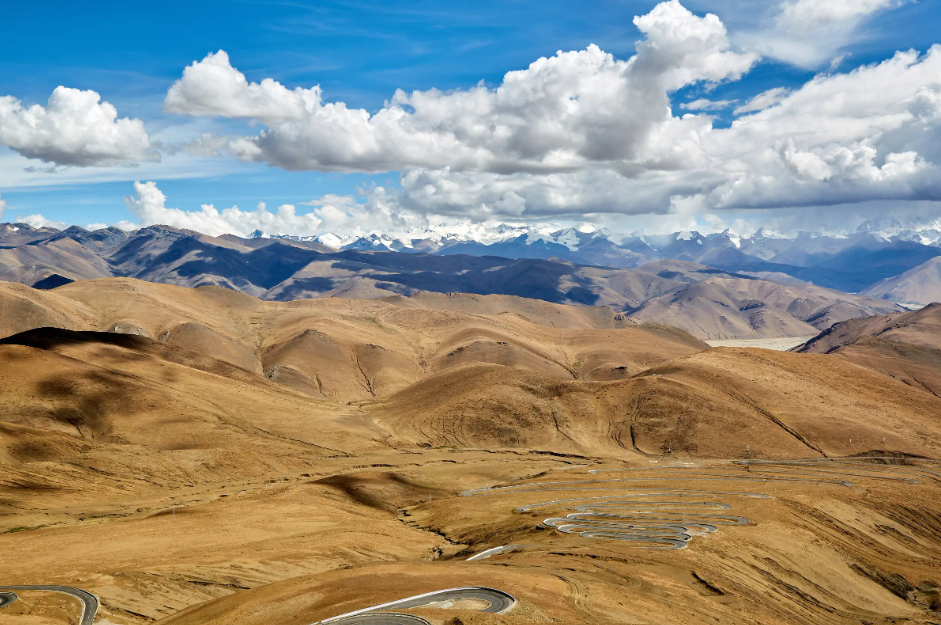
Kathmandu-Lhasa Overland Trip
Foreign nationals traveling overland from Nepal cannot use a standard Chinese tourist visa obtained in their home country. If you hold an existing standard Chinese tourist visa, it will be invalidated once the Group Visa for Nepal-Tibet overland entry is issued. Instead, you must obtain a Chinese Group Visa directly from the Chinese Embassy in Kathmandu. This visa is specifically designed for tourists entering Tibet from Nepal, whether by flight or overland. The entire procedure relies heavily on your chosen travel agency, as individual applications are strictly prohibited by the Tibet Tourism Bureau. Agencies like Tibet Yulong Travel specialize in handling these complex logistics, ensuring that all paperwork aligns perfectly with current regulations so you can focus on preparing for the high-altitude adventure ahead.
Required Documents Before Starting the Application
Before your travel agency can initiate the Tibet travel permit process for overland entry from Nepal, you must provide them with a specific set of documents. Gathering these well in advance is crucial, as any missing or incorrect information will delay the entire application. The processing time inside Tibet can take several weeks, so early preparation is your best strategy.
First, you need a clear, color-scanned copy of your passport’s information page. Your passport must have at least six months of validity remaining from your intended date of entry into Tibet, along with blank pages for the visa. Second, you must provide a scanned copy of your valid Chinese visa if you already hold one, though remember that this may be replaced by the Group Visa later. Third, a passport-sized photograph with a white background is required. Ensure the photo meets standard visa specifications without shadows or glasses glare.
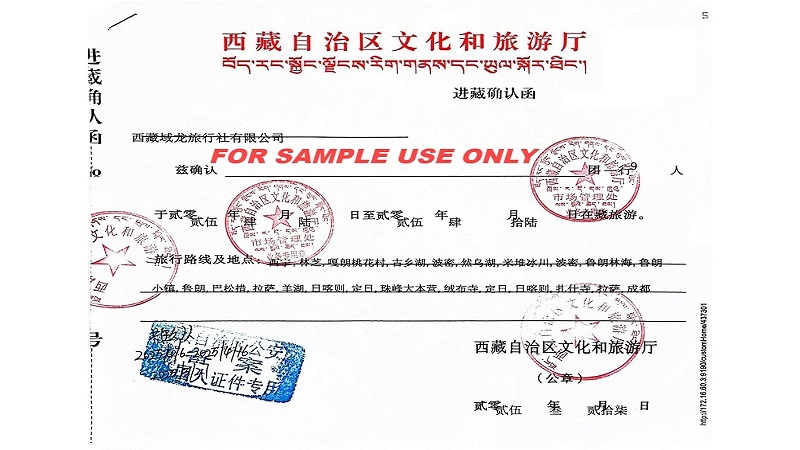
Tibet Travel Permit – Tibet Yulong
Additionally, your travel agency will require a detailed itinerary. You cannot wander freely in Tibet; your route, accommodation, and daily schedule must be pre-approved. You will also need to provide your exact entry and exit dates, as well as the specific border crossing point you intend to use. For journalists, diplomats, or individuals holding certain types of passports, additional approvals are necessary, and the standard tourist route may not apply. Always communicate your professional background honestly to your agency to avoid complications at the border.
Step-by-Step Guide to the Tibet Travel Permit Process for Overland Entry from Nepal
Navigating the Tibet travel permit process for overland entry from Nepal involves a coordinated effort between you, your travel agency, and government offices in both Tibet and Nepal. Here is how the workflow generally unfolds once you have confirmed your booking.
Step 1: Booking with a Registered Agency
You must book a tour with a legally registered Tibetan travel agency. Independent travel is not permitted for foreign passport holders. Once you finalize your itinerary and pay the required deposit, the agency begins the internal paperwork. Companies such as Tibet Yulong Travel have dedicated teams in Lhasa who physically submit documents to the relevant bureaus on your behalf.
Step 2: Issuance of the Tibet Travel Permit (TTP)
The agency submits your passport copies, itinerary, and application forms to the Tibet Tourism Bureau (TTB) in Lhasa. The TTB reviews the application, which typically takes between 15 to 20 working days. Once approved, the TTB issues the Tibet Travel Permit. For overland travelers crossing from Nepal, you will not receive the original TTP in Kathmandu. The original permit stays with your local Tibetan guide and will be presented at Gyirong border checkpoint on crossing day. Your agency’s Kathmandu team will hold verified copies for pre-check.
Step 3: Applying for the Invitation Letter
With the TTP secured, the agency applies for an official invitation letter from the Foreign Affairs Office in Tibet. This letter is sent to the Chinese Embassy in Kathmandu, authorizing them to issue your Chinese Group Visa. Without this invitation letter, the embassy will not process your visa.
Step 4: Obtaining the Chinese Group Visa in Kathmandu
This is the most critical phase of the Tibet travel permit process for overland entry from Nepal. Upon arriving in Kathmandu, you must surrender your original passport to your agency’s local representative. They will take your passport, along with the invitation letter and application forms, to the Chinese Embassy. You generally need to arrive in Kathmandu at least 3 to 5 working days before your planned border crossing to allow sufficient time for this process. The embassy only processes visas on specific working days, so weekends and public holidays (both Nepali and Chinese) must be factored into your timeline.
Step 5: Receiving Your Documents
Once the embassy approves the application, your passport is returned with the Chinese Group Visa. Note that a Group Visa is usually a separate sheet of paper listing all members of the tour group, rather than a sticker placed inside your passport. Your agency representative will hand you your passport, the Group Visa, and the original Tibet Travel Permit just before your departure to the border.
The Chinese Group Visa Explained
Many travelers are confused by the term “Group Visa” during the Tibet travel permit process for overland entry from Nepal. It does not necessarily mean you must travel with a large crowd of strangers. Even if you are a solo traveler or a couple, the agency will process your visa under this category, sometimes grouping you administratively with other travelers heading to the border on the same day.
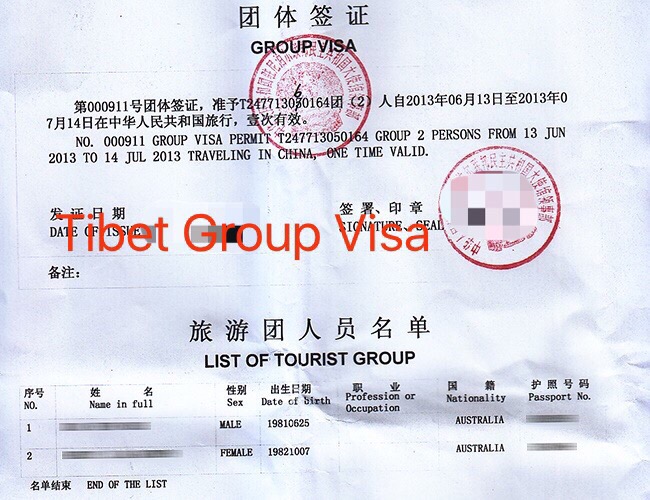
Tibet Group Visa
The Chinese Group Visa is a single-entry document valid only for the duration and route specified in your approved itinerary. You must enter and exit China (specifically Tibet) exactly as planned. If your Group Visa lists your exit point as Lhasa airport back to Kathmandu, you cannot suddenly decide to fly out to Chengdu instead. Any changes to the itinerary after the visa is issued require reapplication, which is incredibly difficult and often impossible while you are already on the road. Furthermore, the Group Visa overrides any existing standard Chinese tourist visa in your passport. If you plan to travel to mainland China after leaving Tibet, discuss this with your agency beforehand, as you may need to arrange a new visa or specific routing.
Crossing the Border: From Kathmandu to Gyirong Port
The physical execution of the Tibet travel permit process for overland entry from Nepal culminates at the border. Currently, the Gyirong Port (known as Rasuwagadhi on the Nepal side) is the only open land border for foreign tourists traveling between Nepal and Tibet. The Zhangmu (Kodari) border is not open for foreign tourist overland travel at this time.
The drive from Kathmandu to the Nepal border town of Syabrubesi or directly to the Rasuwagadhi checkpoint takes roughly 6 to 8 hours, depending on road conditions, weather, and traffic. The roads in the mountainous regions of Nepal can be rugged, especially during the monsoon season. You will depart early in the morning with your guide and driver.
Upon reaching the Nepal immigration office at Rasuwagadhi, you will stamp out of Nepal. You then cross the Friendship Bridge over the Trishuli River gorge to reach the Chinese side at Gyirong Port. Here, Chinese border officials will inspect your passport, your Chinese Group Visa, and your Tibet Travel Permit. They will verify your biometric data, ask basic questions about your trip, and check your luggage. This process can take anywhere from one to three hours depending on the volume of traffic. Once cleared, you officially enter the Tibet Autonomous Region, where your Tibetan guide and a specialized vehicle will be waiting to drive you to Gyirong Town for acclimatization.
Alternative Permits for Specific Regions in Tibet
Securing the Tibet Travel Permit and the Group Visa completes the primary Tibet travel permit process for overland entry from Nepal, but it might not be enough if your itinerary extends beyond Lhasa and the standard routes. Tibet has additional layers of bureaucratic requirements depending on your destination.
If your overland journey includes traveling to Mount Everest Base Camp, you will need an Alien Travel Permit (also known as a PSB Permit). This is issued by the Public Security Bureau in Lhasa or Shigatse. Your travel agency handles this using your original passport and Tibet Travel Permit once you are inside Tibet. It usually takes a few hours to process.
For highly restricted areas like Mount Kailash, Guge Kingdom ruins in Ngari Prefecture, or parts of Nyingchi near the border, a Border Area Travel Permit is mandatory. These are issued by the military authorities and require much longer processing times. Your agency must apply for these simultaneously with your main Tibet Travel Permit. Areas completely closed to foreigners, regardless of permits, exist as well. Always confirm with your agency which permits are included in your package to ensure no surprises halt your expedition midway.
Common Mistakes to Avoid During the Application
Errors during the Tibet travel permit process for overland entry from Nepal can result in being stranded in Kathmandu. One frequent mistake is underestimating the time required in Nepal. Travelers often book flights out of Kathmandu too soon after their planned border crossing date, leaving zero margin for embassy delays. Always build buffer days into your Kathmandu stay.
Another common error is attempting to apply for a standard Chinese tourist visa in your home country with the intention of using it at the Gyirong border. As established, border officials require the Group Visa issued in Kathmandu. Arriving at the border with only a standard visa and no Group Visa will result in immediate denial of entry.
Failing to disclose dual citizenship, previous travel to sensitive regions, or a background in journalism can also cause severe complications. The vetting process by the Tibet Tourism Bureau is thorough. Transparency with your travel agency is the only way to ensure smooth processing. Finally, losing your Group Visa sheet while in Tibet is a major crisis, as you need it to check into hotels, pass police checkpoints, and eventually exit the region. Keep all documents in a secure, waterproof folder alongside your passport.
Practical Tips for a Smooth Overland Journey
Beyond the paperwork, preparing for the realities of the overland route enhances your experience. Altitude sickness is a genuine concern. The drive from Gyirong Port to Lhasa rapidly ascends to elevations exceeding 4,000 meters. Spend at least one night in Gyirong Town (around 2,700 meters) to begin acclimatizing before pushing higher. Drink plenty of water, avoid alcohol, and rest frequently.
Pack layers. The weather in the Himalayas shifts dramatically within hours. Even if you leave sweltering Kathmandu, the high passes into Tibet can be freezing, windy, and snowy. Sun protection is equally vital due to the intense UV radiation at high altitudes.
Currency exchange should be handled before leaving Kathmandu. While digital payments dominate China, foreign cards and apps rarely work seamlessly in remote Tibetan areas. Carry sufficient Chinese Yuan in cash for small purchases, snacks, and tips. Relying on experienced operators like Tibet Yulong Travel ensures you receive accurate pre-departure briefings covering everything from packing lists to cultural etiquette, making the daunting administrative process feel manageable and allowing you to anticipate the breathtaking landscapes awaiting you on the roof of the world.
Timeline and Costs Overview
Understanding the financial and temporal investment helps in planning. The cost of the Tibet travel permit process for overland entry from Nepal is generally bundled into your overall tour package price. Standalone permit fees are nominal, but the mandatory services—guide, vehicle, driver, and agency handling fees—constitute the bulk of the expense. The Chinese Group Visa itself carries a fee that varies slightly based on your nationality and the urgency of processing (standard vs. expedited), typically ranging from 50 to 100 USD or more, payable in Kathmandu.
In terms of timeline, start communicating with your agency at least two months before your intended travel date. Allow 20 days for the TTP issuance in Lhasa, plus transit time to get documents to Kathmandu. Plan to be in Kathmandu for a minimum of 4 to 5 full working days solely for the visa application. Rushing this timeline is the primary cause of failed trips. By respecting the schedule and relying on professional guidance, the overland route from Nepal transforms from a logistical hurdle into the unforgettable beginning of a world-class adventure.