Traveling overland from the high-altitude plateau of Tibet to the lush valleys of Nepal is one of the most spectacular journeys on earth. The route connects two culturally rich destinations, passing through towering Himalayan peaks, ancient monasteries, and remote border towns. However, because this journey involves crossing international borders and traveling through a highly regulated autonomous region, the paperwork can seem overwhelming at first glance. Many travelers frequently ask: what documents do I need for Lhasa to Kathmandu land tour? Understanding the exact documentation required is crucial for a smooth, stress-free trip. Without the correct permits and visas, you will not be allowed to board transportation in Tibet or cross the border into Nepal. This detailed guide breaks down every single document you must prepare before embarking on this unforgettable overland adventure.
Before diving into the detailed explanations, here is a quick summary of the key points regarding what documents do I need for Lhasa to Kathmandu land tour:
- A valid passport with at least six months of remaining validity and blank pages.
- A valid Chinese tourist (L) visa issued before you enter mainland China, unless you qualify for a Chinese visa exemption.
- A Tibet Travel Permit (TTP), which is mandatory for all foreign nationals entering Tibet.
- An Alien Travel Permit (ATP, also called PSB Permit) and Border Area Travel Permit for visiting restricted border zones along the route.
- A Nepal Visa, which can conveniently be obtained upon arrival at the border or in Kathmandu.
Understanding What Documents Do I Need for Lhasa to Kathmandu Land Tour: The Basics
When figuring out what documents do I need for Lhasa to Kathmandu land tour, your passport is the absolute foundation of your entire journey. Your passport must be valid for at least six months beyond your intended date of entry into China and subsequently Nepal. It should also have several blank visa pages to accommodate the various stamps, stickers, and permits you will collect along the way. If your passport is nearing expiration or lacks sufficient blank pages, you must renew it before initiating any travel arrangements. Keep multiple photocopies and digital scans of your passport’s information page stored separately from the original document, as these copies are frequently requested by hotels, checkpoints, and border officials throughout Tibet and Nepal.
Beyond the physical passport, understanding the geopolitical reality of this route is essential. Tibet is an autonomous region of China, meaning standard Chinese immigration laws apply alongside additional regional regulations. You cannot simply book a flight or bus to Lhasa and show up; independent travel in Tibet is strictly prohibited for foreign nationals. You must be part of an organized tour arranged by a registered local travel agency. This requirement directly impacts what documents do I need for Lhasa to Kathmandu land tour, because the agency you choose will handle the application processes for the majority of your specialized permits. Working with a reliable operator like Tibet Yulong Travel ensures that your foundational documents are processed accurately and submitted within the strict timelines required by local authorities. Their expertise in navigating the bureaucratic landscape saves travelers countless hours and prevents costly delays.
To begin addressing what documents do I need for Lhasa to Kathmandu land tour, obtaining a Chinese visa is your first major administrative hurdle. Unless you hold a passport from a country with a specific visa-exemption agreement with China, you must apply for a Chinese tourist visa (typically an L visa) at a Chinese embassy or consulate in your home country before your departure. When filling out your visa application, you may submit a general mainland China travel itinerary. You do not need to list Tibet on your visa application, since Tibet-specific entry authorization (the TTP) is a separate regional permit arranged by your local Tibet agency after your Chinese visa is issued.
The Chinese visa application requires a completed form, a recent passport-sized photograph, proof of round-trip flights, and hotel reservations for your time in mainland China outside of Tibet. Processing times vary by embassy but typically take between four to seven business days, though expedited services are often available for an additional fee. Once you have your Chinese visa securely stamped in your passport, you have cleared the first major step in resolving what documents do I need for Lhasa to Kathmandu land tour. Remember that your Chinese visa dictates your legal presence in the country, including your time in Tibet, so ensure its validity window comfortably covers your entire overland itinerary from your arrival in China until your exit at the Zhangmu border.
Important distinction: This Lhasa-to-Kathmandu route uses a standard Chinese L visa obtained in your home country. This is different from the Kathmandu-to-Lhasa overland route, which requires a special Chinese Group Visa issued in Kathmandu. The two border directions follow entirely separate visa rules.
The Crucial Tibet Travel Permit (TTP)
If there is one document that defines the answer to what documents do I need for Lhasa to Kathmandu land tour, it is the Tibet Travel Permit. Often referred to as the TTB permit, this document is issued by the Tibet Tourism Bureau and is absolutely non-negotiable for foreign travelers. Without it, you cannot board domestic flights or trains heading into Tibet, nor can you pass through the numerous security checkpoints located on highways leading into the region. The Tibet Travel Permit is not something you can apply for independently at an embassy; it must be applied for by a licensed Tibetan travel agency on your behalf.
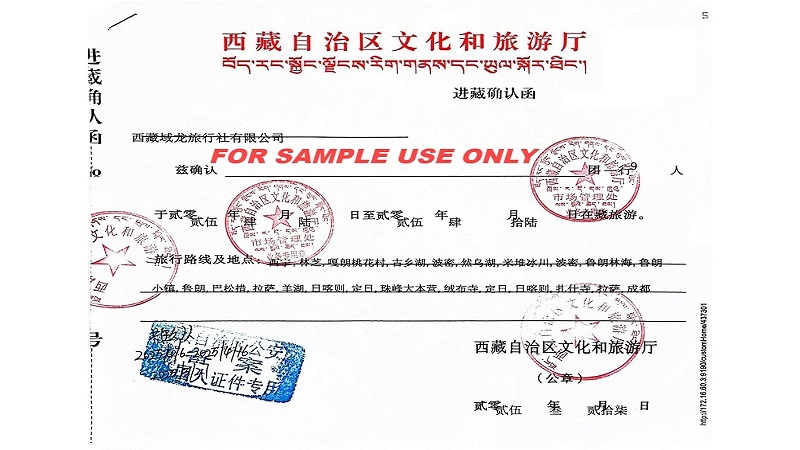
To initiate the process, you must provide your chosen agency—such as Tibet Yulong Travel—with clear scanned copies of your passport and your valid Chinese visa. The agency will then submit these documents, along with your detailed day-by-day itinerary, to the Tibet Tourism Bureau in Lhasa. The processing time for the Tibet Travel Permit generally takes about fifteen to twenty working days, though this timeline can fluctuate based on local regulations, holidays, or specific travel seasons. Because of this lengthy processing period, you must finalize your travel plans and submit your documents well in advance. The TTP is an original physical document. Your agency will arrange to send it to your pre-booked hotel in mainland China before you travel to Lhasa. In rare cases for certain itineraries, your guide may carry the original to meet you in Lhasa. You must carry the original permit with you at all times while in the region, as guides and police officers will request to see it frequently.
Additional Permits: Alien Travel Permit and Border Area Travel Permit
While the Tibet Travel Permit allows you to enter the region and visit Lhasa, answering what documents do I need for Lhasa to Kathmandu land tour requires looking beyond just the capital. The overland route from Lhasa to Kathmandu traverses some of the most remote and heavily regulated areas on the planet, including Mount Everest Base Camp, Shigatse, Gyantse, and the border town of Zhangmu. To visit these locations, additional documentation is mandatory.
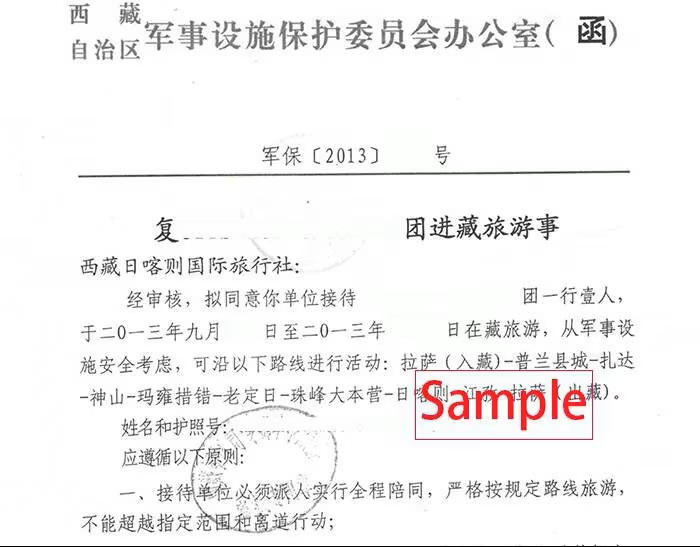
Military Entry Permit
The Alien Travel Permit (ATP), sometimes called the PSB permit, is issued by the local Public Security Bureau. This permit is required for traveling to restricted areas outside of Lhasa. Since the Friendship Highway—the primary overland route to Nepal—passes through several of these zones, your ATP is essential. Fortunately, you do not need to worry about applying for this yourself. Once you arrive in Lhasa, your tour guide will take your passport and Tibet Travel Permit to the local PSB office to arrange the Alien Travel Permit. This process usually takes only a few hours or a day, and your guide handles all the legwork.
Additionally, certain areas along the Lhasa to Kathmandu route are considered sensitive due to their proximity to international borders. For these specific border zones, a Border Area Travel Permit is required. Like the ATP, this is arranged entirely by your travel agency. When you book your overland tour with a professional company like Tibet Yulong Travel, they bundle the applications for the Tibet Travel Permit, Alien Travel Permit, and Border Area Travel Permit into a seamless service. They know exactly which documents do I need for Lhasa to Kathmandu land tour based on your specific daily route, ensuring no checkpoint surprises derail your journey.
Navigating the Border: Zhangmu Port Documentation
The physical transition between China and Nepal happens at Zhangmu Port (Kodari on the Nepal side). The Gyirong / Rasuwagadhi crossing is currently closed to tourist traffic following catastrophic debris flow damage. Understanding what documents do I need for Lhasa to Kathmandu land tour at this specific checkpoint is vital, as the process involves exiting one country and immediately entering another under rugged conditions.
At the Chinese border control station at Zhangmu, officials will inspect your passport, verify your Chinese visa, and collect your original Tibet Travel Permit upon exit. The TTP is retained by border authorities and cannot be kept by you after leaving Tibet. Your guide will assist you through the Chinese exit formalities, ensuring your departure stamp is correctly applied. After clearing Chinese immigration, you will physically cross the border bridge, often walking with your luggage or transferring to a designated Nepalese vehicle on the other side.
This border area sits at a high altitude, and the facilities are relatively basic compared to international airports. Having all your documents meticulously organized in a waterproof folder is highly recommended. Any missing paperwork at this remote location can result in significant delays, as there are no nearby embassies or consulates to issue replacements. The coordination provided by experienced agencies becomes incredibly apparent here, as guides communicate directly with border officials to facilitate a smooth transition for their clients.
Obtaining Your Nepal Visa Upon Arrival
Once you cross the bridge at Zhangmu Port into Kodari, you are officially in Nepal, and the final piece of the puzzle regarding what documents do I need for Lhasa to Kathmandu land tour comes into play. Unlike the complex, advance-planning required for Tibet, obtaining a Nepal visa is a straightforward process that can be completed right at the border.
Most nationalities are eligible for Nepal Visa on Arrival at Kodari / Zhangmu border, but eligibility rules change periodically. Double-check Nepal immigration official rules for your passport nationality before travel. To secure your Nepal visa, you will need your valid passport, a completed arrival card, and passport-sized photographs. While photo booths exist at some entry points, it is highly advisable to bring several extra passport photos from home to save time and avoid technical issues at the remote border. You will also need to pay the visa fee in cash; USD is preferred. The fees are structured based on the duration of your stay: typically, a 15-day visa, a 30-day visa, and a 90-day visa are available, each with escalating costs.
It is important to note that citizens of certain restricted nationalities may not be eligible for a Visa on Arrival and must apply for a Nepal visa at a Nepalese embassy beforehand. Always verify your specific nationality’s eligibility for VOA before your trip. Once your fee is paid and your passport is stamped, you are free to continue your journey down the winding mountain roads toward Kathmandu. The drive from the border to the capital takes several hours, offering a dramatic shift in scenery from the arid Tibetan plateau to the green, terraced hills of Nepal.
Practical Tips for Managing Your Travel Paperwork
Knowing what documents do I need for Lhasa to Kathmandu land tour is only half the battle; managing them effectively during the trip is equally important. The overland journey is dusty, involves frequent transitions between vehicles, and requires passing through numerous police checkpoints where your documents will be scrutinized.
Invest in a durable, zippered, waterproof document organizer. Keep your original passport, Chinese visa, and active permits in this folder, and store it in your daypack rather than your main checked luggage, which might be strapped to the roof of a jeep. Make three sets of photocopies of your passport, visa, and permits. Leave one set with a trusted contact at home, keep one set in your main luggage, and carry one set in your daypack separate from the originals. If your original documents are lost or stolen, having immediate access to photocopies drastically speeds up the replacement process at your respective embassies.
Furthermore, always listen to your tour guide regarding when to present your documents. In Tibet, guides are trained to handle interactions with authorities efficiently. Handing over your documents directly to your guide when approaching a checkpoint is often the standard protocol, as they speak the local language and understand the specific requirements of the officers. Agencies like Tibet Yulong Travel employ seasoned guides who manage these logistical hurdles seamlessly, allowing you to focus on the breathtaking landscapes rather than bureaucratic anxiety.
Health and Insurance Documentation Requirements
While not traditional immigration documents, health and insurance papers are critical components of what documents do I need for Lhasa to Kathmandu land tour. The route reaches extreme altitudes, particularly around Everest Base Camp and the high mountain passes near the border. We strongly recommend travel insurance that clearly covers high-altitude travel above 4000m and emergency helicopter rescue/medical evacuation in the Himalayan region. Some agencies will request proof of this policy before confirming your tour booking.
Carry a printed copy of your insurance policy, including the emergency contact numbers and your policy number. Additionally, if you are carrying prescription medications, bring the original prescriptions or a doctor’s note explaining the necessity of the drugs. Border officials in both China and Nepal can be strict regarding unidentified pharmaceuticals, and having medical documentation prevents misunderstandings. Ensure your vaccinations are up to date and carry your vaccination record if applicable, as health protocols can occasionally influence border crossing procedures.
Final Preparations Before Your Departure
Preparing for the overland journey from Lhasa to Kathmandu requires patience, attention to detail, and early planning. By systematically addressing what documents do I need for Lhasa to Kathmandu land tour, you eliminate the primary source of stress associated with this expedition. Start gathering your materials months in advance. Secure your passport renewal if necessary, apply for your Chinese visa with ample buffer time, and select a reputable travel agency to manage your Tibetan permits.
Partnering with professionals like Tibet Yulong Travel transforms a daunting bureaucratic process into a manageable checklist. Their deep understanding of current regulations ensures that every permit—from the initial Tibet Travel Permit to the localized Alien Travel Permit—is secured accurately and on time. Ultimately, the paperwork is merely the gateway to one of the world’s greatest travel experiences. Once your documents are organized and verified, you are free to immerse yourself in the spiritual atmosphere of Lhasa, marvel at the sheer scale of the Himalayas, and enjoy the vibrant culture awaiting you in Kathmandu. Proper preparation guarantees that your overland adventure remains defined by stunning memories rather than administrative headaches.
FAQ
Q: Can I exit Tibet to Nepal by land without a guide?
A: No. Independent travel is not allowed for foreign visitors on this route. You must travel with a registered agency and licensed guide.
Q: Can I reuse my Tibet Travel Permit if I want to come back to Tibet later?
A: No. Your original TTP will be collected at Zhangmu border on exit and becomes invalid once you leave Tibet.
Q: After crossing into Nepal, can I extend my Nepal visa?
A: Yes, visa extensions are available in Kathmandu if you wish to stay longer in Nepal.