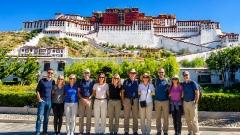
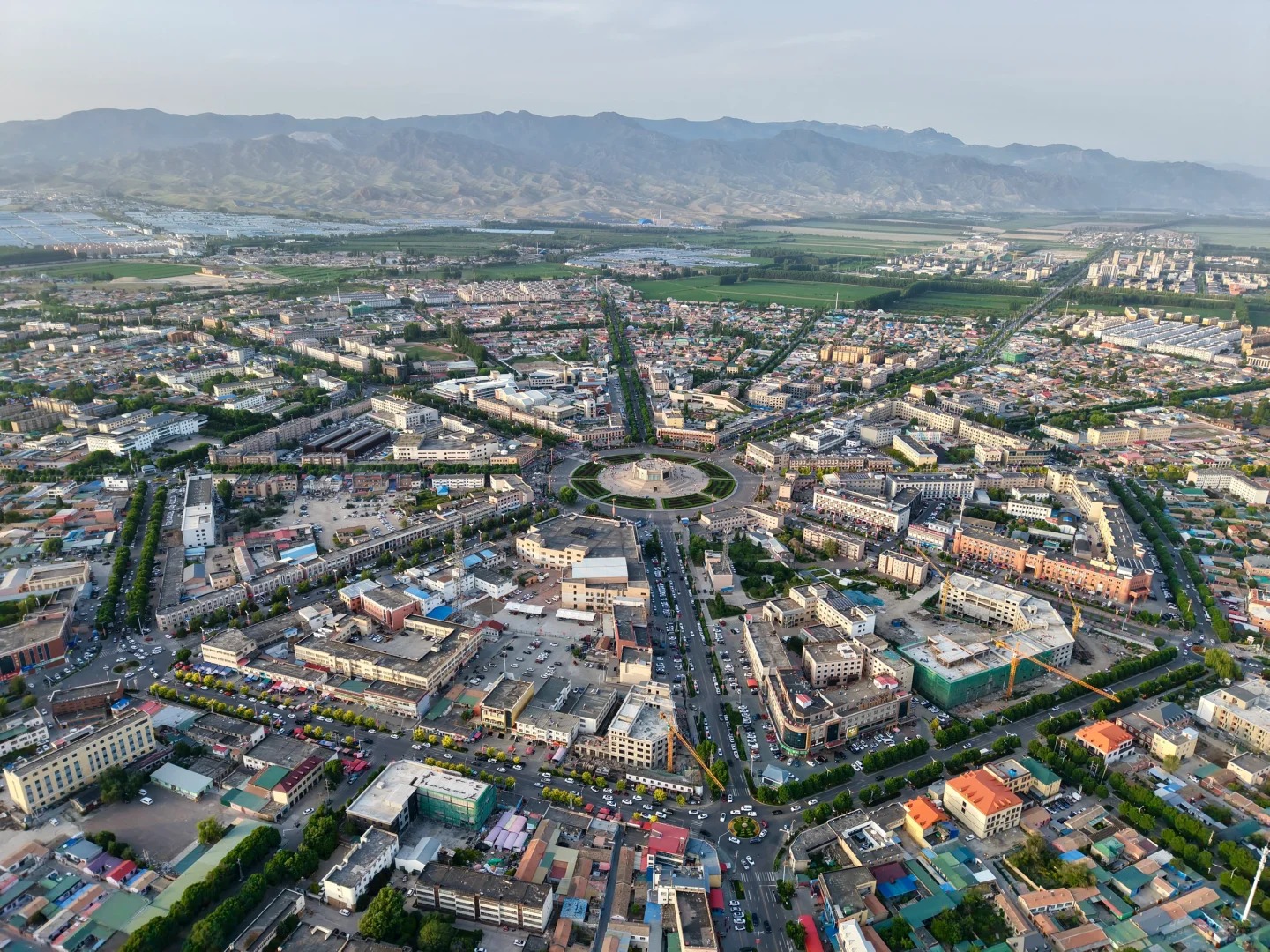
Tibet is famous for its dramatic Himalayan scenery, but its cultural identity is equally connected to Buddhism. Across the region, monasteries, temples, prayer wheels, pilgrimage routes, murals, prayer flags, and religious festivals reflect a spiritual tradition that has developed over many centuries. For international visitors, understanding the religion of Tibetan monks provides important context for what they see during a Tibet tour.
Tibetan monks follow Tibetan Buddhism, a distinctive Buddhist tradition that combines philosophical study, meditation, ethical discipline, devotional practices, and Vajrayana rituals. From the sound of monks chanting in an assembly hall to lively philosophical debates in a monastery courtyard, religious practice remains an important part of Tibet’s cultural landscape.
Key Points
- Tibetan monks primarily follow Tibetan Buddhism, a tradition rooted in Mahayana Buddhism with distinctive Vajrayana practices.
- Core teachings include the Four Noble Truths, the Eightfold Path, karma, compassion, rebirth, and the pursuit of enlightenment.
- Monastic life combines Buddhist scripture study, meditation, prayer, philosophical debate, rituals, and strict personal discipline.
- Tibetan Buddhism has four major schools—Gelug, Nyingma, Kagyu, and Sakya—each with its own traditions and areas of emphasis.
- Understanding Tibetan Buddhist beliefs and customs can help international travelers appreciate monasteries, pilgrimage sites, religious art, and everyday life in Tibet more deeply.
What Religion Do Tibetan Monks Follow?
Tibetan monks follow Tibetan Buddhism, a form of Buddhism that developed in Tibet through the integration of Indian Buddhist teachings with Tibetan cultural traditions. It is generally classified within the Mahayana tradition and incorporates Vajrayana methods, including advanced meditation practices, mantras, visualization, and ritual traditions.
The religion places strong emphasis on developing wisdom and compassion while working toward liberation from suffering. Buddhist teachings influence not only monks but also many aspects of Tibetan cultural life. Pilgrimage, religious festivals, traditional artwork, architecture, and everyday devotional practices all reflect this connection.
Visitors can see Buddhist symbolism throughout Tibet. Prayer wheels contain sacred texts and are traditionally turned as an act of devotion. Prayer flags carrying mantras and prayers are commonly placed in locations exposed to the wind. Butter lamps are offered in temples, while murals and sculptures depict important Buddhist figures and teachings.
Tibetan monasteries are therefore much more than historical attractions. Many remain active religious institutions where monks study, pray, meditate, debate, and participate in ceremonies. Seeing them as living spiritual communities rather than simply tourist sites makes a visit much more meaningful.
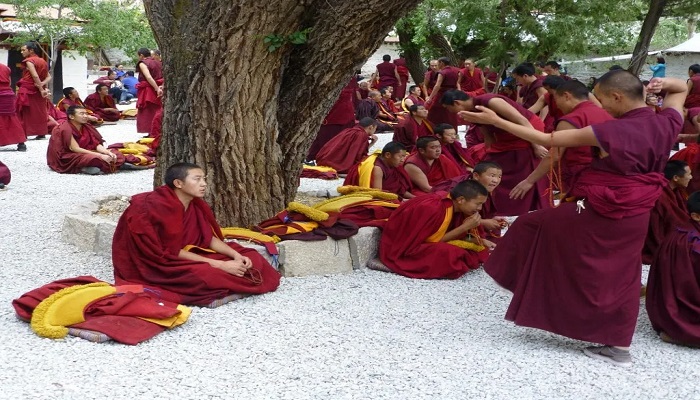
Tibetan Monk
What Are The Core Beliefs Of Tibetan Buddhism?
Although Tibetan Buddhism has developed distinctive practices, its philosophical foundation comes from fundamental Buddhist teachings. Among the most important concepts are the Four Noble Truths, the Eightfold Path, karma, compassion, and rebirth.
The Four Noble Truths
The Four Noble Truths describe the nature of suffering and the way toward liberation. They can be summarized as follows:
- Dukkha – ordinary existence involves suffering, dissatisfaction, or unease.
- Samudaya – suffering arises from craving, attachment, and ignorance.
- Nirodha – freedom from suffering is possible through the cessation of its causes.
- Marga – the path toward liberation is the Noble Eightfold Path.
These teachings provide a philosophical framework for Buddhist practice. Rather than simply accepting suffering as unavoidable, practitioners seek to understand its causes and transform their relationship with desire, attachment, and the mind.
The Eightfold Path
The Noble Eightfold Path provides practical guidance for ethical behavior, mental discipline, and wisdom. It includes:
- Right View
- Right Intention
- Right Speech
- Right Action
- Right Livelihood
- Right Effort
- Right Mindfulness
- Right Concentration
For Tibetan monks, these principles are reflected in the disciplined structure of monastic life. Buddhist education, meditation, ethical conduct, and contemplation are interconnected rather than treated as separate activities.
Karma And Compassion
Karma refers broadly to intentional actions and their consequences. Buddhist teachings emphasize that actions, words, and thoughts influence future experiences. This understanding encourages practitioners to avoid harmful behavior and cultivate positive qualities.
Compassion is therefore central to Tibetan Buddhist practice. Monks may dedicate prayers and religious practices to the welfare of other people and living beings rather than focusing exclusively on themselves. Compassion and wisdom are viewed as essential qualities on the path toward enlightenment.
Rebirth And Samsara
Tibetan Buddhism teaches the concept of rebirth within samsara, the continuing cycle of conditioned existence. According to Buddhist philosophy, beings remain within this cycle because of ignorance, craving, and other causes until liberation is achieved.
For monks, spiritual practice ultimately aims at more than achieving a favorable future life. The deeper goal is enlightenment and freedom from samsara. This gives meditation, ethical discipline, study, and compassion a broader spiritual purpose.
How Does Tibetan Buddhism Shape The Daily Life Of Monks?
Monastic life in Tibet is structured around religious study and practice. A monastery is simultaneously a place of worship, education, meditation, community life, and philosophical training.
The exact daily schedule differs between monasteries, traditions, and individual circumstances, but prayer, study, meditation, and discipline are fundamental elements.
Morning And Evening Prayers
Prayer is an important part of monastic life. Monks may gather in an assembly hall to recite Buddhist texts, prayers, and mantras, sometimes accompanied by traditional instruments.
Morning sessions can begin early, while evening practices provide another opportunity for collective religious activity. Some prayers are dedicated to the well-being of living beings, while others relate to deceased people or particular religious occasions.
For travelers interested in observing monastic life, visiting at an appropriate time can provide a much better understanding of how Buddhism is practiced beyond what can be seen in a museum or historical building.
Buddhist Scripture And Philosophy
Tibetan monks can spend many years studying Buddhist philosophy and classical scriptures. Traditional monastic education includes subjects such as logic, Buddhist philosophy, monastic discipline, and the nature of reality.
The Five Great Treatises form an important part of traditional Buddhist scholastic education. They cover subjects including the Perfection of Wisdom, Middle Way philosophy, Buddhist logic and epistemology, monastic discipline, and Abhidharma teachings.
This scholarly tradition explains why major Tibetan monasteries have historically functioned as centers of higher learning. Monks do not simply memorize religious texts; they are trained to analyze arguments, examine philosophical questions, and develop a deeper understanding of Buddhist teachings.
Meditation Practice
Meditation is another important component of Tibetan Buddhist practice. Different Tibetan Buddhist traditions use a variety of meditation methods, ranging from concentration and analytical meditation to more advanced Vajrayana practices.
Meditation is intended to cultivate qualities such as mental stability, awareness, insight, compassion, and wisdom. Some practices are conducted individually, while others may take place under the guidance of experienced teachers.
For visitors, it is important to remember that not every meditation or religious ceremony is open to tourists. The appropriate approach is to observe quietly and follow the instructions of monastery staff or an English-speaking guide.
Monastic Debate
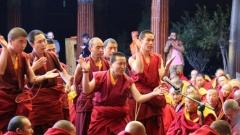
One of the most recognizable features of Tibetan monastic education is philosophical debate. At monasteries such as Sera Monastery in Lhasa, monks may gather in courtyards to discuss and challenge philosophical ideas.
The debates can look energetic to visitors, with gestures and rapid exchanges between participants. However, they are not casual arguments. Debate is a structured educational method designed to test reasoning, clarify Buddhist concepts, and strengthen understanding.
For international travelers, watching a traditional debate can be one of the most memorable ways to experience the intellectual side of Tibetan Buddhism.
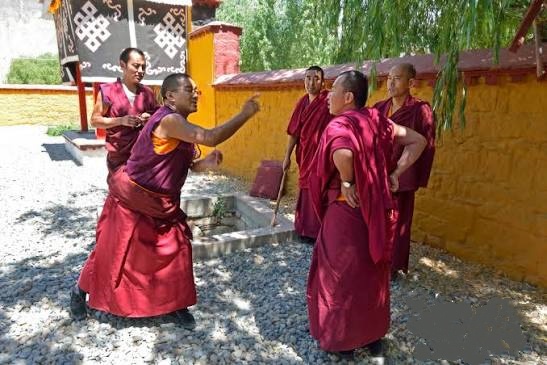
Tibetan Monk Debating
Religious Ceremonies And Festivals
Tibetan monasteries also hold religious ceremonies and festivals throughout the year. Depending on the monastery and Tibetan calendar, visitors may encounter chanting, offerings, processions, masked Cham dances, and other traditional religious activities.
Major festivals can transform monasteries and towns into lively cultural centers. Because religious calendars differ from the international calendar, travelers who want to experience a particular festival should plan their itinerary well in advance.
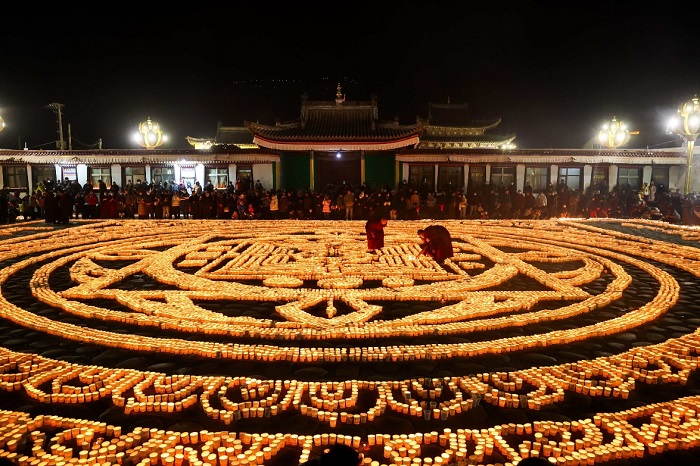
Tsongkhapa Butter Lamp Festival
What Are The Four Main Schools Of Tibetan Buddhism?
Tibetan Buddhism is not a single uniform tradition. It includes several major schools and lineages, each with its own historical development, teachers, philosophical interpretations, and meditation practices.
The four major schools commonly discussed today are Gelug, Nyingma, Kagyu, and Sakya.
Gelug School
The Gelug school is particularly well known for its emphasis on monastic discipline, systematic philosophical study, and rigorous education.
Many famous monasteries around Lhasa, including Sera Monastery and Drepung Monastery, are associated with the Gelug tradition. Visitors can see its scholarly character through monastery education, prayer assemblies, and philosophical debates.
The Dalai Lama lineage is historically associated with the Gelug tradition, although Tibetan Buddhism as a whole is much broader than any single school or lineage.
Nyingma School
The Nyingma school is traditionally regarded as the oldest of the four major schools of Tibetan Buddhism. Its history reaches back to the early transmission of Buddhism into Tibet.
Nyingma teachings are particularly associated with Dzogchen, a sophisticated system of meditation and spiritual practice concerned with recognizing the nature of mind.
Monasteries associated with Nyingma traditions can be found in different parts of Tibet, and visitors may notice distinctive ritual, artistic, and textual traditions.
Kagyu School
The Kagyu school is strongly associated with meditation lineages and the transmission of teachings from teacher to student. Two important meditation traditions connected with Kagyu Buddhism are Mahamudra and, within certain lineages, Dzogchen.
Tsurphu Monastery near Lhasa has an important historical connection with the Karma Kagyu tradition and the Karmapa lineage.
The emphasis on direct spiritual instruction and meditation gives the Kagyu tradition an important place within the broader landscape of Tibetan Buddhism.
Sakya School
The Sakya school is recognized for its distinctive philosophical and tantric teachings, particularly the Lamdre, or “Path and Its Fruit,” system.
Sakya Monastery in Shigatse is one of the most important centers of this tradition. The monastery is also famous for its extensive collection of Buddhist scriptures, historical artworks, and religious treasures.
For travelers visiting different monasteries in Tibet, recognizing these four schools provides useful context for understanding why religious traditions can vary from one monastery to another.
How Is Tibetan Buddhism Different From Other Buddhist Traditions?
Tibetan Buddhism shares fundamental Buddhist teachings with other Buddhist traditions, including the Four Noble Truths, karma, compassion, and the pursuit of liberation. However, its historical development in Tibet gave it distinctive philosophical, ritual, artistic, and institutional characteristics.
One noticeable difference is the prominent role of Vajrayana Buddhism. Tibetan Buddhist practice incorporates mantras, visualization, mandalas, ritual objects, initiation traditions, and other methods that are not expressed in the same way across all Buddhist traditions.
Another distinctive feature is the importance of lineage and spiritual teachers. Tibetan Buddhist traditions preserve teachings through established teacher-student relationships, and certain lineages include systems for recognizing reincarnated spiritual masters, commonly known as tulkus.
Tibetan Buddhist monasteries are also particularly well known for their combination of religious practice and rigorous philosophical education. Public debate, extensive scripture study, and formal monastic training have become recognizable aspects of Tibetan Buddhist culture.
For international tourists, these characteristics help explain why a visit to a Tibetan monastery can feel very different from visiting Buddhist temples elsewhere in Asia.
How Can Tourists Respectfully Observe Tibetan Monks?
International visitors are welcome to experience many aspects of Tibetan Buddhist culture, but monasteries remain sacred religious spaces. Travelers should therefore approach them with cultural sensitivity rather than treating religious activities as entertainment.
Dress modestly when visiting monasteries, particularly when entering prayer halls. Avoid loud conversations and never interrupt monks who are praying, studying, or meditating.
Photography rules vary between monasteries. Outdoor photography may be permitted in some areas, while photography inside prayer halls or during ceremonies can be prohibited. Always ask before taking photographs of religious activities or individual monks.
Visitors should also avoid touching statues, scriptures, ritual objects, offerings, or other sacred items unless specifically invited to do so.
A knowledgeable English-speaking guide can be particularly helpful for international tourists because the guide can explain local customs, identify appropriate areas for photography, and help visitors understand what is happening during religious ceremonies.
How Can Understanding Tibetan Buddhism Improve Your Tibet Trip?
Learning about Tibetan Buddhism before arriving in Tibet can completely change the way you experience the region. Instead of seeing prayer wheels, monasteries, pilgrims, murals, and religious ceremonies as unfamiliar sights, you begin to understand the ideas behind them.
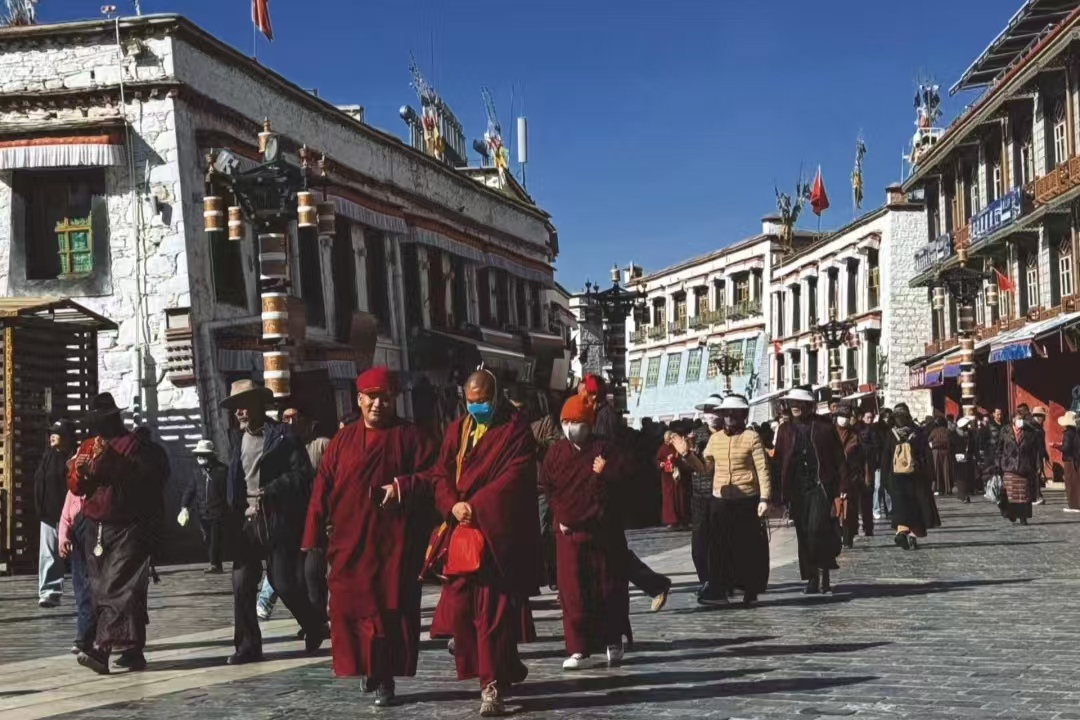
At Jokhang Temple in Lhasa, for example, pilgrims may walk clockwise around the temple in a practice known as kora. Some pilgrims also make repeated prostrations as part of their devotion. These actions are not simply traditional performances; they are meaningful religious practices.
Prayer wheels provide another example. Rather than being decorative objects, they traditionally contain sacred texts and are turned as part of devotional practice. Prayer flags are similarly connected with Buddhist prayers and mantras, while butter lamps represent offerings made within Buddhist practice.
The famous monastery debates in Lhasa reveal another side of Tibetan Buddhism: its emphasis on intellectual examination and philosophical reasoning. Meanwhile, religious festivals demonstrate the importance of ritual, music, dance, art, and community participation.
Traveling through Tibet with this background knowledge allows you to connect individual sights with the larger spiritual tradition that shaped them.
How Can You Experience Tibetan Buddhist Culture During A Tibet Tour?
A well-planned Tibet itinerary can combine religious sites with landscapes, local communities, historical attractions, and cultural experiences.
Lhasa is an excellent starting point because visitors can explore Jokhang Temple, Potala Palace, Barkhor Street, Sera Monastery, and Drepung Monastery. Travelers interested in Tibetan Buddhism can then continue toward places such as Shigatse and visit important monasteries while also experiencing the changing landscapes of the Tibetan Plateau.
A 6-day Central Tibet cultural tour, for example, can combine Lhasa with Gyantse and Shigatse, providing an introduction to Tibetan monasteries, Buddhist culture, history, and high-altitude scenery. Travelers with more time can consider extending the journey toward Everest Base Camp or other culturally significant destinations.
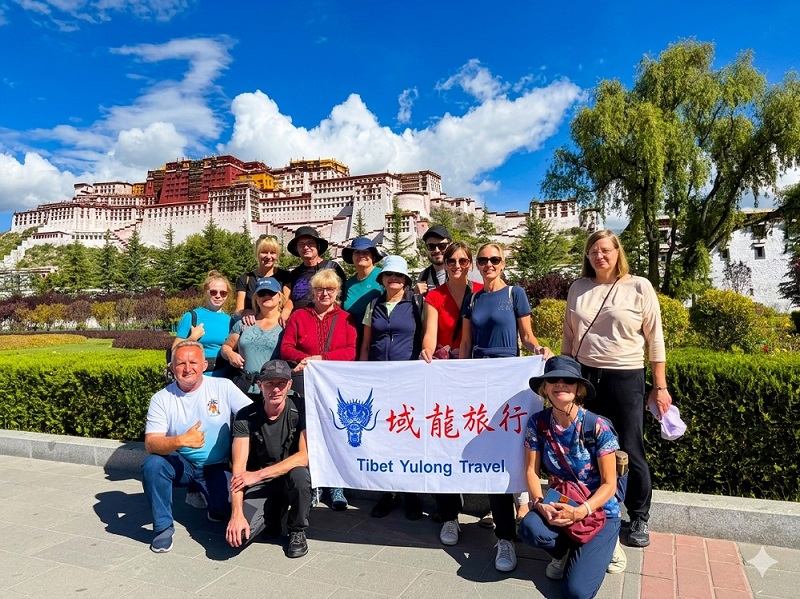
For international visitors, Tibet Yulong Travel can help coordinate the practical aspects of a Tibet journey while an English-speaking guide provides cultural explanations throughout the trip. This can be especially useful when visiting active monasteries, where understanding local etiquette and religious practices makes the experience more respectful and rewarding.
FAQs About The Religion Of Tibetan Monks
What Religion Do Tibetan Monks Follow?
Tibetan monks follow Tibetan Buddhism, a Buddhist tradition rooted in Mahayana Buddhism and strongly influenced by Vajrayana practices. It emphasizes wisdom, compassion, meditation, ethical discipline, and liberation from suffering.
Can Tourists Photograph Tibetan Monks?
Photography depends on the location and circumstances. Outdoor photography may be permitted, while photography inside prayer halls or during religious ceremonies may be restricted. Always ask for permission and follow monastery rules.
Can Visitors Observe Tibetan Buddhist Religious Practices?
Yes. International tourists can observe various religious and cultural activities during monastery visits, depending on local rules and the timing of the visit. Morning prayers, philosophical debates, and festivals can offer valuable insights into Tibetan Buddhist life.
Can Tourists Talk To Tibetan Monks?
Sometimes. Visitors may have opportunities to speak with monks, but monks have demanding schedules involving study, prayer, and meditation. Conversations should therefore remain respectful and should never interfere with religious activities.
Do Tibetan Monks Get Married?
Fully ordained monks generally take vows of celibacy and do not marry. These vows form part of monastic discipline and allow monks to dedicate themselves to Buddhist study and spiritual practice.
Why Do Tibetan Monks Chant Mantras?
Mantra recitation is a form of Buddhist practice. It can be used to cultivate concentration, compassion, devotion, and other qualities associated with spiritual development. The meaning and purpose of specific mantras vary according to the practice and tradition.
Why Is Tibetan Buddhism Important To Tibet?
Tibetan Buddhism has profoundly influenced Tibetan culture, including architecture, art, literature, festivals, pilgrimage, traditional education, and everyday religious customs. Its influence can be seen throughout the region, both inside monasteries and in ordinary community life.