✨ Highlights:
- 🛣️ The G318 southern route is the best road option from Lhasa to Mount Kailash for scenery, road quality and gradual altitude acclimatization
- 📍 Total driving distance roughly 1600km, classic 4-day overland itinerary from Lhasa to Darchen (Kailash gateway)
- 📜 Foreign travellers require China Visa, Tibet Travel Permit and Alien’s Travel Permit for Ngari region
- 🗓️ Best travel window: May to October; winter road closures and extreme cold are not recommended
- 🚙 Private 4WD vehicle with local driver is the most reliable choice instead of self-driving or public bus
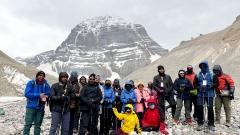
Mount Kailash, standing at 6656 meters in Ngari of western Tibet, is one of the most sacred mountains across four major religions: Buddhism, Hinduism, Bon and Jainism. For pilgrims and adventure travellers around the world, a road trip from Lhasa to Mount Kailash remains the most immersive way to witness the grandeur of the Tibetan highland, far better than flying directly to Ngari Gunsa Airport. The overland journey lets you witness lakes, glaciers, ancient monasteries and endless grasslands step by step while slowly adapting to high altitude.
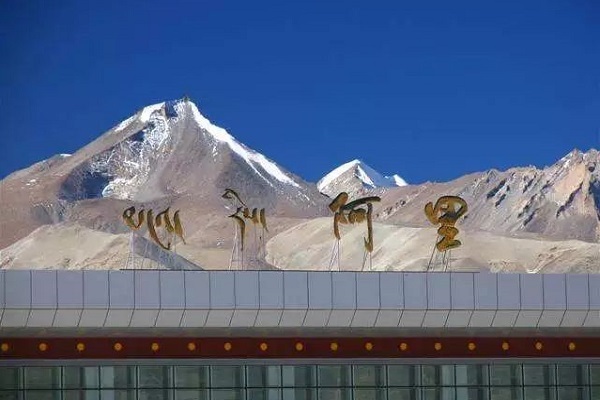
Ngari Gunsa Airport
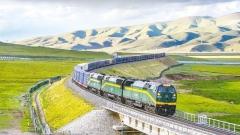
If you are planning your Tibet pilgrimage trip, the core question is: what is the best way to reach Mount Kailash from Lhasa by road? There are two primary overland routes to consider, and understanding the Lhasa to Mount Kailash overland route options will help you pick the right style of travel for your trip. Many visitors dream to drive from Lhasa to Mount Kailash, but the long plateau journey requires careful planning around permits, altitude, accommodation and seasonal weather. In this guide, we will break down route comparison, recommended multi-day itinerary, road status, essential paperwork, altitude management, transport choices and practical travel tips to help you design your perfect Lhasa to Ngari overland tour.
Two Main Road Routes from Lhasa to Mount Kailash
Southern Route (Recommended: Best Way to Reach Mount Kailash from Lhasa by Road)
- Route: Lhasa → Yamdrok Lake → Gyantse → Shigatse → Tingri → Saga → Zhongba → Paryang → Darchen (the base town for Mount Kailash and Lake Manasarovar)
- Lhasa to Mount Kailash road distance and driving time: Around 1600 km, typically completed in 4 days of driving, or 5 days if you want a slower sightseeing pace.
This southern route along G318 is widely recognised as the best overland choice from Lhasa to Mount Kailash. The highway is mostly paved with stable road conditions, and the elevation rises gradually, which is critical to reduce altitude sickness risk. Along the way, you will pass many iconic landmarks: turquoise Yamdrok Yumtso Lake, the famous Pelkor Chode Monastery in Gyantse, Tashilhunpo Monastery in Shigatse, and you can make a side trip to Everest Base Camp if you wish.
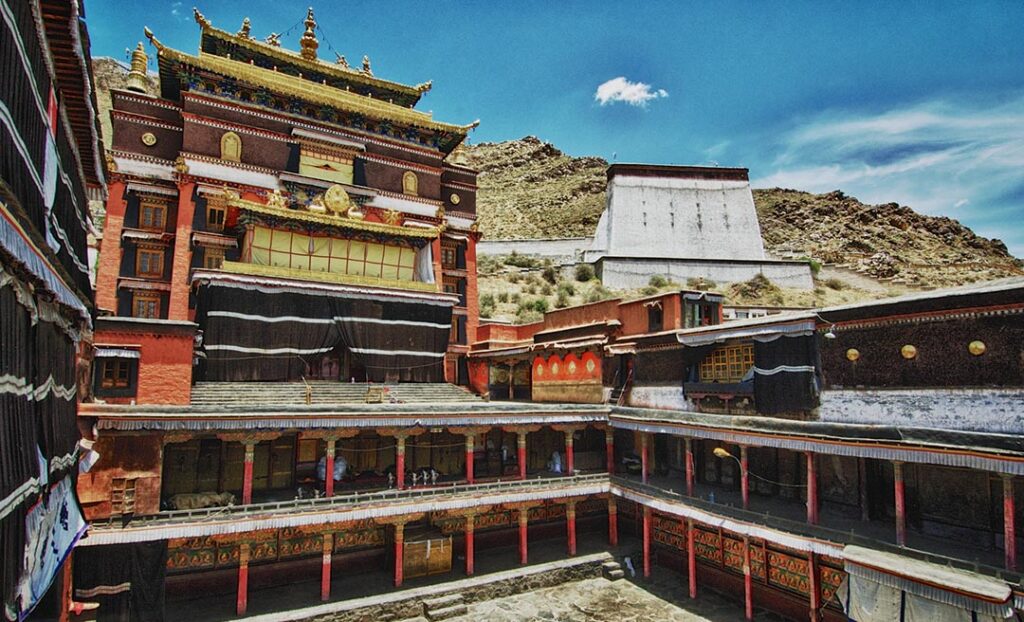
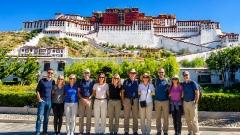
Tashilhunpo Monastery
The route winds through farmlands, high mountain passes and alpine wetlands. You can stop for photos, visit local monasteries and taste authentic Tibetan food in small towns. Most travellers choose this route because it balances amazing scenery, accessible accommodation and manageable altitude gain. After crossing Paryang, the open plateau unfolds, and you will catch your first distant view of Mount Kailash and Lake Manasarovar before arriving at Darchen, the starting point of the Kailash kora.
Northern Route (Alternative, Less Recommended for First-time Visitors)
- Route: Lhasa → Nagqu → Gerze → Tsochen → Darchen
- Total Distance: Approximately 1830 km
- Driving Days: 4–5 days
The northern route, also known as the northern Ngari route, takes you through the remote Changtang grassland. This road is less crowded, with fewer towns and tourists. You will pass dozens of hidden highland lakes and vast wild plateau landscapes. However, it has clear drawbacks. Large sections of the road are remote, with limited hotels, restaurants and fuel stations. The elevation jumps quickly, and many sections sit above 4800 meters overnight, which greatly increases altitude sickness risk.
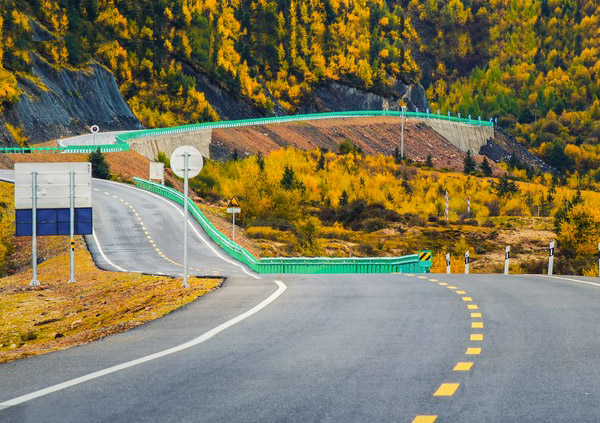
G318
For this reason, the northern route is only suitable for experienced plateau travellers who have already acclimatized in Tibet and prefer wild, off-the-beaten-path scenery. For first-time visitors and pilgrims, the southern G318 route is still the best way to reach Mount Kailash from Lhasa by road.
Recommended 4-Day Overland Itinerary (Southern Route)
This itinerary is designed for slow altitude acclimatization, with reasonable daily driving hours and sightseeing stops.
Day 1: Lhasa to Shigatse (about 270 km, 5–6 hours driving)
Start early from Lhasa. Cross the Kamba La pass to overlook Yamdrok Lake, stop at Gyantse to visit Pelkor Chode Monastery and the famous Kumbum Stupa. Continue west to Shigatse. Overnight in Shigatse at around 3836m. This day keeps the overnight altitude low, ideal for initial highland adaptation.
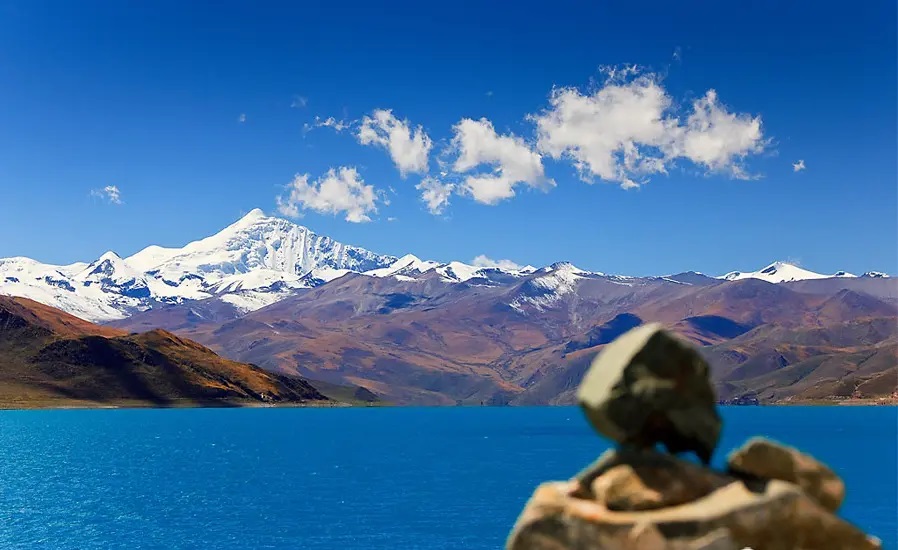
Yamdrok Lake
Day 2: Shigatse to Saga (about 450 km, 7–8 hours driving)
Visit Tashilhunpo Monastery in the morning, the seat of Panchen Lama. Drive west along G318, cross several high mountain passes, and pass through Lhatse, a key highway junction. Reach Saga before dark. Saga sits at about 4400m. Accommodation options are basic but clean.
Day3: Saga to Paryang (about 480 km, 8 hours driving)
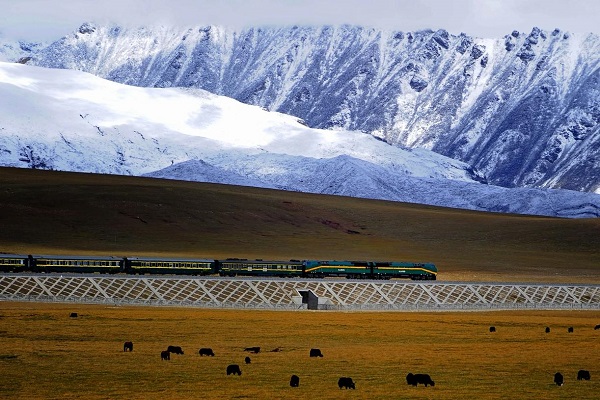
The most scenic stretch of the journey. Drive through Zhongba town, crossing vast grasslands. You may spot wild yaks, Tibetan antelopes and kiangs on the plains. Overnight in Paryang at roughly 4700m. This is the highest overnight stop on this itinerary, so keep activities light and avoid alcohol.
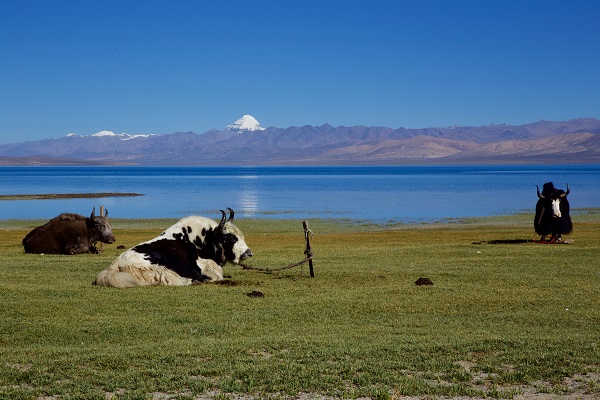
Day4: Paryang to Darchen (about 400 km, 7 hours driving)
Continue west across the plateau. The highlight arrives when you first see the snow-capped peak of Mount Kailash and the holy Lake Manasarovar. Arrive in Darchen, the gateway town of Mount Kailash, at 4675m. Here you can rest, prepare supplies and start your Kailash kora.
If you want a more relaxed pace, extend the trip to 5 days by adding an overnight stop in Tingri and a detour to Everest Base Camp.
Transport Options for Lhasa to Mount Kailash Road Trip
Private 4WD Vehicle with Local Driver (Top Choice)
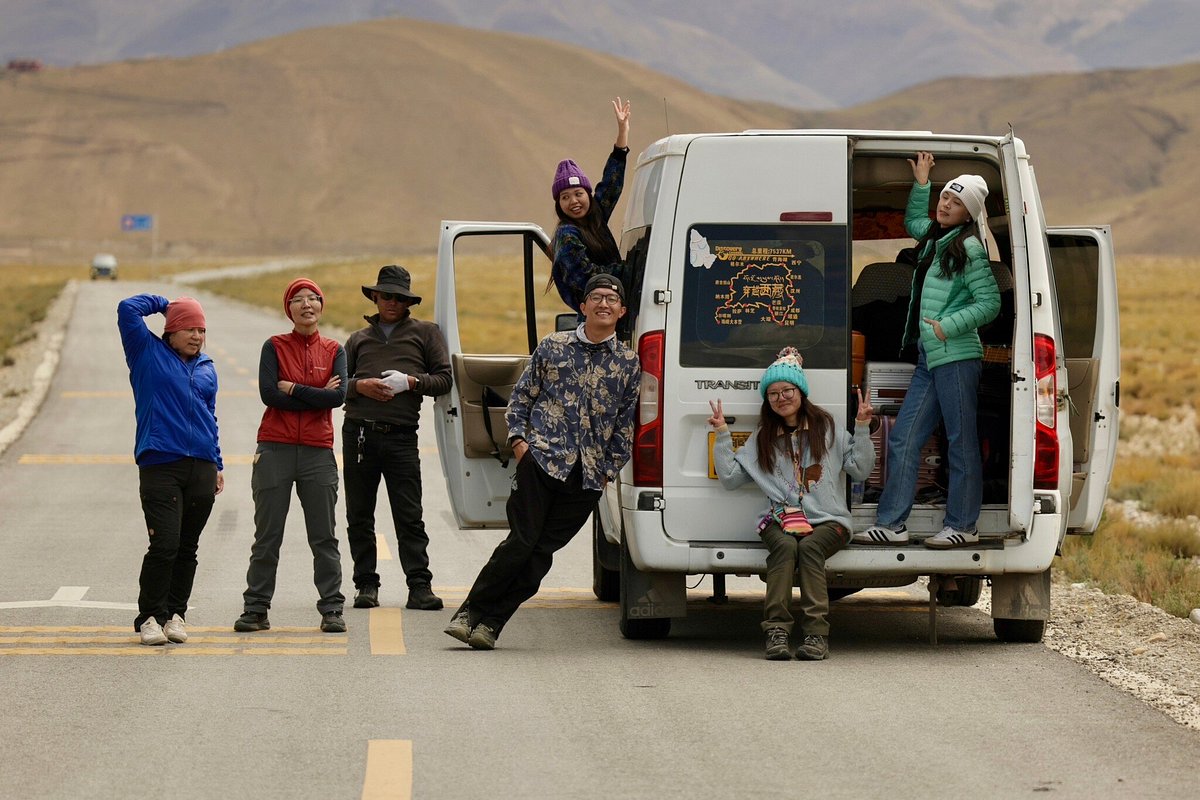
This is the most popular and reliable option for international travellers. The 4WD vehicles are well-maintained for highland roads. Local Tibetan drivers know the road conditions, weather changes, fuel stops and safe overnight locations very well. They can also help with basic communication and emergency response. Most Tibet travel agencies offer packaged private vehicle service together with permit handling.
Public Bus
There are long-distance buses from Lhasa to Ngari, and you can get off at Darchen. The price is cheap, but there are many downsides. Buses run on fixed schedules, you cannot stop freely for sightseeing. Seats are cramped for long hours, and you have no flexibility to adjust your itinerary if altitude symptoms appear. For photography lovers and pilgrims, buses are not recommended.
Self-driving
Foreign tourists are not permitted to rent cars and self-drive in Tibet. Even Chinese drivers need full preparation: reliable SUV, spare tyres, sufficient fuel, detailed route planning and emergency medical supplies. The high-altitude roads have sudden weather changes, and mobile signal is missing in many remote sections. Self-driving is risky for the Lhasa to Kailash route.
Essential Travel Permits
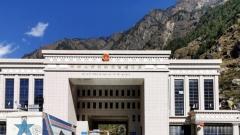
Mount Kailash is located in the Ngari border region, and documents are mandatory for foreign visitors. You must arrange these permits via a registered local Tibet travel agency, as individuals cannot apply directly.
- China Tourist Visa: Apply at Chinese embassies or consulates in your home country before departure.
- Tibet Travel Permit: Basic permit required to enter Tibet.
- Alien’s Travel Permit: Needed for travel in Shigatse and Ngari prefecture to visit Mount Kailash and Lake Manasarovar.
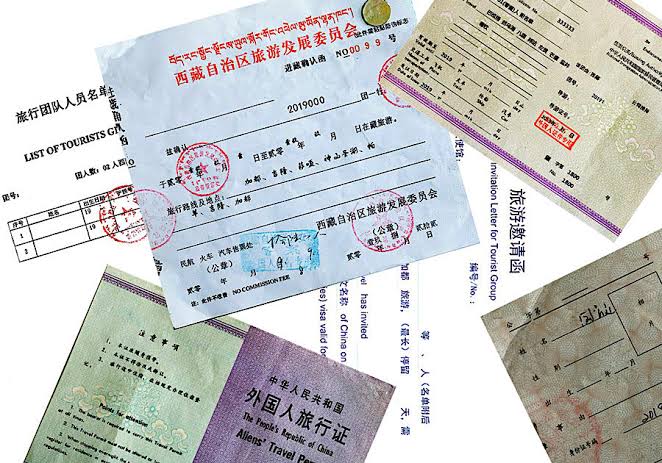
Documents for foreigners entering Tibet
Planning for a Tibet travel permit for Mount Kailash tour needs to start early. Plan permit application at least 4–6 weeks before your travel date. Missing any document will result in being stopped at road checkpoints and forced to return.
Best Travel Season & Road Conditions
Many travellers wonder about the best time to travel Lhasa to Mount Kailash by road. The best travel window is May to October. June to September is the peak season: temperatures are milder, passes are free of heavy snow, and the road surface stays stable. The grasslands turn green, lakes are full, and the weather is suitable for the Kailash kora.
From late October to April, winter brings heavy snow, frozen passes, strong winds and temperatures dropping below -15°C. Some mountain passes may close temporarily. Hotel heating in remote towns is limited. Only very experienced winter plateau travellers should consider this window.
Road conditions: Most sections of the southern G318 route are paved asphalt roads. Small parts may have minor mud or gravel after summer rainstorms. Checkpoints are set along the highway, so always carry your original permits and passport. Fuel stations are available in major towns like Shigatse, Saga and Paryang, but fill up whenever possible.
Altitude Sickness Prevention & Health Preparation
Altitude sickness is the biggest risk on this overland journey. The golden rule is gradual elevation gain.
– Spend 2–3 days resting and acclimatizing in Lhasa before heading west to Mount Kailash. Do not rush the trip.
– Drink plenty of water, avoid alcohol, heavy meals and strenuous exercise during the first few high-altitude days.
– Pack medicines: headache pills, altitude sickness medicine, cold medicine, sunscreen, lip balm and high SPF sunglasses. UV radiation is extremely strong on the plateau.
– Bring warm layered clothing, windproof down jacket, thermal socks and waterproof shoes. Even in summer, temperatures drop sharply after sunset.
If you have severe headache, vomiting or breathing difficulty, descend to lower elevation immediately and seek medical help.
FAQ
Q1: How many days does it take to travel from Lhasa to Mount Kailash by road?
A1: The standard southern route takes 4 driving days. Many travellers extend it to 5 days to visit Everest Base Camp and reduce daily driving fatigue.
Q2: Can I fly instead of taking the road trip from Lhasa to Mount Kailash?
A2: You can fly from Lhasa to Ngari Gunsa Airport, then drive 1 hour to Darchen. Flying saves time, but you jump directly to over 4200m, which dramatically increases altitude sickness risk. The road trip offers far richer scenery and gradual acclimatization.
Q3: Is the road from Lhasa to Mount Kailash safe?
A3: The southern G318 route is generally safe when travelling with a qualified local driver. Risks mainly come from sudden weather changes and altitude sickness, not road crime. Always follow your driver and tour guide’s advice.
Q4: Can I do the Lhasa to Kailash road trip alone?
A4: Foreign travellers cannot travel independently in Tibet. You must book a guided tour with a registered travel agency, including driver and permits. Solo overland travel is not allowed.
Conclusion
After comparing routes, transport and difficulty levels, the G318 southern route with a private 4WD and local driver remains the best way to reach Mount Kailash from Lhasa by road. This classic overland route balances excellent paved roads, incredible Himalayan scenery and slow altitude acclimatization. It gives pilgrims and travellers time to absorb the spiritual atmosphere of the Tibetan plateau before reaching the sacred Mount Kailash and Lake Manasarovar.
Careful preparation of travel permits, proper clothing and altitude management will make your Lhasa to Ngari overland tour safe and unforgettable. Whether you plan to complete the Kailash kora or simply admire the holy mountain, this overland journey is one of the most rewarding highland adventures on earth.