Standing on a high mountain pass with the wind carrying colorful strips of cloth into the vast blue sky is one of the most profound experiences a traveler can have on the Tibetan Plateau. For centuries, hanging prayer flags has been a sacred practice deeply woven into the daily lives and spiritual beliefs of Tibetan Buddhists. If you are wondering how to join a prayer flag blessing ceremony in Tibet, you are about to embark on a journey that transcends typical sightseeing. This practice is not merely a photo opportunity; it is an invitation to participate in a living tradition where human intention meets the natural elements. Understanding the rituals, respecting the culture, and preparing adequately will ensure your participation is both meaningful and respectful. Whether you are a seasoned traveler or visiting the region for the first time, this guide provides everything you need to know.
✨ Highlights:
- Respect local customs and religious etiquette at all times.
- Secure necessary travel permits well before your departure date.
- Understand the specific meaning behind the five flag colors.
- Acclimatize properly to avoid altitude sickness during ceremonies.
- Consider hiring experienced local guides like Tibet Yulong Travel.
Understanding the Spiritual Significance Before You Learn How to Join a Prayer Flag Blessing Ceremony in Tibet
Before diving into the logistics of participating, it is crucial to understand what you are actually taking part in. Tibetan prayer flags, known as “Lungta” (Wind Horse), are rectangular pieces of cloth printed with mantras, prayers, and auspicious symbols. The core belief is that as the wind blows through the flags, it carries the printed prayers and blessings across the landscape, spreading goodwill, compassion, and peace to all sentient beings. The wind acts as a messenger, transforming the physical space into a sacred one.
The colors of the prayer flags are never random. They represent the five elements that make up the universe according to Tibetan Buddhist philosophy. Blue symbolizes the sky and space, white represents air and wind, red stands for fire, green signifies water, and yellow embodies earth. When these colors are arranged in the correct order, they create a balance of elements, promoting harmony and health. During a blessing ceremony, monks or local practitioners chant specific mantras to consecrate the flags before they are hung. This chanting infuses the cloth with spiritual energy, activating its purpose.

Tibetan Prayer Flags
Understanding this background changes the way you approach the ceremony. You are not just hanging colored fabric; you are actively contributing to the spiritual ecosystem of the Himalayas. When travelers ask how to join a prayer flag blessing ceremony in Tibet, the first answer should always be to approach the event with a heart full of respect and a mind open to learning. Without this foundational understanding, the experience loses its depth.
Essential Preparations and Permits Required for Visiting Tibet
Traveling to Tibet requires more planning than visiting other parts of China due to its unique geographical and administrative status. Foreign travelers cannot simply book a flight and arrive independently. You must obtain a Tibet Travel Permit, which is issued by the Tibet Tourism Bureau. This permit is mandatory for all non-Chinese passport holders and is required to board flights or trains heading into the region. To apply for this permit, you must book your tour through a registered local travel agency. The agency will handle the paperwork on your behalf, usually requiring your passport details and Chinese visa information several weeks in advance.
Beyond the basic travel permit, If your ceremony takes place near border or restricted zones, you may need an Alien Travel Permit. A Military Permit is only required for specially designated border locations and is not needed for standard visits to Everest Base Camp. These additional documents further emphasize the importance of working with a reliable agency. Navigating the bureaucratic requirements alone can be overwhelming, which is why many travelers turn to established operators. For instance, Tibet Yulong Travel specializes in organizing culturally immersive itineraries, ensuring that all legal documentation is handled smoothly so you can focus entirely on your spiritual journey.
Physical preparation is equally important. Tibet sits on an average elevation exceeding 4,000 meters. Altitude sickness is a real concern that can derail your plans if ignored. Spend at least two to three days acclimatizing in Lhasa, which sits at around 3,650 meters, before traveling to higher mountain passes where major prayer flag sites are located. Drink plenty of water, avoid alcohol initially, and move slowly. Consult your doctor before the trip regarding medications such as acetazolamide for altitude sickness prevention. This medicine has contraindications and should only be taken under medical advice. Being physically comfortable allows you to be mentally present during the blessing ceremony.
Step-by-Step Guide on How to Join a Prayer Flag Blessing Ceremony in Tibet
Knowing exactly how to join a prayer flag blessing ceremony in Tibet involves understanding where to go, who to ask, and how to behave. Prayer flags are ubiquitous in Tibet. You will see them strung between trees, draped over bridges, fluttering from rooftops, and covering entire mountain passes. However, a formal blessing ceremony usually takes place at specific sacred sites or during particular festivals.
Choosing the Right Location
Some of the most prominent places to witness and participate in these ceremonies include the mountain passes surrounding Lhasa, such as the Kamba La Pass on the way to Yamdrok Lake, or the Gyatso La Pass near Mount Everest. Monasteries like Sera, Drepung, and Ganden also host regular blessing events. During Tibetan New Year (Losar) or the Saga Dawa festival, the scale of these ceremonies increases dramatically, with thousands of pilgrims gathering to replace old flags and hang new ones.
Connecting with Local Practitioners
You generally cannot simply walk into a monastery and ask to join a private ritual. The best way to join is through a guided cultural tour. Your guide, provided by agencies like Tibet Yulong Travel, will have existing relationships with local monks and village elders. They can arrange for you to respectfully observe or even assist in a ceremony. If you are trekking with local nomads, they often perform smaller, personal blessing ceremonies when crossing a new pass. Expressing genuine interest and asking your guide to translate your request politely is the most effective method.

Fading prayer flags are considered auspicious
Purchasing the Flags
Never bring cheap, mass-produced flags from outside Tibet. It is considered disrespectful. Instead, purchase your prayer flags locally in Lhasa’s Barkhor Street market or directly from a monastery. Buying them locally supports the community and ensures the mantras printed on the cloth are accurate and traditionally sanctioned. When you buy the flags, you can ask the monks to bless them before you take them to the hanging site.
The Act of Hanging
During the ceremony, you will likely stand alongside locals while monks chant sutras. Incense made from juniper branches is burned in large stone hearths, filling the air with a thick, fragrant smoke that purifies the area. When it is time to hang the flags, follow the lead of the locals. Ensure the flags follow the traditional color sequence: blue, white, red, green, yellow. They are arranged top‑to‑bottom along the rope, following the natural flow of the wind and clockwise pilgrimage direction. Tie them securely to ropes strung between poles, rocks, or trees. As you tie each knot, it is customary to focus on positive intentions, wishing for the health and happiness of all beings, rather than selfish desires.
Cultural Etiquette and Respectful Behavior During the Ritual
When figuring out how to join a prayer flag blessing ceremony in Tibet, mastering the etiquette is just as important as securing your travel permits. Tibetan Buddhism is deeply integrated into every aspect of life, and visitors are expected to act with reverence.
First, always walk clockwise around sacred structures, including stupas, mani stones (stones carved with mantras), and monasteries. This circumambulation follows the path of the sun and is a fundamental rule of Tibetan religious conduct. If you are standing near a group of praying locals, do not cut through their line or walk counter-clockwise.
Dress modestly. Even if you are hiking to a remote mountain pass, avoid wearing shorts, tank tops, or revealing clothing during a ceremony. Cover your shoulders and knees. Remove your hat and sunglasses when interacting directly with monks or when entering a temple courtyard for the blessing.
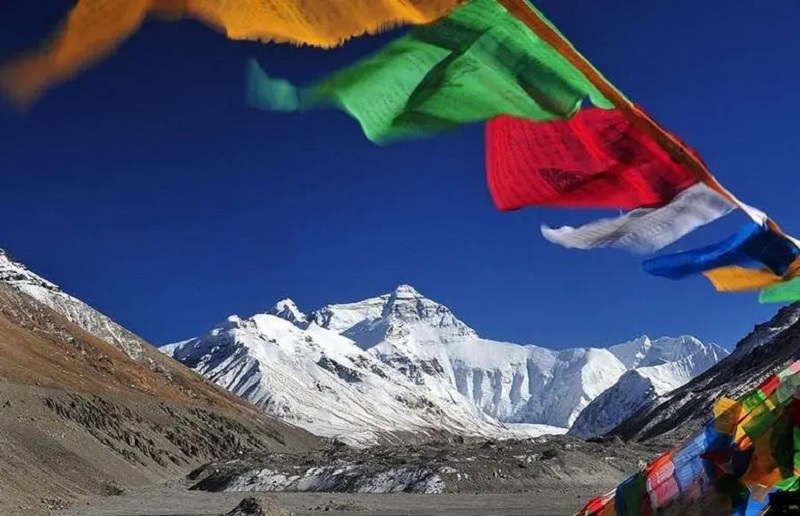
Fluttering prayer flags in front of Mt.Everest
Photography requires explicit permission. While the visual spectacle of thousands of prayer flags against a snowy backdrop is tempting to capture, pointing a camera directly at monks during a sacred chant without asking is highly offensive. Ask your guide to request permission first. In some inner sanctums or during specific esoteric rituals, photography may be strictly forbidden. Put your phone away and experience the moment with your own eyes.
Never step on or over prayer flags, mani stones, or religious texts. If a flag has fallen to the ground, pick it up gently and place it on a clean surface or hand it to a local. Old, faded prayer flags should never be thrown in the trash. Traditionally they are respectfully burned at designated sacred fire sites, where smoke carries the prayers onward. Open burning is restricted in many areas, so always follow local guidance. Respecting the lifecycle of the flag shows a deep understanding of the culture.
The Best Times of Year to Experience a Prayer Flag Ceremony
Timing your visit correctly significantly enhances your chances of experiencing a large-scale prayer flag blessing. While individual families hang flags year-round, communal ceremonies peak during specific periods.
Tibetan New Year, known as Losar, usually falls in February or March. During this time, families thoroughly clean their homes and replace old prayer flags with new ones to welcome good fortune for the coming year. The atmosphere is festive, and monasteries hold extensive prayer sessions.
Saga Dawa, occurring in May or June, commemorates the birth, enlightenment, and passing of Buddha. It is one of the holiest months in the Tibetan calendar. Pilgrims flock to sacred mountains like Mount Kailash and various passes around Lhasa to hang prayer flags. The sheer volume of people and the intensity of devotion during Saga Dawa make it an unparalleled time to learn how to join a prayer flag blessing ceremony in Tibet.
Summer months (July and August) offer the warmest weather and the clearest mountain views, making travel physically easier. However, this is also the rainy season, which can sometimes obscure the peaks. Autumn (September and October) brings crisp air, stable weather, and brilliant blue skies, providing perfect conditions for outdoor ceremonies at high altitudes. Winter is harsh but offers a raw, uncrowded experience for those willing to brave the cold.
Choosing the Right Tour Operator for a Meaningful Experience
Because independent travel for foreigners is heavily restricted in Tibet, the quality of your experience depends almost entirely on the travel agency you choose. Learning how to join a prayer flag blessing ceremony in Tibet is much easier when you have a knowledgeable advocate by your side. A good operator does more than just drive you from point A to point B; they act as cultural interpreters.
Agencies like Tibet Yulong Travel have built strong reputations by focusing on authentic, respectful tourism. Their guides are typically local Tibetans who possess an intimate understanding of regional customs, dialects, and religious protocols. When you travel with an agency that prioritizes cultural preservation, you are granted access to experiences that standard commercial tours might miss. They know which village elder to speak with, which monastery is welcoming visitors that week, and how to facilitate an introduction that honors local traditions.
Furthermore, a reputable agency ensures your safety at high altitudes. Vehicles are equipped with oxygen, guides are trained in first aid, and itineraries are paced to allow for proper acclimatization. When you are not worrying about logistics or health risks, you can fully immerse yourself in the spiritual weight of the blessing ceremony.
What to Expect Emotionally and Spiritually
Participating in a prayer flag blessing ceremony in Tibet is rarely a neutral experience. Many travelers report feeling a sudden, unexpected emotional release when the chanting begins and the juniper smoke rises. The combination of thin air, stark landscapes, and ancient sounds creates an environment that strips away everyday distractions.
You do not need to be a Buddhist to feel the impact of the ceremony. The universal themes of compassion, interconnectedness, and releasing positive intentions into the world resonate across different belief systems. As you tie your flag to the rope and watch the wind catch the fabric, there is a tangible sense of letting go. You are leaving a piece of your hope on that mountain pass, trusting the wind to distribute it.
It is common to feel a deep sense of humility. Standing among people who have practiced these rituals for generations reminds you of the vastness of human spiritual endeavor. Allow yourself to be moved. Do not rush the experience or constantly check the time. Stand still, breathe the incense-filled air, listen to the rhythmic cadence of the mantras, and let the high-altitude wind wash over you.
Practical Tips for the Day of the Ceremony
On the day you are scheduled to participate, pack thoughtfully. High-altitude weather is notoriously unpredictable. Even in summer, a mountain pass can shift from bright sunshine to freezing winds and sleet within minutes. Dress in layers. Bring a windproof and waterproof outer shell, thermal base layers, gloves, and a warm hat. The ceremony often requires standing outdoors for extended periods, so being cold will distract you from the spiritual significance of the event.
Carry a thermos of hot tea or water. Staying hydrated helps combat altitude sickness and keeps you warm. Avoid eating a heavy meal right before ascending to a high pass, as digestion slows down at altitude and can cause discomfort. Light snacks like nuts or dried fruit are ideal.
Bring a small offering if appropriate. It is customary to leave a small donation at monasteries or sacred sites. Your guide can advise you on the proper amount and how to present it respectfully. Never hand money directly to a monk unless instructed to do so; placing it on an altar or in a designated offering box is the standard practice.
Finally, keep your voice low and your movements deliberate. Sacred spaces thrive on tranquility. By approaching the day with mindfulness and practical readiness, you ensure that your inquiry into how to join a prayer flag blessing ceremony in Tibet results in a memory that will stay with you long after you have descended from the plateau.