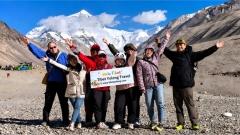
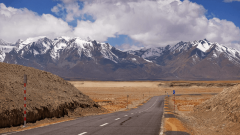
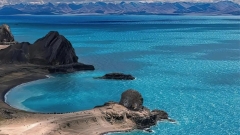
Traveling across the Himalayas by road is one of the most spectacular journeys on earth. The route connecting the Tibetan plateau to the lush valleys of Nepal offers unparalleled views of towering peaks, ancient monasteries, and shifting landscapes. However, this international border crossing is not as simple as booking a bus ticket. Understanding the Lhasa to Kathmandu overland permits required for this trip is absolutely critical before you begin planning your itinerary. Without the proper documentation, travelers will be denied entry into Tibet or turned back at the border. This comprehensive guide breaks down every document you need, how to obtain them, and what to expect along the way.
✨ Highlights:
- A Chinese Group Visa is mandatory for entering Tibet from Nepal or continuing onward.
- The Tibet Travel Permit is the foundational document required for any foreign traveler in Tibet.
- An Alien Travel Permit is needed specifically for visiting Shigatse and the Everest region.
- All permits must be arranged through a registered travel agency; independent applications are not accepted.
- Processing takes several weeks, so early preparation is essential for a seamless journey.
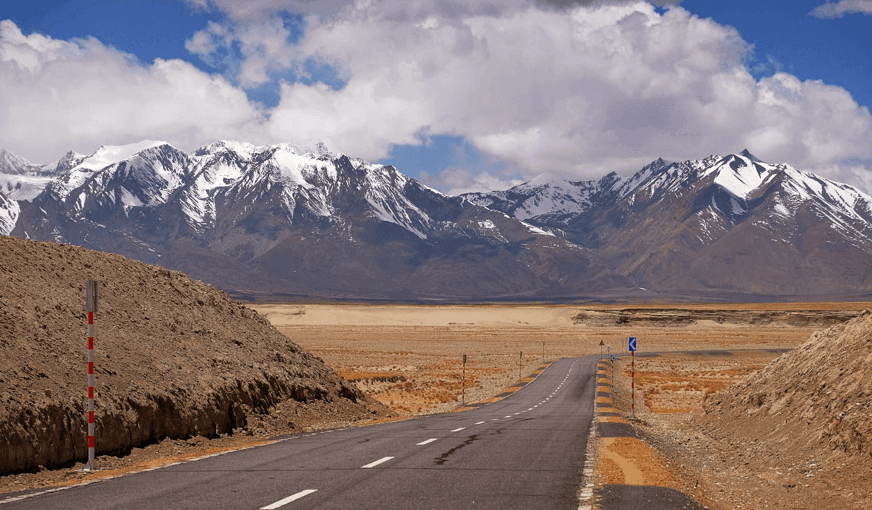
Understanding Why Lhasa to Kathmandu Overland Permits Required Are Essential
The concept of needing multiple documents to travel between two points might seem daunting, but it stems from the unique administrative status of the Tibet Autonomous Region (TAR) and the international nature of the border crossing. When discussing the Lhasa to Kathmandu overland permits required, we are looking at a combination of national immigration laws and regional travel regulations.
Tibet is not open to independent foreign tourism. The local government mandates that all international visitors must travel with an organized tour, accompanied by a licensed guide. This policy means that every piece of documentation is tied directly to your booked itinerary. You cannot simply apply for these papers on your own at an embassy or a government office. Instead, your chosen travel operator acts as the intermediary, submitting your passport details and travel plans to the relevant authorities on your behalf.
Furthermore, because you are crossing an international border—either exiting China into Nepal or entering China from Nepal—standard tourist visas do not always apply in the conventional way. If you are starting in Lhasa and ending in Kathmandu, your standard Chinese visa will be utilized to enter China, but you will need specific exit permissions and a Nepalese visa upon arrival at the border. Conversely, if you start in Kathmandu and travel to Lhasa, your standard Chinese visa becomes invalid, and you must obtain a specialized Group Visa. Navigating these nuances is why understanding the Lhasa to Kathmandu overland permits required is the first step in your travel planning process.
The Core Documents: Breaking Down the Lhasa to Kathmandu Overland Permits Required
To successfully complete the overland journey, you will need a specific stack of documents. Missing even one will result in being barred from boarding flights, trains, or vehicles heading toward the border. Here is a detailed look at each requirement.
1. The Tibet Travel Permit (TTP)
The Tibet Travel Permit is the cornerstone of your journey. Issued by the Tibet Tourism Bureau, this document proves that you are authorized to enter and travel within the Tibet Autonomous Region. No foreign passport holder can board a flight or train to Lhasa without presenting the original physical copy of this permit.
When evaluating the Lhasa to Kathmandu overland permits required, the TTP is the first thing your travel agency will secure. To apply, you must provide clear, color-scanned copies of your passport information page and your valid Chinese visa (if you are entering Tibet from mainland China). The application process generally takes about 15 to 20 working days. It is crucial to note that the TTP lists your exact itinerary, including entry and exit dates, cities visited, and the travel agency responsible for you. Any deviation from this approved route can cause significant issues during police checks along the highway.
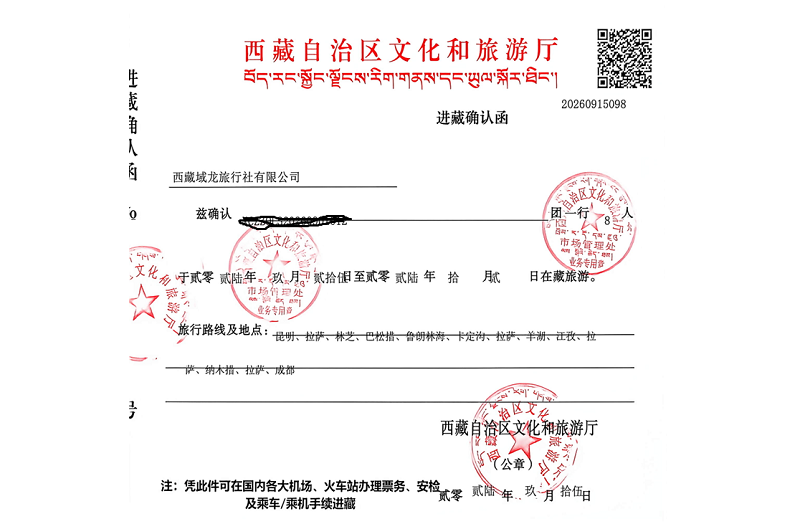
Tibet Travel Permit
2. The Alien Travel Permit (ATP)
While the Tibet Travel Permit gets you into the region, it does not grant you access to unopened or restricted areas. The route from Lhasa to the Nepal border passes through Shigatse, Tingri, and the Mount Everest Base Camp area. These locations fall outside the immediate vicinity of Lhasa and require an additional document known as the Alien Travel Permit, sometimes referred to as the PSB Permit because it is issued by the local Public Security Bureau.
Your guide will typically handle the application for the ATP once you arrive in Lhasa or Shigatse, using your original passport and Tibet Travel Permit. This process usually takes a day or two. Because the overland route to Kathmandu heavily relies on passing through these specific counties, the ATP is non-negotiable among the Lhasa to Kathmandu overland permits required. Without it, you will be stopped at the numerous security checkpoints lining the Friendship Highway.
3. The Chinese Group Visa
This is perhaps the most misunderstood document for travelers doing this route in reverse (from Kathmandu to Lhasa), but it also affects those traveling from Lhasa to Kathmandu. If you are entering Tibet directly from Nepal, you cannot use a standard Chinese tourist visa obtained from an embassy in your home country. Instead, you must apply for a Chinese Group Visa through the Chinese Embassy in Kathmandu.
Even if you are traveling from Lhasa to Kathmandu, you likely entered China using a standard visa. However, if your journey involves flying into Kathmandu first, spending time there, and then going overland to Lhasa, the Group Visa is mandatory. Your travel agency will send you an invitation letter, which you must present at the embassy in Nepal. The entire group must apply together, and the visa is issued on a single sheet of paper rather than stamped into individual passports. This highlights why coordinating the Lhasa to Kathmandu overland permits required with a professional agency is highly recommended.
4. Military Border Pass
Because the route traverses areas close to sensitive international borders, a Military Border Pass is often required. This document is particularly relevant when traveling near Mount Everest and the Gyirong border crossing. Like the ATP, this is arranged by your travel agency and guide in advance. It ensures that military personnel at checkpoints can verify your authorization to transit through these strategic zones.

Military Entry Permit
5. Nepal Visa
If your journey starts in Lhasa and ends in Kathmandu, you will need to enter Nepal at the border. Fortunately, obtaining a Nepal visa is relatively straightforward compared to the Tibetan paperwork. Upon arriving at the Gyirong Port border crossing, travelers can obtain a visa on arrival. You will need passport-sized photos and the appropriate fee in USD or other accepted currencies. While not technically part of the Chinese-side Lhasa to Kathmandu overland permits required, it is an essential component of completing the overland journey successfully.
Step-by-Step Application Process for Your Permits
Knowing what you need is only half the battle; understanding how to get it is equally important. Because independent travel is prohibited, your role in the application process is primarily providing accurate information promptly.
Step 1: Choose a Reputable Travel Agency
The entire permit process hinges on your choice of travel operator. They are legally responsible for your presence in Tibet. Agencies with deep local roots, such as Tibet Yulong Travel, specialize in handling the complex logistics of cross-border itineraries. Working with experienced professionals like Tibet Yulong Travel ensures that your applications for the Lhasa to Kathmandu overland permits required are submitted correctly, minimizing the risk of delays or rejections.
Step 2: Submit Your Documents Early
Once you have confirmed your itinerary and paid your deposit, you must send high-quality scans of your passport and Chinese visa to your agency. Do this at least one to two months before your intended travel date. Government offices in Tibet operate on strict schedules and can experience delays during peak seasons or local holidays.
Step 3: Receive the Tibet Travel Permit
Your agency will submit your details to the Tibet Tourism Bureau. Once approved, they will receive the physical permit. If you are flying into Lhasa from a Chinese city, the agency will mail the original permit to your hotel in mainland China so you can present it at the airport. If you are taking the train, a copy is sometimes sufficient for boarding, though policies fluctuate, making the guidance of experts like Tibet Yulong Travel invaluable.
Step 4: Obtain Secondary Permits on Arrival
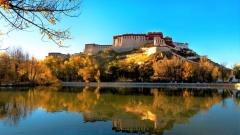
Upon reaching Lhasa, your guide will take your passport to the Public Security Bureau to secure the Alien Travel Permit and any necessary border passes. During this time, you will usually explore Lhasa’s central sites, such as the Potala Palace and Jokhang Temple, while the administrative work is completed in the background.
Step 5: Border Crossing Procedures
When you finally reach the Gyirong border, your guide will assist you with Chinese exit procedures. You will hand over your permits, stamp out of China, cross the bridge, and then proceed to the Nepalese immigration desk to secure your onward visa to Kathmandu.
The Route: What to Expect Between Lhasa and Kathmandu
The physical journey contextualizes why the Lhasa to Kathmandu overland permits required are so stringent. You are not just driving down a highway; you are descending from the roof of the world through remote, high-altitude terrain.
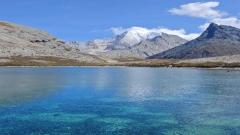
The journey typically begins in Lhasa, situated at about 3,650 meters above sea level. From there, the route heads west toward Shigatse, Tibet’s second-largest city. Along the way, you will pass the stunning Yamdrok Lake, a sacred body of water that necessitates the aforementioned travel permits just to view from the roadside. Shigatse is home to the Tashilhunpo Monastery and serves as a major checkpoint where your Alien Travel Permit will be scrutinized.
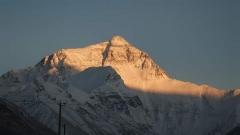
Continuing west, the road leads to Tingri and eventually the Rongbuk Valley, offering the closest accessible views of Mount Everest’s north face. The altitude here exceeds 5,000 meters, and the environment is harsh and heavily regulated. After experiencing Everest Base Camp, the route turns south toward the Gyirong Valley. Unlike the older Zhangmu border crossing, which was severely damaged by earthquakes and remains largely closed to tourists, Gyirong Port is the current official overland crossing point.
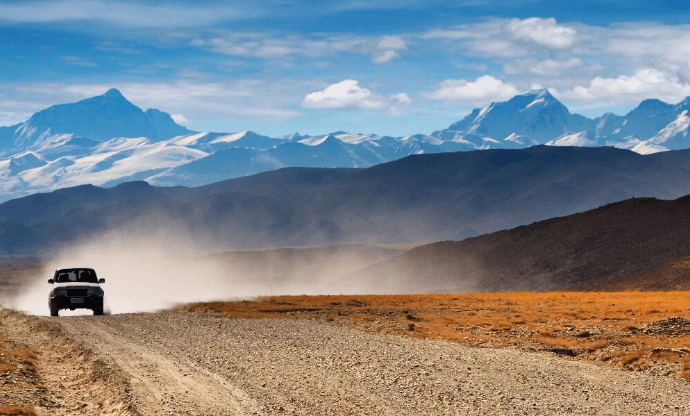
The descent into Gyirong is dramatic. The arid, rocky landscape of the Tibetan plateau rapidly gives way to lush, green gorges and rushing rivers as you drop in elevation. Once you cross the Friendship Bridge into Nepal, the road conditions change significantly. The drive from the Nepalese border town of Rasuwagadhi to Kathmandu is winding, often rough, and subject to weather delays, but it is incredibly scenic. Having all your Lhasa to Kathmandu overland permits required sorted in advance allows you to focus entirely on the breathtaking scenery rather than worrying about bureaucratic hurdles at remote checkpoints.
Common Mistakes to Avoid When Securing Permits
Even well-intentioned travelers make errors that can derail their Himalayan adventure. Being aware of these pitfalls is just as important as knowing the Lhasa to Kathmandu overland permits required.
Applying Too Late: The most frequent mistake is underestimating the processing time. Government bureaus in Tibet do not offer expedited services for tourists. If you attempt to book your trip less than three weeks before your departure, agencies may refuse your booking simply because there is not enough time to secure the paperwork.
Mismatched Information: Your name on the Tibet Travel Permit must match your passport exactly. Even a minor spelling discrepancy or a transposed letter can result in airlines denying you boarding in Chengdu or Xining. Always double-check the scans you send to your agency, whether you are using Tibet Yulong Travel or another operator.
Attempting Independent Travel: Some travelers mistakenly believe they can enter Tibet, hire a local driver, and head to the border independently. This is strictly illegal. Checkpoints are manned by armed police who verify your guide’s license, your vehicle’s commercial plates, and your personal permits. If you are caught without a guide and the proper Lhasa to Kathmandu overland permits required, you will be detained, fined, and deported.
Ignoring Altitude Sickness: While not a bureaucratic mistake, failing to acclimatize can force you to abandon your trip. If you become too ill to continue past Shigatse, your permits become void, and you will have to arrange emergency transport back to Lhasa. Build adequate rest days into your itinerary before attempting the high passes near Everest.
Overlooking the Exit Stamp: When leaving China via Gyirong, ensure your passport receives the official exit stamp. Failing to properly exit the country can cause severe complications if you ever attempt to apply for a Chinese visa in the future. Your guide should oversee this process, but it remains your ultimate responsibility.
Seasonal Considerations and Permit Availability
The timing of your trip heavily influences the ease of obtaining the Lhasa to Kathmandu overland permits required. Tibet experiences distinct seasons that affect both travel conditions and government operations.
Spring and autumn are widely considered the best times for this overland journey. The skies are generally clear, offering unobstructed views of the Himalayan giants, and the temperatures are manageable. However, because these are peak seasons, the volume of permit applications surges. Booking well in advance is paramount during these months.
Winter brings heavy snowfall, which can close mountain passes and render the roads to Gyirong impassable. Furthermore, the Tibet Tourism Bureau occasionally restricts foreign travel during certain winter periods or around specific cultural events. If you plan to travel between December and February, you must consult closely with your agency to confirm that the route is open and that the Lhasa to Kathmandu overland permits required are currently being issued.
Summer is the monsoon season. While Tibet is in the rain shadow and receives less precipitation than Nepal, the lower elevations near the border and the Nepalese side of the journey are prone to landslides and flooding. Road washouts are common, which can strand travelers at the border for days. Permits are still issued during summer, but flexibility in your schedule is highly advised.
Additionally, be aware that the TAR periodically closes its borders to foreign tourists without prior warning, usually for a few weeks during late winter or early spring. During these closures, no Tibet Travel Permits are issued. A knowledgeable agency like Tibet Yulong Travel monitors these administrative shifts constantly, advising clients on safe booking windows to ensure their travel plans are not disrupted.
Partnering with the Right Experts
The complexity of the Lhasa to Kathmandu overland permits required makes professional assistance not just a luxury, but a legal necessity. Your travel agency is your lifeline in Tibet. They negotiate with hotels, manage drivers, communicate with police checkpoints, and handle the endless flow of paperwork.
When selecting an agency, look for transparency regarding costs. The price of permits is usually bundled into the overall tour cost, as agencies charge for the logistical service of obtaining them. Be wary of operators who claim they can get you permits in just a few days or suggest ways to bypass regulations. These promises are false and dangerous.
Established operators like Tibet Yulong Travel have built long-standing relationships with local authorities. This rapport can be crucial if unexpected issues arise, such as a lost passport or a sudden itinerary change due to road conditions. Their guides are trained not only in the history and culture of the region but also in the precise administrative protocols required at every checkpoint between Lhasa and the Nepalese border.
Ultimately, securing the correct documentation transforms a potentially stressful border run into a seamless, awe-inspiring expedition. By understanding the requirements, preparing well in advance, and relying on experienced professionals, you can focus your energy on absorbing the profound beauty of the journey from the Tibetan plateau down into the vibrant heart of Kathmandu.