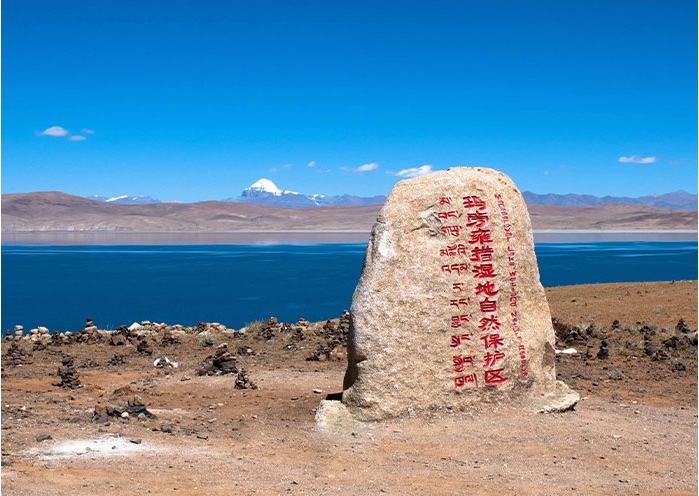
Traveling overland from Kathmandu to Lhasa is one of the most spectacular journeys on the planet. Crossing the towering Himalayas via the Gyirong border, travelers witness a dramatic shift in landscape, culture, and altitude. However, entering Tibet from Nepal requires specific documentation that differs significantly from flying into mainland China. Foreign nationals cannot use a standard Chinese tourist visa; instead, they must obtain a specialized document known as the Chinese Group Visa. Navigating this process can seem daunting without proper preparation. That is why having a reliable group visa for Kathmandu-Lhasa overland trip guide is absolutely essential for any international traveler planning this route. From gathering your paperwork in Kathmandu to crossing the follow the Friendship Highway corridor toward Gyirong, understanding the exact requirements will ensure your Himalayan adventure begins smoothly and without unnecessary bureaucratic delays.
✨ Highlights:
- The Chinese Group Visa is mandatory for all foreign nationals entering Tibet from Nepal.
- You must apply through a registered Tibetan travel agency before arriving in Kathmandu.
- Your original passport will be held by the embassy during the processing period.
- A minimum group size of five people is generally required to issue the visa.
- The Tibet Travel Permit is arranged separately by your agency prior to the visa application.
Understanding the Group Visa for Kathmandu-Lhasa Overland Trip Guide
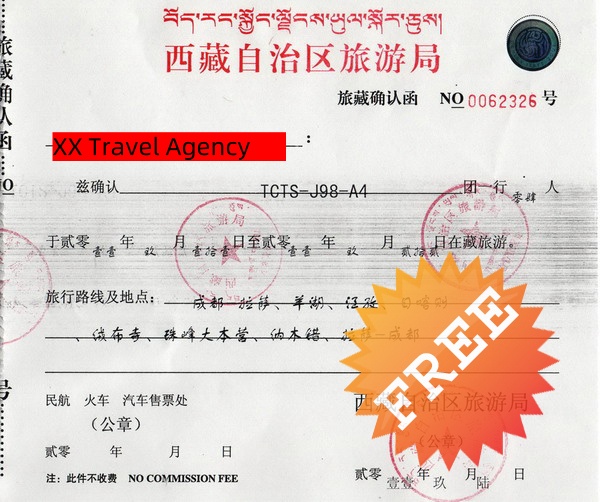
When discussing the group visa for Kathmandu-Lhasa overland trip guide, it is crucial to first understand what this document actually is. The Chinese Group Visa is not a stamp or sticker placed inside your passport. Instead, it is a separate piece of paper—a manifest—that lists the names, nationalities, passport numbers, and dates of birth of every member in your traveling group. This single sheet of paper serves as the entry permit for the entire group into the Tibet Autonomous Region.
Because it is a group document, all members listed on the visa must enter and exit Tibet together. You cannot split up from your group once this visa is issued. If you plan to stay longer than your companions or leave earlier, you will face significant complications at the border. The group visa is strictly tied to the itinerary approved by the local tourism authorities in Tibet.
Unlike standard visas where you might apply independently at an embassy months in advance, the Chinese Group Visa is only processed in Kathmandu. You cannot apply for it in your home country or even in other parts of China if your entry point to Tibet is Nepal. This unique logistical requirement means that your time in Kathmandu before heading to the border must be carefully managed to accommodate the embassy’s processing schedule.
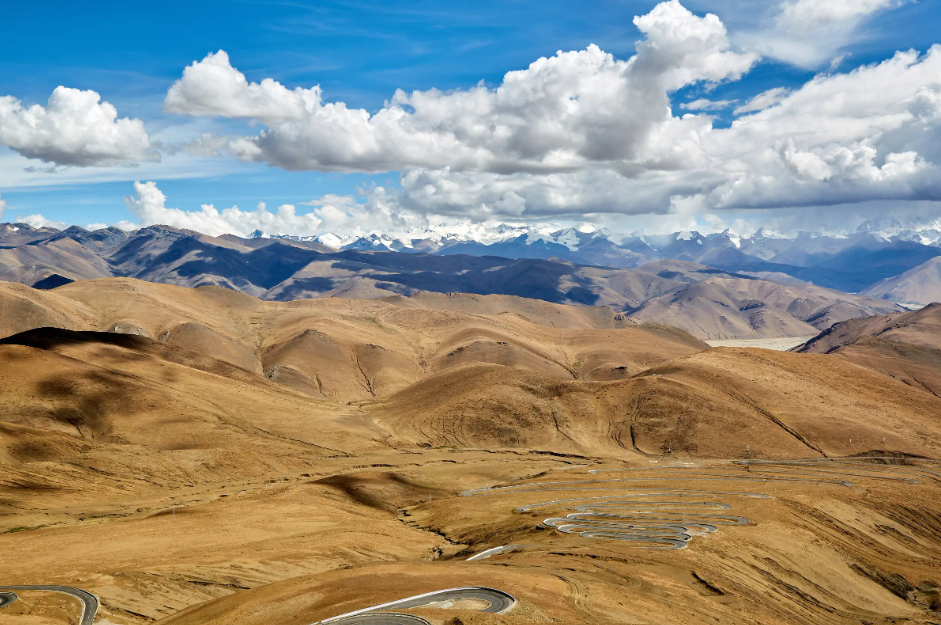
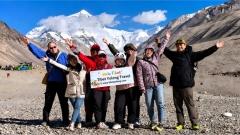
Kathmandu-Lhasa Overland Trip
Why You Need a Group Visa for the Overland Journey
Many travelers wonder why they cannot simply use a regular Chinese visa to cross from Nepal into Tibet. The Tibet Autonomous Region has distinct entry regulations designed to manage tourism, protect the fragile high-altitude environment, and maintain regional stability. A standard Chinese tourist visa alone is not accepted for overland entry into Tibet from Nepal. You still require the Chinese Group Visa together with your Tibet Travel Permit.
The overland route via the Gyirong Port (formerly the Zhangmu/Kodari border) requires travelers to present both the Chinese Group Visa and the Tibet Travel Permit at the immigration checkpoint. Without the group visa, Nepalese immigration will not allow you to exit the country toward the Chinese border, and Chinese border officials will deny you entry. It acts as the primary legal bridge between the two nations for tourists.
Furthermore, independent travel in Tibet is not permitted for foreign passport holders. You must be part of an organized tour with a certified guide, driver, and pre-approved vehicle. The group visa system enforces this regulation by ensuring that every foreigner crossing the border is accounted for under the umbrella of a licensed travel agency’s itinerary.
Step-by-Step Application Process
Securing your documentation requires following a precise sequence of events. Skipping a step or miscalculating your timeline in Kathmandu can result in missed departures. Here is how the process unfolds when following a comprehensive group visa for Kathmandu-Lhasa overland trip guide.
Step 1: Booking with a Registered Travel Agency
Everything begins long before you board your flight to Nepal. You must book your Tibet overland tour with a travel agency registered to operate in the Tibet Autonomous Region. Agencies based solely in Kathmandu cannot legally arrange the internal Tibet permits. You need a Tibetan operator. During this booking phase, you will provide clear, color-scanned copies of your passport information page and any relevant previous visas. Your agency will use these to apply for the Tibet Travel Permit from the Tibet Tourism Bureau in Lhasa.
Step 2: Receiving the Tibet Travel Permit Invitation
Once the Tibet Travel Permit is approved in Lhasa, your agency will send an official invitation letter or a copy of the permit to their partner office or representative in Kathmandu. This document is the prerequisite for applying for the Chinese Group Visa. You cannot approach the Chinese Embassy in Kathmandu without this authorization from the Tibetan side.
Step 3: Submitting Your Passport in Kathmandu
Upon arriving in Kathmandu, you will meet with the local representative of your Tibetan travel agency. You must hand over your original passport. Yes, your actual physical passport will be taken from you for several days while the embassy processes the group visa. During this time, you should carry a photocopy of your passport for identification purposes around the city. The agency representative will compile the passports of all group members (minimum five people) along with the necessary application forms and the Tibet Travel Permit documentation, and submit them to the Chinese Embassy in Kathmandu.
Step 4: Processing Time and Collection
The standard processing time for the Chinese Group Visa in Kathmandu is typically three to four working days. Expedited services sometimes exist but come with higher fees and are subject to the embassy’s current workload and policies. Once the visa is issued, the agency representative will collect the passports and the separate Group Visa manifest. They will return your passport to you and brief you on the departure logistics. Keep the Group Visa paper safe; it is usually kept by your tour guide during the border crossing process.
Essential Documents Required
To ensure the application proceeds without hiccups, you must prepare specific documents. Relying on this group visa for Kathmandu-Lhasa overland trip guide checklist will help you avoid last-minute panic in Kathmandu.
- Valid Passport: Your passport must have at least six months of validity remaining from your planned date of entry into Tibet, and it must contain blank visa pages. Note that since the group visa is a separate paper, no pages will be stamped, but the embassy still requires a valid booklet.
- Passport Photos: You will need recent, standard-sized passport photographs. Usually, two photos per applicant are required. Ensure they have a white background and meet standard international visa photo dimensions.
- Tibet Travel Permit Copy/Invitation: Handled by your agency, but you must have confirmed your tour and provided your details well in advance so they can secure this.
- Completed Application Forms: Your travel agency will provide or fill out the specific group visa application forms required by the Chinese Embassy in Kathmandu.
- Proof of Onward Travel: While primarily handled within the tour itinerary, having proof of your eventual exit from China (such as a flight out of Lhasa or Chengdu) can sometimes be requested.
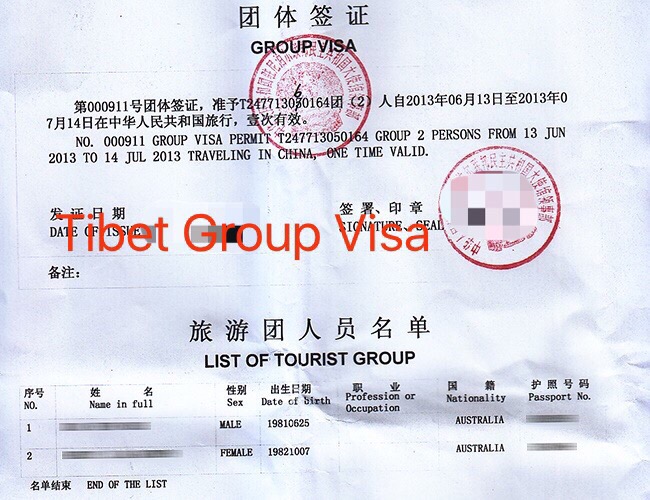
Tibet Group Visa
Costs and Fees Involved
Budgeting for the overland trip requires accounting for the visa fees, which are separate from your overall tour package cost unless explicitly stated by your operator. The price of the Chinese Group Visa varies depending on your nationality and the processing speed required.
For United States citizens, the fee is notably higher due to reciprocal visa agreements between the US and China. American travelers should expect to pay upwards of $175 to $200 USD for the group visa. For citizens of most other countries, the standard fee ranges from $50 to $85 USD. If you require urgent processing to catch a tight itinerary window, expedite fees will add significantly to this base cost.
It is important to note that these are just the embassy fees. Most travel agencies charge a service fee for handling the logistics, standing in line at the embassy, and managing the paperwork on your behalf. Always clarify with your operator whether the visa fees and service charges are included in your initial tour quote or if they are payable in cash upon arrival in Kathmandu.
Crucial Rules and Restrictions
The Chinese Group Visa comes with strict rules that differ vastly from standard tourist visas. Violating these conditions can lead to fines, deportation, or being denied entry at the Zhangmu Port.
No Independent Travel: As mentioned, the group visa ties you to your approved itinerary and your designated guide. You cannot wander off, take local buses independently, or explore unapproved areas. Every movement outside your hotel in Tibet must be accompanied by your guide.
Entry and Exit Together: The entire group listed on the manifest must cross the border into Tibet together, and must exit together. If one person falls ill in Kathmandu and cannot travel, the entire group’s visa may be jeopardized, requiring a reapplication or an alteration of the manifest by the agency, which takes time.
Validity Period: The group visa is valid only for the exact dates specified on the document. You cannot arrive in Tibet earlier than the start date, nor can you overstay the end date. There is no option to extend a Chinese Group Visa once inside Tibet. If you wish to stay longer, you would theoretically need to exit and reapply, which is practically impossible for standard tourists.
Restricted Areas: Even with the group visa and the Tibet Travel Permit, certain regions in Tibet require additional Alien Travel Permits or Military Permits. Your travel agency handles these based on your specific itinerary (e.g., visiting Mount Everest Base Camp or Mount Kailash).
Timeline and Planning Ahead
Timing is everything when executing the plans outlined in any group visa for Kathmandu-Lhasa overland trip guide. Because your passport is surrendered for three to four working days in Kathmandu, you cannot arrive in Nepal and immediately drive to the border the next day.
A standard recommendation is to arrive in Kathmandu at least four to five full days before your scheduled departure to the Zhangmu Port. This buffer accounts for weekends (the embassy is closed on Saturdays and Sundays), public holidays in either Nepal or China, and unforeseen administrative delays. Use this waiting time to recover from jet lag, explore the temples of the Kathmandu Valley, and acclimatize slightly before beginning the ascent into the Himalayas.
You should also initiate contact with your travel agency at least one to two months before your intended travel date. The Tibet Travel Permit alone can take several weeks to process in Lhasa, and the agency needs ample time to organize the group logistics, match solo travelers with groups of five if necessary, and prepare the documentation for the Kathmandu embassy run.
The Overland Route: Kathmandu to Lhasa
Once your paperwork is secured, the physical journey begins. The traditional Kodari/Zhangmu border crossing was severely damaged by earthquakes years ago, making the Gyirong Port (Resuo Bridge) the primary and most reliable land crossing for tourists today.
The drive from Kathmandu to the border takes approximately seven to nine hours, winding through lush valleys, terraced hillsides, and eventually climbing into stark, arid mountain landscapes. At the border town of Rasuwagadhi on the Nepalese side, you will clear Nepalese exit immigration. Your guide will then assist you in walking across the Friendship Bridge over the Trishuli River gorge.
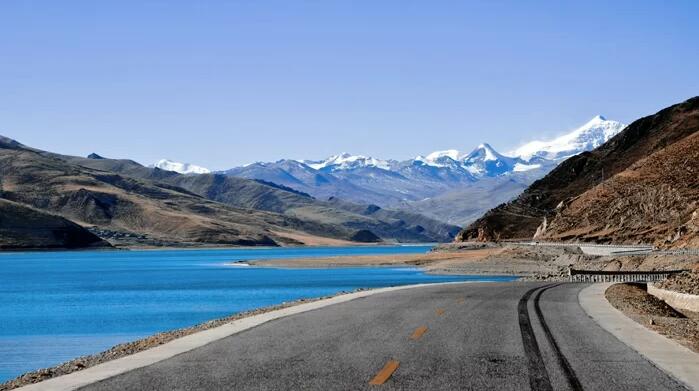
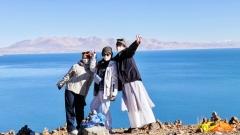
Yamdrok Lake Road
On the Chinese side at Zhangmu Port, border officials will inspect your passport alongside the Chinese Group Visa manifest. They will cross-reference your name, verify the Tibet Travel Permit, and conduct standard security checks. Once cleared, you will officially be in the Tibet Autonomous Region.
From Zhangmu Port, the road continues to climb dramatically. You will pass through Gyirong Town, ascend toward the high plateau, and often stop in Tingri or Shelkar before reaching the vast expanses near Shigatse. The final leg brings you into Lhasa. This journey takes several days, allowing for vital altitude acclimatization. The scenery transitions from deep river gorges to sweeping grasslands dotted with yaks, culminating in the breathtaking views of snow-capped peaks and turquoise lakes like Yamdrok Tso.
Altitude Considerations and Health Precautions
While securing the visa is a bureaucratic hurdle, surviving the altitude is a physical one. The overland route is actually preferred by many medical professionals over flying directly into Lhasa because it allows for gradual acclimatization. However, the Zhangmu Port route still involves rapid ascents.
Kathmandu sits at roughly 1,400 meters. Within a few days of driving, you will cross passes exceeding 5,000 meters. Symptoms of Acute Mountain Sickness (AMS)—headaches, nausea, dizziness, shortness of breath—are common. Your travel agency should provide oxygen cylinders in the vehicle, and guides are trained to monitor guests for severe symptoms like HAPE or HACE.
Consult your physician before the trip regarding prophylactic medications like Acetazolamide (Diamox). Stay hydrated, avoid alcohol during the first few days on the plateau, eat light meals, and never push yourself physically if you feel unwell. Inform your guide immediately if symptoms worsen; descending to a lower altitude is the only true cure for severe AMS.
Packing Essentials for the Border Crossing
The journey from Kathmandu to Lhasa spans diverse climate zones. You will experience humid subtropical weather in Nepal and freezing, arid conditions on the Tibetan plateau, sometimes within the same day.
Pack layers. A moisture-wicking base layer, insulating mid-layers (fleece or down), and a windproof/waterproof outer shell are mandatory. Sturdy, comfortable walking shoes are essential for border crossings and monastery visits. Bring high-SPF sunscreen, UV-blocking sunglasses, and lip balm, as the high-altitude sun is incredibly intense.
Keep all your critical documents—passport, copies of your visa, travel insurance, and emergency contacts—in a secure, easily accessible travel pouch. Do not pack your passport in your main luggage that goes into the roof rack of the vehicle; keep it on your person during border transit days.
Choosing a Reliable Travel Partner
Navigating the complexities of the Chinese Group Visa, securing the Tibet Travel Permit, and organizing a seamless overland expedition requires an experienced operator. Attempting to coordinate these elements through disconnected local agents often leads to miscommunication and delays. Working with a specialized provider like Tibet Yulong Travel ensures that every logistical detail is handled professionally. Their expertise in coordinating between Lhasa and Kathmandu offices streamlines the group visa application process, guaranteeing that your permits are ready and your itinerary complies with all regional regulations. A dedicated team manages the ground transport, border formalities, and guide assignments, allowing you to focus entirely on the magnificent landscapes and rich cultural heritage of the journey rather than administrative stress.
Frequently Asked Questions About the Group Visa
Can I apply for the Chinese Group Visa by myself in Kathmandu?
No. Individual applications are not accepted for this type of visa. It must be processed through a registered travel agency acting on behalf of an organized tour group. Furthermore, you need the backing of the Tibet Travel Permit, which only an authorized agency can obtain.
What happens if my passport expires soon?
Your passport must have a minimum of six months validity beyond your planned entry date into Tibet. If it expires sooner, you must renew it before traveling to Nepal, as the embassy will reject the application.
Does the Group Visa leave a stamp in my passport?
Generally, no. Because the visa is a separate piece of paper listing the whole group, individual passports do not receive a Chinese visa sticker. You will, however, receive entry and exit stamps from both Nepalese and Chinese border control officers in your passport booklet.
Can I travel to other parts of China after Tibet with this visa?
The Chinese Group Visa is specifically issued for the Tibet itinerary. Once your tour in Tibet concludes, if you are flying to another Chinese city like Chengdu or Beijing, your guide will assist you with the transition. However, the group visa itself becomes invalid once the approved Tibet itinerary ends. Your agency will advise you on how to handle onward travel within mainland China, which sometimes requires transitioning to a standard visa or relying on specific transit exemptions depending on your nationality and route.
Is the overland route open year-round?
No. The Zhangmu Port and the high mountain passes are frequently closed during the winter months due to heavy snowfall and dangerous driving conditions. Additionally, Tibet tourism access for foreign visitors may be temporarily restricted around major national observances; confirm availability with your agency well ahead of time. The best times for the overland journey are from April to early June, and September to November, when the weather is stable and the skies are clear.
Embarking on the overland journey from Kathmandu to Lhasa is a profound experience that tests your sense of adventure while rewarding you with some of the most awe-inspiring scenery on Earth. By thoroughly understanding the requirements outlined in this group visa for Kathmandu-Lhasa overland trip guide, preparing your documents well in advance, and partnering with a reputable travel agency, you eliminate the administrative hurdles. This preparation leaves you free to fully immerse yourself in the spiritual atmosphere of ancient monasteries, the crisp air of the high plateau, and the unforgettable camaraderie of crossing the roof of the world.