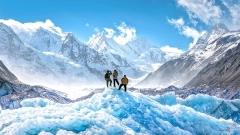
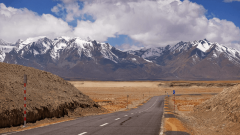
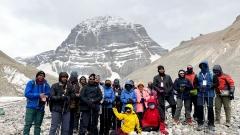
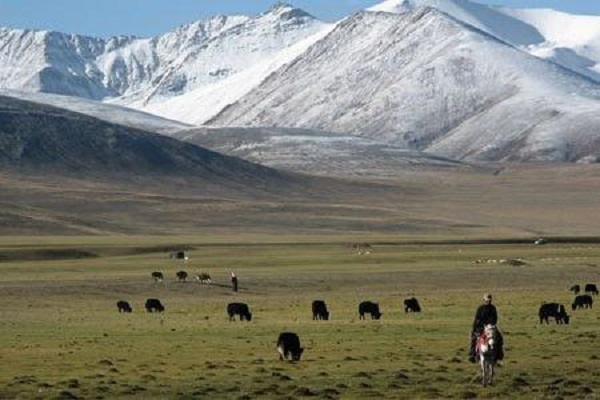
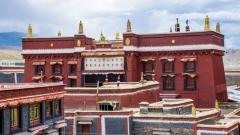
Autumn is arguably the most spectacular season to explore the Roof of the World. When the summer monsoon rains retreat, the skies clear into an endless, piercing blue, offering unparalleled visibility of the world’s highest peaks. A 10-day Tibet autumn private tour from Lhasa provides the perfect balance of time, allowing travelers to acclimatize properly while venturing deep into the remote western regions toward Mount Everest. Unlike crowded summer group trips, a private autumn journey ensures personalized pacing, dedicated guide attention, and the freedom to linger at breathtaking viewpoints without rushing. From the golden poplar-lined streets of Lhasa to the stark, wind-swept beauty of the Rongbuk Valley, every day brings a new landscape. Whether you are a photography enthusiast chasing the crisp autumn light or a cultural traveler seeking quiet moments in ancient monasteries, this itinerary delivers an unforgettable Himalayan experience.
✨ Highlights:
- Crystal-clear autumn skies offer unobstructed views of Mount Everest and surrounding eight-thousanders.
- Private vehicle and dedicated guide ensure flexible pacing and optimal altitude acclimatization.
- Golden poplar forests and changing alpine meadows create stunning photographic opportunities throughout the route.
- Deep cultural immersion in Lhasa, Gyantse, and Shigatse without the heavy summer tourist crowds.
- Comfortable travel conditions with fewer rain delays and excellent road accessibility across the plateau.
Why Choose a 10-Day Tibet Autumn Private Tour from Lhasa?
Planning a trip to the Tibetan Plateau requires careful consideration of timing, logistics, and physical readiness. Opting for a 10-day Tibet autumn private tour from Lhasa addresses all these concerns simultaneously. The ten-day duration is not arbitrary; it is the ideal timeframe required to safely ascend from Lhasa’s elevation of 3,650 meters to the base of Mount Everest at over 5,200 meters, while still having time to return comfortably. Rushing this process can lead to altitude sickness, which is why longer itineraries are highly recommended for first-time visitors.
Autumn, spanning from late September through November, transforms the region. The humidity drops significantly, meaning the persistent clouds that often hide the great Himalayan peaks during summer vanish. You are almost guaranteed panoramic views of mountain ranges that stretch across the horizon. Furthermore, the temperatures during the day remain comfortable for outdoor exploration, though nights become crisp, requiring proper layering.
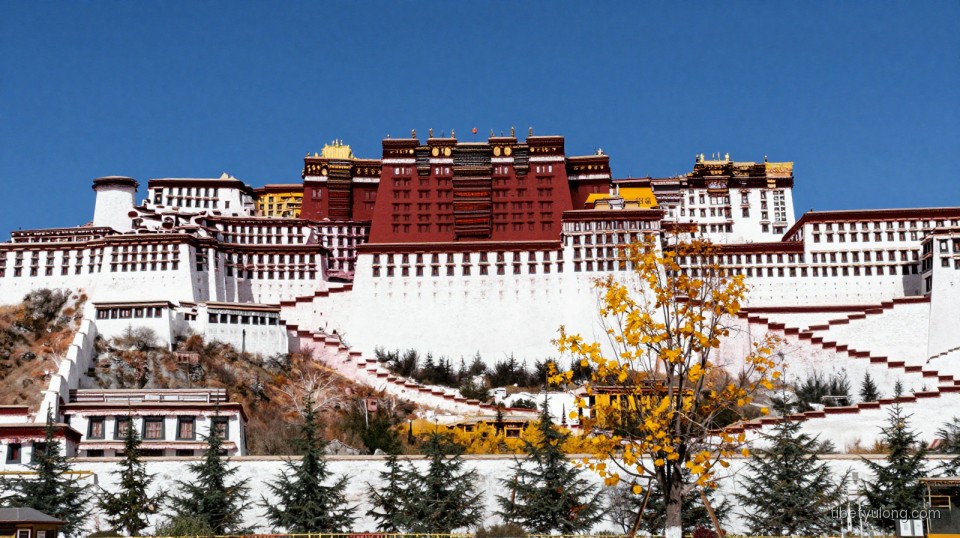
Choosing a private tour over a standard group package elevates the entire experience. In a private setup, your schedule dictates the pace. If you wish to spend an extra hour photographing the golden leaves framing the Potala Palace, you can. If you need to rest longer at a high-altitude pass, your driver and guide will accommodate you seamlessly. Companies like Tibet Yulong Travel specialize in crafting these tailored experiences, ensuring that every logistical detail—from permit acquisitions to hotel selections—is handled expertly so you can focus entirely on the journey.
Days 1-3: Acclimatization and Cultural Immersion in Lhasa
The foundation of any successful high-altitude journey lies in proper acclimatization, and there is no better place to achieve this than in Lhasa itself. Upon arrival at Lhasa Gonggar Airport or the Lhasa Railway Station, your private guide and driver will transfer you directly to your hotel. The first rule of arriving on the plateau is to take it easy. Avoid strenuous activity, drink plenty of water, and allow your body to adjust to the thinner air. The autumn sunlight streaming through your hotel window will feel incredibly warm, but remember that the UV index remains high year-round.
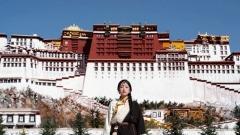
On your second day, the exploration begins gently. You will visit the iconic Potala Palace, the former winter residence of the Dalai Lamas. Climbing the steps to the palace requires a slow, steady pace, but the reward is immense. Inside, thousands of rooms house intricate murals, golden stupas, and sacred statues. The crisp autumn air makes the climb more manageable than in the humid summer months. Afterward, descend into the heart of the old city to wander around Barkhor Street. Here, the scent of juniper incense fills the air as pilgrims circumambulate the Jokhang Temple. The golden roofs of the temple gleam brilliantly against the deep blue autumn sky.
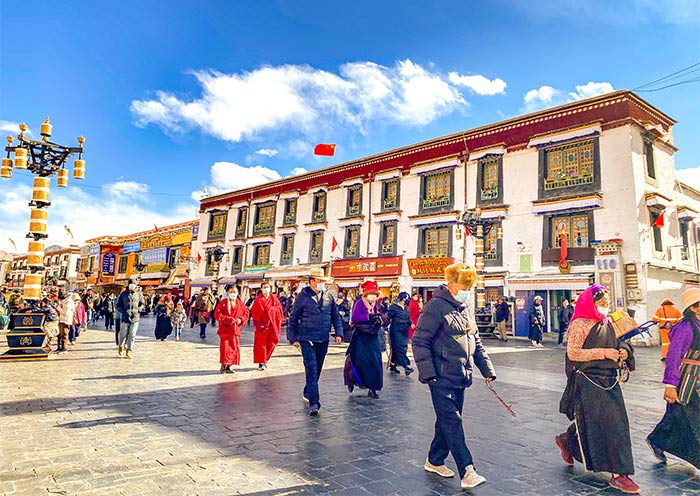
The Busy Barkhor Street
Day three takes you to the great monastic universities of Drepung and Sera. Drepung, once the largest monastery in the world, sits nestled against a hillside dotted with turning autumn shrubs. In the afternoon, head to Sera Monastery to witness the famous monks’ debate. Watching the monks clap their hands and stamp their feet in vigorous philosophical discussion is a profound cultural experience. Because you are on a private tour, your guide can explain the nuances of these debates in depth, providing context that large groups rarely receive.
Day 4: Journey Along the Turquoise Waters of Yamdrok Lake
Leaving Lhasa behind, your 10-day Tibet autumn private tour from Lhasa truly hits its stride as you venture into the vast countryside. The drive today is one of the most scenic in all of Asia. You will ascend the Kamba La Pass, reaching an elevation of nearly 4,800 meters. As you step out of your vehicle at the summit, the view that unfolds below is staggering. Yamdrok Lake stretches out like a massive sapphire embedded in the brown and gold mountains. In autumn, the lake’s color seems even more intense due to the lack of atmospheric haze.
The descent toward the lakeshore takes you through small villages where locals are busy with the autumn harvest. Barley fields turn a rich, golden hue before being cut, creating a patchwork quilt across the valleys. You will have ample time to stop along the shoreline. The private nature of your tour means you can find quiet spots away from the occasional passing vehicles to sit by the water and absorb the silence of the plateau.
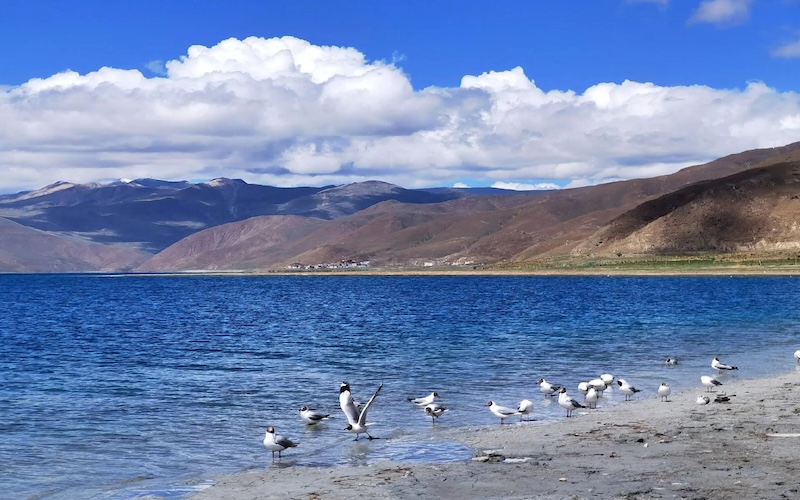
Yamdrok Lake
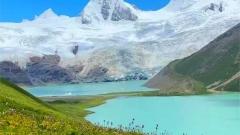
Continuing westward, the route passes the Karola Glacier, which hangs dramatically close to the highway. The contrast between the white ice, the dark rock, and the clear autumn sky is striking. By late afternoon, you will arrive in the historic town of Gyantse. Dominated by the towering Gyantse Kumbum—a unique multi-tiered stupa—the town feels like stepping back in time. Spending the night here allows you to experience the quiet atmosphere of a traditional Tibetan town after the day-trippers have departed.
Day 5: Exploring Shigatse and the Seat of the Panchen Lama
A short morning drive brings you to Shigatse, the second-largest city in Tibet and the traditional capital of the Tsang region. The primary destination here is Tashilhunpo Monastery, a sprawling complex of golden roofs, white walls, and winding alleys. This monastery is the historical seat of the Panchen Lama and holds immense religious significance. Walking through its courtyards in the cool autumn morning air is deeply peaceful. The monastery houses the largest copper Buddha statue in the world, seated within a magnificent, multi-story chapel.
Your guide will lead you through the various colleges and prayer halls, explaining the distinct architectural styles and the history of the institution. Unlike the bustling atmosphere of Lhasa’s temples, Tashilhunpo often feels more contemplative, especially in the autumn when visitor numbers decrease. You might see elderly pilgrims spinning the massive prayer wheels that line the outer kora path, their murmured mantras blending with the rustling of dry autumn leaves blown by the gentle wind.
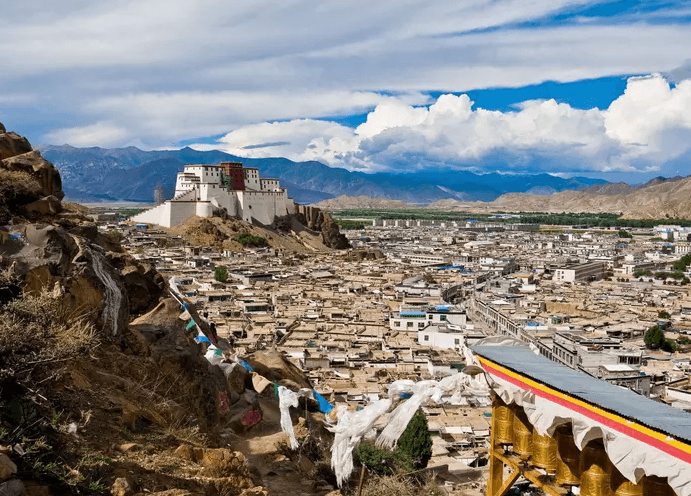
Shigatse Dzong
After a thorough exploration of the monastery, enjoy a relaxed lunch in Shigatse. The city offers surprisingly good dining options, including local Tibetan cuisine featuring yak meat, tsampa (roasted barley flour), and butter tea, as well as Chinese and Western dishes. The remainder of the afternoon is yours to stroll through the local markets or simply rest at your hotel, preparing your body for the higher altitudes that lie ahead on your journey toward Everest.
Day 6: Crossing the High Passes Toward Everest Base Camp
This is a pivotal day on your 10-day Tibet autumn private tour from Lhasa, as you leave the relatively lower elevations of Shigatse and push deep into the Himalayas. The road winds upward through dramatic gorges and across vast, arid plains. You will cross several high mountain passes, including the Tsuo La and Gyatsuo La, both exceeding 5,000 meters. At each pass, prayer flags snap violently in the autumn wind, sending blessings into the thin air.
The landscape shifts dramatically as you approach Tingri. The terrain becomes wilder, more rugged, and profoundly desolate. Yet, it is this very starkness that makes the scenery so captivating. The golden-brown grasslands are punctuated by rocky outcrops and distant snow-capped ridges. If the weather holds—and autumn is famous for its stable weather—you will be treated to your first distant glimpses of the Himalayan giants, including Cho Oyu and eventually Mount Everest itself.
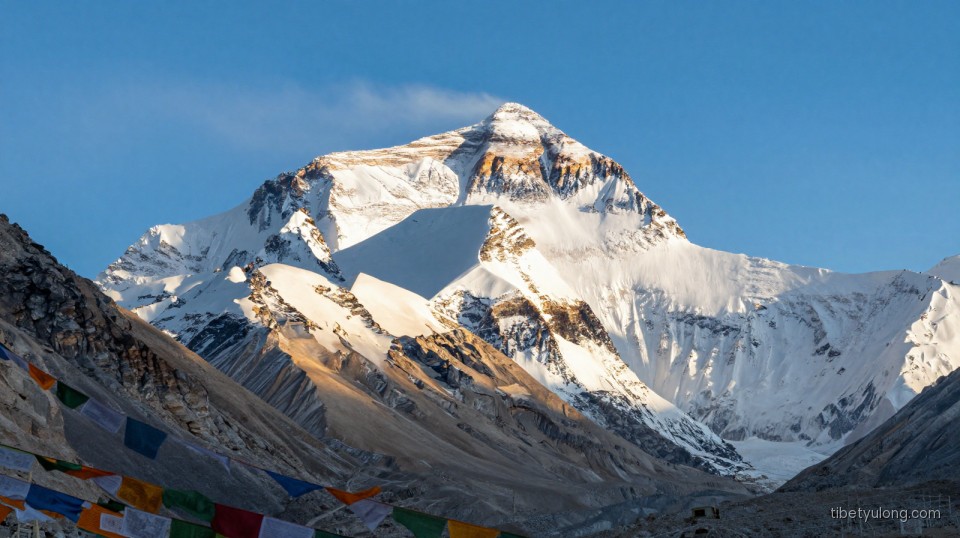
Best Month to See Mount Everest Clearly from Base Camp: A Complete Guide
Arriving in the small town of Tingri (New Tingri/Shekar), you will check into your guesthouse. Accommodations here are basic compared to Lhasa or Shigatse, but they provide necessary warmth and shelter. It is crucial to move slowly today. The altitude is significant, and the drop in oxygen is noticeable. Drink warm fluids, avoid alcohol, and get plenty of rest. The anticipation of seeing the world’s highest peak up close tomorrow will likely keep your spirits high despite the physical fatigue.
Day 7: Sunrise Over Mount Everest and the Rongbuk Valley
Waking up before dawn is a necessity when visiting Mount Everest, and autumn provides the best possible chance for a cloudless sunrise. Your private driver will navigate the final stretch of the winding road down into the Rongbuk Valley. As the first rays of the sun hit the summit of Everest, the peak glows a brilliant, fiery gold against the deep indigo sky. This phenomenon, known as alpenglow, is a photographer’s dream and a spiritual moment for many travelers.
You will visit Rongbuk Monastery, the highest monastery in the world, sitting at approximately 5,000 meters. The resident monks and nuns maintain a life of deep devotion in this extreme environment. Standing outside the monastery, looking south down the valley, the north face of Everest dominates your entire field of vision. The sheer scale of the mountain is impossible to comprehend until you are standing right beneath it.
From the monastery area, you can take the eco-buses further into the valley to reach the designated tourist base camp area. Here, you can walk among the fluttering prayer flags and take in the raw, icy beauty of the environment. The autumn air is exceptionally dry and cold, so thermal layers, heavy jackets, gloves, and hats are mandatory. Spend as much time as your body comfortably allows absorbing the majesty of Chomolungma, the Goddess Mother of the World, before beginning the journey back out of the valley.
Day 8: Retracing the Friendship Highway Back to Shigatse
After the intense altitude of the Everest region, Day eight focuses on descending to a more comfortable elevation. The drive back toward Shigatse retraces parts of the famous Friendship Highway. While it is the same route, traveling in the opposite direction reveals entirely different perspectives of the mountains and valleys. The low angle of the autumn sun casts long, dramatic shadows across the landscape, highlighting textures in the rocks and earth that were invisible on the way up.
Your private guide can suggest alternative stops or viewpoints that you might have missed during the outward journey. Perhaps a brief detour to a remote village or a stop at a particularly beautiful stretch of river. The flexibility of a private tour shines brightest on long driving days like this, transforming what could be a tedious transit into an ongoing adventure.
By late afternoon, you will arrive back in Shigatse. The thicker air will immediately feel richer and easier to breathe, often resulting in a sudden burst of renewed energy and improved appetite. Enjoy a hearty dinner and a comfortable bed, knowing that the most physically demanding portion of your 10-day Tibet autumn private tour from Lhasa has been successfully completed. The sense of accomplishment upon returning from Everest is a feeling shared by all who make the journey.
Day 9: Return to Lhasa via the Yarlung Tsangpo River Valley
The penultimate day of the itinerary involves the return journey to Lhasa. Rather than going back over the high passes of Yamdrok Lake, the route typically follows the broad valley of the Yarlung Tsangpo River. This river, which eventually becomes the Brahmaputra, carves a massive path through the plateau. In autumn, the water levels drop, revealing wide sandy banks and gravel shoals, while the surrounding hills display shades of ochre, amber, and rust.
The drive is generally smoother and faster than the southern route. You will pass through agricultural heartlands where Tibetan farmers are finishing their autumn harvests. Stacks of dried barley stalks dot the fields, and tractors kick up dust on the rural roads. It is a fascinating glimpse into the daily life of the plateau’s inhabitants, a life dictated by the harsh seasons and the rhythms of the land.
As you approach Lhasa in the late afternoon, the familiar silhouette of the Potala Palace welcomes you back. Returning to your hotel after spending over a week exploring the remote west feels remarkably comforting. You now have the evening free to revisit favorite spots in the old city, perhaps enjoying a final cup of sweet tea at a local teahouse or purchasing last-minute souvenirs like thangka paintings, singing bowls, or locally woven textiles.
Day 10: Departure and Final Reflections
Your final morning in Tibet will depend on your flight or train schedule. If you have a later departure, use the remaining hours to take a quiet walk around the Lhasa River or visit a neighborhood you haven’t yet explored. The autumn mornings in Lhasa are incredibly serene, with monks sweeping monastery courtyards and the smell of burning juniper branches drifting through the narrow alleys.
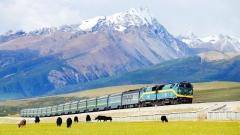
Your private driver will transfer you to the airport or railway station, ensuring a smooth conclusion to your travels. As the plane ascends or the train pulls away, you will likely look out the window one last time at the vast, golden-brown expanse of the Tibetan Plateau, framed by the jagged white teeth of the Himalayas.
Completing a 10-day Tibet autumn private tour from Lhasa is more than just a vacation; it is a transformative expedition. The combination of pristine autumn weather, profound cultural encounters, and the sheer physical challenge of traversing the world’s highest landscapes leaves an indelible mark on every traveler. Organizing such a complex journey requires expertise, which is why partnering with experienced operators like Tibet Yulong Travel is highly recommended. Their deep local knowledge, reliable fleet of vehicles, and network of skilled guides ensure that every aspect of your private tour—from securing the necessary Tibet Travel Permits to arranging the best available accommodations in remote areas—is executed flawlessly. They understand the nuances of autumn travel, helping you pack appropriately and pace your journey safely. Ultimately, choosing a private autumn itinerary guarantees that your experience of the Roof of the World is as majestic, personal, and unforgettable as the landscape itself.