Standing at the edge of the Tibetan Plateau, gazing up at the highest point on Earth is an experience that defies simple description. A Rongbuk Monastery and Everest Base Camp day visit offers travelers a rare opportunity to witness the majesty of Mount Everest without committing to a multi-day trekking expedition. This journey combines profound spiritual heritage with raw, untamed natural beauty, taking you through sweeping valleys and over high mountain passes to the very foot of the world’s most famous peak. Whether you are a photography enthusiast, a cultural explorer, or simply someone seeking a transformative travel experience, this single-day excursion delivers memories that last a lifetime. Understanding the logistics, physical demands, and historical context of this route is essential for anyone planning to embark on this remarkable adventure into the heart of the Himalayas.
Before diving into the detailed guide, here are the key takeaways for your journey:
- Altitude exceeds 5,000 meters; proper acclimatization is mandatory.
- Foreign travelers must secure a Tibet Travel Permit and Alien Travel Permit.
- The drive from Tingri or Shegar takes several hours on paved and unpaved roads.
- Rongbuk Monastery is the highest monastery in the world, rich in history.
- Weather conditions change rapidly; layered clothing is essential for comfort.
Preparing for Your Rongbuk Monastery and Everest Base Camp Day Visit
A Rongbuk Monastery and Everest Base Camp day visit is not a casual sightseeing trip; it is a high-altitude expedition that requires careful preparation. The sheer elevation of the destination means that your body will be operating in an environment where oxygen levels are roughly half of what they are at sea level. Because of this, spending time acclimatizing in Lhasa or Shigatse before heading toward the Everest region is absolutely critical. Rushing the ascent can lead to acute mountain sickness, which can quickly ruin your plans and pose serious health risks. Most well-planned itineraries allocate at least two to three days for acclimatization at intermediate elevations before pushing toward the base camp area.
Physical fitness plays a role, but cardiovascular conditioning alone does not guarantee immunity to altitude sickness. Hydration is your best ally. Drinking plenty of water in the days leading up to your Rongbuk Monastery and Everest Base Camp day visit helps your body adjust to the thinner air. Avoid alcohol, heavy exertion, and sleeping pills during the acclimatization phase. Many experienced travelers and guides recommend consulting with a physician before the trip to discuss medications like acetazolamide, which can help prevent altitude-related issues. Packing a personal first-aid kit that includes pain relievers, anti-nausea medication, and any prescribed altitude sickness drugs is a standard practice for this route.
Mental preparation is just as important as physical readiness. The infrastructure in this remote part of Tibet is basic. Restrooms are rudimentary, food options are limited to what local guesthouses or your tour vehicle provides, and cellular service can be intermittent or nonexistent. Embracing the rugged nature of the journey rather than expecting luxury resort amenities will significantly enhance your overall experience. When you align your expectations with the reality of the Tibetan plateau, the breathtaking scenery becomes the undisputed focal point of the day.
Securing Permits and Documentation
Traveling to the Everest region in Tibet involves navigating a specific set of administrative requirements. Independent travel by foreign nationals is not permitted in the Tibet Autonomous Region. To undertake a Rongbuk Monastery and Everest Base Camp day visit, you must be part of an organized tour with a licensed travel agency. This agency will handle the complex paperwork required to get you to the base camp legally and safely.
The foundational document is the Tibet Travel Permit, which is issued by the Tibet Tourism Bureau. Your travel agency will apply for this permit on your behalf using copies of your passport and Chinese visa. This process typically takes several weeks, so booking your tour well in advance is necessary. Without this permit, you cannot board a flight or train to Tibet, nor can you pass through the various checkpoints on the road to Everest.
In addition to the Tibet Travel Permit, visiting Everest Base Camp requires an Alien Travel Permit (ATP) issued by the PSB. This permit grants access to this border-adjacent zone; no separate military border permit is needed for the standard Rongbuk – EBC tourist route. Rules are subject to occasional adjustment. A reputable operator, such as Tibet Yulong Travel, specializes in managing these bureaucratic hurdles seamlessly. By handling all permit applications, checkpoint registrations, and logistical coordination, agencies like Tibet Yulong Travel ensure that your focus remains entirely on the spectacular landscapes and cultural sites rather than administrative stress.
It is vital to carry your original passport and all issued permits with you at all times during the drive. Security checkpoints are frequent along the Friendship Highway and the branching roads toward Everest. Officials will inspect your documents thoroughly, and having everything organized and readily accessible speeds up the process significantly.
The Journey: Driving Toward the Roof of the World
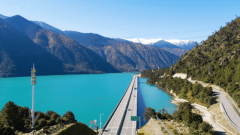
The overland journey to begin your Rongbuk Monastery and Everest Base Camp day visit usually starts from either Tingri (Shegar) or Old Tingri. The drive itself is one of the most visually stunning road trips on the planet. As you leave the main highway, the landscape transforms dramatically. The relatively gentle valleys give way to rugged, arid mountains painted in shades of ochre, brown, and gray. The roads wind through high passes adorned with colorful prayer flags fluttering violently in the relentless Himalayan wind.
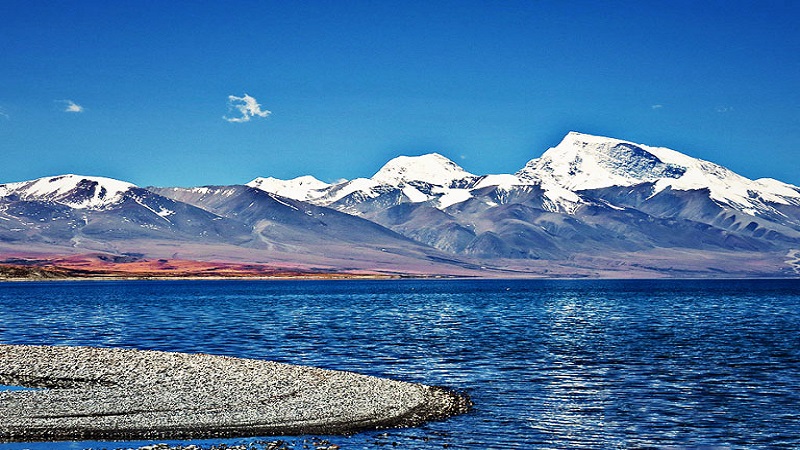
One of the most iconic moments of the drive occurs at Gawu La Pass, situated at an elevation of approximately 5,248 meters. On a clear day, this vantage point offers a panoramic view of four of the world’s highest peaks: Mount Everest, Lhotse, Cho Oyu and Shishapangma. Travelers often pause here to take photographs and absorb the sheer scale of the Himalayan range. The air is thin, and walking even a few steps to the viewing platform can leave you breathless, but the visual reward is unparalleled.
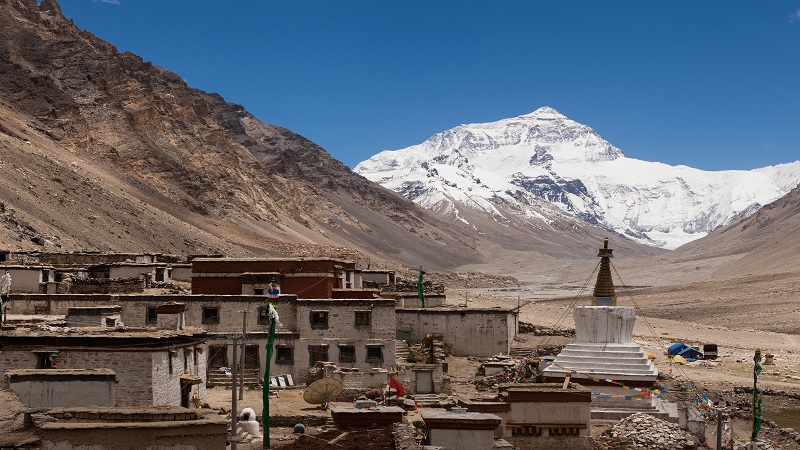
Descending from the passes, the road eventually leads into the Rongbuk Valley. The terrain here is stark and lunar-like, carved by ancient glaciers and shaped by extreme weather. The dirt and gravel sections of the road can be bumpy, making a sturdy, well-maintained four-wheel-drive vehicle an absolute necessity. Professional drivers who know these routes intimately are crucial, as the combination of sharp switchbacks, loose gravel, and high altitude demands expert navigation. The drive from Shegar (New Tingri) to Rongbuk normally takes around 2 hours; it can stretch to 3–4 hours with photo stops, checkpoint delays or poor road conditions, depending on road conditions and the number of stops made for photography and acclimatization.
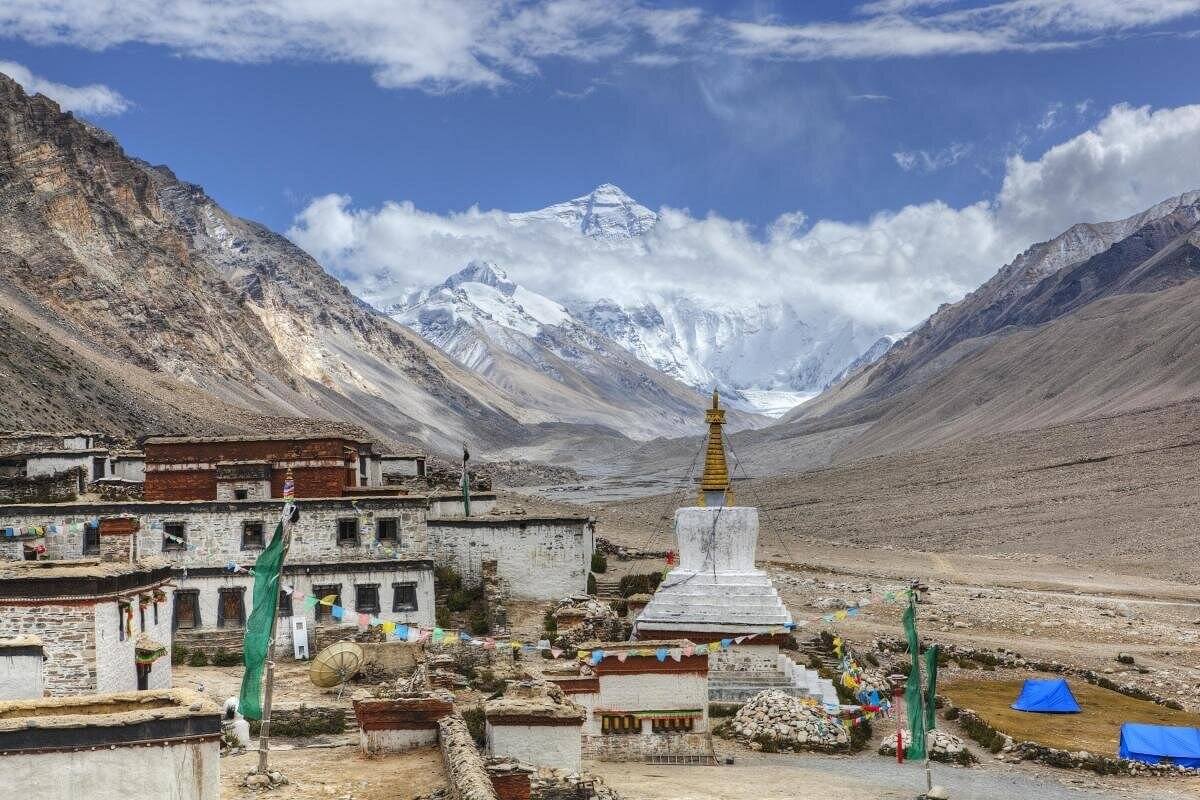
As you draw closer, the northern face of Mount Everest slowly reveals itself, rising sharply against the deep blue sky. The anticipation builds with every kilometer, and the silhouette of the Rongbuk Monastery eventually comes into view, nestled at the end of the valley with the colossal mountain serving as its backdrop.
Exploring Rongbuk Monastery
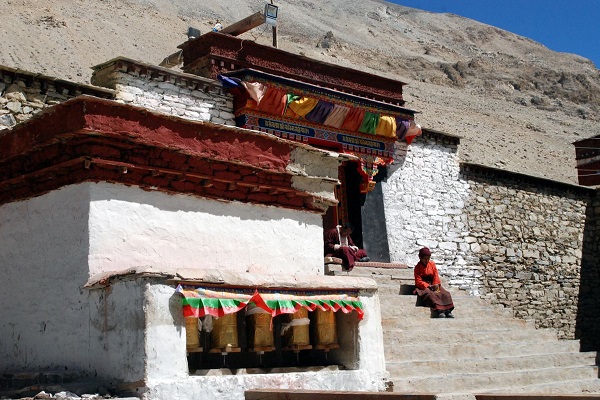
No Rongbuk Monastery and Everest Base Camp day visit is complete without dedicating time to explore the spiritual heart of the valley. Rongbuk Monastery holds the distinction of being the highest monastery in the world, sitting at an elevation of roughly 5,009 meters. Founded in 1902 by Ngawang Tenzin Norbu, it belongs to the Gelug school of Tibetan Buddhism. Historically, it was a thriving center for meditation and learning, housing hundreds of monks and nuns who sought enlightenment in the extreme isolation of the Himalayas.
The monastery suffered significant damage during the mid-twentieth century but has been painstakingly restored over the decades. Today, while smaller than its historical footprint, it remains an active place of worship and a deeply moving site for visitors. The architecture is traditional Tibetan, featuring whitewashed walls, dark window frames, and vibrant murals depicting Buddhist deities and mandalas. Inside the main prayer hall, the scent of juniper incense and yak butter lamps fills the air, creating an atmosphere of profound tranquility that contrasts sharply with the harsh environment outside.
Walking around the monastery grounds, you will encounter mani stones—rocks carved with the sacred mantra “Om Mani Padme Hum”—stacked carefully by pilgrims and travelers. Spinning the prayer wheels that line the outer walls is a customary practice, believed to send blessings into the world. The resident monks and nuns are generally welcoming, though visitors should always maintain a respectful demeanor, ask permission before taking close-up portraits, and refrain from disrupting religious ceremonies.
From the courtyard of Rongbuk Monastery, the view of Mount Everest is perfectly framed. The mountain appears so close that you feel you could reach out and touch it, yet it towers thousands of meters above the valley floor. This specific vantage point has produced some of the most famous photographs of Everest ever taken. Spending quiet time here, observing the interplay of light and shadow on the peak as clouds drift past, is often cited by travelers as the emotional highlight of their entire trip.
Reaching Everest Base Camp
After exploring the monastery, the next phase of your Rongbuk Monastery and Everest Base Camp day visit takes you to the official tourist base camp. It is important to clarify that the tourist base camp is distinct from the mountaineering base camp used by climbers attempting to summit the peak. The climber’s camp is restricted and located further up the glacier, while the tourist area is designed to accommodate visitors safely without interfering with expedition logistics.
Historically, visitors could drive directly to the base camp tent settlement. However, in recent times, environmental conservation efforts have led to changes in how tourists access the immediate base camp area. Depending on current regulations, you may need to transfer from your private tour vehicle into officially sanctioned eco-buses for the final stretch of the journey. These measures were implemented to reduce emissions and protect the fragile alpine ecosystem from the impact of heavy vehicular traffic.
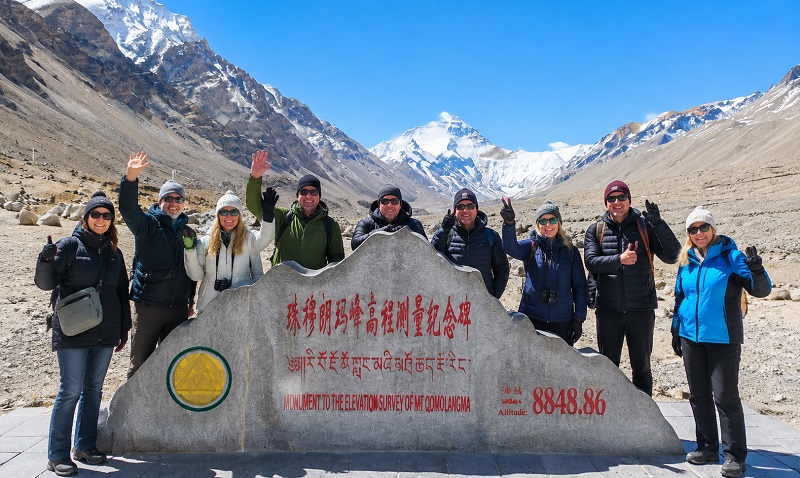
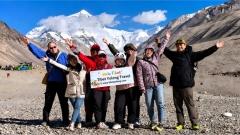
Upon arriving at the base camp area, the proximity to the North Face of Everest is staggering. The Rongbuk Glacier stretches out before you, a chaotic river of ice, seracs, and moraines. The famous Everest Base Camp marker stone, indicating the elevation of 5,200 meters, is a popular spot for commemorative photos. Standing at this marker, surrounded by the towering peaks and the vast silence of the high plateau, brings a profound sense of accomplishment.
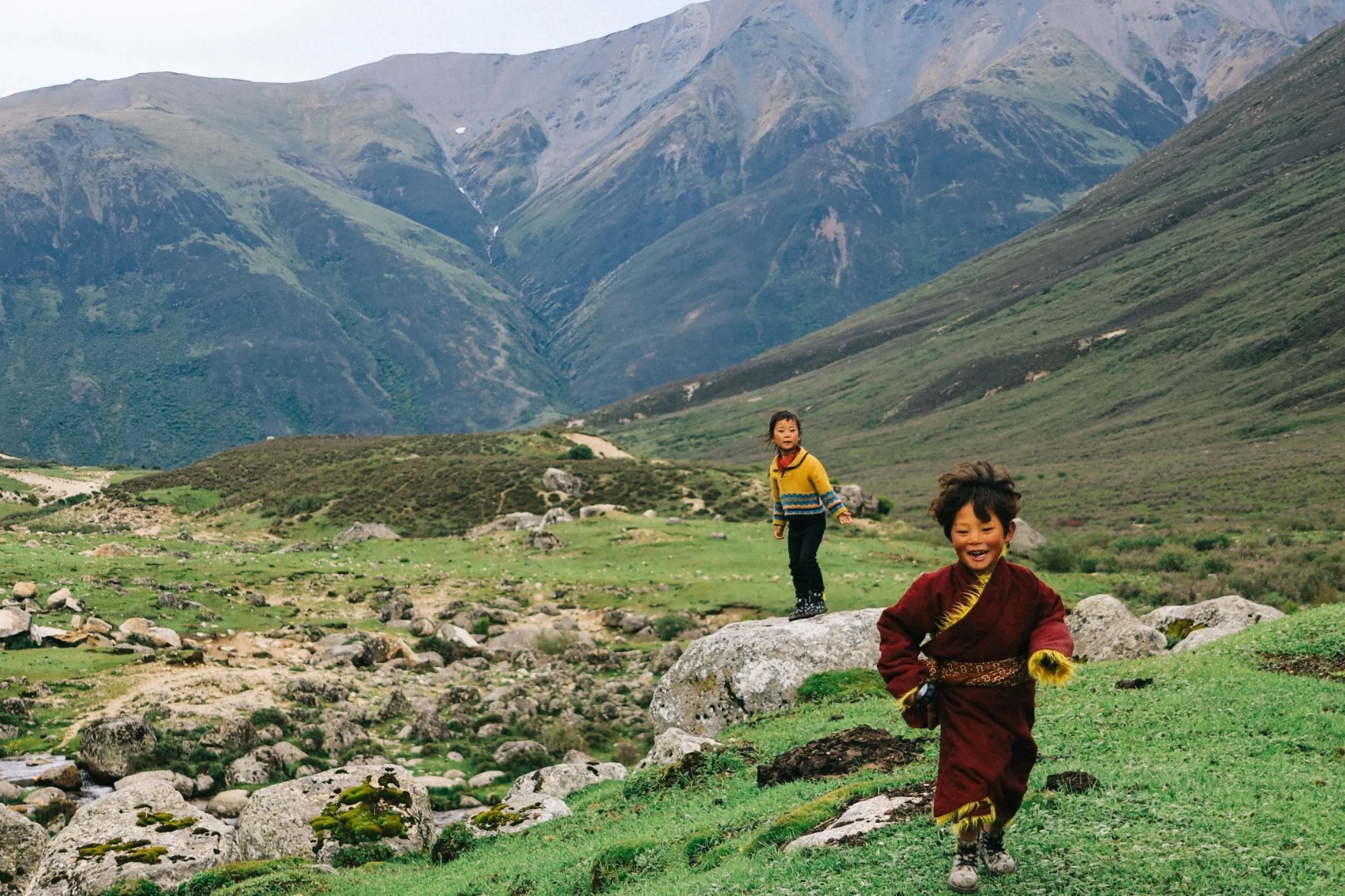
During the warmer months, typically from late spring to early autumn, local Tibetan herders set up yak-hair tents at the base camp area. These tents serve as makeshift tea houses and guesthouses. Stepping inside one of these tents offers welcome refuge from the biting wind. You can sit on traditional rugs, sip hot sweet tea or yak butter tea, and warm your hands while chatting with the local families who run them. This interaction provides a genuine glimpse into the resilience and hospitality of the people who call this extreme environment home.
Weather, Climate, and What to Wear
The climate at Rongbuk Monastery and Everest Base Camp is notoriously unpredictable and unforgiving. Even if you are undertaking your Rongbuk Monastery and Everest Base Camp day visit during the summer months, temperatures can plummet below freezing, especially in the early morning and late afternoon. The high altitude means there is very little atmosphere to trap heat, and the intense solar radiation during the day gives way to rapid cooling once the sun dips behind the peaks.
Wind is a constant companion in the Rongbuk Valley. Gale-force gusts can sweep down from the glaciers without warning, dropping the perceived temperature drastically. Therefore, dressing in layers is not just a recommendation; it is a survival strategy. Start with a moisture-wicking base layer to keep sweat away from your skin. Add an insulating middle layer, such as a fleece or down jacket, to trap body heat. Finally, a windproof and waterproof outer shell is essential to protect against the elements.
Accessories are equally important. A warm beanie or hat that covers your ears, insulated gloves, and thick wool socks will make your time outdoors much more comfortable. Sunglasses with high UV protection are mandatory, as the glare from the snow and ice can cause snow blindness. Sunscreen with a high SPF and lip balm are also necessary, as the thin atmosphere offers little protection against ultraviolet rays, and sunburn can occur rapidly even on cloudy days. Sturdy, broken-in hiking boots with good ankle support are recommended for navigating the rocky and uneven terrain around the base camp and monastery.
The best windows for a Rongbuk Monastery and Everest Base Camp day visit are generally from April to early June, and from September to November. During these transitional seasons, the monsoon clouds have either not yet arrived or have recently departed, offering the clearest views of the mountain. Winter visits are possible but require extreme cold-weather gear and tolerance for potential road closures due to heavy snowfall.
Health and Safety at High Altitude
Safety during a Rongbuk Monastery and Everest Base Camp day visit revolves almost entirely around managing altitude. At over 5,000 meters, the human body is under significant physiological stress. Symptoms of mild altitude sickness include headache, dizziness, fatigue, shortness of breath, and nausea. If these symptoms escalate to confusion, loss of coordination, or severe breathlessness while resting, it indicates a medical emergency requiring immediate descent.
To mitigate these risks, move slowly. The excitement of finally seeing Everest can tempt travelers to rush out of the vehicle and sprint toward the viewpoints. This sudden exertion at high altitude is a primary trigger for acute mountain sickness. Pace yourself deliberately. Take slow, deep breaths and allow your body to dictate your speed.
Portable oxygen cylinders are a standard inclusion in vehicles operated by professional agencies. Taking small, controlled inhalations of supplemental oxygen upon arrival at the monastery or base camp can ease the transition. However, relying entirely on bottled oxygen is not advisable, as it can mask worsening symptoms. Your guide should be trained to recognize the signs of altitude illness and equipped with a pulse oximeter to monitor your blood oxygen levels throughout the day.
Diet also plays a role in how you feel at high altitudes. Heavy, greasy meals are difficult to digest when your body is already working overtime to process limited oxygen. Opt for light, carbohydrate-rich foods like noodles, rice, or bread. Staying hydrated is paramount, but avoid drinking untreated water from streams or glaciers. Stick to boiled water provided by your guide or the local tea tents, or use purified bottled water.
Photography Tips for the Journey
For photographers, a Rongbuk Monastery and Everest Base Camp day visit is a pilgrimage. The quality of light at high altitudes is exceptionally crisp, producing images with incredible clarity and contrast. However, the extreme conditions present unique challenges for both the photographer and the equipment.
Cold temperatures drain camera batteries rapidly. Always carry spare batteries and keep them in an inner pocket close to your body heat until you are ready to use them. When moving between the freezing outdoors and the relatively warmer interior of a yak tent or vehicle, condensation can form on your lens and internal components. To prevent this, place your camera in a sealed plastic bag before bringing it into a warmer environment, allowing it to adjust to the temperature gradually.
The lighting conditions change dramatically throughout the day. Early morning offers soft, golden light illuminating the peaks, while midday sunlight can create harsh shadows and blown-out highlights due to the reflective snow. Using a polarizing filter can help cut through the glare and deepen the contrast of the blue sky against the white mountains. Wide-angle lenses are ideal for capturing the vastness of the Rongbuk Valley and the full expanse of the Himalayan range, while telephoto lenses are perfect for isolating details on the mountain face or capturing portraits of the monks at the monastery.
When photographing the monastery, respect the sanctity of the space. Avoid using flash inside the prayer halls, as it can damage ancient pigments and disturb those in meditation. Always ask for consent before photographing individuals, particularly monks, nuns, and local herders. A smile and a polite gesture go a long way in building rapport and ensuring your photography is welcomed rather than viewed as intrusive.
Environmental Responsibility and Sustainable Travel
The ecosystem surrounding Rongbuk Monastery and Everest Base Camp is incredibly fragile. The short growing season and extreme cold mean that vegetation takes decades to recover if damaged, and waste does not decompose naturally in this environment. As tourism to the region has grown, so has the emphasis on sustainable travel practices to protect this pristine landscape.
Visitors undertaking a Rongbuk Monastery and Everest Base Camp day visit must adhere strictly to Leave No Trace principles. All trash generated during your trip—including food wrappers, tissues, and empty water bottles—must be packed out and disposed of properly in designated areas back in larger towns. Never leave anything behind at the base camp or around the monastery.
Stay on established paths and trails. Wandering off-trail can damage delicate alpine flora and accelerate soil erosion. Respect the boundaries set by local authorities regarding how close you can get to the glacial edges. The ice is unstable, and venturing too far poses both environmental and personal safety risks.
Supporting the local economy responsibly is another pillar of sustainable travel. Purchasing tea, snacks, or locally made handicrafts directly from the Tibetan families operating the base camp tents ensures that the financial benefits of tourism reach the communities living in this harsh environment. Choosing a responsible tour operator, such as Tibet Yulong Travel, guarantees that your journey adheres to local environmental regulations. Agencies like Tibet Yulong Travel actively promote eco-friendly travel practices, employ local drivers and guides, and contribute to the preservation of both the cultural and natural heritage of the Everest region.
Cultural Etiquette and Interactions
Tibet possesses a deeply rooted cultural and spiritual identity, and visitors should approach their Rongbuk Monastery and Everest Base Camp day visit with cultural sensitivity. Understanding basic etiquette enhances your experience and shows respect for the local population.
When visiting Rongbuk Monastery, dress modestly. Avoid wearing shorts, sleeveless shirts, or overly revealing clothing. Walk clockwise around stupas, mani stone walls, and the monastery itself, following the direction of local pilgrims. Do not touch religious artifacts, statues, or murals unless explicitly invited to do so. If you wish to make a small donation to the monastery, place it quietly on the altar or hand it to a monk respectfully.
Interactions with locals are generally warm, but language barriers exist. Learning a few basic Tibetan phrases, such as “Tashi Delek” (hello/good luck), can break the ice and elicit smiles. When receiving items, such as a cup of tea, it is polite to accept them with both hands. Pointing at people or religious objects with a single finger is considered rude; instead, gesture with an open hand.
Photography etiquette extends beyond asking permission. If someone declines to be photographed, respect their wishes immediately and graciously. The harmony between the local communities, their spiritual practices, and the land they inhabit is delicate, and as a visitor, your role is to observe and appreciate without disrupting that balance.
Planning Your Itinerary
Executing a successful Rongbuk Monastery and Everest Base Camp day visit requires meticulous timing. Because the base camp is located far from major urban centers, Note that this “day visit to Rongbuk & EBC” starts from your overnight base in Shegar / Tingri. It is not a day trip directly from Lhasa, which would be impossibly long and unsafe at altitude.
A typical itinerary begins with an early morning departure from Tingri or Shegar. Leaving at dawn maximizes your chances of clear skies, as clouds tend to build up around the peaks later in the day. The drive takes several hours, meaning you arrive at Rongbuk Monastery by mid-morning. You spend a few hours exploring the monastery, soaking in the views, and then proceed to the Everest Base Camp area via the designated transport method.
Time at the base camp is usually limited to two to three hours. This is sufficient to take photographs, enjoy a hot drink in a yak tent, and absorb the magnitude of the surroundings. Guides closely monitor the group’s physical condition and the weather. If winds pick up dangerously or someone exhibits severe altitude symptoms, the return journey is initiated immediately.
The drive back to your overnight accommodation happens in the late afternoon or early evening. While the long hours spent in a vehicle can be tiring, the changing light on the mountains during the return trip offers an entirely different photographic perspective. Working with an experienced provider like Tibet Yulong Travel ensures that the pacing of this demanding schedule is optimized for both safety and enjoyment, leaving enough buffer time to handle unexpected delays at checkpoints or sudden weather shifts.
Embarking on a Rongbuk Monastery and Everest Base Camp day visit is a profound journey into one of the most remote and awe-inspiring environments on Earth. It demands physical preparation, respect for local culture, and a willingness to embrace the challenges of high-altitude travel. Yet, for those who make the journey, standing in the shadow of the world’s highest peak, surrounded by centuries of spiritual history, offers a perspective that forever alters how you view the world and your place within it. With the right preparation, proper documentation, and the guidance of experienced professionals, this extraordinary day trip remains one of the most rewarding travel experiences available anywhere on the globe.