✨ Highlights:
- 🏯 Discover three iconic Tibetan towns: Gyantse, Shigatse and Sakya in one southern Tibet circuit
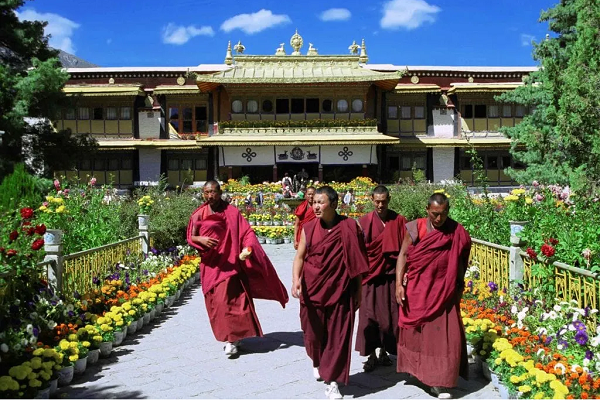
- 📜 Explore Palkhor Monastery, Kumbum Stupa, Tashilhunpo Monastery and Sakya Monastery
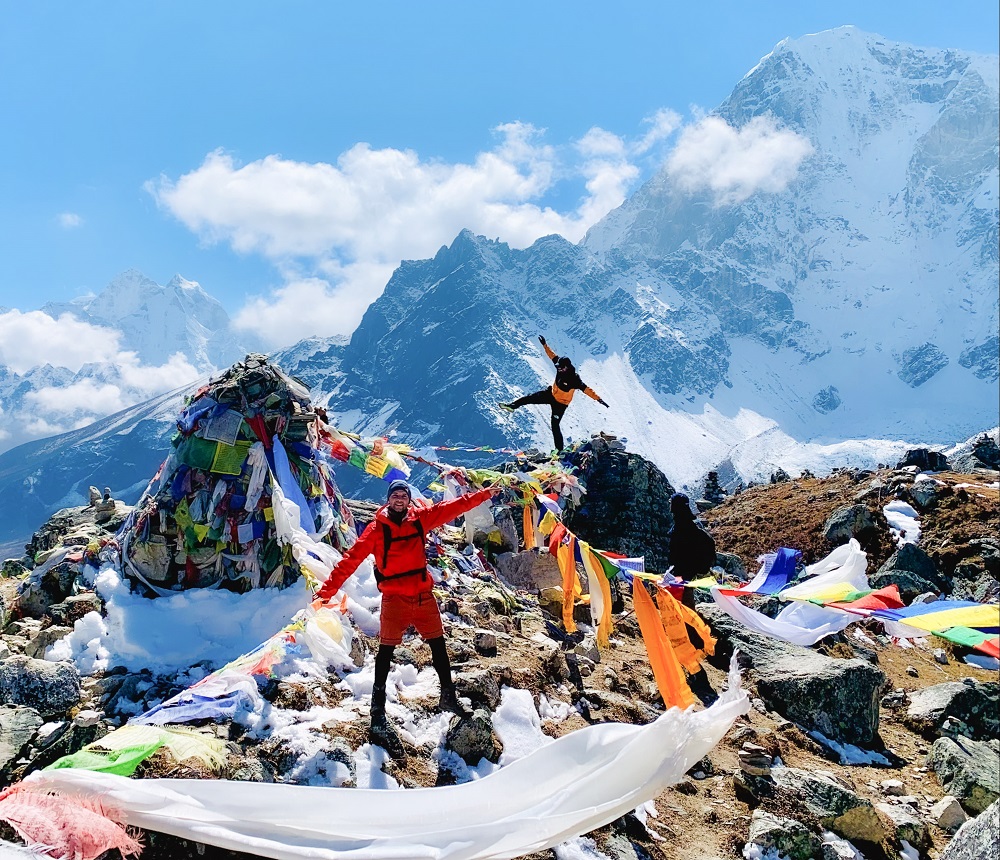
- 🏔️ Mix Himalayan scenery, medieval Tibetan history and authentic local village culture
- 🚙 Flexible private tour options, ideal for history lovers, photographers and cultural travellers
- 🌤️ Well-planned altitude acclimatisation schedule for a comfortable Tibet overland journey
Southern Tibet is the heartland of traditional Tibetan civilisation, where fertile river valleys, snow-capped Himalayan peaks and centuries-old monasteries weave together a profound cultural landscape. The Southern Tibet circuit linking Gyantse, Sakya and Shigatse is one of Tibet’s most rewarding overland tour routes, less crowded than the Lhasa city hotspots yet packed with world-class heritage sites, dramatic highland scenery and untouched rural Tibetan life. This multi-day Gyantse Sakya Shigatse tour route connects the “Hero City” Gyantse, the religious capital Shigatse and the ancient Sakya Kingdom, giving travellers a deep dive into Tibetan art, medieval history and Himalayan traditions. Many overseas travellers book a Lhasa Gyantse Shigatse Sakya tour to begin their adventure from the Tibetan capital. Whether you are a history enthusiast, landscape photographer, or a traveller seeking authentic Tibetan culture, this journey delivers a rich and immersive southern Tibet experience.
What is the Southern Tibet Circuit of Gyantse, Sakya and Shigatse?
The Southern Tibet circuit focusing on Gyantse, Shigatse and Sakya is a classic cultural travel loop in southern Tibet, within the Shigatse prefecture. Many travellers combine this circuit with Lhasa as the starting point, travelling along the G318 and regional provincial highways to connect these three historically important towns. Unlike the Everest Base Camp rush trip that only stops briefly in Shigatse, this route slows down to explore the soul of southern Tibet. If you have more vacation time, you can plan a Southern Tibet circuit extend to Everest Base Camp, combining cultural heritage with Himalayan mountain views.
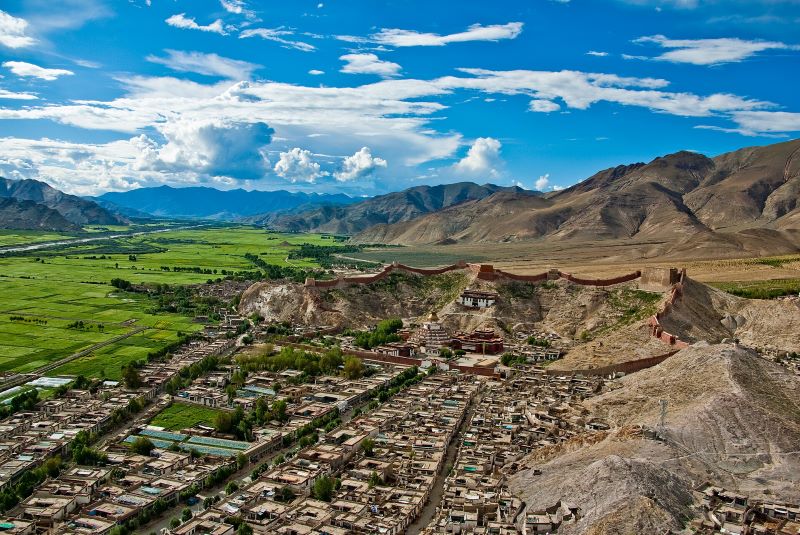
Shigatse, the second-largest city in Tibet, serves as the administrative and spiritual centre of this region, home to Tashilhunpo Monastery, the seat of the Panchen Lama. Gyantse, known as the Hero City, sits on the fertile Nyang Chu river basin, famous for its unique multi-sect Palkhor Monastery and dramatic Dzong Fortress. Further west, Sakya, once the political centre of Tibet during the Sakya Dynasty, stands apart with its grey-walled Sakya Monastery, often called the second Dunhuang for its enormous collection of ancient Tibetan scriptures and Yuan Dynasty murals.
Gyantse Dzong Castle
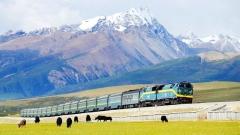
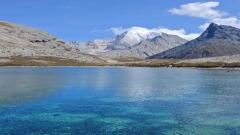
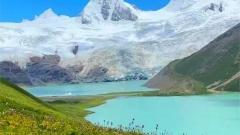
This circuit balances natural scenery and cultural heritage. Along the road, you will pass golden barley fields, turquoise alpine lakes, glacier outcrops and rolling grasslands, with distant Himalayan snow peaks visible on clear days. This Southern Tibet cultural circuit itinerary is usually arranged as a 4 to 6-day private land tour, with flexible extensions towards Everest Base Camp or remote Himalayan valleys. Most international travellers start this southern Tibet circuit from Lhasa after proper altitude acclimatisation, to avoid altitude sickness while travelling between towns at 3800m to 4500m elevation.
Must-see Attractions on the Gyantse Sakya Shigatse Tour Route
Gyantse: The Hero City of Southern Tibet
Gyantse is the first major cultural highlight on this Southern Tibet circuit. Once a vital trading hub between Tibet, Nepal and India, Gyantse preserves a complete old Tibetan town atmosphere, free from heavy commercialisation.
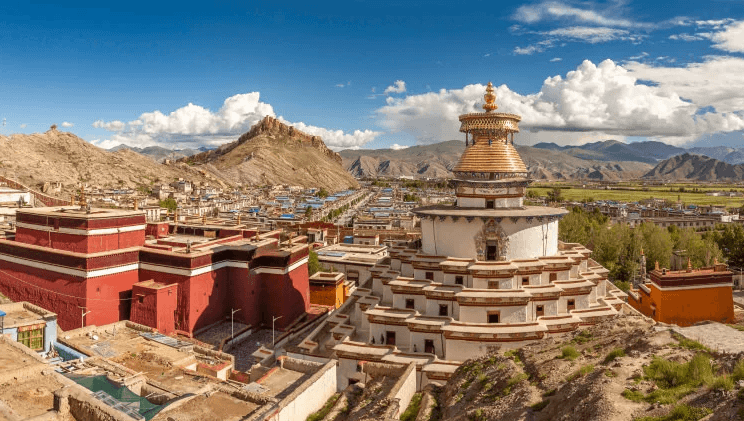
The top landmark is Palkhor Monastery (Pelkor Chode Monastery) and the iconic Kumbum Stupa. Unique across Tibet, Palkhor Monastery hosts three major Tibetan Buddhist schools — Sakya, Gelug and Kagyu — coexisting peacefully within one monastic compound. The Kumbum Stupa, also known as the Stupa of 100,000 Buddhas, is a masterpiece of Tibetan architecture. Rising nine stories high, the stupa contains over 100 chapels and thousands of Buddhist statues and murals, each level presenting different artistic styles. Walking through the narrow corridors of the stupa feels like stepping into a three-dimensional Tibetan Buddhist mandala.
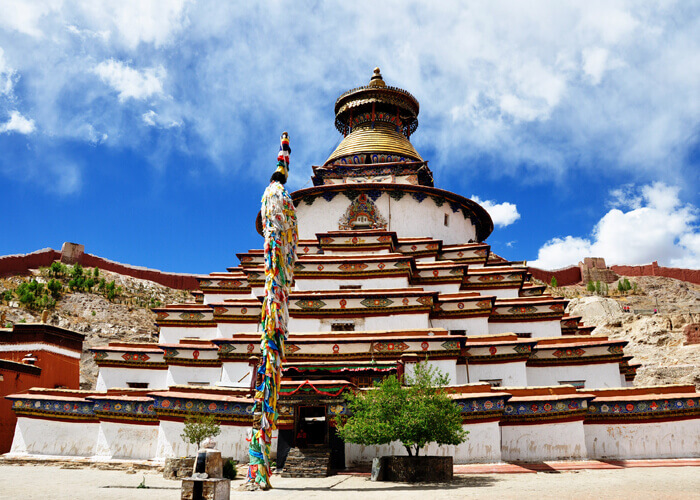
Palkhor Monastery
Right above Gyantse town sits the Gyantse Dzong Fortress, the famous site of the 1904 Gyantse resistance. Standing dramatically on a rocky hilltop, the ruined fortress offers panoramic views over the entire Gyantse valley and surrounding barley fields. Visitors can hike up the fortress hill to explore the old battlements and understand this important chapter of Tibetan modern history. The quiet old town of Gyantse is also worth wandering, visiting local family workshops producing traditional Tibetan carpets, a famous local handicraft passed down for hundreds of years.
Shigatse: Spiritual Heart of Southern Tibet
Shigatse is the largest town on this Southern Tibet circuit and a natural base for exploring surrounding monasteries and valleys. The unmissable site here is Tashilhunpo Monastery, one of the great “Three Seats” of the Gelug school of Tibetan Buddhism and the traditional residence of the Panchen Lama. Founded in the 15th century by the first Dalai Lama, Tashilhunpo Monastery spreads across a hillside with golden roofed halls, massive Buddha statues and quiet monk quarters. The giant Maitreya Buddha statue inside the monastery is one of the largest bronze Buddha images in the world. A guided tour inside helps travellers understand monastic life, Tibetan iconography and the historical relationship between the Dalai Lama and Panchen Lama institutions.
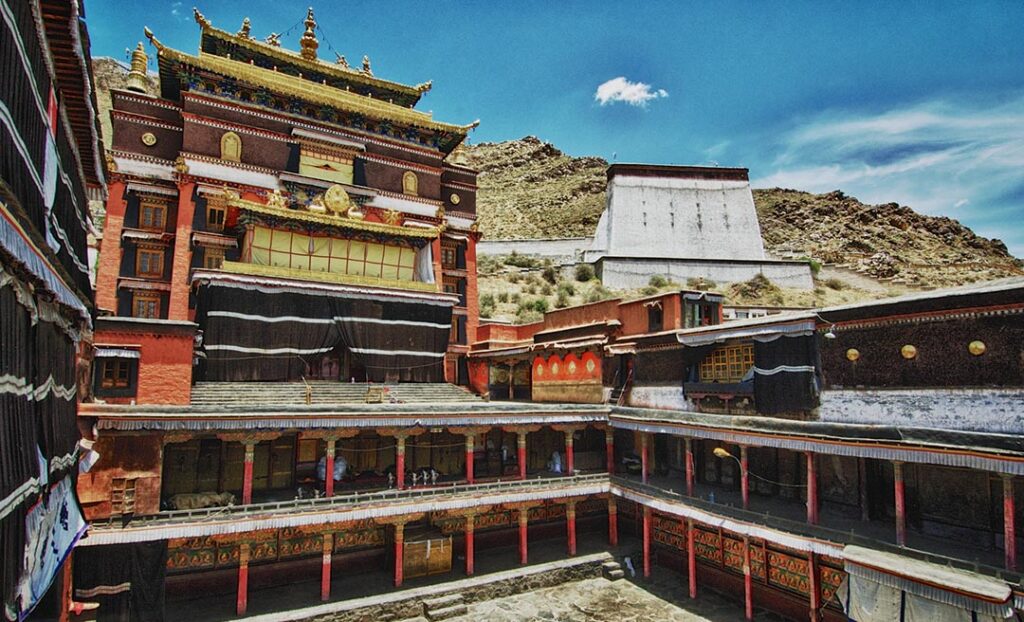
Tashilhunpo Monastery
Beyond Tashilhunpo, Shigatse old town retains a laid-back local lifestyle. You can stroll through traditional markets, taste local Tibetan foods such as tsampa, butter tea and dried yak meat, and visit small local temples. Many travellers choose to stay overnight in Shigatse, as it has the widest selection of hotels and restaurants in this southern Tibet circuit, making it an ideal rest stop before heading west to Sakya. A Gyantse to Sakya road trip Tibet takes you across vast highland plains from Gyantse via Shigatse, revealing the changing landscapes of southern Tibet.
Sakya: Home of the “Second Dunhuang” Sakya Monastery
Sakya town is the most culturally distinctive stop on this Gyantse Sakya Shigatse tour route. The name Sakya means “grey earth”, after the grey soil of the hillside where the monastery was built. The Sakya school of Tibetan Buddhism ruled the whole of Tibet during the 13th and 14th centuries under Mongol patronage, leaving behind an extraordinary cultural treasure in Sakya Monastery.
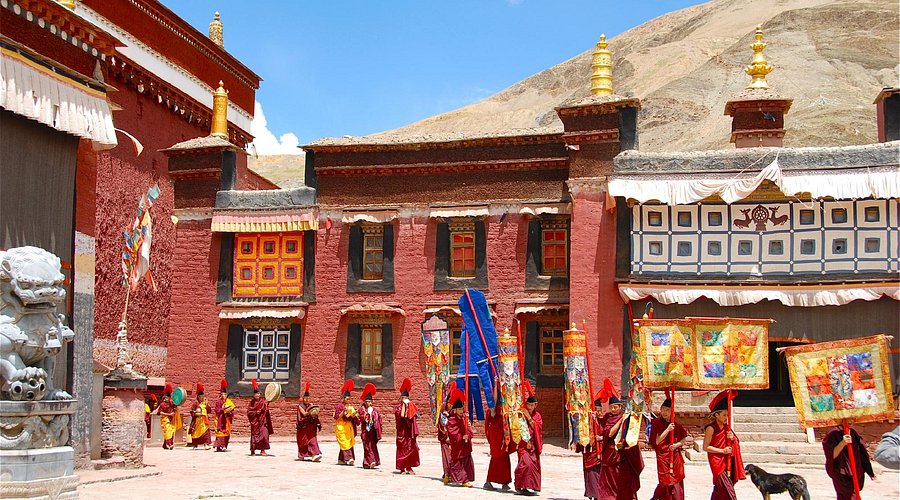
Sakya Monastery
The monastery’s outer walls are painted with traditional red, white and grey stripes, the signature symbol of the Sakya school. Inside the main hall stands the legendary scripture wall, stacked with tens of thousands of ancient palm-leaf manuscripts and handwritten Tibetan scrolls, some dating back more than 800 years. The well-preserved Yuan Dynasty murals inside the main temple are breathtaking, with vivid colours and detailed narrative scenes comparable to the Dunhuang cave paintings. Unlike many busy monasteries in Lhasa, Sakya Monastery maintains a calm, timeless atmosphere, with fewer tourists and more resident monks.
Sakya town itself is quiet and rustic. A short walk from the main monastery leads to the ruins of Sakya North Monastery, perched on the opposite hillside. From here, you get a sweeping overlook of the Sakya valley, the old town and the monastery complex below. Travellers interested in Tibetan medieval history will find Sakya the most unforgettable stop on this southern Tibet circuit.
Recommended Itinerary for Southern Tibet Circuit: Gyantse – Sakya – Shigatse
This 5-day classic itinerary is designed for smooth altitude acclimatisation and balanced sightseeing. Many travellers refer to this plan as a Southern Tibet overland itinerary Gyantse to Sakya. Most travellers begin from Lhasa.
Day 1: Lhasa to Gyantse. Drive along the G318 highway. Stop at Yamdrok Lake and Karola Glacier en route. Arrive in Gyantse in late afternoon. Visit Gyantse Dzong Fortress and wander the old town. Overnight in Gyantse.
Day 2: Gyantse sightseeing. Full morning tour of Palkhor Monastery and Kumbum Stupa. Afternoon free time to explore local carpet workshops. Drive to Shigatse. Overnight in Shigatse.
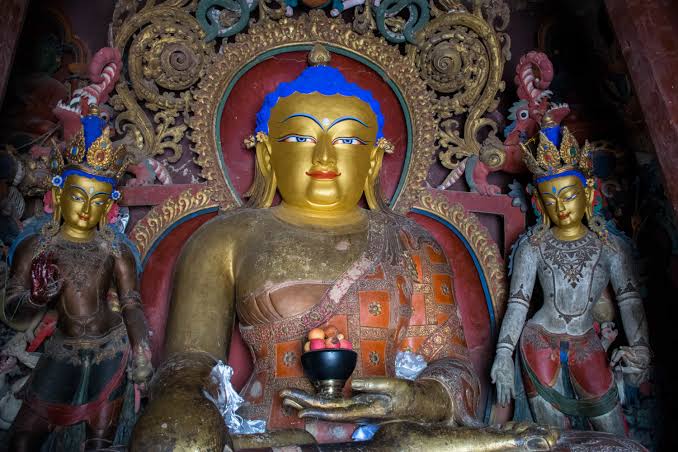
Kumbum Stupa
Day3: Shigatse to Sakya. Morning guided tour of Tashilhunpo Monastery. Afternoon drive west to Sakya. Check in and explore Sakya old town. Overnight in Sakya.
Day4: Sakya sightseeing. Spend the whole morning visiting Sakya Monastery with a local guide. Explore Sakya North Monastery ruins. Drive back to Shigatse. Overnight in Shigatse.
Day5: Shigatse return to Lhasa. Optional short stops at local viewpoints on the way back. End the Southern Tibet circuit in Lhasa.
If you have extra time, you can extend this route to Everest Base Camp from Shigatse, turning this cultural circuit into a combined culture and mountain tour. The driving distances between towns are manageable with a private vehicle and experienced local driver, which is strongly recommended for this southern Tibet tour.
Travel Tips for Gyantse Sakya Shigatse Southern Tibet Circuit
The best travel season for this Southern Tibet circuit is from May to October. May and June offer clear skies for mountain views, fewer tourists and mild temperatures. July and August are the rainy season, bringing green valleys but occasional rain showers and cloud cover over distant peaks. Winter visits from November to April are possible for cultural travellers who prefer quiet monasteries, though temperatures drop sharply at night.
Altitude awareness is critical. Gyantse sits at around 3950m, Shigatse at 3836m, Sakya at roughly 4300m. Take it slow on the first days, avoid heavy exercise and drink plenty of water. Do not drink excessive alcohol during the trip. Travellers must obtain Tibet travel permits in advance for this southern Tibet circuit; independent foreign travellers are not allowed without a licensed local tour operator.
When visiting monasteries, follow local etiquette: dress modestly with shoulders and knees covered, do not take photos inside chapels unless photography is explicitly permitted, and walk clockwise around stupas and prayer wheels. Hiring a knowledgeable local Tibetan-speaking guide greatly improves your experience, as many stories and mural details cannot be understood without explanation.
Road conditions between Gyantse, Shigatse and Sakya are mostly paved. Private vehicle tours are the standard choice. Public buses are available between major towns but are inconvenient for sightseeing stops along the way. Pack warm layers, sunscreen, sunglasses and a hat, as UV radiation is extremely strong on the Tibetan plateau even on cloudy days.
Why Choose the Gyantse Sakya Shigatse Southern Tibet Circuit?
Many first-time visitors only stay in Lhasa and rush to Everest Base Camp, missing the profound cultural treasures of southern Tibet. The Gyantse Sakya Shigatse tour route offers a slower, deeper Tibetan journey. Instead of only seeing famous landmarks, you walk through ancient towns that have preserved their traditional layout and lifestyle for centuries. You encounter three very different strands of Tibetan history: the heroic resistance story of Gyantse, the Gelug spiritual legacy of Shigatse and the imperial-era Sakya kingdom civilisation.
This southern Tibet circuit works well for different types of travellers. Cultural historians can dive into Tibetan dynasties and religious art. Landscape photographers will capture dramatic Himalayan backdrops, ancient monasteries and rural Tibetan farmland. Travellers who dislike crowded tourist sites will appreciate the quieter atmosphere in Sakya and Gyantse compared with Lhasa.
Combining natural beauty, monumental religious art and living Tibetan culture, the Southern Tibet circuit stands out as one of Tibet’s most rewarding overland circuits. It gives you a genuine taste of southern Tibet beyond the postcard icons, creating travel memories that last a lifetime.
FAQ
Q1: How many days do I need for the Gyantse Sakya Shigatse southern Tibet circuit?
A: A minimum of 4 days is possible, but a 5-day itinerary is recommended for relaxed sightseeing and proper altitude adjustment. You can extend to 7–8 days by adding Everest Base Camp.
Q2: Do I need a permit to travel to Gyantse, Sakya and Shigatse?
A: Yes. All foreign visitors require Tibet travel permits arranged by a registered local tour company before entering southern Tibet.
Q3: Is this southern Tibet circuit suitable for beginners to Tibet travel?
A: Yes, provided you spend 2–3 days acclimatising in Lhasa before starting this route. Travellers with heart conditions or severe respiratory issues should consult a doctor before the trip.
Q4: Can I visit Sakya Monastery without a guide?
A: You may enter the monastery grounds, but the priceless murals and scripture collections require a local guide to fully understand the history and symbolism.
Final Thoughts
A trip along the Southern Tibet circuit is far more than just checking famous monasteries off your travel list. The Gyantse Sakya Shigatse tour route invites you to step into living Tibetan history, where age-old traditions continue amid sweeping highland landscapes. Whether you plan a short cultural getaway or want to expand your adventure toward Everest, this overland journey offers a rare chance to connect with the soul of southern Tibet. If you are ready to design your private Tibet tour, our local travel team can tailor every detail of your itinerary, from accommodation selection and permit handling to arranging expert guides and reliable drivers for your unforgettable southern Tibet adventure.