
Perched atop Marpo Ri (Red Mountain) in the center of the Lhasa Valley, the Potala Palace stands at an altitude of 3,700 meters (12,100 feet). It is the world’s highest and most expansive ancient palace complex, seamlessly integrating fortress architecture, grand palaces, and sacred monasteries.
The name “Potala” derives from the Sanskrit word Potalaka, the mythical abode of Avalokiteśvara, the Bodhisattva of Compassion. Rising dramatically against the azure sky, this towering red-and-white masterpiece is not only a UNESCO World Heritage Site but also the ultimate beacon of spirituality for millions of pilgrims.
Key Takeaways
- Origins & Purpose: Originally constructed in the 7th century during the Tibetan Empire, King Songtsen Gampo built the palace to welcome Princess Wencheng and Princess Bhrikuti, as well as to serve as the empire’s political and military stronghold.
- Two Major Historical Periods: The original 7th-century “Red Mountain Palace” was largely destroyed by lightning and warfare. The iconic structure seen today was rebuilt in the 17th century under the 5th Dalai Lama, creating the White and Red Palace complexes.
- Architectural Division: The White Palace served as the administrative headquarters and living quarters of the Dalai Lamas, while the Red Palace was dedicated to religious rites and housing the golden stupas of past Dalai Lamas.
- The Ultimate Symbol of Tibet: It embodies the historical union of religious and political authority, represents the pinnacle of Tibetan architecture, and stands as a sacred pilgrimage center representing Avalokiteśvara.

A Thousand Years of History: Origins and Evolution of the Potala Palace
The construction and evolution of the Potala Palace span over thirteen centuries, shaped primarily by two defining eras in Tibetan history.
1. The Tibetan Empire Era: Songtsen Gampo’s Original Foundation (7th Century)
In the early 7th century AD, Songtsen Gampo, the 32nd King of Tibet, unified the Tibetan Plateau and established Lhasa as the capital of the Tibetan Empire.
To consolidate his political power and celebrate his royal alliances—marrying Princess Wencheng of the Chinese Tang Dynasty and Princess Bhrikuti of Nepal—Songtsen Gampo ordered the construction of a grand fortress palace atop Red Mountain in 641 AD. Known as the “Red Mountain Palace,” this fortress contained 999 rooms plus a meditation cave at the summit, surrounded by defensive walls and watchtowers, serving as the political and military nerve center of the empire.
However, this original fortress did not survive intact. In the late 8th century, a lightning strike triggered a massive fire that destroyed much of its wooden structure. Subsequent civil wars following the fall of the empire further ruined the complex, leaving only two ancient chambers intact: the Chogyal Drubphug (Meditation Cave of Songtsen Gampo) and the Phakpa Lhakhang (Sacred Avalokiteśvara Chapel).
2. The Ganden Phodrang Era: Reconstruction by the 5th Dalai Lama (17th Century)
After nearly eight centuries of standing as a ruin, the Potala Palace experienced a monumental rebirth.
In 1642, Ngawang Lobsang Gyatso, the 5th Dalai Lama, established the Ganden Phodrang government and unified Tibet. To create a centralized seat of government that reflected both spiritual and temporal authority, he decided to rebuild the Potala Palace over the ancient ruins of Red Mountain.
1645: Construction officially began with the building of the White Palace (Potrang Karpo). Upon its completion in 1648, the 5th Dalai Lama moved the government administration from Drepung Monastery into the Potala Palace.
1690: Following the passing of the 5th Dalai Lama, the Regent Desi Sangye Gyatso initiated the construction of the central Red Palace (Potrang Marpo) to house the golden stupa of the late leader and host religious ceremonies. The Red Palace was completed four years later.
Subsequent Dalai Lamas expanded and refined the complex over the generations, resulting in the massive structure seen today, housing shrines, stupa chapels, assembly halls, administrative offices, and fortified walls.
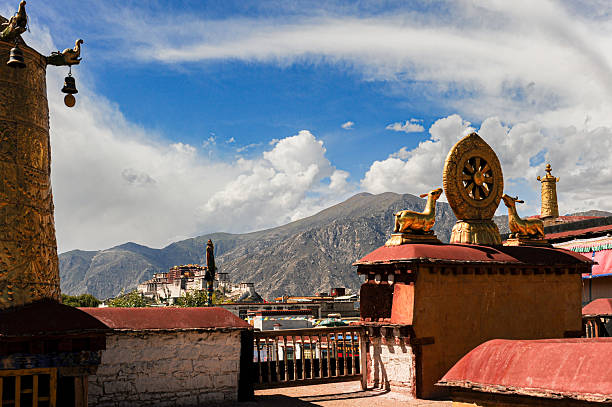
Red and White: Architectural Layout and Functions
The main building of the Potala Palace rises 13 stories high, reaching nearly 117 meters (384 feet). Built from massive granite stone walls and interior timber framing, its exterior is defined by the striking contrast between its white and red sections:
1. The White Palace (Potrang Karpo) — Administrative & Living Quarters
The White Palace forms the lower and outer wings of the complex. Painted white to symbolize peace and authority, it served as the secular heart of the Tibetan government.
The Great Eastern Hall (Deyang Shar): The largest hall in the White Palace, covering over 700 square meters, where major political ceremonies such as the enthronement of the Dalai Lamas took place.
The Sunlight Halls: Located on the top level, these bright and airy rooms served as the private living quarters, study chambers, and offices of the Dalai Lamas.
2. The Red Palace (Potrang Marpo) — Religious & Stupa Sanctuaries
Located in the center of the complex, the Red Palace is painted a deep crimson red to represent sacred authority and devotion. It is dedicated entirely to religious worship and memorial sanctuaries.
Stupa Halls of the Dalai Lamas: The Red Palace houses the gilded burial stupas (chortens) holding the mummified remains of the 5th through 13th Dalai Lamas (excluding the 6th). The grandest of these is the stupa of the 5th Dalai Lama, standing 14.85 meters tall and covered in over 3,700 kilograms of gold and thousands of precious gems.
Assembly Halls and Treasuries: The Red Palace contains thousands of shrines filled with priceless murals, statues, thangkas, and ancient scriptures written on palm leaves (pattra sutras).
Why the Potala Palace is the Ultimate Symbol of Tibet
Beyond its architectural magnificence, the Potala Palace holds profound symbolic significance that makes it the defining image of Lhasa and Tibet:
Physical Embodiment of Dual Governance
For centuries, the Potala Palace was both the supreme administrative center of the Tibetan government and the holiest sanctuary of the Gelug school of Tibetan Buddhism. The White Palace represented secular statecraft, while the Red Palace represented spiritual devotion—a perfect physical representation of Tibet’s historical system of combined religious and political rule.
Pinnacle of Tibetan Architecture and Art
Designed to blend naturally with the rugged contours of Red Mountain, the palace showcases incredible engineering wisdom, featuring earthquake-resistant stone walls and traditional trapezoidal window frames. Its interior preserves an irreplaceable treasury of Tibetan art, metalwork, and sacred iconography.
Spiritual Anchor for Pilgrims
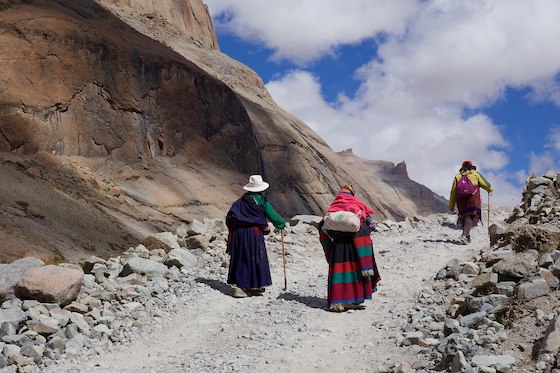
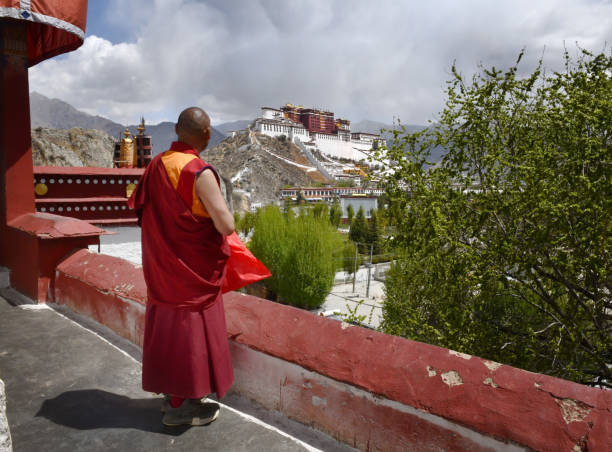
In Tibetan Buddhist belief, the palace is revered as the earthly realm of Avalokiteśvara. Year-round, thousands of pilgrims travel from across the Tibetan region, making ritual circumambulations (kora) around its base, turning prayer wheels, and performing full-body prostrations.
Gazing up at its white stone walls and crimson towers set against the high-altitude sky, the Potala Palace stands as the eternal heart, history, and spiritual soul of Tibet.