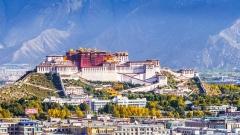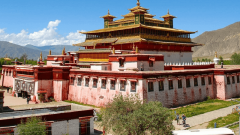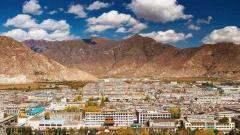

Lhasa, the capital of the Tibet Autonomous Region, translates to “Land of the Gods” or “Sacred Land” in Tibetan. Suspended high on the roof of the world, this “Sun City” owes its standing as a spiritual beacon to the ancient monasteries scattered across its valleys and city streets.
Spanning over 1,300 years, the history of Lhasa’s temples falls into two main golden eras: the 7th-century founding temples of the Tibetan Empire, and the massive 15th-century university monasteries of the Gelug (Yellow Hat) school.
Key Takeaways
- The Sacred Origins (7th Century Empire): Jokhang and Ramoche Temples were established by King Songtsen Gampo to welcome Princess Wencheng and Princess Bhrikuti, housing the sacred 12-year-old and 8-year-old life-sized statues of Shakyamuni Buddha.
- The Gelug Flourishing (15th Century): Master Tsongkhapa and his disciples founded Ganden, Drepung, and Sera Monasteries, transforming Lhasa into the academic and spiritual epicenter of Tibetan Buddhism.
- Multi-Dimensional Purposes: From suppressing demonic plateau forces (Tibet’s demoness layout) and enshrining sacred relics to building massive monastic universities and governance seats.
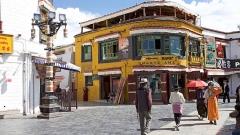
- The Circuit of Faith: Lhasa’s monastery network forms the core of sacred pilgrimage pathways (Kora), including the famous Barkhor Street around Jokhang Temple.
Phase 1: Founding Temples of the Tibetan Empire (7th Century)
1. Jokhang Temple — The Heart of Tibetan Faith
Founded: 647 AD (Under Songtsen Gampo, the 32nd King of Tibet).
Origins & Purpose: According to legend, the geography of Tibet resembled a supine demoness. To suppress negative cosmic energy and provide a sanctuary for the 8-year-old status of Shakyamuni Buddha brought by Princess Bhrikuti of Nepal, Songtsen Gampo ordered a lake filled to erect the temple.
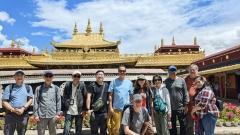
Historical Significance: The Jokhang is the oldest timber-frame structure in Tibet, blending Tibetan, Tang Dynasty, Indian, and Nepalese architectural styles. Later, the 12-year-old life-sized statue of Shakyamuni Buddha (Jowo Rinpoche), brought by Princess Wencheng, was moved here, establishing the Jokhang as Tibet’s most sacred shrine.
2. Ramoche Temple — Witness to Royal Alliances
Founded: Circa 641 AD.
Origins & Purpose: Built under the direction of Princess Wencheng, facing east toward Chang’an (the Tang capital). It was originally constructed to house the Jowo Rinpoche statue she brought from Central China before it was swapped with the statue in the Jokhang.
Historical Significance: Heavily influenced by Tang Dynasty architecture, Ramoche was rebuilt several times following fires. Today, it serves as the home of the Gyuto Tantric Monastery, one of the highest tantric colleges in the Gelug tradition.
Phase 2: The Gelug School and Lhasa’s “Great Three” Monasteries (15th Century)
In 1409 AD, the reformer Je Tsongkhapa founded the Gelug school in Lhasa, triggering a era of monastery construction. The resulting “Great Three Monasteries” served not only as houses of worship but as monastic universities housing thousands of scholars.
3. Ganden Monastery — The Ancestral Seat of Gelug
Founded: 1409 AD.
Origins & Purpose: Personally selected and established by Je Tsongkhapa on Wangbur Mountain east of Lhasa. Its goal was to create a disciplined center for systematic studies in Sutra and Tantra.
Historical Significance: Ganden is the first Gelug monastery. Its administrative head, the “Ganden Tripa” (Throne Holder of Ganden), represents the formal lineage holder of the Gelug school.
4. Drepung Monastery — The Largest Monastic University in Tibet
Founded: 1416 AD.
Origins & Purpose: Founded by Tsongkhapa’s disciple Jamyang Chojey at the foot of Mount Gambo Utse west of Lhasa. “Drepung” means “Heap of Rice” in Tibetan, symbolizing prosperity and abundant Buddhist teachings.
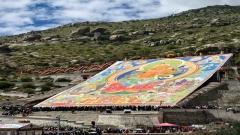
Historical Significance: At its peak, Drepung housed over 10,000 monks, making it the largest monastery in Tibet. Before the 5th Dalai Lama rebuilt the Potala Palace, the “Ganden Phodrang” structure inside Drepung served as the administrative capital of Tibet. Its annual “Shedding of the Buddha” ceremony during the Shoton Festival remains a grand cultural highlight.
5. Sera Monastery — The Pinnacle of Monastic Debating
Founded: 1419 AD.
Origins & Purpose: Built by another key disciple of Tsongkhapa, Jamchen Chojey (Shakya Yeshe), at the base of Sera Utse Mountain north of Lhasa.
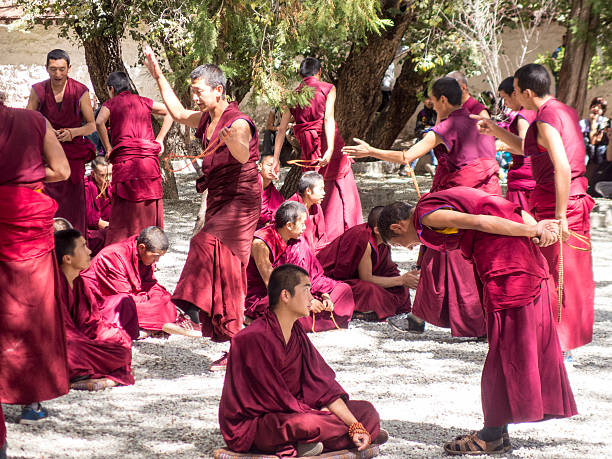
Historical Significance: Sera is famous worldwide for its lively and rigorous monastic debates. Held in the monastery’s courtyard, monks debate Buddhist philosophy using expressive hand claps, foot stomps, and sharp verbal exchanges, forming one of Lhasa’s most iconic cultural traditions.
Other Notable Sacred Sites in Lhasa
Norbulingka Monastic Palaces: Built in the mid-18th century as the traditional summer residence of the Dalai Lamas, combining royal garden landscaping with sacred chapels.
The Four Regents’ Monasteries (The Four Lings): Kundeling, Tengyeling, Tsemonling, and Cewangling—historically significant monasteries whose high incarnate lamas served as Regents of Tibet during the Qing Dynasty.
Spiritual Anchor: The Historical & Contemporary Meaning
Lhasa’s monasteries represent far more than architectural masterworks; they are the living pulse of Tibetan daily life:
Subduing Demons and Sacred Mapping: From filling lakes to subduing forces of the earth, the founding of Lhasa’s temples illustrates how ancient Tibetans harmonized nature and faith.
Centers of Higher Learning: The rigorous college (Tratsang) system established by the Great Three Monasteries institutionalized Buddhist philosophy, training generations of scholars and high lamas.
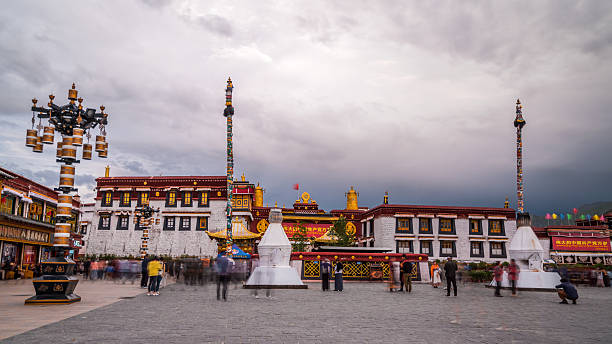
The Center of the Pilgrimage Network: Radiating outward from the Jowo Rinpoche in the Jokhang Temple, three concentric circumambulation circuits—Nangkhor (inner), Barkhor (middle), and Lingkhor (outer)—wrap the entire city of Lhasa in continuous prayer and devotion.
For centuries, pilgrims have traveled thousands of miles across the plateau to light a single butter lamp before these sacred halls, preserving the timeless spiritual essence of the “Land of the Gods.”