
📌 Highlights:
- 🏮 A Lhasa local market tour takes you beyond famous temples and palaces, stepping into community bazaars where ordinary Tibetan residents shop, eat and socialize.
- 🥟 Explore three iconic local markets: the centuries-old Chongsaikang Market, vibrant Tianhai Night Market and quiet bazaars around Barkhor Street.
- 🧶 Sample traditional plateau foods, browse handmade Tibetan crafts and learn practical etiquette tips for visiting local markets respectfully.
- 🌄 Skip overcrowded tourist sites and experience slow, authentic Lhasa through the sights, sounds and flavors of neighborhood markets.
Most travelers visit Lhasa for iconic landmarks like the Potala Palace and Jokhang Temple, yet the true soul of Lhasa lies in its bustling community bazaars and street markets. A Lhasa local market tour is far more than a casual shopping trip; it is the most immersive way to explore the real charm of the plateau city and touch the most genuine local customs. Away from overcommercialized tourist zones, the trivial, warm daily scenes in urban markets interpret the most authentic urban temperament of Lhasa, allowing every traveler to stay away from superficial sightseeing and gain a unique cultural travel experience.
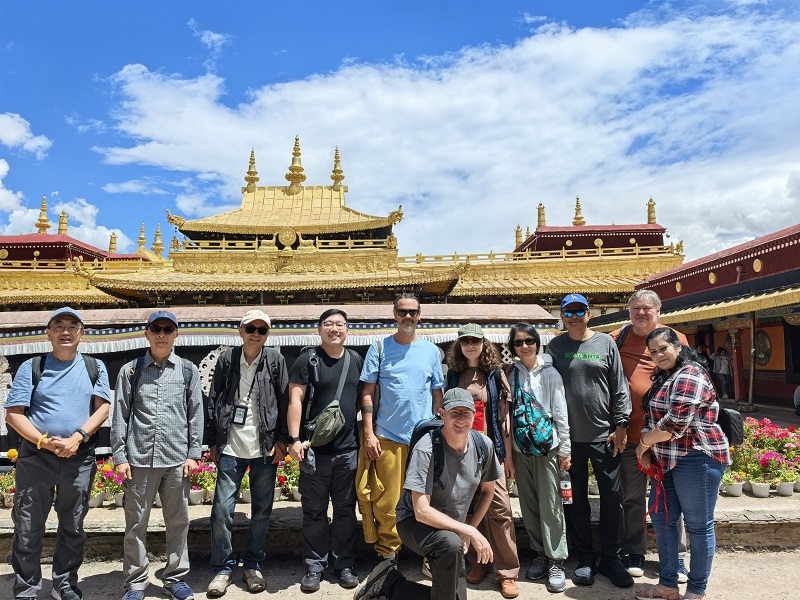
Jokhang Temple Visitors
For most cultural tourists, simply checking in at scenic spots cannot truly understand the connotation of Lhasa. Only by walking into the street markets where local people live can we truly perceive the local customs of the snow-covered plateau. This article will take you to explore the core charms of a Lhasa local market tour, unveil the unknown market scenery of Lhasa, and let tourists truly integrate into the local plateau life.
Why Explore Lhasa Local Markets for Authentic Tibetan Daily Life
Unlike fixed scenic spots with standardized tourism procedures, urban folk markets are the most real carrier of urban life. All living scenes in the markets are naturally formed by local residents’ daily life, without any artificial packaging and performance. Choosing a Lhasa local market tour means walking into the living circle of local Tibetans and feeling the most down-to-earth plateau fireworks.
Many tourists only stay in the superficial tourism layer when traveling in Lhasa, unable to get in touch with the core local culture. In fact, the city’s most touching scenery is hidden in the noisy market stalls, simple vendor conversations, and rich plateau ingredients. If you want to get rid of rigid travel itineraries and experience the unique charm of Lhasa’s folk culture, in-depth market exploration is undoubtedly the best choice.
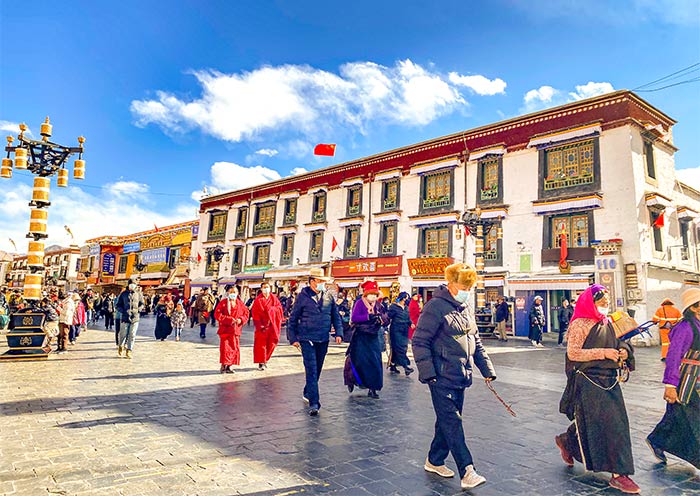
The Busy Barkhor Street
These markets have never catered to tourist preferences. They have always adhered to the most primitive trading methods and life rhythms, witnessing the inheritance and changes of Tibetan folk culture from generation to generation. Every plant, every product, and every custom in the market is a vivid textbook of plateau culture, allowing people to truly feel the unique charm of snowland life.
Core Value of Exploring Lhasa’s Local Markets
The biggest value of a Lhasa local market cultural tour is that it breaks the single tourism cognition of most tourists and presents a three-dimensional and vivid Lhasa. Different from the solemn and sacred impression brought by temple buildings, Lhasa’s markets are full of vitality and humanity, recording every trivial and warm moment of local people’s life.
Many people’s impression of Lhasa is limited to sacred religion and magnificent plateau scenery, but they know little about the daily life of local Tibetans. In fact, the real snowland life is hidden in the three meals a day of local residents, the handmade utensils passed down from generation to generation, and the daily market transactions. In these lively markets, tourists can capture Authentic Tibetan daily life that is rarely seen in tourist guides.
As the most grassroots living space in Lhasa, Local markets in Lhasa carry the dietary habits, aesthetic concepts and life attitudes of local Tibetans. Here, you can watch herdsmen sell fresh plateau specialties, watch craftsmen polish traditional handicrafts, and listen to local residents talk about trivial daily life. All the scenes here are true and natural, completely different from the homogenized commercial streets in major tourist cities.
Must-Visit Local Markets in Lhasa
Chongsaikang Market: Centennial Folk Bazaar
Chongsaikang Market, with a history of more than 300 years, is the most representative folk market in Lhasa and an essential stop for in-depth travel. It is located near Barkhor Street, but it is completely different from the tourist-intensive pilgrimage street. This is a pure livelihood market exclusively for local residents, with no fancy commercial packaging, only the most real market transactions and folk customs.
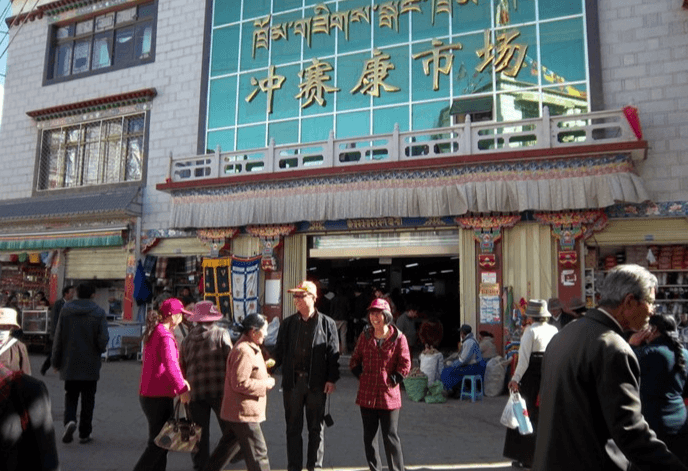
The market covers a wealth of business categories, including plateau medicinal materials, handmade Tibetan ornaments, wooden daily utensils, traditional Tibetan costumes and fresh plateau ingredients. Every morning and evening, local vendors set up stalls in an orderly manner. Most of them are indigenous Tibetans who have inherited family craftsmanship and small businesses. The products they operate are closely related to local daily life, with strong plateau characteristics and folk attributes.
In the open-air trading area of the market, elderly local people often gather to trade turquoise, beeswax, agate and other traditional ornaments and old folk objects. They follow ancient folk trading rules, negotiate prices in Tibetan, and retain the most primitive plateau trading customs. Walking here, you can fully feel the slow pace and simple life style of Lhasa’s old city.
Tianhai Night Market: Lhasa’s Night Fireworks Land
If the daytime market represents the triviality of work and life, the night market embodies the leisure and warmth of Lhasa’s life. Tianhai Night Market, a well-known old night market in Lhasa, has a history of more than 20 years. It has developed from scattered open-air stalls into a standardized characteristic block, gathering hundreds of local merchants.
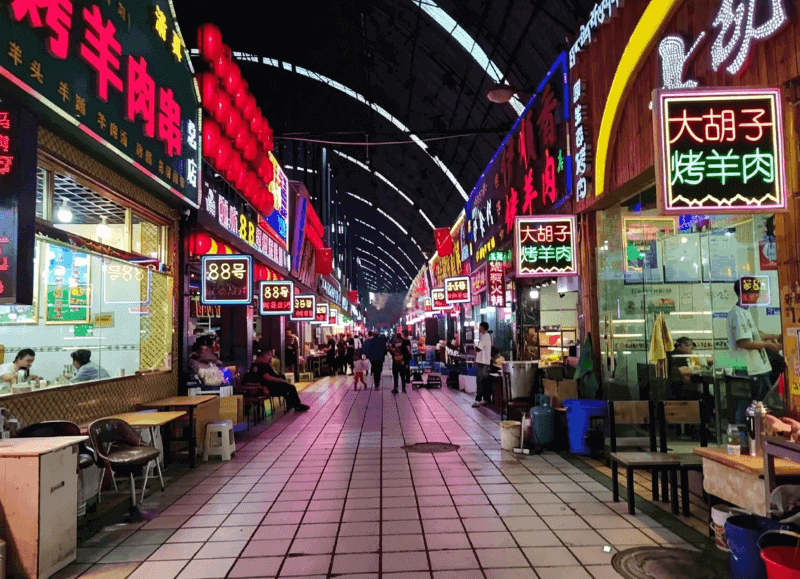
This night market is the core place for local people to relax after work. It is dominated by authentic Tibetan specialty snacks, supplemented by daily groceries and cultural and creative handicrafts. Tourists can taste yak meat dumplings, Tibetan noodles, air-dried yak meat and other characteristic delicacies here, and drink mellow butter tea and sweet tea to experience the unique plateau diet culture different from inland areas.
The most touching part of the night market is the strong human touch. There are no noisy promotional shouts for tourists, only local families dining together, young people chatting and laughing, and vendors patiently entertaining regular customers. The strong fireworks atmosphere makes people instantly integrate into the local life atmosphere of Lhasa.
Barkhor Street Surrounding Bazaars: Integration of Faith and Life
Most tourists come to Barkhor Street for pilgrimage and sightseeing, but the surrounding hidden community bazaars are the real life gathering places for local people. Away from the crowded tourist routes, these small bazaars maintain the most original livelihood attributes, serving the daily shopping and life needs of surrounding residents all year round.
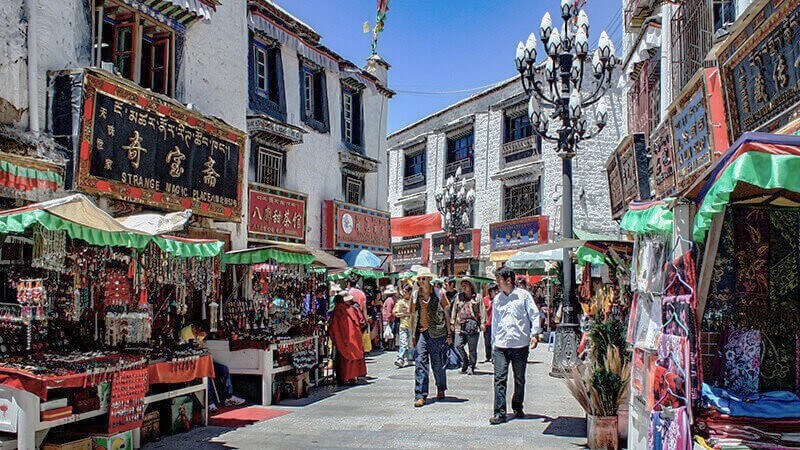
Barkhor Shopping Market
The stalls here mainly sell daily ingredients such as highland barley flour and fresh yak meat, as well as religious supplies such as incense and prayer flags needed by local people for daily worship. Local residents will come here early every morning to purchase ingredients and supplies, integrating religious beliefs and trivial daily life, forming a unique plateau life scene.
Unique Experience of Lhasa Local Market Tour
A good travel experience is not only about seeing beautiful scenery, but also about feeling the local life temperature. A Tibet local market experience allows every tourist to break the stereotype of Lhasa and truly understand the diversity and warmth of snowland life. In the market, every bite of authentic Tibetan food, every handmade craft, and every simple conversation with locals is a unique travel gain.
Different from the fixed and standardized service of scenic spots, the market experience is full of randomness and surprises. You can sit in an old local tea house, drink a cup of sweet tea, watch the coming and going of locals, and feel the slow and peaceful life rhythm of the plateau; you can also watch craftsmen make traditional Tibetan handicrafts on the spot and appreciate the inheritance of ancient folk craftsmanship.
Practical Travel Tips for Lhasa Market Tour
To better experience the local market customs of Lhasa, tourists need to master certain travel strategies to avoid affecting the travel experience due to unfamiliarity with local customs. First of all, it is recommended to arrange the market tour in the morning or evening. The morning market has complete ingredients and strong life atmosphere, while the evening night market is lively and suitable for tasting snacks and experiencing night life.
Secondly, we should respect local folk customs and trading habits. Local vendors are simple and honest. When shopping and bargaining, we need to maintain politeness and gentleness. Do not take photos of local residents without permission, and do not touch religious handicrafts at will, so as to respect local cultural beliefs and living habits.
Finally, take the initiative to communicate with local people appropriately. Tibetan people are warm and hospitable. A simple greeting can narrow the distance between each other and let tourists truly feel the optimistic and simple life attitude of local plateau residents.
Conclusion
A Lhasa local market tour is an indispensable in-depth travel project in Lhasa’s travel itinerary. It allows tourists to jump out of the traditional scenic spot sightseeing mode, walk into the most real living scene of Lhasa, and feel the unique folk customs and life temperature of the snowland plateau. Whether it is the century-old folk heritage of the old market, the strong fireworks of the night market, or the integration of faith and life in community bazaars, they all jointly compose the most vivid picture of Lhasa’s folk life.
For every tourist who pursues in-depth cultural travel, abandoning the impetuous scenic spot check-in and walking into Lhasa’s local markets to feel the trivial and warm daily life of local people is the most precious travel experience in Lhasa.