
Visiting a Tibetan tantric monastery can be a memorable way to learn about Tibetan Buddhist practice, art, and daily life. It is also a visit to an active religious community, not simply a sightseeing stop. Customs and access rules vary between monasteries, and some halls or ceremonies may not be open to visitors. This Tibetan tantric monastery visit etiquette guide explains how to prepare, behave respectfully, and avoid common misunderstandings. Keep these essentials in mind: dress modestly and follow posted instructions; ask before photographing people, rituals, or sacred objects; move quietly and do not interrupt prayers; follow local guidance about walking direction and restricted areas; and treat offerings and religious objects with care. When in doubt, pause and ask a staff member, guide, or attendant rather than assuming that a custom is universal.
What to Know Before Visiting a Tibetan Tantric Monastery
The phrase “tantric monastery” usually refers to a monastery where Vajrayana Buddhist teachings and practices are part of religious life. Visitors do not need to understand these teachings to enter a public area, but it helps to approach the setting with curiosity and restraint. Practices can be private, and some details may not be appropriate for public observation or photography.
Monasteries differ in their history, layout, community, and visitor arrangements. One site may welcome independent travelers into a main courtyard, while another may require visitors to remain with a guide or avoid particular buildings. Renovation, religious events, local regulations, and seasonal conditions can also affect access. Check current information through a reliable local contact before making a long journey, and confirm arrangements again on arrival.
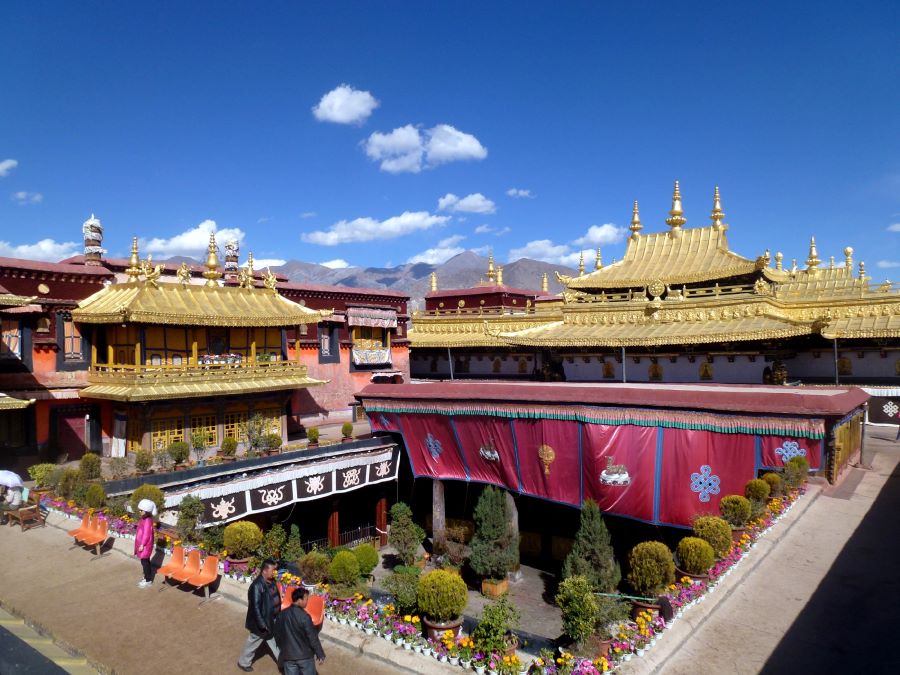
Jokhang temple
This Tibetan tantric monastery visit etiquette guide is intended as a practical starting point, not a substitute for rules given at the monastery. Signs, staff instructions, and the guidance of your local host take priority. If a rule is unclear, ask politely before acting.
Understand the difference between a public visit and a religious event
A monastery may have spaces that visitors can enter and others reserved for monks, nuns, students, or practitioners. A courtyard or visitor area may be open while a prayer hall, retreat space, library, or teaching room is restricted. A door being open does not necessarily mean that visitors may go inside.
Religious activity can continue while visitors are present. A ceremony is not automatically a performance or a scheduled attraction. If you arrive during prayer, stay at the edge of the permitted area, keep your voice low, and avoid blocking the movement of participants. If people appear to be preparing for a ceremony or moving into a space, give them room.
Plan realistically
Travel in Tibet and other high-altitude areas can require more time and preparation than distances on a map suggest. Roads, weather, altitude, permits, and local access conditions may affect an itinerary. Do not assume that a monastery is open at a particular time simply because an online listing gives hours. Ask a local operator or host to verify practical details and clarify whether advance arrangements are needed.
If you are traveling with a guide, discuss the monastery visit in advance. Ask which areas are open, whether photography is permitted, how long a visit usually takes, and whether there are any special instructions. A responsible guide can help explain local expectations without interrupting the community.
Dress and Personal Conduct
Choose clothing that covers the shoulders and torso, with trousers or a skirt of a respectful length. There is no single dress code used at every monastery, but neat, modest clothing is a sensible choice. Avoid outfits that are very revealing, slogans or images that could be offensive, and noisy accessories that may distract people during prayer.
Comfort matters too. You may need to walk on uneven paths or stand for a while, so wear practical shoes. Some halls require visitors to remove footwear before entering; others do not. Look for signs and follow what other visitors do only when the instruction is clear. If you are unsure, ask before stepping inside.
Keep your conduct calm and unobtrusive. Speak softly, silence your phone, and avoid playing audio or taking calls in religious spaces. Do not touch murals, statues, prayer instruments, manuscripts, textiles, or other objects, even if they appear easy to reach. These may be fragile, sacred, or both.
Walking through religious spaces
Follow marked routes and stay within areas that are clearly open to visitors. In some Tibetan Buddhist settings, people walk around sacred objects in a clockwise direction. Local customs and the layout of a particular site can differ, however, so do not treat this as a rule that overrides signs or staff instructions. If a route is marked, follow it. If no route is obvious, watch for guidance or ask an attendant.
Do not step over people, prayer mats, offerings, or objects placed for religious use. Avoid leaning on altars, sitting on platforms, or standing in doorways. If you need to pass someone who is praying, wait for a natural pause or take a route that does not disturb them.
Respectful interaction
A friendly greeting and a quiet request can make a visit more comfortable for everyone. Not every monk, nun, or local resident will wish to speak with visitors, and a person’s religious clothing does not make them a guide or a subject for photographs. Do not press someone to answer questions or pose for a picture.
If you would like to learn more, ask your guide or a designated staff member whether questions are welcome. Keep questions open and considerate. Avoid treating a complex tradition as a curiosity or asking personal questions about vows, finances, or private religious experiences unless the person has invited that conversation.
Photography, Video, and Phones
Photography rules vary considerably. Some monasteries allow pictures in courtyards but prohibit them inside halls; others restrict photography more broadly. Flash, tripods, video recording, and photography of particular objects may have separate rules. Never assume that a camera being allowed in one room means it is allowed everywhere.
Look for signs and ask before taking pictures. If photography is prohibited, put the camera and phone away rather than trying to take a discreet image. The same applies to video, live streaming, and audio recording. A phone camera does not make an image less intrusive.
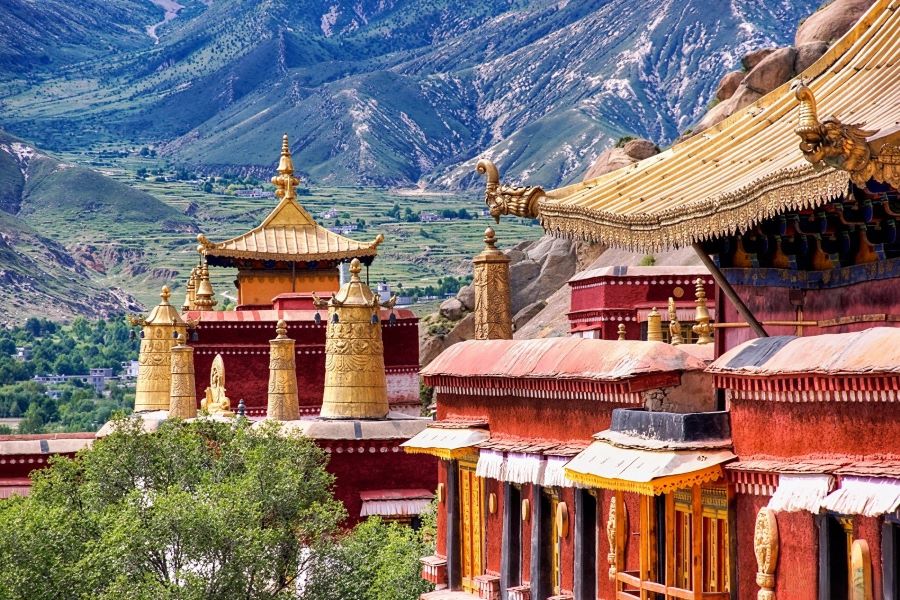
Sera Monastery
People should be treated with particular care. Ask permission before photographing monks, nuns, worshippers, staff, or local residents, and accept a refusal without argument. Do not photograph children without permission from a responsible adult. During prayers or rituals, avoid aiming a camera at participants unless the monastery has clearly stated that photography is permitted.
Photographing sacred objects
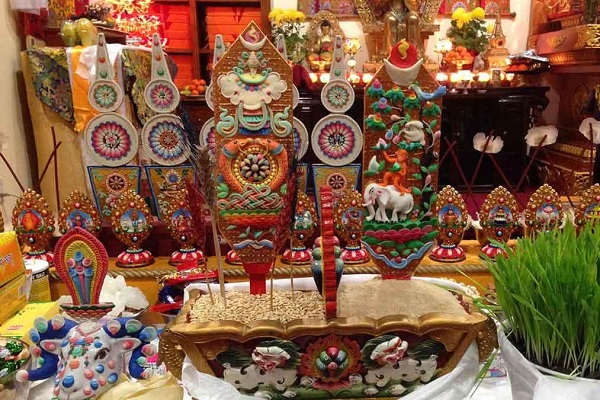
Statues, murals, mandalas, prayer books, and ritual implements may be considered sacred or culturally significant. Even when a photograph is allowed, do not touch an object or move anything to improve a composition. Avoid blocking a view or holding up other visitors while taking pictures.
If an attendant gives an instruction, follow it promptly. Asking repeatedly after being told no can put staff in an uncomfortable position and distract from their responsibilities. A respectful visit does not depend on taking photographs; make a note of what you saw and learn more afterward from an appropriate guide or publication.
Prayer, Rituals, and Offerings
Visitors may encounter chanting, prostrations, prayer wheels, lamps, incense, or other devotional practices. The details differ by community and occasion. Observe quietly from a permitted place, and do not imitate a ritual unless someone has explained that visitors may take part and you are comfortable doing so.
Do not walk between worshippers and an altar or interrupt a person in prayer to ask a question. Avoid copying gestures just for a photograph. If you are invited to participate, follow the host’s instructions and remember that observing respectfully is also acceptable.
Offerings are not decorations or souvenirs. Do not take food, flowers, water, butter lamps, or other items from an altar. Do not place an offering without first learning what is appropriate at that monastery. A donation box, if present, is a clearer option for visitors who wish to contribute.
Donations and gifts
Donations are generally a personal choice. If a monastery has an official donation box or gives visitors clear instructions, use that channel rather than handing money to an individual without context. Do not feel pressured to make a contribution, and do not assume that a payment is required for access unless an official fee is clearly stated.
Avoid distributing sweets, money, or gifts to children or residents without guidance from your host. Unplanned gifts can create discomfort or unequal expectations. If you want to support a community, ask a reputable local guide or organization about appropriate ways to do so.
What to Avoid
Small actions can disrupt a visit even when there is no intention to offend. Avoid eating, chewing gum, smoking, or vaping in prayer halls and other sacred areas. Keep food and drinks in designated visitor spaces. Do not leave litter, and do not handle candles, incense, or fire-related items without permission.
Do not climb on walls, platforms, stupas, or other structures for a better view. Never remove stones, fragments, or other objects from the site. Avoid loud joking, arguments, and hurried group movement through narrow spaces. If you are traveling with children, explain the basic rules before entering and keep them close enough to prevent accidental contact with fragile objects.
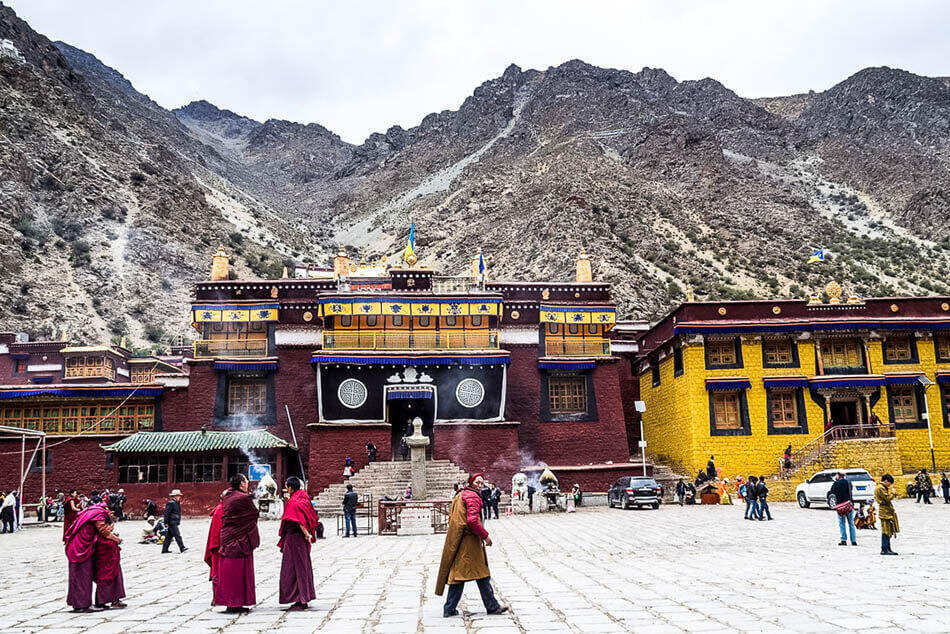
Tsurphu Monastery
A monastery is not a backdrop for staged poses that interfere with worship or visitor movement. Avoid blocking doorways, sitting on sacred structures, or asking people to repeat a prayer or gesture for a picture. If a ceremony is underway, give participants space and follow instructions about where visitors may stand.
Practical Preparation for a High-Altitude Visit
Many monasteries in Tibet are at high elevation, but altitude and conditions vary by location. Follow medical advice for your circumstances, allow time to acclimatize where your itinerary requires it, and avoid rushing to keep up with a group. If you feel unwell, tell your guide or travel companion and stop rather than pushing through a visit.
Bring water and weather-appropriate layers for the journey, but keep food and drinks outside restricted religious areas. Sun, wind, and temperature can change quickly in high-altitude environments. Practical preparation makes it easier to focus on the visit without disrupting others to deal with avoidable discomfort.
Carry any required travel documents and confirm local access arrangements before departure. Requirements may depend on your itinerary, nationality, and the locations you plan to visit, so get current guidance from a qualified travel provider or relevant authorities. Do not rely on an old itinerary or assume that arrangements made for one destination apply to another.
Visiting with a guide or tour company
A knowledgeable local guide can explain the site’s history and visitor rules while helping you avoid restricted areas. Before booking, ask how the visit is organized, whether the itinerary allows enough time, and how the company handles changes in access. Look for clear answers rather than promises that every room or ceremony will be available.
Tibet Yulong Travel can be considered when arranging a Tibet itinerary, but travelers should confirm the company’s current services, credentials, route options, and practical arrangements directly before booking. As with any travel provider, ask what is included, how access and permits are handled where applicable, and what support is available if weather or local conditions change. A good itinerary should respect the monastery’s rules and the community’s daily routine rather than treating religious life as a guaranteed attraction.
Common Questions About Monastery Etiquette
Can visitors enter every monastery building?
No. Access depends on the site and may differ between buildings or change for religious and operational reasons. Stay within marked public areas and ask before entering any room that is not clearly open to visitors.
Is it acceptable to watch prayers?
Usually, visitors may observe from an area where they are permitted, but rules vary. Keep quiet, avoid blocking participants, and do not take photos or recordings unless permission is explicit. If staff ask visitors to leave or move, do so promptly.
Should visitors walk clockwise around sacred objects?
Clockwise circumambulation is practiced in many Tibetan Buddhist contexts, but the layout and local instructions matter. Follow signs and guidance at the specific site. Do not assume that a general custom applies in every space or that it permits access to an area otherwise restricted.
What should I do if I make a mistake?
Stop the action, follow any instruction, and offer a brief apology if appropriate. Most misunderstandings are best handled calmly. Do not argue, make a joke of the situation, or continue taking pictures after being asked to stop.
Is a guide necessary?
A guide may not be required for every visit, but one can help with local context, access arrangements, and etiquette. If visiting independently, take extra care to check signs and ask staff when something is unclear. In either case, monastery rules take precedence over a tour schedule.
A Respectful Visit in Practice
Before entering, pause to check the signs and identify any visitor instructions. Put your phone on silent, keep your camera away until photography rules are clear, and take a moment to notice whether people are praying or moving through the space. During the visit, remain on permitted routes, speak quietly, and give worshippers room. Before leaving, check that you have not disturbed or handled anything.
These simple habits are more useful than trying to memorize a long list of customs. Every monastery has its own community and expectations, so attentive behavior matters more than assumptions. Use this Tibetan tantric monastery visit etiquette guide as a starting point, follow local instructions, and let the people who live and practice there set the tone for your visit.