Tibet has long captivated travellers in search of deep spiritual experiences, yet few occasions encapsulate the spirit of Tibetan Buddhism as powerfully as the Great Prayer Festival, locally called Monlam Chenmo. Held annually in Lhasa, this magnificent gathering transforms the city into a living tapestry of devotion, philosophy, and ancient tradition. For centuries, monks from monasteries across the Tibetan Plateau have converged upon the Jokhang Temple and Barkhor Street to participate in days of continuous prayer, debate, and celebration. Planning a trip to witness this extraordinary event requires careful preparation, an understanding of local customs, and a deep respect for the religious significance of the occasion. This Great Prayer Festival Monlam Chenmo Lhasa guide is designed to help you navigate the complexities of traveling to Tibet during one of its most sacred periods, ensuring your journey is both culturally enriching and logistically smooth.
✨ Highlights:
- Monlam Chenmo occurs on the 4th to 15th day of the first Tibetan lunar month.
- The festival centers around Jokhang Temple and Barkhor Street in Lhasa.
- Foreign travelers must secure a Tibet Travel Permit through a registered agency.
- High altitude acclimatization is essential before attending crowded festival events.
- Respectful behavior and photography etiquette are strictly required during ceremonies.
Understanding the Great Prayer Festival Monlam Chenmo Lhasa Guide Context
To truly appreciate the scale and significance of Monlam Chenmo, it is necessary to look back at its origins. The festival was established by Je Tsongkhapa, the founder of the Gelug school of Tibetan Buddhism, who organized the first Great Prayer Festival to celebrate the miracles performed by the historical Buddha. Tsongkhapa envisioned a time when thousands of monks would gather not merely for ritualistic observance, but for rigorous philosophical debate, collective prayer, and the renewal of their vows. Over the centuries, this vision became the most important religious event on the Tibetan calendar, drawing practitioners from every corner of the Himalayas.
The name “Monlam” translates directly to “prayer” or “aspiration,” while “Chenmo” means “great.” Together, they signify a grand aspiration for world peace, the alleviation of suffering, and the flourishing of Buddhist teachings. Unlike smaller, localized monastery festivals, Monlam Chenmo is a pan-Tibetan event. Historically, it served as a unifying force, bringing together different sects and regional groups under a shared spiritual objective. Today, while the political and social landscapes of Tibet have shifted dramatically, the core religious function of the festival remains intact. Understanding this historical weight is the first step to getting the most from this guide., as it frames how you should approach the spaces and people involved in the celebrations.
The atmosphere in Lhasa during this period is palpable. The scent of juniper incense hangs heavy in the crisp winter air, and the low, resonant chanting of monks can be heard echoing through the narrow alleyways of the old city long before dawn breaks. It is a sensory experience unlike any other, demanding patience and presence from those who come to witness it.
When and Where the Monlam Chenmo Takes Place
Timing your visit correctly is crucial, as the Tibetan lunar calendar does not align perfectly with the Gregorian calendar. Monlam Chenmo traditionally begins on the fourth day of the first Tibetan lunar month and culminates on the fifteenth day, which coincides with the Butter Lamp Festival. Because the Tibetan New Year (Losar) shifts each year relative to Western dates—typically falling in February or early March—the exact dates of the Great Prayer Festival also fluctuate. Visitors planning their trip should confirm the exact dates well in advance the specific lunar calendar conversions for their intended year of travel well in advance to avoid missing the main events.
The geographic epicenter of the festival is undeniably the Jokhang Temple. As the most sacred temple in Tibetan Buddhism, Jokhang serves as the spiritual anchor for the entire event. During Monlam Chenmo, the courtyards and surrounding plazas fill with thousands of monks clad in maroon robes. They sit in orderly rows, engaging in sutra recitations and philosophical examinations. Just outside the temple gates, the Barkhor Street circuit becomes a river of humanity. Pilgrims walk the kora (circumambulation route) clockwise, spinning prayer wheels, murmuring mantras, and performing full-body prostrations along the cobblestones.
While Jokhang and Barkhor are the primary venues, the festival’s energy radiates outward to other major monasteries in the Lhasa valley. Drepung, Sera, and Ganden monasteries all hold their own supplementary prayers and debates during this window. However, the grand public spectacles, including the display of massive thangka paintings and the creation of intricate yak butter sculptures, are concentrated in the old city center. Navigating these crowded spaces requires physical stamina and a willingness to move slowly, allowing the rhythm of the festival to dictate your pace rather than rushing from one site to the next.
Key Rituals and Events You Will Witness
This guide covers the key rituals you may observe during the festival of the rituals you are likely to observe. The festival is not a single performance but a sequence of deeply meaningful religious activities spread over several days.
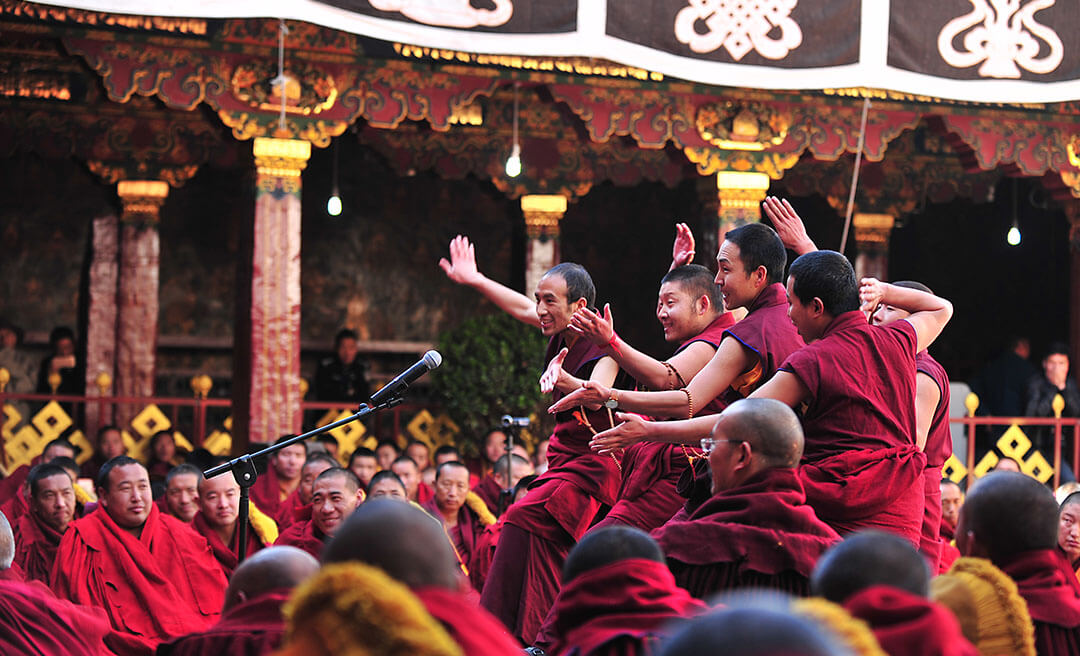
Philosophical Debates (Tsamdra): One of the most dynamic aspects of Monlam Chenmo is the public debating sessions. These are not quiet academic discussions; they are highly physical, theatrical exchanges where monks test each other’s understanding of Buddhist logic. A challenger will clap his hands loudly, stomp his feet, and shout questions, while the defender sits calmly, formulating responses based on canonical texts. For visitors, watching these debates offers a fascinating glimpse into the rigorous intellectual training that defines Tibetan monastic education.
Sutra Recitations and Prayers: Thousands of monks gather to chant sutras simultaneously. The acoustic effect of this collective recitation creates a deep, vibrating hum that seems to resonate in the chest. These prayers are dedicated to the flourishing of the Buddhist teachings, harmony for all beings, and the well‑being of all sentient beings. Visitors are generally permitted to observe from the periphery, provided they remain silent and respectful.
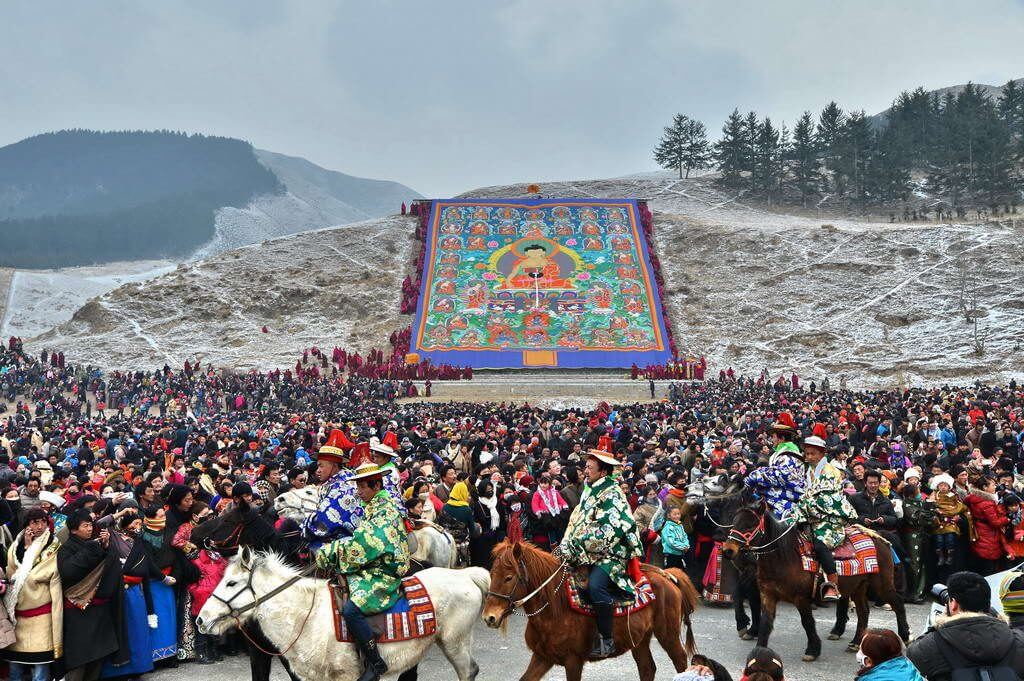
The Display of Giant Thangkas: On specific days, enormous appliqué thangkas (religious scroll paintings) depicting Buddhas, Bodhisattvas, or historical figures are unfurled against the walls of monasteries or special scaffolding erected in the city. These textiles are masterpieces of Tibetan art, often taking years to complete. The unveiling is accompanied by intense devotion, with pilgrims pressing their foreheads to the ground in reverence.
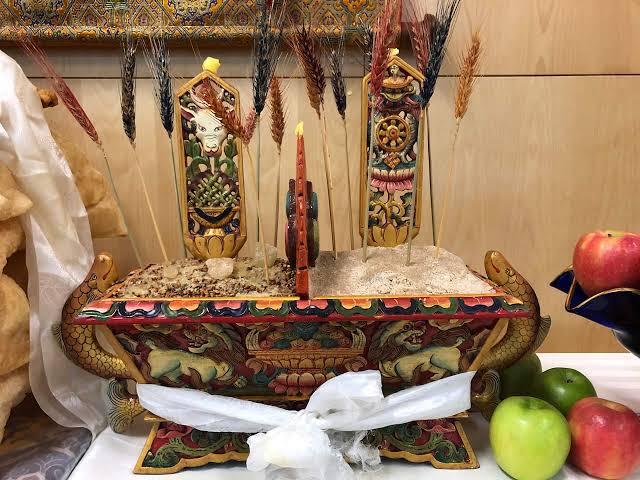
Yak Butter Sculptures (Torma): Leading up to the fifteenth day, monks work tirelessly to sculpt elaborate figures, flowers, and mandalas out of dyed yak butter. These ephemeral artworks are displayed during the Butter Lamp Festival, illuminating the night with flickering light and vibrant colors. Because butter melts, these sculptures exist only temporarily, symbolizing the Buddhist concept of impermanence.
Practical Travel Logistics for Attending the Festival
Traveling to Lhasa requires navigating specific logistical hurdles, especially for international visitors. No Great Prayer Festival Monlam Chenmo Lhasa guide would be complete without addressing the mandatory permit system. Foreign passport holders cannot travel independently in the Tibet Autonomous Region. You must book your trip through a registered Tibetan travel agency, which will apply for your Tibet Travel Permit on your behalf. This process can take several weeks, so initiating your booking well ahead of the festival dates is non-negotiable.
Agencies such as Tibet Yulong Travel specialize in organizing itineraries that align with major cultural events like Monlam Chenmo. Working with experienced operators like Tibet Yulong Travel ensures that your permits, transportation, and accommodations are handled smoothly, allowing you to focus entirely on the cultural experience rather than bureaucratic stress. They can also provide knowledgeable local guides who can translate the nuances of the rituals and facilitate respectful interactions with locals.
Getting to Lhasa typically involves flying into Lhasa Gonggar Airport from major Chinese hub cities like Chengdu, Chongqing, or Xining, or taking the famous Qinghai-Tibet Railway. During the festival season, flights and train tickets sell out rapidly due to the influx of domestic tourists and returning pilgrims. Securing your transport months in advance is highly recommended.
Once in Lhasa, accommodation options range from basic guesthouses favored by backpackers to luxury hotels offering modern amenities. During Monlam Chenmo, hotels near Barkhor Street and Jokhang Temple are in extremely high demand. Staying within walking distance of the old city is advantageous, as traffic restrictions and sheer crowds can make vehicular transport difficult during peak festival hours. Be prepared for basic conditions if you choose budget options, as heating systems in older buildings may struggle against the biting winter cold.
Health, Altitude, and Winter Weather Considerations
Lhasa sits at an elevation of approximately 3,650 meters (11,975 feet). Altitude sickness is a genuine concern for travelers arriving from lower elevations, and the physical demands of attending a multi-day festival can exacerbate symptoms. A responsible Great Prayer Festival Monlam Chenmo Lhasa guide must emphasize the importance of acclimatization. Upon arrival, spend at least two to three days resting, hydrating heavily, and avoiding strenuous activity or alcohol. Do not attempt to join the dense crowds at Jokhang Temple immediately after landing; give your body time to adjust to the thin air.
Symptoms of acute mountain sickness include headaches, nausea, dizziness, and shortness of breath. If these persist or worsen, seek medical attention immediately. Many hotels in Lhasa offer supplemental oxygen in rooms, which can aid sleep during the first few nights. Carrying portable oxygen canisters while walking the Barkhor circuit is also a common practice among visitors.
Weather during the festival season is characteristically cold, dry, and intensely sunny. Daytime temperatures might reach a mild 8°C to 12°C (46°F to 54°F) under direct sunlight, but once the sun dips behind the mountains, temperatures plummet well below freezing. Layering is the most effective strategy. Start with moisture-wicking thermal base layers, add insulating mid-layers like fleece or down, and finish with a windproof outer shell. The ultraviolet radiation at this altitude is exceptionally strong, even in winter. High-SPF sunscreen, UV-blocking sunglasses, and wide-brimmed hats or caps are essential daily items to prevent severe sunburn and snow blindness.
Hydration is doubly important because the high altitude accelerates fluid loss, and the dry winter air parches the throat quickly. Carry a reusable thermos filled with warm water or sweet tea. Local teahouses around Barkhor Street offer refuge from the cold, serving traditional Tibetan butter tea or sweet milk tea alongside simple meals like thukpa (noodle soup) and momos (dumplings).
Cultural Etiquette and Responsible Tourism
Attending Monlam Chenmo is a privilege, not a right. The festival is a deeply sacred time for Tibetan Buddhists, and visitors must conduct themselves with the utmost respect. Integrating proper etiquette into your understanding via a Great Prayer Festival Monlam Chenmo Lhasa guide will prevent unintentional offenses and foster positive interactions.
Dress modestly. Avoid wearing revealing clothing, shorts, or sleeveless tops, even if the midday sun feels warm. Shoulders and knees should be covered when entering temple grounds or walking the kora. Remove hats and sunglasses when stepping inside shrine rooms.
Photography is a sensitive issue. While capturing the grandeur of the festival is tempting, you must never photograph monks, pilgrims, or rituals without explicit permission. Inside temples, photography is almost universally prohibited unless you have purchased a specific photo permit, and even then, flash photography is forbidden as it damages ancient murals. During philosophical debates, keep your distance and do not use your camera as a barrier between yourself and the participants. If someone gestures for you to stop taking photos, comply immediately and politely.
Movement around sacred sites follows strict rules. Always walk clockwise around stupas, mani stones, and the Barkhor circuit. Never point your feet toward a Buddha statue, an altar, or a monk. When sitting in a courtyard to observe prayers, sit cross-legged or kneel, keeping your posture humble. Do not interrupt ceremonies, speak loudly, or push through crowds of praying pilgrims to get a better vantage point.
Engaging with locals should be done gently. Many pilgrims travel vast distances on foot to attend Monlam Chenmo. Offering a small donation to a beggar or a monk is customary and appreciated, but do so discreetly. If you wish to converse with locals, learn a few basic Tibetan phrases, such as “Tashi Delek” (hello/good luck), which goes a long way in showing respect for their culture.
Exploring Lhasa Beyond the Festival Grounds
While the Great Prayer Festival dominates the schedule, Lhasa offers numerous other sites that complement the spiritual intensity of Monlam Chenmo. Utilizing downtime between festival events to explore these locations provides a more holistic understanding of Tibetan history and culture.
The Potala Palace, the former winter residence of the Dalai Lamas, looms over the city and is an architectural marvel. Visiting the Potala requires advance ticket reservations, which your travel agency, such as Tibet Yulong Travel, can arrange. The palace houses thousands of rooms, chapels, and tombs, offering a staggering collection of Tibetan art and history. Walking through its dimly lit corridors provides a stark, quiet contrast to the bustling energy of the festival streets below.
Norbulingka, the former summer palace, offers expansive gardens that, while dormant in winter, still provide peaceful walking paths away from the crowds. For those interested in monastic life beyond the festival gatherings, a visit to Sera Monastery to watch their famous afternoon debates (which occur year-round, separate from the Monlam events) is highly educational. Drepung Monastery, once the largest in the world, sits on a hillside west of the city and offers panoramic views of the Lhasa valley, providing a moment of quiet reflection.
Do not overlook the local markets. While Barkhor Street is packed with religious artifacts, exploring smaller side streets reveals shops selling traditional Tibetan medicine, handmade jewelry, and everyday goods used by locals. Eating at small, family-run restaurants allows you to taste authentic Tibetan cuisine away from tourist-oriented menus. Try tsampa (roasted barley flour mixed with tea), shapale (meat pies), and various yak meat dishes that provide the necessary calories to stay warm in the winter climate.
Preparing Your Mindset for the Journey
Traveling to Tibet during Monlam Chenmo is not a typical vacation; it is an immersion into a worldview fundamentally different from modern secular life. The best Great Prayer Festival Monlam Chenmo Lhasa guide prepares you mentally as much as logistically. Expect delays, crowded spaces, language barriers, and moments of physical discomfort due to the altitude and cold. Approach these challenges not as inconveniences, but as integral parts of the pilgrimage experience.
Take time to simply sit and observe. Watch the expressions on the faces of the pilgrims turning their prayer wheels. Listen to the cadence of the monks’ chanting. Notice the way the winter light hits the golden roofs of Jokhang Temple. The true value of witnessing Monlam Chenmo lies in these quiet observations, the moments where the sheer weight of centuries of devotion becomes tangible.
By securing your permits early through reliable partners like Tibet Yulong Travel, respecting the physical demands of the altitude, and approaching the sacred rituals with humility, your journey to Lhasa during the Great Prayer Festival will be profoundly transformative. It is an opportunity to stand at the crossroads of ancient faith and enduring culture, bearing witness to one of the most spectacular spiritual gatherings on Earth. Whether you are a devout practitioner, a student of anthropology, or simply a traveler seeking meaning beyond the ordinary, Monlam Chenmo offers an experience that will linger in your memory long after you have descended from the high plateau.