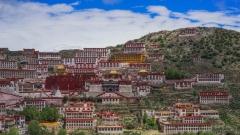

Lhasa, the capital of Tibet, sits at an elevation of approximately 3,650 meters (11,975 feet) above sea level, making altitude one of the first things international travelers should understand before visiting. Many people searching for “oxygen level in Lhasa” assume that the air contains much less oxygen than at sea level. In fact, the percentage of oxygen in the atmosphere remains close to 21%, but the atmospheric pressure is considerably lower at this elevation. As a result, each breath contains fewer oxygen molecules, and the amount of oxygen available to the body is significantly reduced. At the elevation of Lhasa, oxygen availability is commonly described as approximately 65%–68% of the level at sea level. This difference explains why visitors may feel short of breath or tired during their first days in the city and why proper acclimatization is an important part of any Tibet itinerary.
Key Points to Know
- The oxygen concentration in Lhasa is still about 21%, just as it is at sea level; the difference is the lower atmospheric pressure.
- Effective oxygen availability in Lhasa is around 65%–68% of sea-level conditions, because the air is thinner at approximately 3,650 meters.
- New arrivals may experience breathlessness, fatigue, headaches, or other symptoms of altitude exposure, particularly during the first 24–48 hours.
- Acclimatization is essential, so travelers should take it easy after arriving in Lhasa and avoid strenuous activity at first.
- Supplemental oxygen is available in many hotels and transport facilities, but oxygen should be considered support rather than a substitute for proper acclimatization.
How Much Oxygen Is There in Lhasa?
The first thing to understand is that Lhasa does not have a dramatically lower percentage of oxygen in the air. Oxygen still accounts for roughly 21% of the atmosphere, just as it does in cities at much lower elevations.
The important difference is atmospheric pressure. As altitude increases, the atmosphere becomes thinner and the pressure decreases. This means that although every breath still contains approximately the same proportion of oxygen, there are fewer total air molecules in the same volume of air. Consequently, each breath delivers fewer oxygen molecules to the lungs.
This is why saying that “Lhasa has only 65% oxygen” would be inaccurate. A better explanation is that the effective availability of oxygen is roughly 65%–68% of what travelers experience at sea level.
For international visitors, this distinction is useful because it explains why the air can feel normal when breathing while the body nevertheless has to work harder to obtain the oxygen it needs.
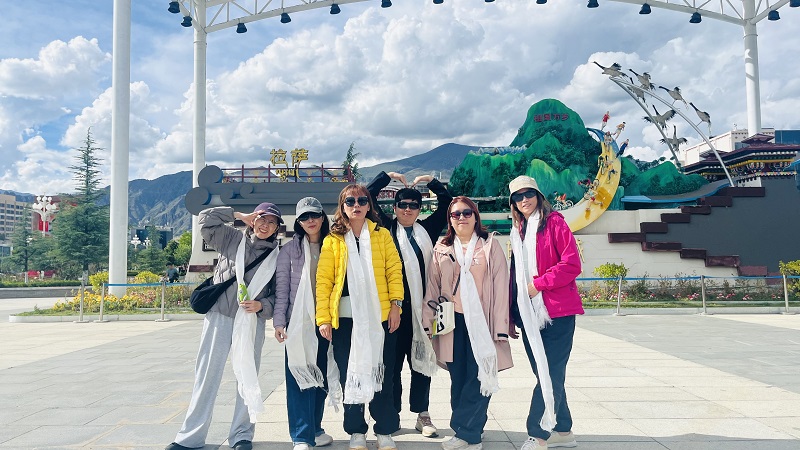
Lhasa
Why Does Oxygen Feel Lower in Lhasa?
Lhasa’s elevation of approximately 3,650 meters (11,975 feet) places it far above most cities around the world. At sea level, atmospheric pressure is much higher, allowing a greater number of oxygen molecules to enter the lungs with each breath.
In Lhasa, the lower atmospheric pressure means the air is less dense. The oxygen percentage has not disappeared or dramatically changed, but the number of oxygen molecules available in each breath is reduced. For a visitor who normally lives close to sea level, this can create a noticeable physical difference. You may find yourself breathing more quickly when walking uphill, climbing stairs, or carrying luggage. Some travelers feel unusually tired after a relatively short walk, while others notice that they need to pause more frequently during sightseeing.
These reactions are particularly common during the first few days because the body has not yet fully adapted to the high-altitude environment.
Is There Less Oxygen in Lhasa Than at Sea Level?
Yes, but it is important to explain what “less oxygen” means. The proportion of oxygen in the air remains approximately 21% at both sea level and in Lhasa. However, the lower atmospheric pressure at 3,650 meters means that each breath contains fewer oxygen molecules.
In practical terms, the amount of oxygen available to the body is roughly 30%–35% lower than at sea level, with commonly cited oxygen availability in Lhasa at approximately 65%–68% of sea-level conditions. This is the reason travelers can experience altitude-related symptoms even though an ordinary oxygen meter or basic description of the atmosphere may still indicate that oxygen makes up about one-fifth of the air.
Understanding this difference is one of the most useful things you can do before traveling to Tibet.
What Does the Lower Oxygen Availability Mean for Travelers?
For most visitors, the most noticeable effect is that ordinary physical activities can require more effort than expected.
Walking around Lhasa’s historic center may feel easy at first, but climbing stairs, walking uphill, or moving quickly can leave you short of breath. Even travelers who are physically fit at home should not assume that their usual fitness level completely protects them from the effects of altitude.
You may notice yourself breathing more deeply or more frequently, particularly when walking. Some people experience fatigue, mild headaches, dizziness, reduced appetite, or difficulty sleeping during the initial adjustment period. These experiences vary considerably from person to person. Age, fitness level, previous high-altitude experience, individual physiology, and the speed at which you gain elevation can all influence how your body responds.
For this reason, altitude acclimatization should be treated as part of the travel itinerary rather than an inconvenience.
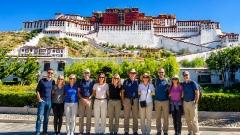
How Should You Acclimatize in Lhasa?
Lhasa is often the first major stop for international travelers visiting Tibet, and it is an important place to begin adjusting to the plateau environment. The simplest rule is to slow down during your first 24–48 hours.
Instead of immediately attempting a demanding trek or long-distance road journey, spend your first days exploring Lhasa at a comfortable pace. Visit cultural attractions, walk slowly, take regular breaks, drink enough fluids, and give your body time to adjust.
Take It Easy After Arrival
Your first day in Lhasa should not be packed with strenuous activities. Even if you feel energetic after arriving, the effects of altitude can become more noticeable later. Walking slowly and taking breaks is much better than trying to complete a long sightseeing route as quickly as possible.
Allow Time Before Going Higher
Lhasa itself is high, but many famous Tibet destinations are considerably higher. Namtso, Everest Base Camp, and parts of western Tibet can expose travelers to substantially greater altitude. Spending several days in Lhasa before moving toward higher destinations gives your body more time to adapt.
A well-designed Tibet itinerary therefore usually avoids rushing directly from a low-altitude environment into the highest parts of the plateau.
Stay Hydrated and Rest
The Tibetan Plateau is dry, and travelers can lose fluids without realizing it. Drinking enough water and getting adequate sleep can help you cope with the environmental change. It is also sensible to avoid overexertion immediately after arrival.
Can You Use Supplemental Oxygen in Lhasa?
Yes. Supplemental oxygen is available at many hotels, transportation facilities, and tourist services in Tibet, and some travelers choose to use it when they feel uncomfortable at high altitude. Portable oxygen cans and oxygen facilities can also be found in tourist areas and accommodation facilities.
However, supplemental oxygen should not be viewed as a replacement for acclimatization. The primary objective is to allow your body to adapt naturally to the lower-pressure environment. Oxygen can provide additional support when needed, but travelers should still follow a sensible pace and avoid pushing themselves too hard.
If you experience severe or worsening symptoms, do not simply rely on portable oxygen and continue your itinerary. Seek appropriate medical assistance.
Is Lhasa Safe for International Travelers at This Oxygen Level?
Lhasa’s altitude is certainly something to take seriously, but the city’s elevation does not mean that international travelers cannot visit safely. Thousands of visitors travel to Lhasa every year. The key is preparation and a sensible itinerary. The greatest challenge for many first-time visitors is not the oxygen percentage itself but the sudden change in altitude compared with their normal environment.
A traveler arriving from a city near sea level may immediately notice the difference, while someone who regularly spends time at high elevations may find the transition easier. There is no reliable way to predict exactly how an individual will react simply by looking at fitness level. Even very athletic travelers can experience altitude-related discomfort.
This is why responsible Tibet travel focuses on gradual acclimatization rather than assuming that physical fitness alone is enough.
Does Oxygen Level Change Across Tibet?
Yes. Oxygen availability generally decreases as elevation increases.
This means that Lhasa is not necessarily the most demanding part of a Tibet journey. Once travelers leave the city and travel toward higher mountain passes, lakes, Everest Base Camp, or western Tibet, the thinner atmosphere can become more noticeable. For example, destinations around Namtso and Everest are located at significantly higher elevations than Lhasa. Journeys toward Mount Kailash and the Ngari region can also involve long periods at very high altitude.
This is one reason a Tibet itinerary should be designed carefully. A route that looks manageable on a map may be physically demanding because of elevation rather than distance.
The combination of altitude, long driving days, cold temperatures, wind, and dry air can make remote Tibet travel considerably more challenging than a conventional sightseeing holiday.
What Should You Expect During Your First Day in Lhasa?
Your first day may feel surprisingly normal—or noticeably different. Some travelers arrive in Lhasa and feel comfortable immediately. Others notice that walking requires more effort, especially when climbing stairs or moving quickly. You might experience faster breathing, a mild headache, tiredness, or a general feeling that your body is working harder than usual.
Do not be alarmed simply because you become slightly breathless after walking. At high altitude, the body naturally responds by increasing breathing and heart rate so that more oxygen can reach tissues. The important thing is to pay attention to how you feel and avoid unnecessary exertion.
If symptoms become severe, continue to worsen, or include concerning signs such as significant difficulty breathing at rest, confusion, inability to walk normally, or other serious symptoms, seek medical attention promptly.

Portable Oxygen Cylinder
What Should You Pack for Lhasa’s High Altitude?
Preparing for altitude is not only about oxygen. Lhasa’s high-elevation environment is also characterized by strong sunlight, dry air, and significant temperature changes.
International travelers should consider bringing comfortable walking shoes, layered clothing, sunglasses, sunscreen, lip balm, and moisturizer. A light jacket can be useful during the day, while warmer clothing is important in the morning and evening and when traveling to higher destinations.
Sun protection is particularly important because ultraviolet radiation can be intense at high altitude.
Staying comfortable physically can make acclimatization easier because your body is already adapting to a major environmental change.
Does High Altitude Make Exercise More Difficult in Lhasa?
Yes. Activities that seem effortless at home can require significantly more energy in Lhasa.
For example, a traveler who regularly walks several kilometers at sea level may find that a shorter walk in Lhasa requires more frequent breaks. Climbing stairs can be particularly noticeable because the body needs to work harder to obtain oxygen. This does not mean you need to avoid walking altogether. Gentle movement can be part of normal sightseeing, and Lhasa is an excellent city to explore at a relaxed pace.
The key is to reduce intensity rather than eliminate activity. Walk slowly, stop when necessary, and avoid turning the first few days into a physical challenge.
Why Is Lhasa a Good Place to Start a Tibet Trip?
Although Lhasa is already at approximately 3,650 meters, it is often the most practical place to begin a Tibet journey because it provides access to hotels, restaurants, medical facilities, transportation, and major cultural attractions. Travelers can spend several days in the city while their bodies begin adjusting to the altitude before continuing to higher destinations.
Lhasa also offers plenty to do without requiring strenuous physical activity. You can explore the Potala Palace, visit Jokhang Temple, walk through Barkhor Street, and discover monasteries such as Sera and Drepung.
This makes it possible to experience Tibetan culture while giving your body time to adapt.
For international tourists, combining cultural sightseeing in Lhasa with gradual acclimatization is one of the most sensible ways to begin a Tibet adventure.
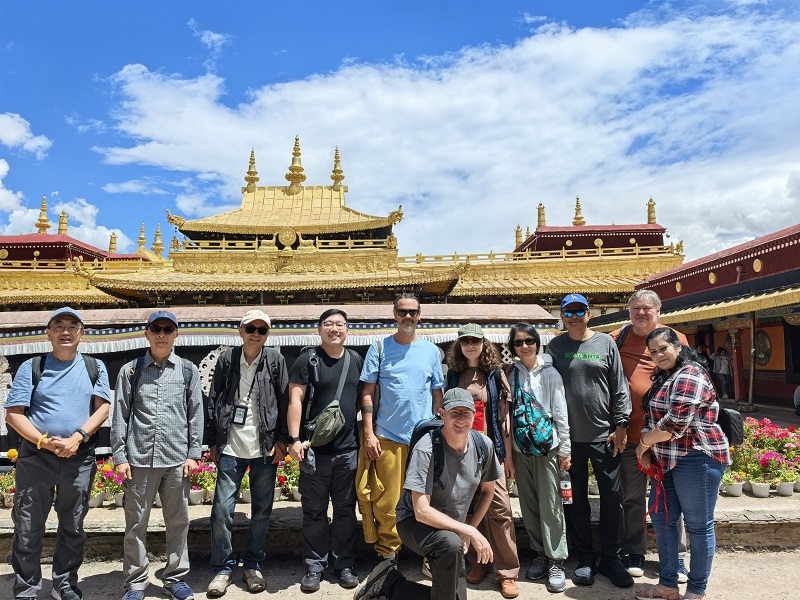
Jokhang Temple Visitors
What Is the Oxygen Level in Lhasa Compared With Other Places?
The most useful comparison is not the percentage of oxygen in the air but the amount of oxygen available at different elevations.
At sea level, atmospheric pressure is much higher, so each breath contains a greater number of oxygen molecules. In Lhasa, the air pressure is lower, resulting in roughly 65%–68% of the oxygen availability experienced at sea level. As elevation increases beyond Lhasa, oxygen availability decreases further.
This explains why a traveler may feel relatively comfortable after several days in Lhasa but notice a renewed physical challenge when traveling to a much higher mountain pass or trekking destination.
In other words, acclimatization to Lhasa does not necessarily mean you are fully acclimatized to every destination in Tibet.
How Tibet Yulong Travel Can Help With High-Altitude Travel
For international travelers, planning a Tibet trip involves more than choosing attractions. Altitude, transportation, accommodation, permits, road conditions, and the order of destinations all influence how comfortable the journey will be.
Tibet Yulong Travel can help international visitors organize a Tibet itinerary with appropriate acclimatization time in Lhasa before continuing to higher-altitude destinations. Local guides can also help travelers adjust their daily activities according to how they are feeling and the conditions along the route.
For travelers planning destinations such as Everest Base Camp, Namtso, Mount Kailash, or western Tibet, this kind of local support can be especially valuable because these areas can be much more demanding than Lhasa.