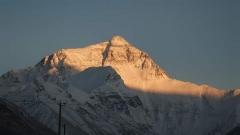
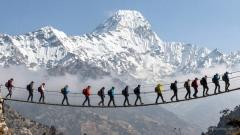
Mount Kailash stands as one of the most revered peaks on Earth, drawing pilgrims and trekkers from across the globe. While the outer circuit is widely known, the Inner Kora represents a far more demanding and spiritually profound journey reserved for experienced high-altitude trekkers. This hidden route navigates the southern face of the mountain, passing ancient monasteries, sacred lakes, and rugged glacial terrain that few travelers ever witness. Completing the Inner Kora requires not only physical endurance but also careful logistical planning, proper permits, and deep respect for local traditions. For those who undertake it, the experience offers an unparalleled connection to the sacred landscape of western Tibet.
Key Takeaways:
- The Inner Kora is significantly harder than the outer circuit.
- A special restricted area permit is mandatory for this route.
- Trekkers must complete the outer Kora before attempting the inner path.
- Altitude sickness poses the primary physical risk during the trek.
- Local guides are essential for navigation and cultural compliance.
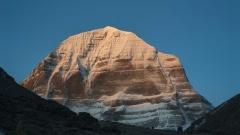
Understanding the Inner Kora of Mt. Kailash
The Inner Kora of Mt. Kailash is a shorter but vastly more technical trek compared to the famous 52-kilometer outer circuit. While the outer path circumnavigates the entire mountain, the inner route focuses exclusively on the southern face, bringing trekkers incredibly close to the sheer rock walls and hanging glaciers of the peak itself. The total distance of the Inner Kora is roughly 30 kilometers, but the extreme elevation and rugged terrain make it feel much longer.
Spiritually, the Inner Kora holds immense weight in Tibetan Buddhism, Hinduism, Jainism, and the Bon religion. According to tradition, completing thirteen outer circuits grants a pilgrim the right to attempt the inner path. It is believed that walking the Inner Kora purifies negative karma accumulated over countless lifetimes. Because of this deep religious significance, the route is treated with profound reverence by locals. Trekkers are expected to maintain a respectful demeanor, avoid loud noises, and strictly follow the clockwise direction (or counter-clockwise for Bon practitioners) established by centuries of tradition.
Unlike the outer circuit, which sees thousands of visitors annually, the Inner Kora remains relatively untouched. The lack of infrastructure means there are no guesthouses or tea houses along the way. Trekkers must be entirely self-sufficient, carrying all necessary camping gear, food, and water purification systems. This isolation is precisely what draws serious adventurers to the route, offering a raw, unfiltered experience of the Tibetan plateau.
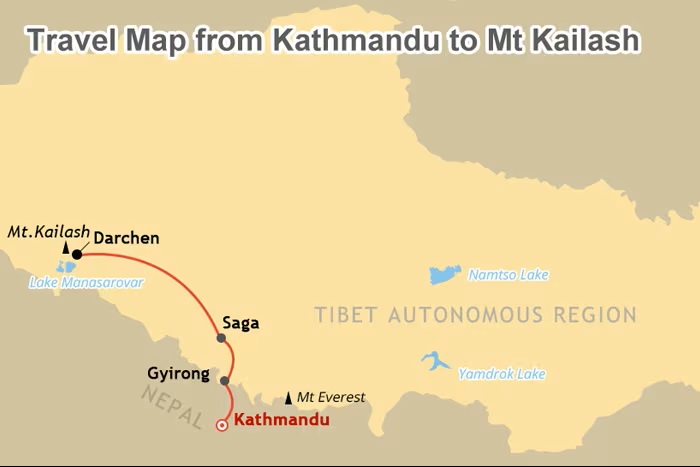
Map of Kathmandu to Mount Kailash
Route Breakdown and Key Landmarks
The journey typically begins from Darchen, the small settlement at the base of Mount Kailash that serves as the staging ground for all Kora activities. From Darchen, trekkers head south toward Selung Monastery, which marks the official starting point of the Inner Kora. This initial stretch involves navigating through a broad valley before the terrain abruptly shifts into steep, rocky ascents.
Note: Image placeholder removed per rules, text continues.
One of the first major landmarks encountered is the Atmalinga, a naturally formed rock structure that resembles a phallus, deeply venerated in Hindu and Buddhist traditions. Pilgrims often leave offerings here before continuing their ascent. The trail then climbs sharply toward the Nanda Devi glacier area, though views of the actual peak are frequently obscured by surrounding ridges. The footing here becomes treacherous, consisting of loose scree, snowfields, and exposed rock bands that require careful scrambling.
The highest point of the Inner Kora is the Serdung Chuksum pass, sitting at an elevation exceeding 5,800 meters. Reaching this pass is the most physically grueling segment of the trek. The air is exceptionally thin, and weather conditions can change within minutes, transforming clear skies into blinding snowstorms. From the pass, the route descends past several sacred tarns and small caves historically used by meditating monks. These caves, such as the Milarepa Cave, are steeped in legend and offer a glimpse into the ascetic lives of past practitioners.
The final leg of the Inner Kora brings trekkers back down toward the valleys connecting to Darchen. The descent is hard on the knees but offers spectacular retrospective views of the southern face of Mount Kailash, characterized by its distinct horizontal striations of rock and ice. Navigating this route without prior knowledge is highly discouraged, which is why engaging experienced professionals like Tibet Yulong Travel is crucial. Their guides know the subtle trail markers, understand the microclimates of the valleys, and ensure the group moves safely between campsites.
Permit Requirements and Logistics
Accessing the Inner Kora is heavily regulated by Chinese authorities due to its proximity to sensitive border regions and its status as a protected ecological and cultural zone. Foreign travelers cannot simply arrive in Darchen and begin walking; a complex web of permits is required well in advance of the trip.
First, all foreign visitors to Tibet must obtain a Tibet Travel Permit, issued through a registered travel agency. This document allows entry into the Tibet Autonomous Region. However, Mount Kailash is located in Ngari Prefecture, a restricted area that demands an additional Alien’s Travel Permit, usually processed in Lhasa or Shigatse upon arrival.
The specific authorization required for the Inner Kora goes beyond standard tourist permits. Because the route enters zones rarely visited even by locals, special military and border approvals are necessary. These permits are subject to strict quotas and can be revoked without notice depending on political climates, weather events, or environmental conservation efforts. Independent applications are virtually impossible for foreign nationals. Partnering with an established operator like Tibet Yulong Travel streamlines this bureaucratic process significantly. They handle the paperwork, liaise with local authorities, and secure the necessary approvals, allowing trekkers to focus purely on physical preparation rather than administrative hurdles.
It is also important to note that the Inner Kora is generally closed during the winter months due to heavy snowfall and avalanche risks. The viable window for trekking usually falls between late spring and early autumn, though exact dates fluctuate based on seasonal conditions. Attempting the route outside of approved windows is illegal and extremely dangerous.
Physical Preparation and Altitude Challenges
The defining challenge of the Inner Kora is altitude. While the outer circuit tops out at the Dolma La Pass around 5,630 meters, the Inner Kora pushes trekkers consistently above 5,500 meters, with the highest passes nearing 6,000 meters. At these elevations, oxygen levels are roughly half of those found at sea level, making every step exponentially more exhausting.
Acute Mountain Sickness (AMS) is a guaranteed concern. Symptoms range from mild headaches and nausea to life-threatening pulmonary or cerebral edema. Proper acclimatization is non-negotiable. Trekkers should spend at least three to four days in Lhasa or Shigatse adjusting to the elevation before traveling to western Tibet. Upon arriving in Darchen, resting for an additional day or two is highly recommended. Many experts suggest completing the outer Kora first, not just for spiritual reasons, but as a practical acclimatization exercise before tackling the harsher inner route.
Physical conditioning should begin months in advance. Cardiovascular endurance is paramount. Activities like long-distance hiking with a weighted pack, stair climbing, and running at lower elevations build the necessary baseline fitness. Core strength and leg stability are equally important for navigating the uneven, rocky terrain of the southern face. Unlike paved trails, the Inner Kora demands constant balance adjustments, placing significant strain on ankles and knees.
Hydration and nutrition play critical roles at high altitudes. The body loses moisture rapidly in the dry Tibetan air, and dehydration accelerates AMS symptoms. Trekkers must drink copious amounts of water, utilizing purification tablets or filters since natural water sources may contain harmful bacteria. Caloric needs also skyrocket; lightweight, high-energy foods like nuts, dried meats, energy gels, and dehydrated meals are essential for maintaining stamina throughout the multi-day push.
Essential Gear for the Inner Kora
Packing for the Inner Kora requires balancing necessity with weight constraints. Since there are no porters available for the most technical sections of the inner route, trekkers often have to carry their own gear or rely on yaks only for specific segments where the terrain permits animal passage.
A four-season tent capable of withstanding high winds and sub-zero temperatures is mandatory. Sleeping bags rated to at least minus twenty degrees Celsius, paired with insulated sleeping pads, ensure adequate rest during freezing nights. Layered clothing systems are vital; temperatures can swing drastically from intense solar radiation during the day to bitter cold after sunset. Base layers made of merino wool, insulating mid-layers, and waterproof, windproof outer shells form the core of a reliable wardrobe.
Sturdy, broken-in mountaineering boots with aggressive tread are necessary for traversing loose scree and icy patches. Trekking poles provide crucial stability on steep ascents and descents, reducing the impact on joints. Additionally, high-SPF sunscreen, UV-blocking sunglasses, and wide-brimmed hats protect against the intense ultraviolet radiation present at extreme altitudes.
Navigation tools, including detailed topographic maps and GPS devices, should be carried by the lead guide. Communication devices like satellite phones are highly recommended, as cellular coverage is nonexistent along the Inner Kora. First aid kits must be comprehensive, including medications for altitude sickness, pain relief, blister care, and gastrointestinal issues.
Cultural Etiquette and Responsible Trekking
Mount Kailash is not merely a geographical feature; it is a living spiritual entity for millions of people. Trekkers undertaking the Inner Kora bear a responsibility to minimize their environmental footprint and honor local customs. The fragile alpine ecosystem of western Tibet recovers very slowly from damage. All waste, including organic matter, must be packed out. Leaving trash or disturbing natural formations is considered deeply offensive and ecologically harmful.
When passing mani stones, chortens, or prayer flags, always keep them to your left if walking clockwise. Do not climb on sacred structures or remove stones as souvenirs. Interactions with local herders or monks encountered along the route should be conducted with politeness and humility. Asking permission before taking photographs of people or religious sites is a basic courtesy that fosters goodwill.
Choosing a responsible tour operator ensures that these ethical standards are maintained throughout the expedition. Companies like Tibet Yulong Travel emphasize sustainable tourism practices, educating their clients on local customs and ensuring that the economic benefits of trekking support the surrounding communities. By respecting the sanctity of the mountain and adhering to traditional protocols, trekkers contribute to the preservation of the Inner Kora for future generations of pilgrims and adventurers alike.