✨Highlights:
- 🕯️ Sit inside the meditation caves of Drak Yerpa, the cliff retreat associated with Padmasambhava, Tsongkhapa and Songtsen Gampo
- ☸️ Tour Ganden Monastery, the first Gelug monastery in Tibet, founded by Tsongkhapa in 1409
- 🚶 Join local pilgrims for the 40-minute kora around Ganden’s ridge, with the Kyichu valley unrolling below
- 🏔️ White stupas, cliff shrines and snow peaks in one frame at the Drak Yerpa complex, 30 km from Lhasa
- 🙏 Two UNESCO World Heritage Sites in one day: the Potala Palace and the Jokhang Temple with its prostration ground
- 📿 Witness the clapping monk debates at Sera Monastery, the sharpest show in Tibetan philosophical training
- 🏯 See all three of the great Gelug monasteries of Lhasa within a single week
- 🍵 End each city day in a traditional tea house, where the sweet milk tea is served by the thermos
What makes a pilgrimage trek different from a sightseeing tour
There is a version of Tibet that can be collected: a palace, a temple, a lake, a photograph at each. And there is a version that can only be walked. This five-day Drak Yerpa pilgrimage trek belongs to the second category. It uses the same Lhasa as every other itinerary, then takes you out to a cliff of meditation caves and a monastery on a ridge, and asks you to move through both at the speed of the people who go there to pray.
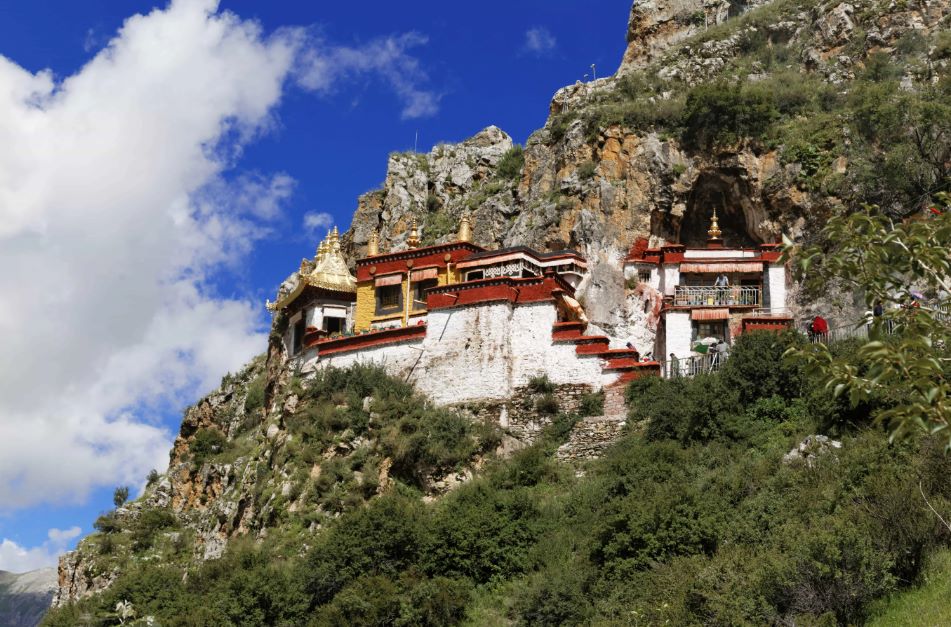
Drak Yerpa
Drak Yerpa is thirty kilometres from the city and about fifteen centuries away from it in atmosphere. Hermits lived in its caves; the founders of Tibetan Buddhism’s most influential lineages are remembered as having practised there. Ganden, an hour further east, is the mother monastery of the Gelug order, the seat from which Tsongkhapa’s reforms spread across the plateau. Between them they frame the two poles of Tibetan spiritual life: the solitary cave and the great institution.
The walking is modest, which is the point. A 40-minute kora around Ganden and a slow, prayerful exploration of the Yerpa caves add up to perhaps two hours on your feet, all of it at altitudes between 3,900 and 4,300 metres that your body will already have met during three nights in Lhasa. This is a pilgrimage trek for travellers who want depth rather than distance, and for anyone whose knees have an opinion about 5,000-metre passes.
At a glance
- Duration: 5 days and 4 nights, round trip from Lhasa
- Highest point: approximately 4,300 metres at Ganden Monastery; Lhasa sits at 3,650 metres
- Walking: 40-minute kora at Ganden, plus unhurried walking through the Drak Yerpa complex
- Difficulty: easy, with altitude as the only real variable
- Best months: April to October, and especially May, September and October for clear skies and thin crowds
- Group size: 2 to 12 travellers, private departures available
- Travel style: monastery-focused, semi-private vehicle, licensed local guide
Day 1: Land in Lhasa and do nothing
The arrival day is deliberately blank. Your guide meets you with a white hada at Lhasa Gonggar International Airport or at the railway station, and the drive into town gives you the Lhasa River and the first flat-roofed villages on the plain. At the hotel, the only task is to rest.
Altitude at 3,650 metres is not a metaphor. The air holds roughly two-thirds of the oxygen you are used to at sea level, and the body’s first response is to breathe faster and lose water quickly. Drink more than feels necessary, skip alcohol and heavy meals, avoid a hot shower on the first evening, and go to bed early. Travellers who treat day one as a recovery day usually find that days two to four are uncomplicated.
Day 2: Drepung and Sera, the intellectual spine of Lhasa
Drepung Monastery fills a hillside west of the city with tiered white buildings that once housed more than ten thousand monks.In its Coqen Hall your guide traces how the Gelug school grew from a reform movement into the dominant monastic system of Tibet, and in Loseling College you walk past dormitories where study continues today with the same curriculum that has been taught for centuries: debate first, memorisation always, logic as the backbone.
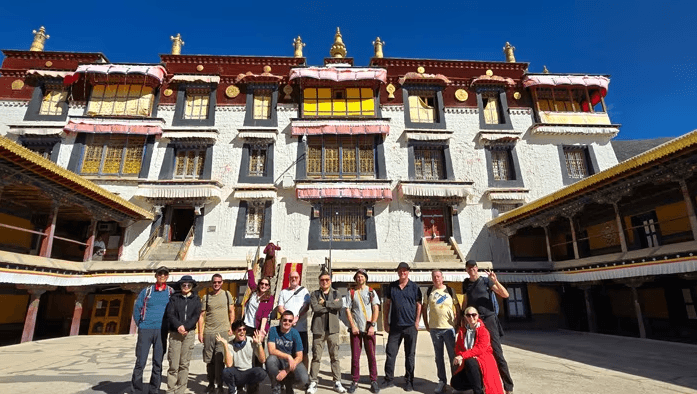
Drepung Monastery
Sera Monastery, in the north of the city, is where that training becomes visible. From 15:30 to 17:00, Monday to Saturday, the debate courtyard fills with monks in maroon robes. One sits and defends a thesis; the others stand and attack it, clapping their hands together at the end of each challenge, drawing a circle in the air before a rebuttal. Ask your guide to explain the gestures and the afternoon turns into a masterclass in how Tibetan philosophy is actually done, in public, out loud, at speed.
The welcome dinner that evening is when the group becomes a group. Your guide hands out traditional gifts, answers the practical questions everyone is quietly worried about, and sets the rhythm for the days ahead.
Day 3: The Potala Palace, the Jokhang and the Barkhor
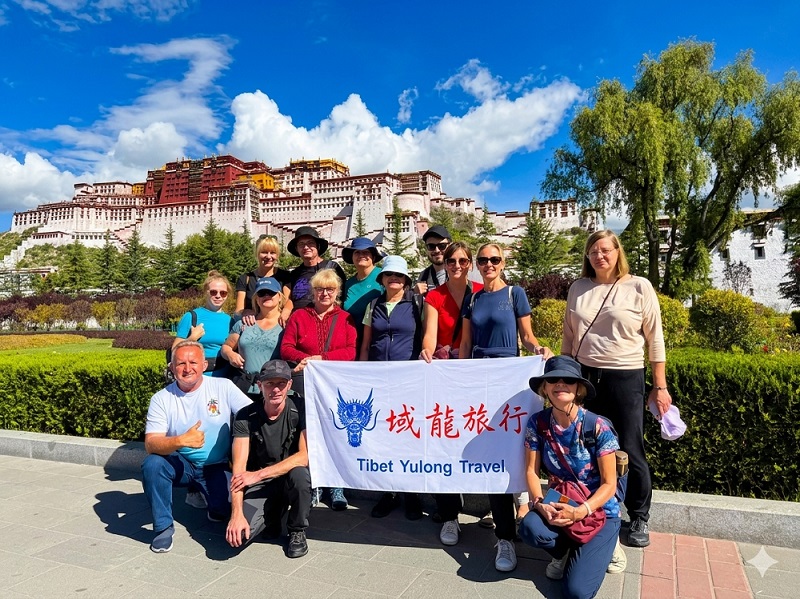
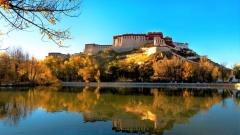
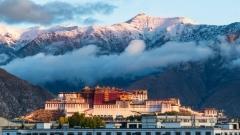
The Potala Palace is the image most people carry of Tibet before they arrive, and it still manages to exceed it. Eleven storeys of white and maroon above the old town, built into the hill rather than on top of it, with chapels, assembly halls, gilded burial stupas and quarters that once housed the country’s spiritual leadership through the winter months. You climb slowly. Everyone climbs slowly. At the top, the view over the Lhasa valley explains why the site was chosen long before anyone thought to photograph it.
Below the palace, Longwangtan Park gives you the reflection shot across its pond, with local families circling the water and children running along the paths. It is a useful reminder that the Potala is not only a monument but a neighbour.
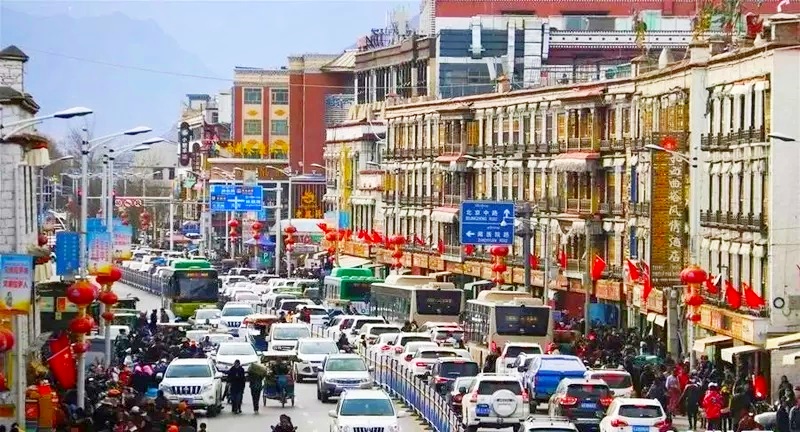
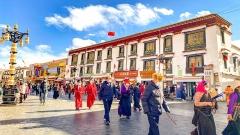
After lunch, the Jokhang Temple. Its inner shrine holds the Jowo Shakyamuni, the most revered image in Tibet, said to show the Buddha at twelve years old and brought to the plateau in the seventh century as part of a royal dowry. Outside the entrance, a constant tide of pilgrims prostrates on worn wooden boards, rises, and prostrates again. The Barkhor circuit around the temple is the living heart of the old city: a clockwise river of prayer wheels, rosaries, coral, turquoise, butter lamps and tea stalls. Walk it with the flow, not against it.
The day ends in a traditional tea house, where the tea comes in a thermos and the tables are shared with whoever arrives. Your guide will explain what people talk about, and it will not be monasteries.
Day 4: Drak Yerpa’s caves and Ganden’s ridge
This is the day the itinerary exists for. An early departure, a thirty-kilometre drive east of Lhasa, and then the cliff appears: white shrines stacked against a rock face, a long staircase, stupas at the foot, and above them the openings of caves where the air feels older than the buildings.
Drak Yerpa is one of Tibet’s most important retreat sites. It is associated with Padmasambhava, the eighth-century master who established tantric Buddhism in Tibet; with Songtsen Gampo, the king who first unified the plateau and moved its capital to Lhasa; and with Tsongkhapa, whose meditation here preceded the founding of Ganden. At its height the complex held dozens of hermitages and cave cells, and monks lived in them in near-silence for years at a time.
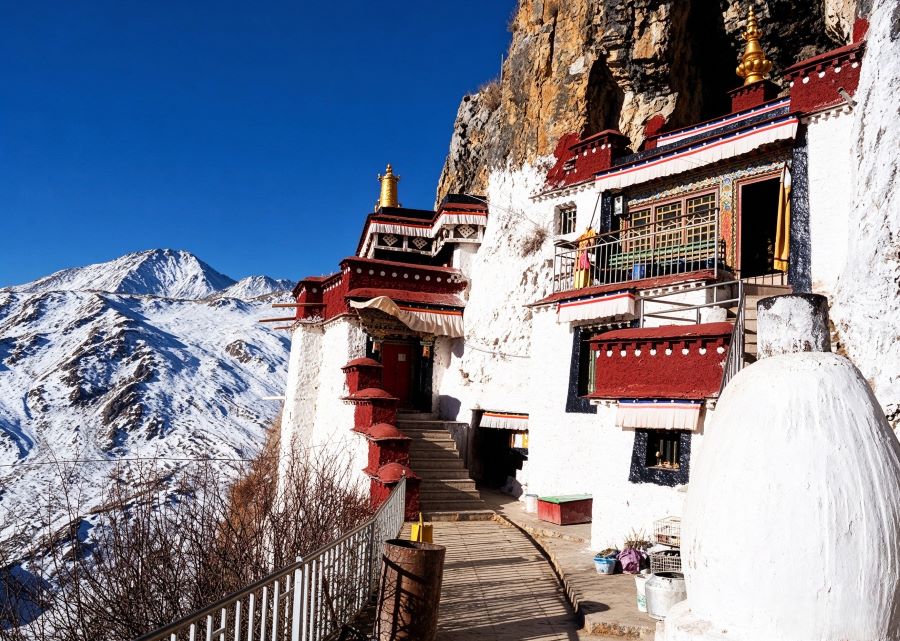
Drak Yerpa in winter
You walk through the shrines at your own pace and, if you wish, sit for a while inside one of the caves. Nobody will hurry you. Many travellers describe this half hour as the quietest they experience in Tibet: no traffic, no tour groups, only wind on the rock and the low murmur of a caretaker’s prayers. A packed lunch follows, usually eaten on the terrace with the valley opening below.
Then east again to Ganden, the monastery Tsongkhapa founded in 1409, the first of the Gelug houses and for centuries its scholarly capital. The complex drapes across a ridge at about 4,300 metres, its buildings stepping down the slope, its white walls and golden roofs visible from far across the Kyichu valley. Inside, you see the assembly hall and the stupa of Tsongkhapa, the object of one of the largest pilgrim flows in central Tibet.
Outside, join that flow. The kora around Ganden takes about forty minutes on a well-worn path that curves above the monastery, past prayer-flag poles, cairns and prostration spots, with the valley floor and the river below. It is not strenuous, but it is at 4,300 metres, so pace yourself, stop when you want to, and let the pilgrims pass. Descending, the drive back to Lhasa takes roughly an hour and a half.
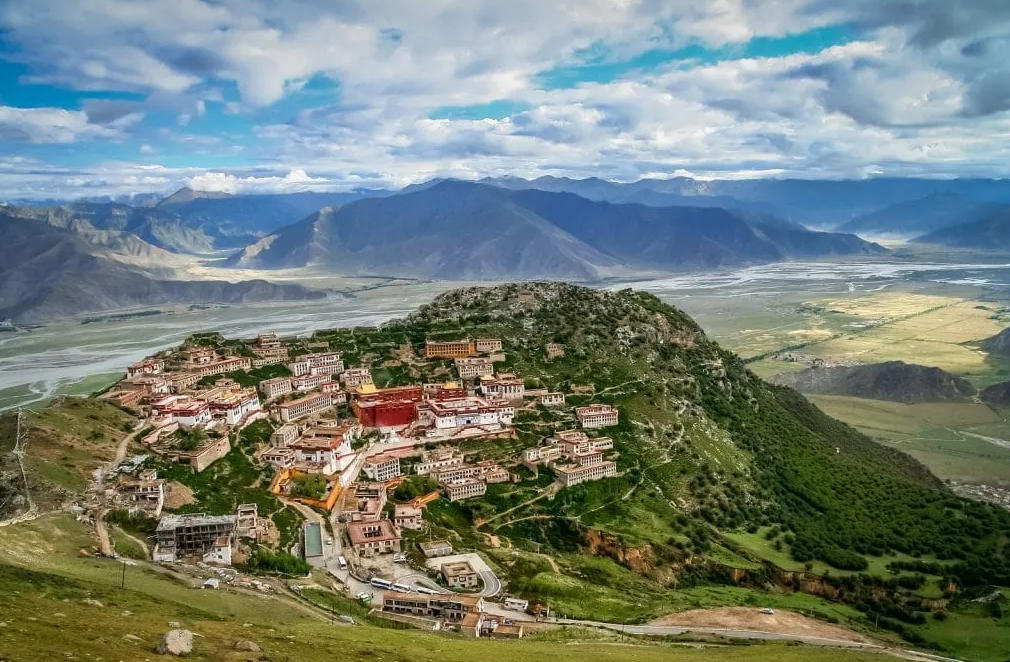
Ganden Monastery
Understanding what you have walked past
Tibetan pilgrimage is not passive. A kora is a physical prayer, each circuit accumulating merit, each spin of a prayer wheel releasing the mantra printed inside. Pilgrims often carry a thermos, a rosary and a small bag of barley to leave at shrines; they touch the base of stupas with their foreheads; they count. Understanding three things makes the day richer: that the direction is clockwise for these sites; that the number of circuits is often fixed by tradition or by a promise; and that the merit is not for the pilgrim alone but is dedicated to all beings, including, explicitly, you.
Ganden’s importance is institutional as well as spiritual. The Gelug order, with its emphasis on monastic discipline and systematic study, became the most powerful school in Tibet, and Ganden was its headquarters. Its abbots held the highest teaching seat in the tradition. When you walk the ridge above those halls, you are walking above the administrative and intellectual centre of an entire Buddhist world.
Altitude, honestly
This route is gentle on the legs but still runs at altitude for four days. The pattern that works is simple: no exertion on day one, moderate activity on days two and three, and the two outings on day four taken slowly with frequent pauses. Symptoms that warrant telling your guide immediately are a headache that does not respond to paracetamol, nausea, dizziness, breathlessness while sitting still, and any confusion or unusual sleepiness. We carry portable oxygen, choose hotels with oxygen supply in Lhasa, and will restructure a day rather than push through.
Travellers with heart, lung or blood-pressure conditions should speak to their doctor before booking, and anyone recovering from a respiratory infection should postpone: lungs that are still inflamed cope badly with thin air.
When to go
April and May bring clear skies and cold nights, with the valleys greening and few other visitors on the kora paths. June to August is warmer and greener but coincides with the domestic holiday season, when Potala Palace tickets and monastery courtyards are busiest. September and October offer the best balance: stable weather, golden barley in the Kyichu valley, and clear views from Ganden’s ridge. November to March is quiet, cold and possible, though snow can close the higher roads and some monastic activity slows for the winter retreat.
Permits and practicalities
Foreign travellers need a Tibet Travel Permit, arranged through a licensed local operator; you cannot apply for it yourself from abroad, and it must be issued before you enter Tibet. We process it as part of the booking and tell you exactly which documents to send and when. The itinerary uses a private 9 to 17 seat vehicle with driver, a licensed English- or Chinese-speaking guide, all entrance tickets for the listed sites, airport or station transfers, four-star or equivalent accommodation with breakfast, portable oxygen and one bottle of water per person per day. Not included: transport to and from Lhasa, meals not listed, personal spending, tips and single supplements.
The Potala Palace requires a timed entry slot booked with passport details, and its hours can change around festivals and maintenance, so the guide may reorder days two and three. Drak Yerpa has no formal ticket office in the usual sense; small offerings at the shrines are customary and entirely optional.
Sleeping and eating
Lhasa accommodation is four-star or equivalent, chosen for location, warm rooms and reliable hot water. Breakfasts are included and usually combine Tibetan, Chinese and Western options. Lunches and dinners are flexible: noodle shops, momo restaurants, Sichuan-style eateries, vegetarian cafés and hotel dining all work. On the Drak Yerpa day, lunch is a packed one, eaten at the site.
Fitness and what to pack
If you can walk for an hour on uneven ground, you can manage this route. Prepare with regular walking or cycling in the month before you travel, and practise slow breathing on stairs. Pack layers: thermal base, fleece, windproof shell, warm hat and gloves for the early mornings, sun hat, high-factor sunscreen, lip balm, sunglasses, grippy shoes, a small daypack, a thermos and a power bank. Bring a little cash for offerings and tea.
Behaving well at sacred sites
Remove hats inside assembly halls unless the signage says otherwise. Do not point your feet towards altars or images. Ask before photographing monks or pilgrims, and never photograph inside halls where prohibition signs are posted. Walk clockwise around monasteries, stupas and the kora paths. Do not touch or climb on relics, and do not place non-biodegradable offerings. At Drak Yerpa, keep voices low near the caves where practitioners may be in retreat, and never enter a cave that is closed or marked private.
FAQ
📋 How much walking is involved?
Roughly two hours on the main walking day: a slow exploration of Drak Yerpa and the 40-minute kora at Ganden. The rest is vehicle-based sightseeing in Lhasa.
📋 Is Drak Yerpa accessible for older travellers?
The main shrines require stair climbing at 3,900 to 4,000 metres. Most travellers in their sixties manage it with pauses. Anyone with mobility limits can stay at the lower terrace and still see the stupas and the cliff face.
📋 Do I need to be Buddhist to join?
No. The route is designed for travellers interested in history, architecture and lived religion. Your guide explains practice without assuming belief.
📋 What is the difference between this trip and the Namtso route?
This one trades the lake and the island kora for cave sanctuaries and Ganden’s ridge. The Lhasa sightseeing days are shared; the fourth day is entirely different.
📋 Can Ganden and Drak Yerpa be visited in one day?
Yes. They lie in roughly the same direction east of Lhasa, about 30 and 55 km away respectively, which is why the itinerary pairs them.
📋 Is photography allowed?
In the monastery courtyards and on the kora paths, yes. Inside assembly halls and at the caves, follow signage and ask your guide; flash and tripods are usually prohibited.
Travel this route with Tibet Yulong
Tibet Yulong is a locally owned operator working with Tibetan guides who know these cliffs and ridges as part of their own landscape. We arrange the permits, the vehicle, the tickets and the timing, and we keep groups small enough that a cave can be quiet and a tea house can be a conversation. Send us your dates, and we will tell you which season suits this pilgrimage best and how to build the rest of your Tibet trip around it.