✨Highlights:
- 🏔️ A gentle 4.2 km clockwise kora around Tashi Dor Island, the sacred peninsula of Namtso, with only about 60 m of total ascent
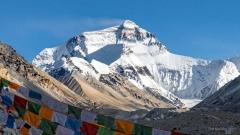
- 💙 Turquoise water meeting the snow wall of the Nyenchen Tanglha range, one of the most photographed horizons on the plateau
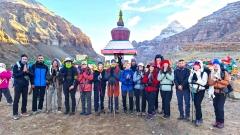
- 🛕 Four sacred stops on one loop: the Welcome Stone, the prayer-flag-draped Joined Palm Rock, the Good and Evil Cave and hillside Tashi Monastery
- 🧘 Three full nights in Lhasa before the lake, so the highest point of the trip comes after your body has already adapted
- 🏯 Both UNESCO World Heritage Sites in one day: the Potala Palace at dawn and the Jokhang Temple with the Barkhor pilgrimage circuit in the afternoon
- 📿 The monk debates at Sera Monastery, explained gesture by gesture by a local guide
- 🍵 Sweet milk tea in a traditional Lhasa tea house with the people who drink it every afternoon
- 🚐 Private vehicle, oxygen on board, permit handling and a flexible lakeside return option if anyone feels the altitude
Why the Namtso Lake trek belongs on a first Tibet itinerary
Most travellers arrive in Lhasa with the same two questions: how will my body cope with 3,650 metres, and where do I see the Tibet that exists outside the city? A five-day Namtso Lake trek answers both in the same week. You spend three nights acclimatising in the capital, walking through monasteries and pilgrimage circuits at a pace that lets your breathing settle, and only then drive north to the Heavenly Lake for a short, quiet circuit of Tashi Dor Island.
That sequence is deliberate. Namtso sits at 4,718 metres and the road crosses the Nagenla Pass at 5,190 metres, higher than most first-time visitors expect to go on their opening trip. By placing the lake on day four, after three nights of sleep at 3,650 metres, the body has already begun producing extra red blood cells and adjusting its breathing rhythm. The kora itself is short, flat-ish and entirely optional in its full form, which makes this the rare high-altitude lake visit that feels devotional rather than demanding.
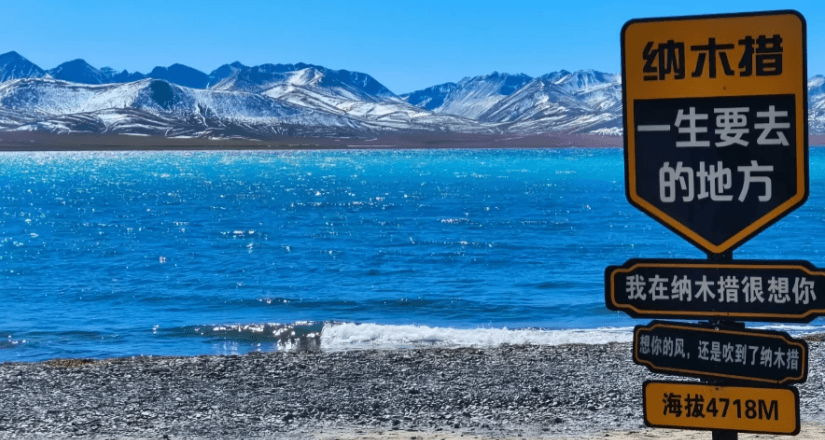
Namtso Lake
It also happens to be a beautiful introduction to the idea of a kora. Walking clockwise around a sacred island, past prayer flags, mani piles and a small monastery, is how Tibetans have honoured this lake for centuries. You are not spectating that practice from a car window. You are inside it, at walking pace, for two and a half to three hours.
At a glance
- Duration: 5 days and 4 nights, starting and finishing in Lhasa
- Highest point: 5,190 metres at Nagenla Pass; the kora itself stays between roughly 4,720 and 4,780 metres
- Walking: 4.2 km clockwise on Tashi Dor Island, 2.5 to 3 hours, total ascent about 60 m
- Difficulty: easy to moderate, suitable for fit travellers with no prior trekking experience
- Best months: late April to October, with June to September giving green grassland and open roads
- Group size: 2 to 12 travellers, private departures available year-round
- Start and finish: Lhasa Gonggar International Airport or Lhasa Railway Station
Day 1: Arrival in Lhasa at 3,650 metres
Your guide meets you at the airport or the railway station with a hada, the white ceremonial scarf that marks a welcome on the plateau, and drives you into the city. On the way in you catch your first sight of the Lhasa River and, beyond it, the wide braided course of the Yarlung Tsangpo, the great river that drains much of southern Tibet.
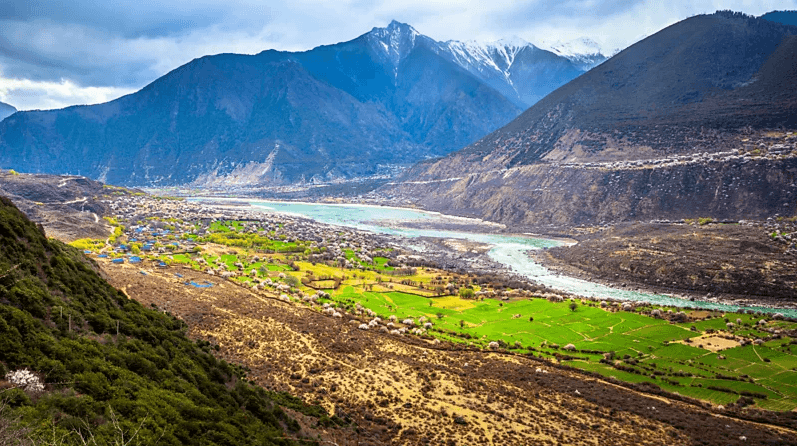
Yarlung Tsangpo Canyon
The rest of the day is yours to do almost nothing. This is the single most important instruction of the whole trip. Lhasa’s altitude is high enough that a rushed first afternoon, a long hot shower, a glass of wine and a late night can turn into a headache that lasts three days. Drink water steadily, eat lightly, walk only as far as the nearest corner shop, and sleep early. Travellers who protect this first evening almost always report a smoother week.
Day 2: Drepung and Sera, the monastic engine room of Lhasa
Today moves at the speed of monastic life. In the morning you drive west of the city to Drepung Monastery, which once housed more than ten thousand monks and was the largest monastic institution in Tibet. Its whitewashed buildings spill down the hillside in tiers so dense that from a distance the whole complex looks like a heap of rice, which is exactly what its name means. Inside the Coqen Hall your guide explains how the Gelug school organised itself, and in Loseling College you see the dormitories where monks still study, eat and sleep in rooms barely wider than a bed.
In the afternoon you cross the city to Sera Monastery, where the courtyard fills between three and five o’clock, Monday to Saturday, with the famous debates. Young monks clap their hands, stamp their feet and shout questions at a seated defender of a particular view, testing logic the way a prosecutor tests a case. Without explanation it looks like theatre. With a guide beside you, the hand clap becomes a sharp punctuation mark for a conclusion, the raised arm a demand for evidence, and the whole performance turns into a lesson in how Tibetan Buddhism is actually learned.
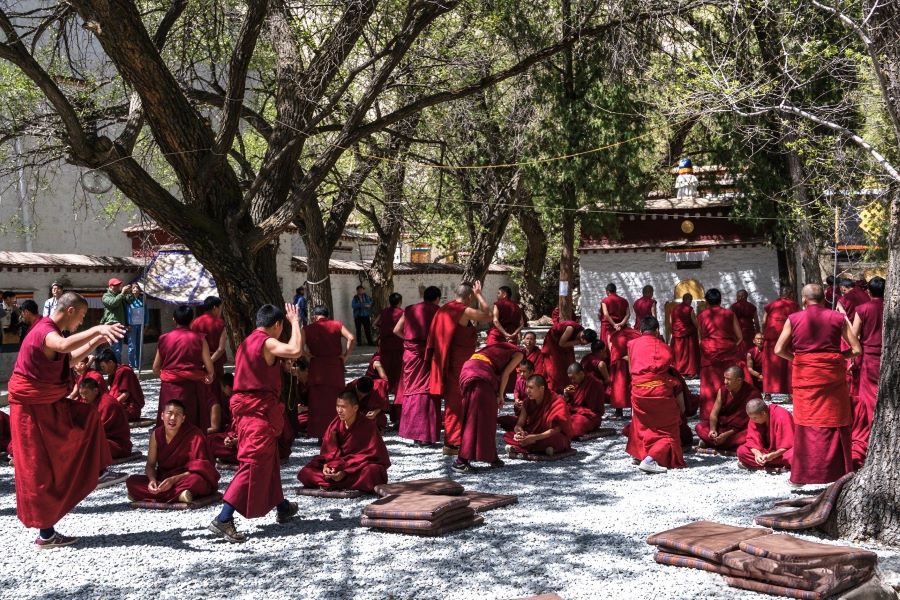
Lamas at Sera Monastery Engage in Debate
That evening a welcome dinner brings the group together, and your guide runs through the practical details of the days ahead: what to wear at the lake, how cold the wind gets on the pass, and how much water to carry.
Day 3: Potala Palace, Jokhang Temple and the Barkhor circuit
Two UNESCO World Heritage Sites in one day, both of them central to the way Tibet understands itself. The Potala Palace rises eleven storeys above the old town, a fortress, a residence and a monastery compressed into one white and maroon mass. You climb its staircases slowly, which is the only sensible way to climb anything at this altitude, and pass through chapels, assembly halls and private quarters where the gold burial stupas of former spiritual leaders catch the light from high windows. Below the palace, Longwangtan Park offers the postcard reflection shot across its pond, with local families circling the water in the afternoon.
After lunch you walk into the Jokhang Temple, the spiritual centre of the city and the reason Lhasa exists as a pilgrimage destination. The inner shrine holds the Jowo Shakyamuni, an image said to depict the Buddha at the age of twelve, carried into Tibet more than a thousand years ago as part of a royal dowry. Outside the door, pilgrims prostrate themselves on boards worn smooth by knees and foreheads, and the line of bodies moving up and down never quite stops.
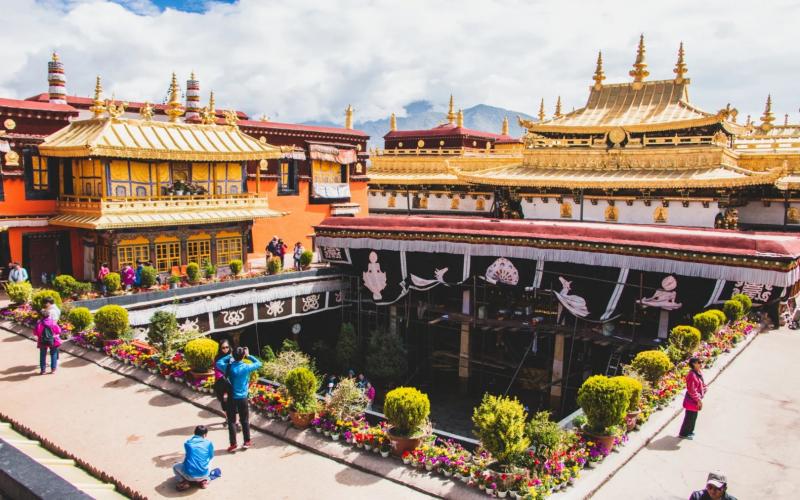
Jokhang Temple
The Barkhor circuit wraps around the temple in a loop of about a kilometre. Walk it clockwise, keep to the outer flow, and let the current carry you past stalls of prayer wheels, turquoise, butter lamps and dried herbs. Your guide closes the afternoon in a traditional tea house, where sweet milk tea arrives in a thermos and the conversation is entirely local. It is the least monumental and most memorable hour of the day.
Day 4: Lhasa to Namtso and the Tashi Dor Island kora
You leave before dawn, heading north across the wide, wind-scoured grasslands that separate Lhasa from the lake. The road climbs steadily and the landscape empties: nomad tents, yaks, a few dark shapes of grazing yaks against pale grass, then nothing but sky.
At Nagenla Pass, 5,190 metres, the vehicle stops for about fifteen minutes. The view opens without warning, the entire blue length of Namtso below and the Nyenchen Tanglha range running white along the far shore. Your guide will say the same thing every guide says, and mean it: walk slowly, do not run, do not jump for a photograph. Fifteen minutes at this height is fine for most people; thirty minutes of excited scrambling is not.
At the scenic gate you complete the entry formalities and transfer to the official shuttle bus for the short ride to Tashi Dor Island. The kora begins there: a 4.2 km clockwise loop on boardwalk and compact gravel, undulating gently, gaining and losing perhaps 60 metres in total. There is no exposure, no scrambling and no technical ground, which is why this qualifies as a trek for people who have never carried a pack in their life.
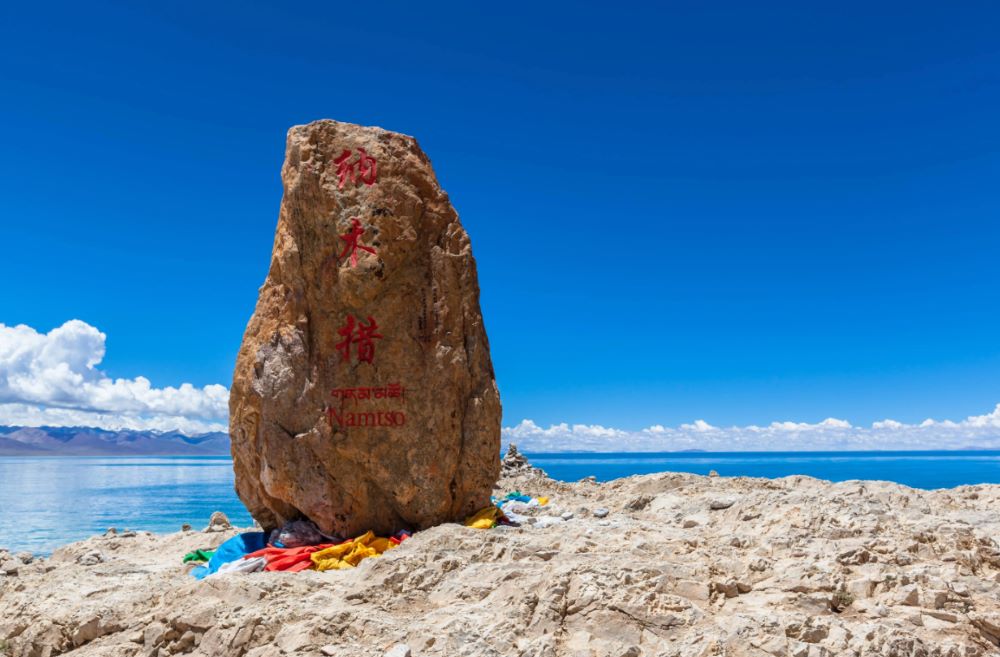
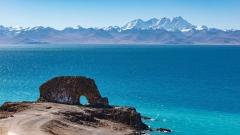
The loop has four fixed points. The Welcome Stone, also called the Couple Stone, stands at the entrance as a pair of weathered rocks regarded as guardians of the lake. The Joined Palm Rock, wrapped in layers of prayer flags, is where pilgrims press their palms and walk around the stone. The Good and Evil Cave is remembered as a meditation retreat of Padmasambhava, and is dark, narrow and quietly astonishing. Tashi Monastery sits on the island’s high point, small and white against the water, with an uninterrupted view of both shorelines. Beyond it, the west cliff viewpoint is the place to sit still: at midday and again in late afternoon, the light turns the lake into sheets of gold and green.
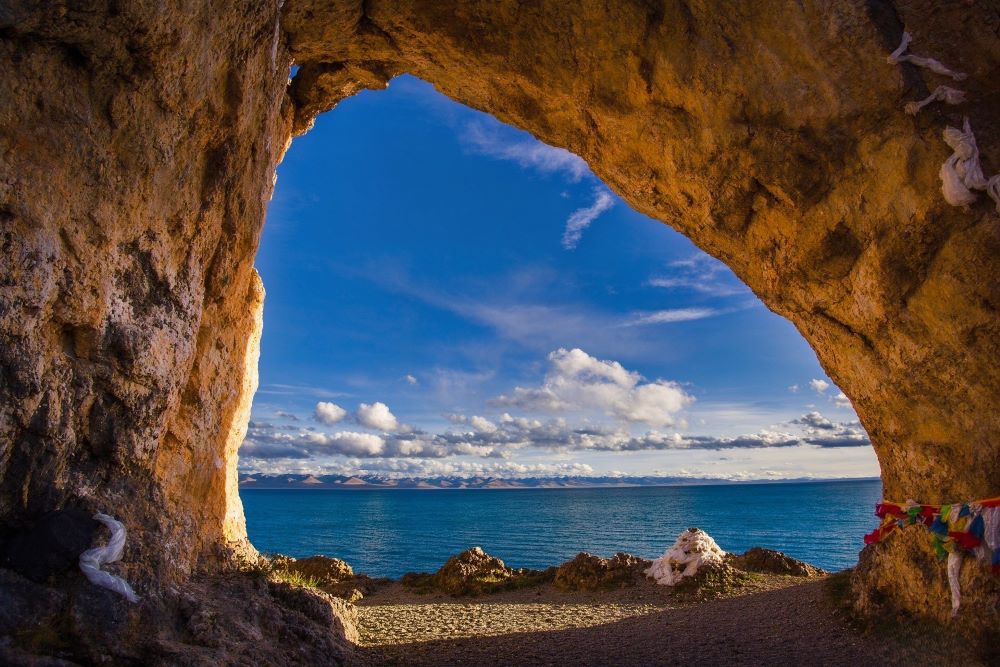
Holy Elephant Gate
If anyone in the group feels tired or light-headed, the guide can cut the loop short and follow the lakeside path back instead. Nothing about the day is compulsory. Food on the island is limited, so lunch is a packed one, and most travellers appreciate the extra high-energy snacks and a thermos of hot water they brought from Lhasa. The shuttle returns you to the gate, and the drive south brings you back to the city in the evening.
What you are actually looking at
Namtso is the second-largest lake in Tibet and one of the highest salt lakes in the world, a body of water so saturated that its colour changes with cloud, wind and sun angle. On a still morning it reads as deep cobalt; by afternoon it can look almost Caribbean turquoise along the shallows. The Nyenchen Tanglha range behind it runs for hundreds of kilometres, and its main peak stands at 7,162 metres, permanently white above the lake.
The island itself is granite and schist, strewn with glacial boulders and threaded with prayer flag lines that snap in the wind. Mani piles grow at every junction, each stone placed by a passer-by with a wish. This is one of the best places in Tibet to understand how thin the human footprint is relative to the land.
Altitude: why the order of this itinerary matters
Acclimatisation is not a ritual phrase; it is physiology. Above about 3,500 metres the body compensates for lower oxygen pressure by breathing faster, raising heart rate and, over several days, increasing red blood cell production. That process needs time, roughly one to three days for the early adjustments. Sleeping three nights at 3,650 metres before sleeping anywhere higher is the reason this Namtso Lake trek is positioned as a first trip rather than a warm-up.
Symptoms worth reporting to your guide immediately include a persistent headache that painkillers do not touch, nausea, dizziness, unusual breathlessness at rest and any confusion. The itinerary carries portable oxygen, the hotels in Lhasa are equipped with oxygen supply, and the guide is trained to change plans rather than push through. Travellers with uncontrolled heart or lung conditions, or with recent illness, should clear the trip with a doctor first.
Best time to visit Namtso
Late April to June brings clear skies, cold nights and a lake still ringed by snow, with very few other visitors. July and August are the warmest and greenest months, when the grassland fills with nomad herds and wildflowers, and also the wettest, with occasional afternoon storms. September and October are the connoisseur’s choice: stable weather, golden grass, crisp air and a lake that photographs like a paint swatch. November to March is possible for the determined, and the lake can freeze into white pressure ridges, but roads close after heavy snow and the wind is brutal. The kora is walkable year-round when the road is open.
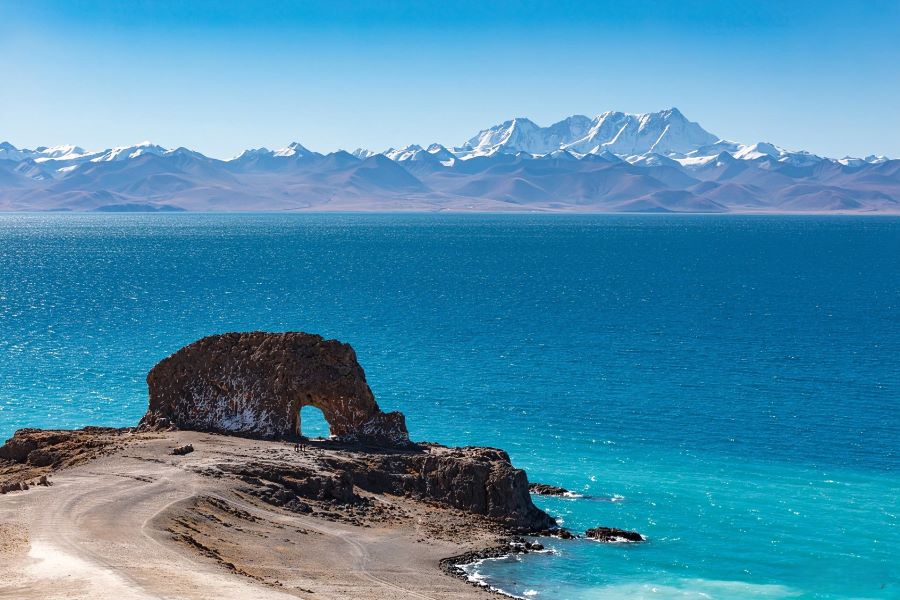
Namtso Lake
Permits, transport and what is included
All foreign travellers need a Tibet Travel Permit, arranged through a licensed local agency before arrival, plus the relevant Chinese visa or group visa formalities. We handle the permit application as part of the booking and advise on the documents you need to send. The tour uses a private 9 to 17 seat vehicle with a driver and a licensed English- or Chinese-speaking guide, and includes all entrance fees for the sites listed in the itinerary, airport or station transfers, four-star hotels or equivalent, daily breakfast, and the Namtso scenic shuttle.
Not included: flights or train tickets to Lhasa, lunches and dinners not listed, personal expenses, tips and any single supplement for a private room. The Potala Palace requires timed entry with passport details submitted in advance, and its visiting hours can shift with maintenance and festival schedules, so the order of days two to four may be adjusted by your guide.
Where you sleep and what you eat
In Lhasa you stay in a carefully selected four-star hotel or equivalent, with oxygen supply available at designated high-altitude properties. Beds are warm, showers are hot in the evening, and the altitude is the only thing that keeps you awake. At Namtso the visit is a day trip rather than an overnight stay, which means no camping at 4,718 metres and no night at the coldest, windiest point of the route. This is a deliberate comfort choice and one of the reasons the itinerary works for travellers in their sixties as well as backpackers.
Food in Lhasa is easy: hotel breakfasts, Tibetan noodles, momos, butter tea, Sichuan-influenced restaurants and good vegetarian options. On the lake day, bring your own snacks and hot water; the island’s few stalls sell instant noodles and little else.
Fitness and packing
No specific training is required for a 4.2 km walk on a boardwalk, but general fitness helps at altitude. A month of regular walking, stairs or cycling before departure will make the monastery steps and the Potala climb noticeably easier. Bring layers rather than a single thick coat: windproof shell, fleece, thermal base, warm hat, gloves, sunglasses with high UV protection, lip balm, sunscreen, a sun hat, sturdy shoes with grip, a small daypack, a thermos flask, and a power bank for the cold.
Travelling respectfully at a sacred lake
Walk clockwise around the island and around monasteries. Do not climb on prayer-flag piles, mani stones or shrine structures. Ask before photographing pilgrims, and do not photograph inside monastery assembly halls where signs prohibit it. Keep voices low near the caves and the monastery. Do not leave plastic or offerings that are not biodegradable; carry out what you carry in. Avoid single-use plastic bottles where possible, and refill from the vehicle’s water supply.
FAQ
📋 Is the Namtso Lake trek difficult?
No. The kora is 4.2 km with about 60 metres of total ascent on boardwalk and gravel, and it can be shortened at any point. The challenge is altitude, not terrain, which is why the itinerary spends three nights in Lhasa first.
📋 Can I do this trip if I have never trekked before?
Yes. This is designed as an introductory high-altitude walk. If you can walk for three hours on undulating ground at home, you can complete the loop.
📋 How cold is it at Namtso in summer?
Daytime temperatures in July and August typically sit between 10 and 18 degrees Celsius, with strong wind making it feel colder; nights drop close to freezing. A windproof layer and a warm hat matter more than a heavy coat.
📋 Do I need special permits beyond the Tibet Travel Permit?
The Tibet Travel Permit covers the Lhasa and Namtso areas on this itinerary. Your agency arranges it; you cannot obtain it independently as a foreign traveller.
📋 Will I see the monk debates at Sera?
The debates run from about 15:30 to 17:00, Monday to Saturday, and are included on day two. Occasional monastic holidays can suspend them, in which case your guide substitutes a visit to the scripture printing house.
📋 Can the itinerary be private or customised?
Yes. All departures can be run privately for families, couples or small groups, and extra days in Lhasa, a Lhasa to Everest extension or a longer Ganden to Samye trek can be added.
Walk the Heavenly Lake with Tibet Yulong
Tibet Yulong is a locally owned travel company based on the plateau, working with Tibetan guides who grew up within sight of these mountains. Every Namtso Lake trek is run directly, without middlemen, with permits handled, logistics tested and a guide who knows when to slow down and when to turn back. Tell us your dates and how much time you have, and we will match this five-day route to your fitness, your season and the rest of your Tibet itinerary.