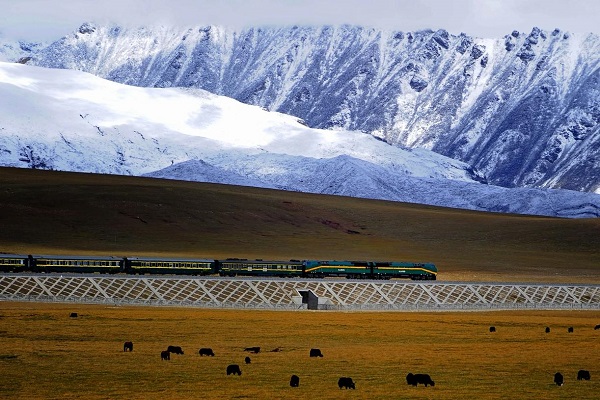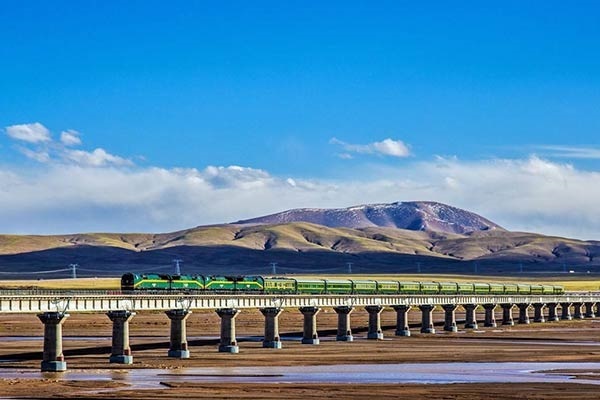

Overland travel from Kathmandu in Nepal to Lhasa, the capital of the Tibet Autonomous Region, is one of the most iconic Himalayan adventures available to international travelers. For decades, the Gyirong border (Kerung / Rasuwagadhi-Gyirong Port) has served as the only fully operational land border open to foreign tourists between Nepal and Tibet. If you are planning this legendary cross-Himalayan road trip, understanding Gyirong border crossing requirements 2026 Kathmandu to Lhasa is the foundation of smooth travel. Missing any official document or failing to follow border regulations can lead to denied entry, unexpected delays or cancelled travel plans.
This comprehensive guide covers updated official policies, mandatory paperwork, step-by-step border clearance procedures, transport arrangements, seasonal travel advice and common mistakes to avoid. We clarify outdated visa rules, permit application timelines and logistics for travelers setting off from Kathmandu heading north to the Tibetan Plateau. Whether you are organizing a small private tour, a photography expedition or a cultural journey across the Himalayas, all information is tailored to the 2026 border operation standards at Gyirong Port.
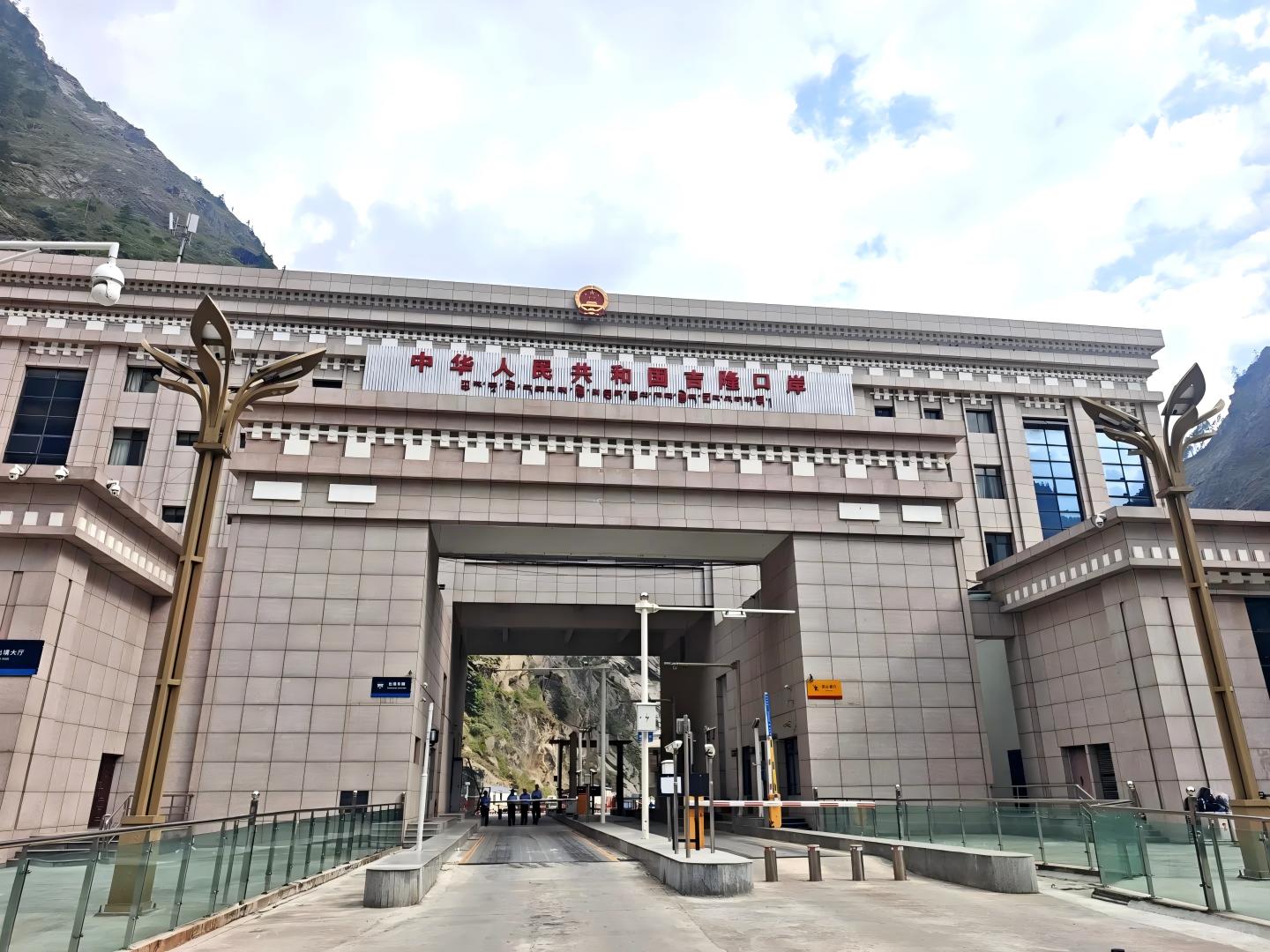
Gyirong Border
Many travelers search for straightforward checklists outlining Tibet travel permit requirements for overland Kathmandu to Lhasa via Gyirong port, yet scattered online resources often contain obsolete rules from before the post-pandemic border reopening. This guide consolidates verified, up-to-date requirements directly relevant to foreign passport holders crossing from the Nepali Rasuwagadhi checkpoint into Gyirong on the Chinese side, before continuing the drive east to Lhasa.
Current Status of Gyirong Border Port in 2026
Gyirong Port connects Rasuwagadhi in northern Nepal and Gyirong Town in Shigatse Prefecture, Tibet. Sitting at roughly 1,818 meters above sea level, the border valley enjoys a milder climate compared to high plateau regions, making it the preferred overland gateway over alternative border points. As of 2026, Gyirong remains the primary land crossing for international tourists traveling between Nepal and Tibet.
Important operational rules every traveler must note:
- Border official working hours generally run from Monday to Friday. Weekend tourist clearance is limited and not guaranteed; travelers should plan their crossing on weekdays.
- Border gates close in the afternoon (Nepal local time). You must arrive early enough to complete all immigration and customs inspections. Late arrival means you will be turned away and forced to reschedule for another day.
- Road conditions between Kathmandu and Rasuwagadhi fluctuate through the year. Monsoon season (June to September) brings heavy rainfall, increasing risks of landslides and temporary road blockages. Dry season from October until May offers far more stable driving conditions.
- Independent, unguided foreign tourists cannot cross the Gyirong border into Tibet. All international visitors must book a regulated tour with a licensed Tibetan travel agency. Your official guide will wait for you on the Chinese side and accompany you throughout your stay in Tibet. No self-drive or solo overland entry is permitted.
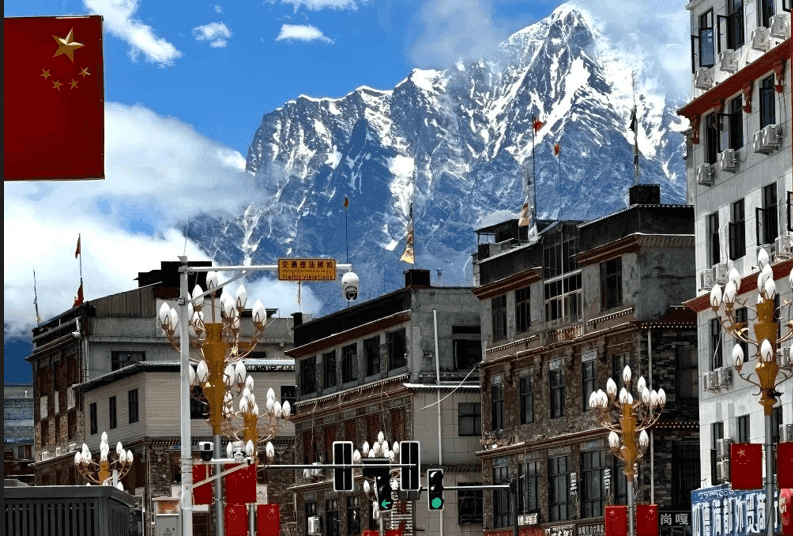
Gyirong Town
Mandatory Documents: Gyirong Border Crossing Requirements 2026 Kathmandu to Lhasa
Paperwork preparation is the most critical stage of your trip. Border officials conduct strict document verification, and incomplete paperwork is the top reason travelers face entry refusal. Below is the full official checklist for foreign nationals traveling north via Gyirong in 2026.
Valid Original Passport
Your passport must meet two non-negotiable standards:
- Minimum 6 months validity remaining counting from your planned exit date out of China.
- At least two blank consecutive visa pages for immigration stamps.
Digital copies and photographed passport pages are not accepted at immigration counters. Always carry your physical original passport. We recommend saving scanned copies separately in your email or cloud storage as a backup.
Chinese Visa or Tibet Group Visa
Two visa options apply to travelers departing Kathmandu to cross Gyirong border to Lhasa, depending on your nationality and travel arrangements:
- Standard Chinese L Tourist Visa: If you obtained an individual Chinese tourist visa in your home country before arriving in Nepal, you may use this document to cross Gyirong Port. Always confirm validity terms with your travel agent well in advance.
- Tibet Group Visa: Tourists who arrive in Kathmandu without a pre-arranged Chinese visa must apply for a Group Visa via the Chinese Embassy in Kathmandu. This document can only be submitted and processed through a registered travel agency. Individual applicants cannot apply directly. Processing normally takes 3–5 working days, so you need to arrive in Kathmandu early enough to complete formalities before your border crossing date.
Travelers from countries enjoying bilateral Chinese visa-free arrangements are exempt from applying for a visa, but visa-free status does not waive the requirement for the Tibet Travel Permit.
Tibet Travel Permit (TTP)
This is the most essential regional document for all foreign visitors entering the Tibet Autonomous Region. No matter if you fly into Lhasa or cross overland through Gyirong border, the Tibet Travel Permit will be checked multiple times: at Gyirong immigration checkpoint, highway police checkpoints between Gyirong and Shigatse, and upon arrival in Lhasa.
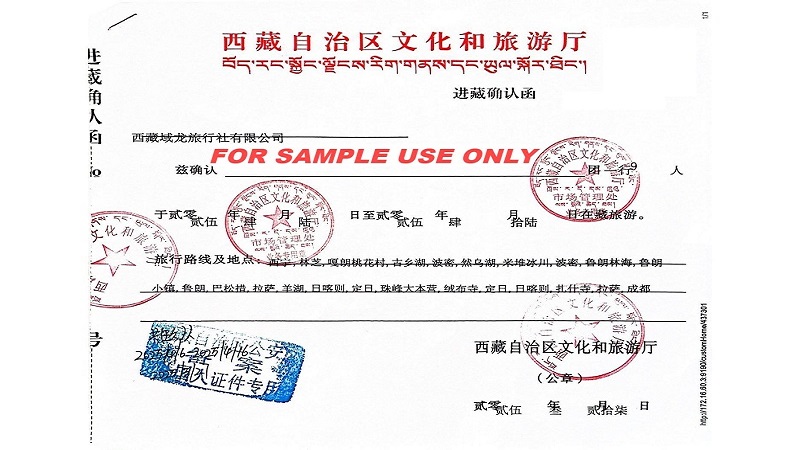
Tibet Travel Permit – Tibet Yulong
Key facts about the Tibet Travel Permit:
- It is issued by the Tibet Tourism Bureau. Private individuals cannot submit applications directly; you must rely on a licensed local Tibetan travel agency.
- The application requires a clear scanned passport copy and your confirmed travel itinerary. Agencies usually need 10 to 20 working days for approval, so start arrangements early.
- In most cases, your Tibetan guide will keep the original permit and present it during official inspections. You may keep a printed copy for reference.
Additional Permits (If Your Itinerary Includes Extra Destinations)
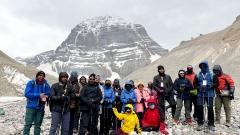
If your route beyond Lhasa includes border zones such as Everest Base Camp, Mount Kailash and Lake Manasarovar, you need supplementary frontier permits. Many travellers research Kathmandu to Lhasa Gyirong permit requirements but overlook these extra documents.
- Tibet Border Pass / Alien’s Travel Permit: Mandatory for travel to remote frontier counties near Nepal and India.
- Military Area Entry Permit: Needed for restricted military zones in western Tibet (Ngari Prefecture).
If your planned trip only covers Gyirong, Shigatse and Lhasa city without venturing further to remote border areas, these additional permits are unnecessary. Share your full day-by-day itinerary with your travel agency so they can arrange all required documentation in one batch.
Supplementary Items to Carry
- Passport-sized photographs (2–4 copies) for unexpected form filling.
- Small amount of US dollar cash for emergency costs; ATMs are limited near the border.
- Printed copies of your tour confirmation letter provided by your Tibetan agency.
- Completed health declaration forms (distributed on site at the border checkpoint).
Step-by-Step Border Crossing Process from Kathmandu to Gyirong Port
Understanding the sequence of immigration procedures helps reduce stress on crossing day. The full process usually takes 2.5 to 4 hours depending on visitor volume.
Step 1: Depart Kathmandu Early
Your Nepali driver will collect you from your hotel early in the morning. The road journey from central Kathmandu to Rasuwagadhi border checkpoint lasts roughly 7–8 hours. Roads contain narrow, winding mountain sections. Pack water, snacks, sun protection and warm layers, as mountain temperatures shift rapidly.
Step 2: Complete Nepal Exit Formalities at Rasuwagadhi
Once you reach the Nepali immigration office, submit your passport to complete exit procedures. Officers will verify your valid Nepal visa and stamp your passport to confirm departure from Nepal. Double-check that the exit stamp is clearly printed before walking toward the friendship bridge that separates Nepal and China.
Step 3: Cross the Border Bridge to Gyirong Port (Chinese Side)
The short walk across the bridge marks entry into Chinese territory. Do not carry restricted items including certain printed materials, drones, satellite communication equipment or fresh food products. Customs perform thorough X-ray scanning of all luggage, and random manual baggage inspections are standard practice.
Step 4: Chinese Immigration and Document Inspection
Your prearranged Tibetan guide will wait at the designated meeting zone. Hand over your passport, visa documents, while your guide presents the official Tibet Travel Permit. Immigration officers may collect biometric data and take digital photographs. Answer questions honestly about your travel plans inside Tibet.
Step 5: Meet Your Vehicle and Continue to Gyirong Town / Shigatse
After receiving clearance, you will board your private tour vehicle. Most groups choose to stay overnight in Gyirong Town or Shigatse to acclimatise gradually to rising altitude before the long final drive to Lhasa. The stretch from Gyirong Port to Lhasa covers around 600 kilometers and normally takes 10–12 hours driving time with rest stops.
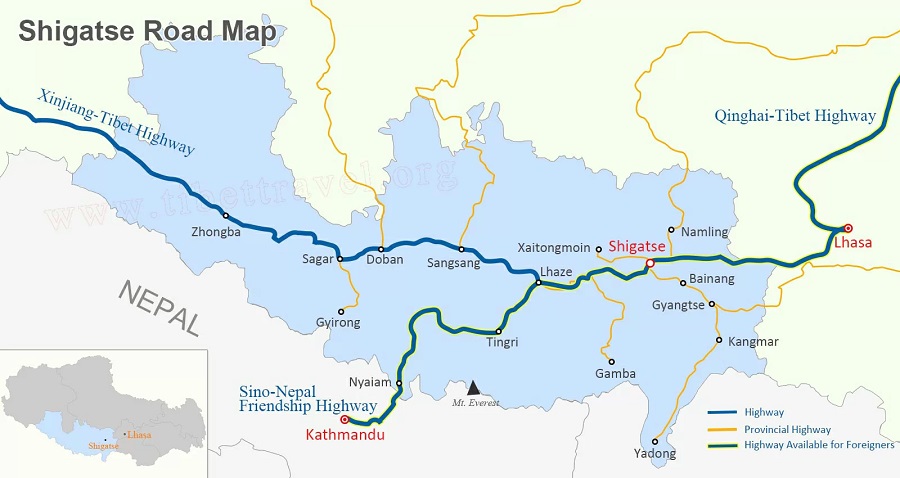
Shigatse Road Map
Transport Arrangements from Kathmandu to Lhasa via Gyirong Border
Independent transport bookings are impractical for this route due to border regulations. All travel should be coordinated through your tour operator.
- Kathmandu to Rasuwagadhi: Nepali registered private jeep or van. Public buses rarely align with border opening hours and do not offer flexible schedules for tourists.
- Border crossing: No vehicles can pass directly between the two checkpoints. Travelers walk across on foot.
- Gyirong Port onward to Lhasa: Officially registered Tibetan tourist vehicle with local licensed driver and guide. Foreign registered vehicles cannot operate inside Tibet for tourist transport.
Avoid trying to book separate drivers on your own. Many unlicensed operators cannot pass official road checkpoints, which will halt your journey midway.
High Altitude Travel & Safety Advice
Altitude sickness is a common risk on this overland route. Gyirong Port sits at 1,818 m; Gyirong Town rises to roughly 4,200 m, and Lhasa rests at 3,656 m above sea level.
- Build acclimatization slowly. Do not rush straight from the border to Lhasa without an overnight rest.
- Stay hydrated, avoid heavy alcohol consumption and avoid intense physical activity during your first two days on the plateau.
- Bring basic altitude sickness medication after consulting your doctor before travel.
- Weather conditions in the Himalayas change instantly. Prepare waterproof outerwear, warm fleece, sunscreen and UV-protective sunglasses all year round.
Common Mistakes Travellers Make in 2026
1. Leaving visa and permit applications until the last minute. Delays at embassies and tourism bureaus frequently happen during peak travel seasons (autumn and spring).
2. Planning border crossing on weekends or national holidays when immigration services operate with limited staff.
3. Assuming you can travel without a guide. Regulation has not changed in 2026; solo foreign tourists are denied entry at Gyirong.
4. Confusing Tibet Travel Permit with a Chinese visa. These are two separate official documents; possessing one does not replace the other.
5. Overloading luggage with prohibited electronics or printed materials that trigger lengthy customs searches.
Best Time to Complete the Kathmandu to Lhasa Overland Crossing
- Spring (March–May): Mild temperatures, clear mountain views, ideal for landscape and cultural photography. Moderate tourist numbers.
- Autumn (September–November): Considered the peak season. Stable weather, excellent visibility of Himalayan peaks. Book permits and tour packages at least two months ahead.
- Winter (December–February): Fewer tourists, lower tour costs. However, mountain passes can experience snowfall, which may temporarily slow road traffic.
- Monsoon (June–August): Higher risk of landslides and cloud-obscured scenery. Only recommended for flexible travelers comfortable with possible schedule adjustments.
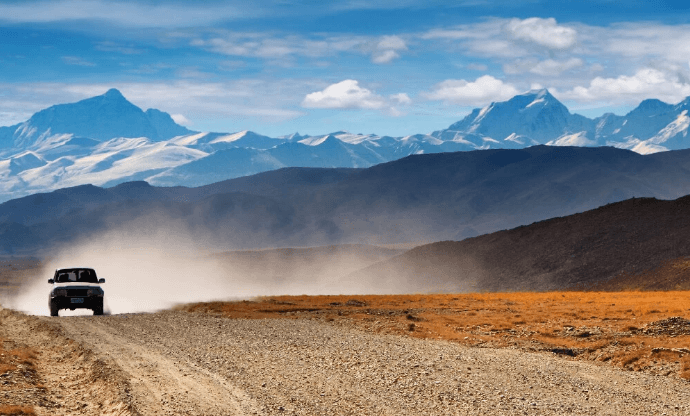
Gyirong Overland
Recommended Tour for Your Gyirong Overland Journey
Planning your own Kathmandu to Lhasa overland via Gyirong trip means dealing with complicated permit applications, border coordination, vehicle bookings and altitude arrangement. To enjoy a stress-free Himalayan adventure, we recommend our classic 8-Day Kathmandu to Lhasa Tour: The Epic Himalayan Highway.
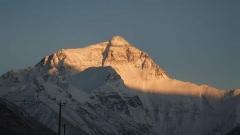
Our professional team manages the full preparation work, including all required permits, border guidance, ground transport and experienced bilingual guides. The well-designed itinerary features gradual altitude acclimatization and covers iconic attractions such as Everest Base Camp, Tashilhunpo Monastery, Yamdrok Lake and the core landmarks in Lhasa.
Check full itinerary, prices and fixed departure dates here:
Day 1: Kathmandu to Gyirong-Crossing the Border into Tibet
Day 2: Gyirong Valley-Hike to Milarepa Cave
Day 3: Gyirong to Tingri: visit Everest Base Camp
Day 4: Tingri to Shigatse: G318 Milestones & Tashilhunpo Monastery
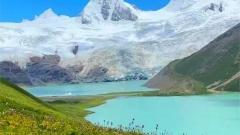
Day 5: Shigatse to Lhasa: Karola Glaciers, Yamdrok Lakes & Historic Highway
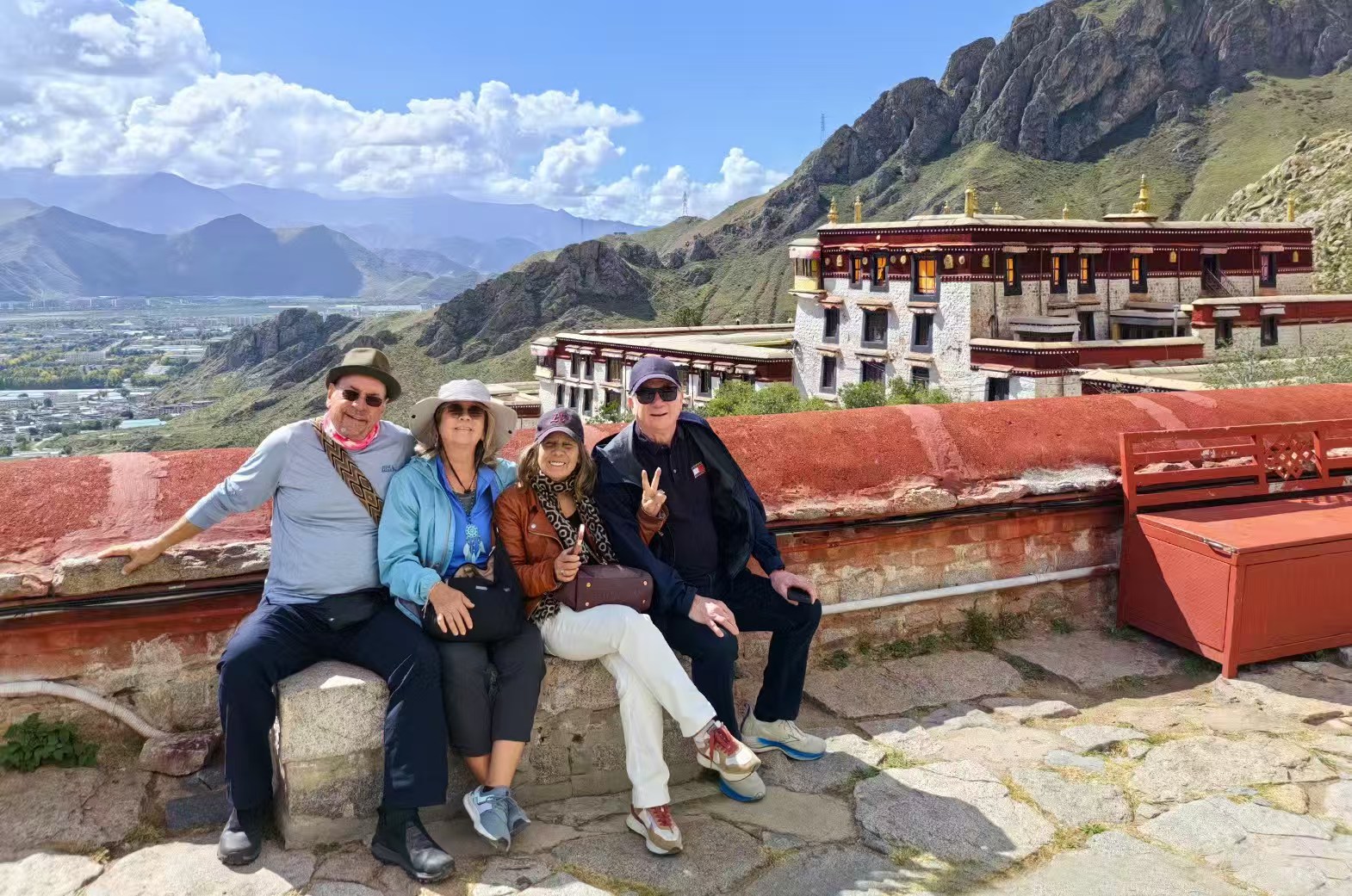
Day 6: Lhasa Tour City Tour: visit Drepung Monastery and Sera Monastery
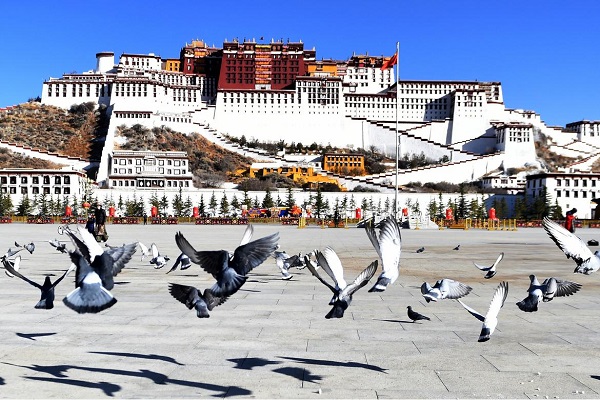
Day 7: Lhasa Tour City Tour: Explore The Potala Palace, Jokhang Temple & Barkhor Street
Day 8: Lhasa Departure
Conclusion
Organizing an overland trip from Kathmandu to Lhasa via Gyirong Port delivers unforgettable Himalayan scenery and unique cross-cultural experiences, yet success fully depends on strict adherence to Gyirong border crossing requirements 2026 Kathmandu to Lhasa. From securing your passport, visa and Tibet Travel Permit to scheduling your crossing on working days and traveling with a licensed guide, every step requires careful advance planning.
Take sufficient time to coordinate with your travel agency to verify all paperwork deadlines, confirm seasonal road conditions and finalise your itinerary. By preparing all documents well ahead and understanding the border clearance workflow, you can avoid unnecessary disruptions and focus on enjoying the spectacular journey from the Nepali hills up onto the roof of the world toward Lhasa.