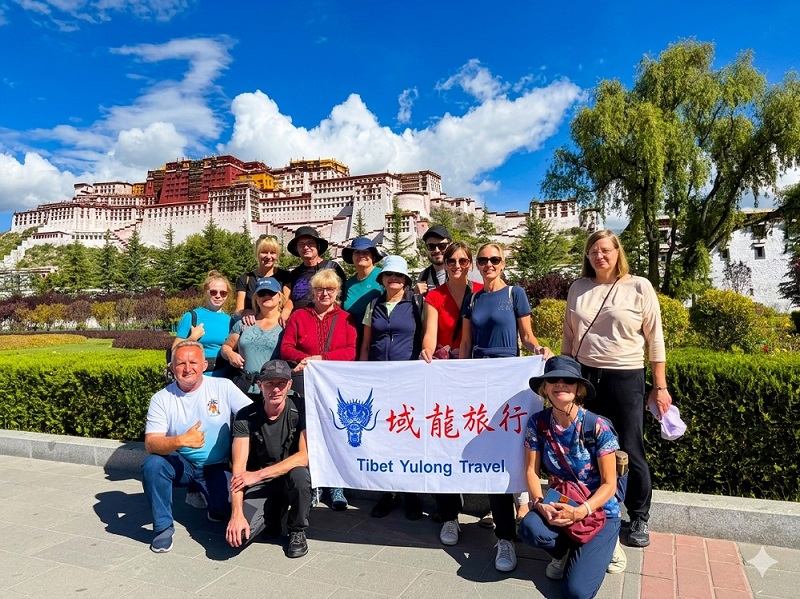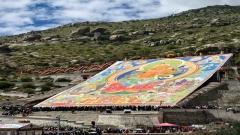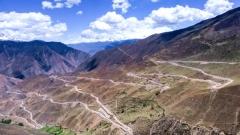

For many Chinese-Canadians and international travelers living in Vancouver, Toronto, or elsewhere across Canada, Tibet has always held a special kind of draw — the towering presence of the Potala Palace, the deep traditions of Tibetan Buddhism, and that unmistakable sense of vastness and stillness that comes with standing on the Roof of the World.
Unlike travel to many other destinations, however, a trip to Tibet isn’t something you can simply decide on and book overnight. Whether you hold a Canadian passport or are a Chinese-Canadian citizen, unless you carry a Chinese mainland ID card or a Hong Kong/Macau travel permit, you’re classified as a foreign visitor when entering Tibet. This means you’ll need to apply in advance for a special document — the Tibet Travel Permit — and arrange your trip through a licensed local travel agency in order to legally enter and travel within Tibet.
This guide walks through everything Canadian travelers need to know about visiting Tibet, from required documents and application procedures to transportation routes and practical travel tips.
What Is a Tibet Travel Permit?
The Tibet Travel Permit is the essential document required for all foreign visitors, including Canadian passport holders, to travel in the Tibet Autonomous Region. It’s issued by the Tibet Tourism Bureau, but it isn’t something travelers can apply for on their own — it must be submitted on your behalf by a licensed Tibet-based travel agency.
In other words, whether you’re still in Canada or have already arrived in a mainland Chinese city like Beijing, Chengdu, or Shanghai, there’s no government office window where you can walk in and apply yourself. The only path forward is to connect with a reliable Tibet travel agency well ahead of your trip.
Why does this rule exist?
Tibet sits at an average elevation of over 4,000 meters, with a highland climate, delicate ecosystem, and transportation infrastructure that differs significantly from mainland Chinese cities. Local authorities require all foreign travelers to visit as part of an organized tour arranged through a travel agency, both to help ensure traveler safety and to make regional management more practical.
For Canadian travelers, this means that even if you’re used to planning independent trips and traveling spontaneously, visiting Tibet requires a shift in mindset — finding a reputable local travel agency to handle your permit applications, itinerary planning, accommodations, and transportation.
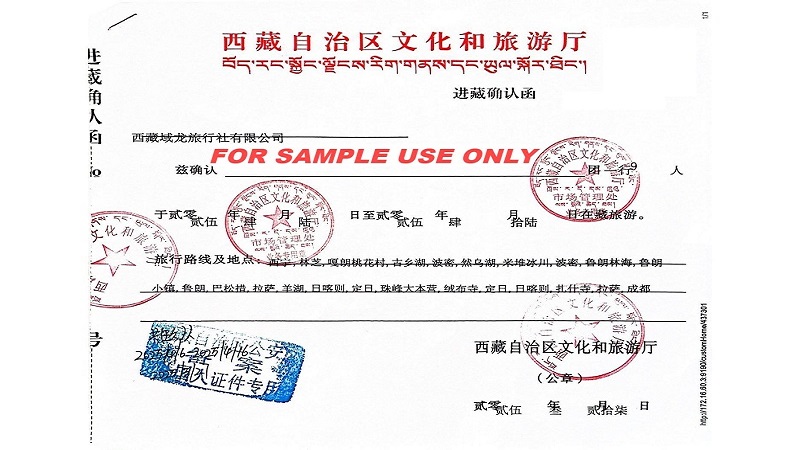
Tibet Travel Permit – Tibet Yulong
What Documents Do Canadian Travelers Need?
The exact documents required will depend on which route you choose to enter Tibet.
Passport and Visa
At the most basic level, you’ll need a valid Canadian passport and a Chinese visa.
- Entering via mainland Chinese cities (such as Chengdu, Chongqing, Beijing, Shanghai, or Guangzhou): You’ll need to apply for a Chinese Tourist Visa (L-visa) in Canada before your trip. It’s best to apply well in advance, since visa processing can take some time.
- Entering via Kathmandu, Nepal: You won’t need to apply for a Chinese visa beforehand. Instead, you’ll need a Group Visa, arranged in Kathmandu, typically with the help of a local agency or your Tibet travel agency.
The Tibet Travel Permit Application Process
Once your passport and visa are sorted, the next essential step is having your travel agency apply for your Tibet Travel Permit on your behalf:
- You provide copies of your passport and Chinese visa to the travel agency.
- The agency compiles your information and submits the application to the Tibet Tourism Bureau.
- Once issued, your guide will hand you the original permit in person upon your arrival at Lhasa’s airport or train station, or the agency may courier it in advance to your hotel in a transit city.
Additional Permits for Restricted Areas
If your itinerary includes any of the following areas, you’ll need additional permits beyond the basic Tibet Travel Permit — specifically, the Alien’s Travel Permit, and in some cases, a Military Area Entry Permit:
- Everest Base Camp
- The Ngari region (including Mount Kailash and Lake Manasarovar)
- Rawok Lake, Nyingchi, and Shannan
These additional permits also require processing through your travel agency — individual travelers cannot apply for them directly.
Recommendation: Once you’ve decided to travel to Tibet, reach out to your travel agency as early as possible, and provide accurate, complete personal information and itinerary details to avoid delays caused by incomplete information or last-minute changes.
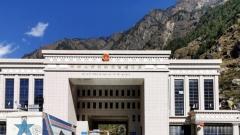
What Information Is Required for the Permit Application?
When applying for your Tibet Travel Permit, your travel agency will need to collect a range of detailed information from you:
- Full name, nationality, age, gender, occupation
- Passport number and contact phone number
- Specific dates and locations for your Tibet itinerary
- Your planned mode of transportation into and out of Tibet
Important note: Once your Tibet Travel Permit has been officially issued, requesting an extension or making changes to your itinerary can be very difficult — and in many cases, simply isn’t possible. It’s strongly recommended that you finalize your itinerary details in advance — including your exact departure and return dates, the cities and sites you plan to visit, and your transportation method — before your agency submits the application.
If you’re entering via a mainland Chinese city, you’ll also need to confirm your specific “entry city” in advance. Once this city is set on your application, it generally cannot be changed afterward.
How Do Canadian Travelers Get to Tibet?
Traveling from Canada to Tibet typically requires at least one connecting flight. Broadly speaking, there are two main routes to choose from.
Route 1: Via Mainland Chinese Cities
Fly from Vancouver or Toronto to a major Chinese city, then connect onward to Lhasa by plane or train:
- Vancouver–Chengdu: Sichuan Airlines 3U8502
- Toronto–Guangzhou: China Southern CZ312
- Toronto–Beijing: Hainan Airlines HU7976
- Toronto–Shanghai: Air Canada AC027
- Toronto–Beijing–Chongqing: Air Canada AC31, connecting to AC6608
Onward flights and trains to Lhasa:
- Chengdu–Lhasa: More than 20 flights daily; train Z322 (every other day, approximately 37 hours)
- Chongqing–Lhasa: More than 10 flights daily; train Z223 (every other day, approximately 36 hours)
- Guangzhou–Lhasa: China Southern CZ3463 or China Eastern MU5774
- Beijing–Lhasa: Air China CA4125; train Z21 (daily, approximately 40 hours)
- Shanghai–Lhasa: China Eastern MU2335; train Z164 (daily, approximately 47 hours)
Of these, Chengdu and Chongqing are generally the most recommended transit cities, thanks to their closer geographic proximity to Tibet, higher flight frequency, and status as the primary departure points for lower-altitude flights to Nyingchi. Train journeys from these two cities are also comparatively shorter.
Route 2: Via Kathmandu, Nepal
Fly from Vancouver or Toronto via a connecting hub like Hong Kong to Kathmandu, then continue to Tibet by air or overland:
- Vancouver–Hong Kong–Kathmandu: Cathay Pacific CX865, connecting to CX5104
- Kathmandu–Lhasa: Air China CA408 or Sichuan Airlines 3U8720
Tip: Whichever route you choose, it’s best to plan your itinerary early and confirm your full route and timeline with your travel agency, so they can help book flights and train tickets and schedule your Tibet Travel Permit application accordingly.
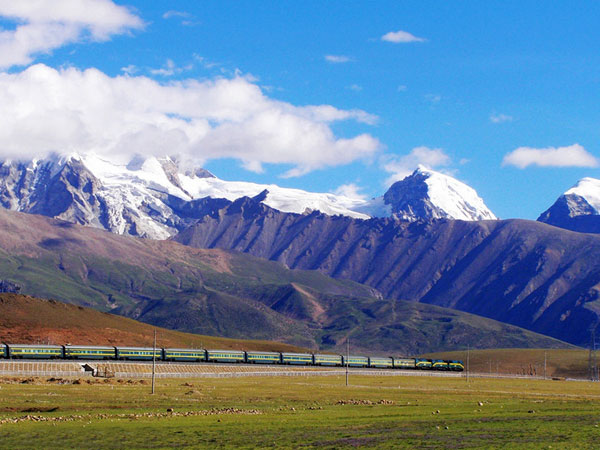
Qinghai–Tibet Train
Can Canadian Travelers Explore Tibet Independently?
The short answer is no. Aside from mainland Chinese travelers holding a Chinese ID card, and Hong Kong/Macau travelers holding a home return permit, all foreign passport holders — including Canadian citizens — are required to travel through Tibet as part of an organized group; fully independent travel isn’t permitted.
That said, there’s still meaningful flexibility in how you can structure your trip. Tibet tours generally fall into two categories:
Join-in Group Tours
These combine travelers with similar itineraries into a shared group, with departure dates and routes pre-arranged by the travel agency.
Advantages: More affordable pricing, the chance to meet fellow travelers from around the world, and a convenient, time-saving option overall.
Private Customized Tours
These are built entirely around your preferred schedule, route, and interests.
Advantages: Maximum flexibility and independence — ideal for travelers who want to set their own pace, are traveling with family, or have unusual scheduling needs. This is the closest option to true independent travel within Tibet’s regulatory framework.
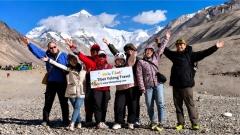
What to Pack for Your Trip to Tibet
Tibet sits on the Qinghai-Tibet Plateau and experiences a classic highland climate, characterized by dramatic swings between day and night temperatures — daytime sun can feel surprisingly warm, while nights turn cold quickly.
Clothing:
- Thermal base layers, quick-dry undergarments
- A warm down jacket, long pants
Footwear:
- Non-slip, insulated hiking boots
- Comfortable sneakers as a backup pair
- Breathable socks
First aid and other essentials:
- Medication for altitude sickness prevention, cold medicine
- Sunglasses and sunscreen
If you happen to forget something before your trip, don’t worry too much — Lhasa has well-stocked shops where you can pick up warm clothing, hiking gear, and common medications locally.
Local Tibetan Cuisine Worth Trying
A trip to Tibet wouldn’t be complete without sampling some of the region’s distinctive local dishes:
- Tibetan noodles: A light, flavorful broth with chewy noodles — an easy introduction to Tibetan cuisine.
- Tibetan yogurt: Creamy with a pleasant tang, commonly found throughout Lhasa’s streets.
- Yak meat: Whether in hotpot, dried, or paired with noodles, it offers a distinctive flavor worth trying.
- Sweet tea: Mild and pleasantly sweet, a great way to experience the everyday rhythm of local life.
- Butter tea: A rich, distinctive brew that takes some getting used to, but is also believed to help ease altitude sickness symptoms.
Currency Exchange and Language Services
Exchanging Canadian Dollars
The Bank of China branch in Lhasa can exchange Canadian dollars for Chinese yuan, located at No. 7 Lin Kuo Xi Road, Lhasa. If you’re carrying a foreign bank card, you can also withdraw yuan directly from local ATMs — a convenient and secure option.
English and Other Language Guides
Tibet has professionally trained, English-speaking Tibetan guides available, and travelers can join English-language Tibet tours with a guide accompanying them throughout.
Guides fluent in other languages — including Spanish, German, Japanese, French, and Russian — are also available upon request through your travel agency.
Let a Professional Local Team Guide Your Journey
For Canadian travelers, a trip to Tibet does require a bit more planning than the average vacation — from the Tibet Travel Permit application and visa preparation to route planning and transportation logistics, every piece needs to fit together. But it’s precisely this complexity that makes a Tibet journey feel so rare and rewarding once it comes together.
If you’re planning your own trip to Tibet, consider working with an experienced local agency like Tibet Yulong, one that understands the ins and outs of the permit process for foreign travelers. From permit applications and ticket bookings to custom itinerary planning and accommodations, we offer comprehensive, one-stop service — so you can leave the logistics to us and simply look forward to this unforgettable journey to the Roof of the World.