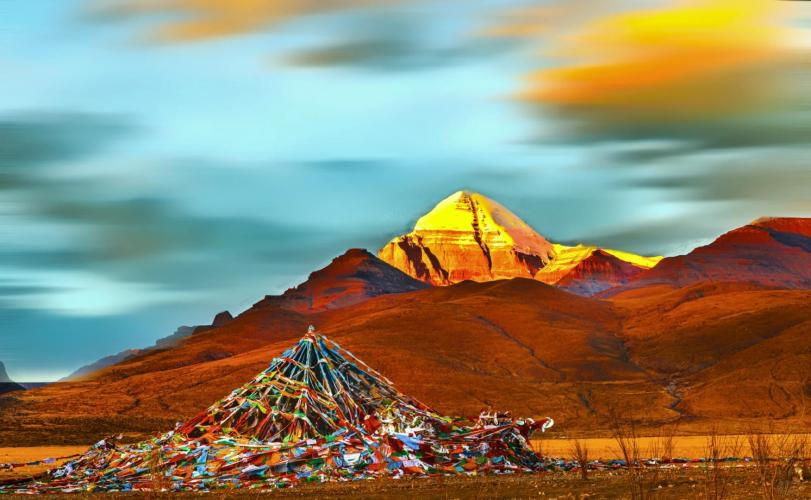
Standing at 6,638 meters above sea level, Mount Kailash is one of the most recognizable peaks on Earth. Travelers, geographers, and pilgrims frequently ask a simple but surprisingly complex question: is Kailash part of the Himalayas? The short answer is no. While it sits near the Himalayan range and shares the same rugged Tibetan plateau environment, Kailash belongs to an entirely separate geological formation known as the Gangdise Mountains, or Transhimalaya. Understanding this distinction changes how we view the region’s geography, ecology, and cultural importance. Whether you are planning a pilgrimage or simply researching high-altitude landscapes, knowing where Kailash fits into the broader Asian topography is essential for any traveler heading to western Tibet.
Key Takeaways:
- Kailash belongs to the Gangdise range, not the Himalayas.
- The peak stands 6,638 meters high in western Tibet.
- Four major religions consider Kailash deeply sacred.
- Lake Manasarovar sits at the base of the mountain.
- Trekking around Kailash requires careful altitude preparation.
The Geographical Reality of Kailash and the Himalayas
To understand why Kailash is not part of the Himalayas, we have to look at the tectonic history of the Tibetan Plateau. The Himalayas were formed by the collision of the Indian and Eurasian tectonic plates. This massive geological event pushed up a continuous chain of mountains stretching across several countries. However, north of the main Himalayan crest lies another distinct range. This is the Gangdise system, also referred to as the Transhimalaya. Kailash is the most famous peak within this specific range.
The Yarlung Tsangpo River valley acts as a natural geographical divider between the Himalayas to the south and the Gangdise range to the north. While both ranges share extreme altitudes and harsh climates, their rock compositions and structural formations differ significantly. The rocks forming Kailash are primarily conglomerate and sandstone, deposited millions of years ago and later thrust upward. In contrast, the higher peaks of the central Himalayas often feature different metamorphic and igneous rock structures. Therefore, grouping Kailash with the Himalayas is a common misconception driven by proximity rather than geological fact.
Why People Confuse Kailash with the Himalayan Range
The confusion surrounding Kailash stems from several understandable factors. First, the sheer scale of the Tibetan Plateau makes precise geographical distinctions difficult for casual observers. When people think of high mountains in Tibet or Nepal, they immediately default to the Himalayas because it is the most globally recognized mountain range in the region. Second, travel literature and marketing materials sometimes loosely group all high-altitude peaks in western Tibet under the “Himalayan” umbrella for simplicity, even though this is geographically inaccurate.
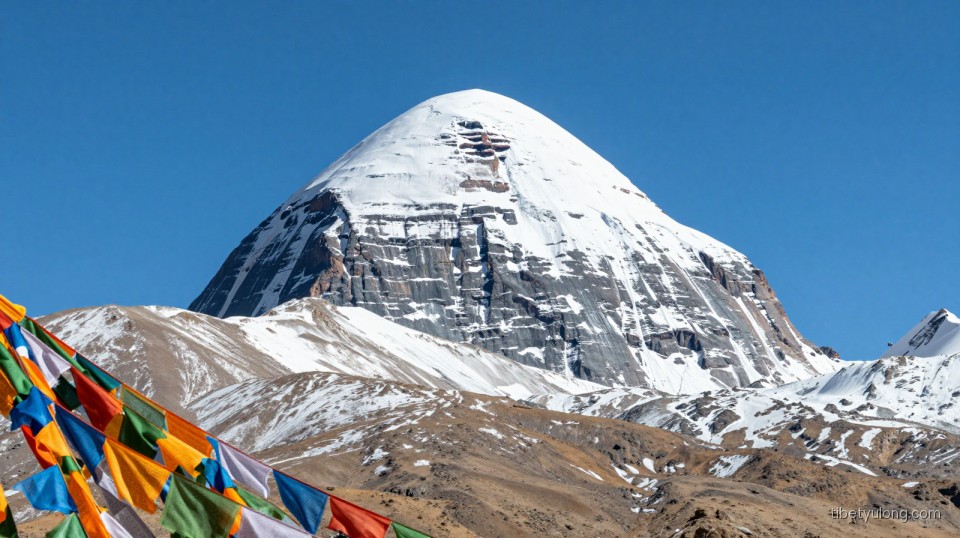
Furthermore, the visual landscape does not help clarify the boundary. Standing near Kailash, the horizon is dominated by snow-capped peaks in every direction. Without a detailed topographic map, distinguishing the Gangdise range from the Himalayas is nearly impossible. Both ranges experience similar weather patterns, support comparable alpine ecosystems, and present identical challenges to trekkers. Yet, for geologists and serious mountaineers, the distinction matters. Kailash occupies a unique position in the Transhimalaya, standing somewhat isolated from neighboring peaks, which contributes heavily to its striking, symmetrical appearance.
The Spiritual Significance of Kailash Across Religions
While geographers debate tectonic plates, millions of people focus on the spiritual gravity of Kailash. This peak holds unparalleled religious importance across four major traditions: Hinduism, Buddhism, Jainism, and the indigenous Bon religion. For Hindus, Kailash is the earthly abode of Lord Shiva, a place where the divine intersects with the physical world. Pilgrims believe that circumambulating the mountain washes away sins and brings them closer to liberation.
In Tibetan Buddhism, the mountain is associated with Demchok, a deity representing supreme bliss. Buddhist pilgrims undertake the arduous trek as a meditative practice, believing the physical struggle mirrors the internal journey toward enlightenment. Jains revere Kailash as the site where their first Tirthankara, Rishabhanatha, attained spiritual liberation. Meanwhile, followers of the ancient Bon religion consider the mountain the seat of all spiritual power, predating the arrival of Buddhism in Tibet.
This convergence of faiths makes Kailash one of the few places on Earth universally respected by multiple, distinct religious groups. Interestingly, this reverence has protected the peak. Unlike other mountains in the Gangdise or Himalayan ranges, Kailash remains unclimbed. Out of respect for its sacred status, climbing attempts are prohibited, ensuring its summit remains untouched by human hands.
Exploring the Sacred Landscape Around Kailash
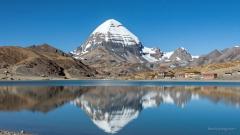
A journey to Kailash is never just about the mountain itself; the surrounding landscape is equally vital to the experience. At the southern base of the peak lies Lake Manasarovar, one of the highest freshwater lakes in the world. Fed by glacial meltwater, the lake is considered exceptionally pure. Pilgrims often bathe in its freezing waters or drink from it, believing it possesses healing properties. Just to the west sits Lake Rakshastal, a saltwater lake often described in local lore as the darker counterpart to Manasarovar. Together, these two bodies of water represent the sun and the moon, or the forces of light and darkness.
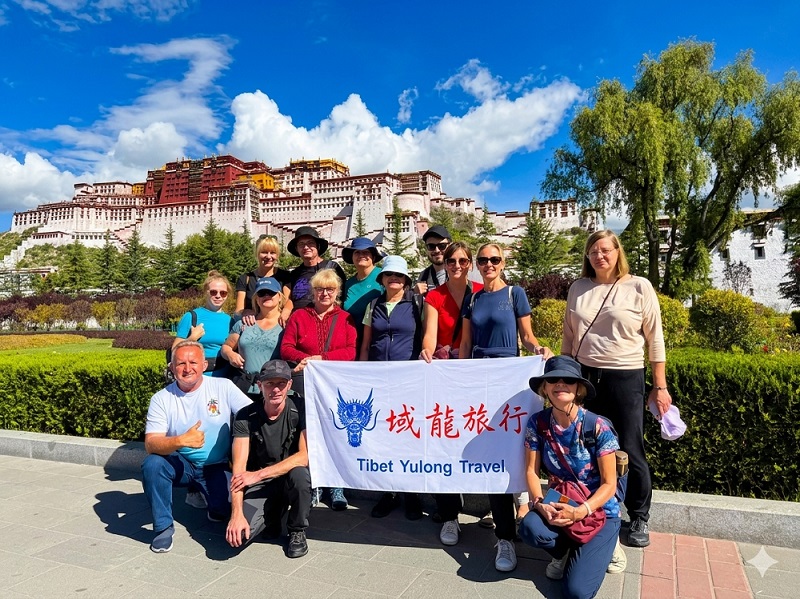
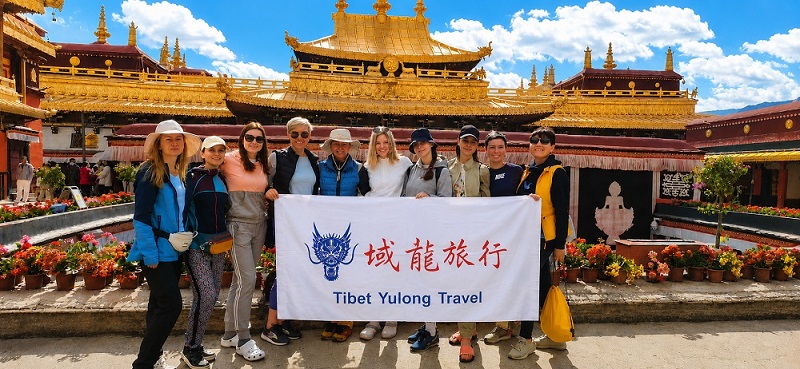
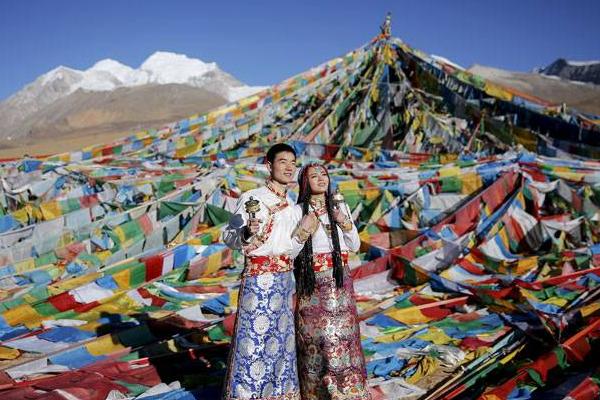
The standard pilgrimage route involves a 52-kilometer circumambulation known as the Kora. This trek typically takes three days to complete and involves crossing the Dolma La pass, which sits at a staggering 5,630 meters above sea level. Along the route, travelers encounter ancient monasteries, chortens draped in prayer flags, and fellow pilgrims from across Asia. The infrastructure is basic, consisting mostly of simple guesthouses and tent camps, making preparation essential. Because the terrain is remote and unforgiving, many visitors rely on experienced operators like Tibet Yulong Travel to organize logistics, secure necessary permits, and provide reliable transportation across the vast distances of western Tibet.
How to Prepare for a Journey to Kailash
Traveling to Kailash demands rigorous preparation due to its extreme remoteness and altitude. Unlike popular trekking destinations in the lower Himalayas, reaching the Gangdise range requires traversing some of the most desolate landscapes on the planet. Most journeys begin in Lhasa or Kathmandu, followed by several days of overland driving across the Tibetan Plateau. This gradual ascent is crucial for acclimatization. Rushing to high altitudes without proper adjustment can lead to severe altitude sickness, which is a genuine medical emergency in such a remote area.
Physical fitness is important, but cardiovascular endurance matters more than raw strength. The Kora involves long days of walking over uneven, rocky terrain at elevations where oxygen levels are roughly half of those at sea level. Trekkers should spend months prior to their trip engaging in hiking, running, or cycling to build stamina. Equally important is mental preparation. Facilities are minimal, weather can change violently within hours, and the isolation can be psychologically taxing.
Packing appropriately is non-negotiable. Layered clothing is mandatory, as temperatures can swing drastically between midday sun and nighttime freezes. High-quality waterproof boots, UV protection, and a reliable sleeping bag rated for sub-zero temperatures are absolute necessities. Hydration systems and high-calorie snacks must be carried daily during the trek, as resupply points are scarce.
Navigating the bureaucratic requirements is another significant hurdle. Foreign travelers cannot visit Kailash independently. You must obtain a Tibet Travel Permit, an Alien Travel Permit for the Ngari Prefecture, and potentially military border passes depending on your exact route. Working with a registered agency simplifies this process considerably. Professional guides ensure compliance with local regulations while providing invaluable context about the region’s history, geology, and culture.
Understanding that Kailash is part of the Gangdise range rather than the Himalayas enriches the entire experience. It shifts the perspective from viewing the mountain as just another tall peak to recognizing it as a unique geological and spiritual anomaly. The Transhimalaya offers a landscape distinct from the southern slopes of the Himalayas—drier, starker, and profoundly quiet. When you finally stand before the symmetrical, striated faces of Kailash, looking out over the turquoise waters of Lake Manasarovar, the geological classifications fade into the background. What remains is the undeniable presence of a place that has drawn humanity’s deepest reverence for millennia. Whether approached through the lens of science or spirituality, the journey to Kailash remains one of the most profound travel experiences available today.