✨ Highlights:
- ✅ Official Travel Compliance Guidance: Clear safety and regulatory guidelines to help foreign independent travellers follow standardized Tibet tourism policies and avoid travel risks.
- 📋 Professional Altitude Health Safety Tips: Practical advice on high-altitude adaptation, altitude sickness prevention, symptom identification, and emergency treatment for solo plateau travel.
- 🔐 Personal & Property Safety Tips: Reliable safety guidance for outdoor activities, night travel, and property management, suitable for all solo foreign travellers.
- 🌤️ Climate & Road Safety Guidelines: Key tips for adapting to Tibet’s changeable high-altitude climate and staying safe on complex mountain roads.
- 🙏 Cultural & Religious Safety Etiquette: Core taboos and polite behaviors to respect local Tibetan customs and avoid unnecessary travel disputes.
- 🩹 Complete Emergency Preparation Strategy: Systematic advice on travel insurance, emergency contacts, and portable emergency kits to ensure full safety protection for solo travellers.
Tibet, a land of snow-capped peaks, sacred lakes, ancient monasteries, and pure high-altitude wilderness, has long been a dream destination for global solo travelers. For foreign independent travellers seeking authentic cultural immersion, serene natural scenery, and unique spiritual experiences, a solo trip to Tibet offers unparalleled travel rewards. However, Tibet’s unique geographical environment, high altitude, special travel regulations, and remote regional features bring distinct safety challenges that differ from conventional urban travel destinations. This article compiles practical and reliable solo travel in Tibet safety tips to help foreign solo travellers enjoy a smooth, secure, and memorable Tibet journey. This comprehensive safety guide covers legal compliance, altitude health management, personal safety, cultural etiquette, emergency preparedness, and practical travel tips, fully tailored to the needs of independent foreign visitors.
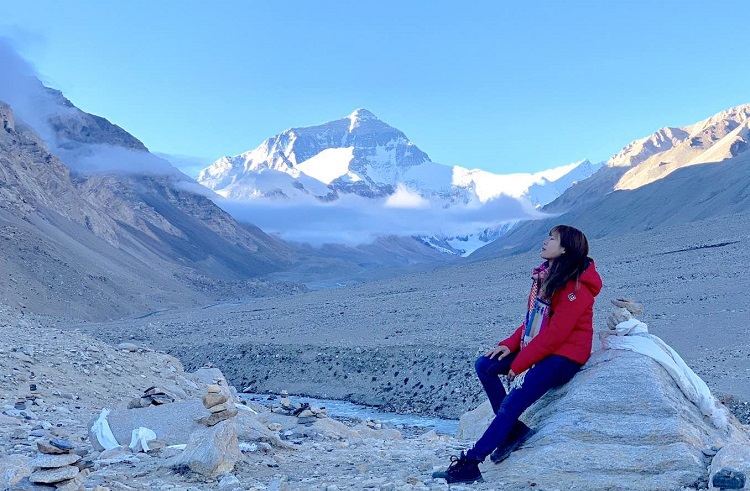
Everest Base Camp
Legal & Regulatory Safety: Follow Official Travel Rules Strictly
The top priority of safe solo travel in Tibet for foreigners is abiding by local travel regulations, as non-compliance will lead to travel interruptions and potential safety risks. Many first-time visitors are unfamiliar with the local tourism policies, so it is essential to learn the rules for foreign independent travellers visiting Tibet before planning your itinerary. Unlike domestic travellers or foreign visitors in other Chinese cities, foreign independent travellers are not permitted to travel completely unguided in Tibet. This is the most critical rule every solo foreign traveller must clarify before departure.
All foreign tourists must apply for an official travel credential in advance through a licensed local travel agency, and travel with a registered local guide and pre-arranged transportation throughout the trip. Understanding the application process and required documents for a Tibet travel permit for foreign solo travellers is the first step to ensuring a hassle-free and legal trip. While this rule limits fully free independent travel, it essentially provides a professional safety guarantee for solo travellers. Local guides are familiar with regional routes, weather changes, restricted areas, and emergency resources, effectively avoiding safety hazards caused by unfamiliarity with the region.
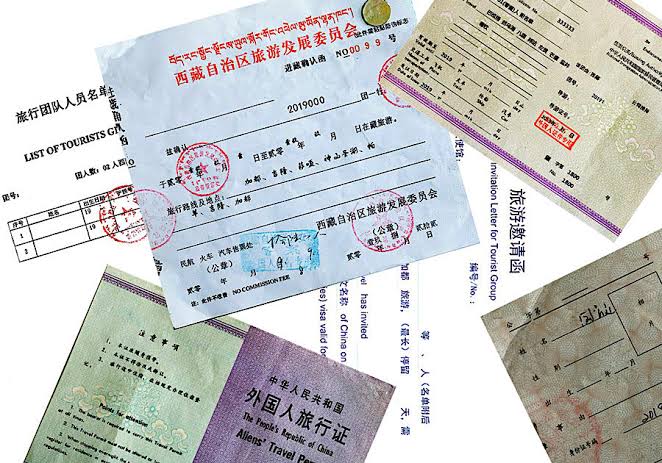
Documents for foreigners entering Tibet
Key regulatory safety tips for foreign solo travellers: First, prepare valid documents including a passport, Chinese visa, and Tibet Travel Permit, and keep both physical and electronic backups to avoid document loss affecting travel. Second, strictly follow the approved travel route; do not privately detour to unopened border areas, remote no-entry zones, or restricted cultural protection areas. Third, pay attention to temporary travel control notices. Tibet may implement short-term entry restrictions during special periods, so confirm the latest travel policies one week before departure. Fourth, never engage in any illegal photography, surveying, or mapping activities in military management areas and key protected areas to avoid legal risks.
Altitude Health Safety: Prevent & Manage Altitude Sickness
Altitude sickness is the biggest natural safety threat for solo foreign travellers in Tibet. Most regions of Tibet are above 3,000 meters above sea level, with low oxygen density, dry air, and strong ultraviolet rays. For travellers coming from low-altitude areas, sudden altitude changes can easily cause physical discomfort, and improper handling may trigger severe health risks. Different from group travellers, solo travellers need to take full responsibility for their physical conditions and master scientific altitude adaptation rules.
The first 48 hours after arriving in Lhasa are the critical adaptation period. Travellers must maintain a low-intensity travel state: avoid strenuous exercise such as running, climbing fast, and long-distance walking, arrange early rest, and ensure sufficient sleep. It is strictly prohibited to drink alcohol, smoke, or take sleeping pills in the early stage, as these behaviors will inhibit respiratory function and aggravate oxygen deficiency, increasing the risk of severe altitude sickness. At the same time, drink plenty of warm water continuously. The dry high-altitude air will cause rapid body water loss, and dehydration is the main inducement of altitude headache and fatigue.
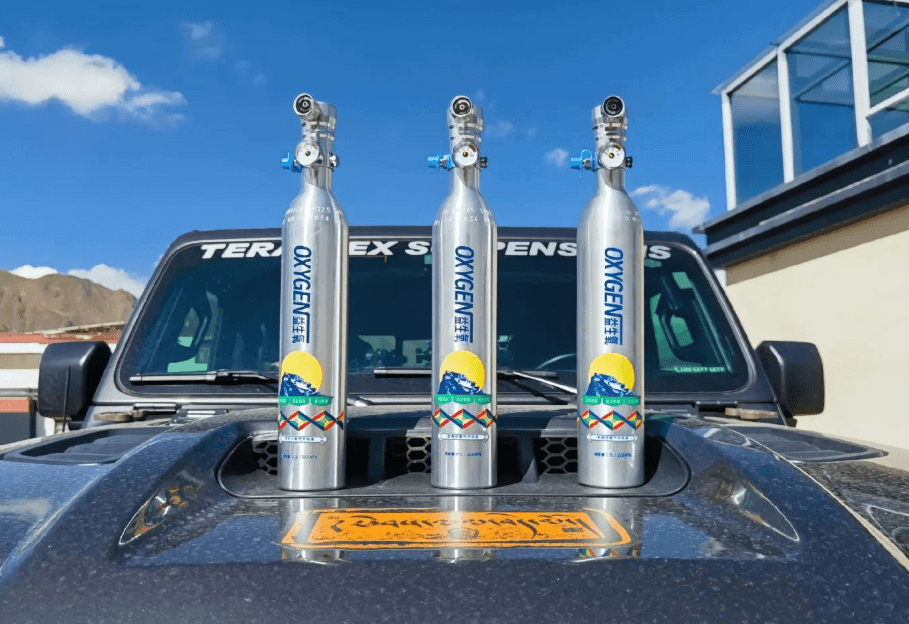
Oxygen
Master the classification and response methods of altitude sickness to achieve precise prevention. Mild altitude sickness is the most common, manifested as dull headache, mild shortness of breath, fatigue, poor appetite, and frequent waking at night. These symptoms are normal adaptive reactions, which can be relieved by 1-3 days of rest and slow adaptation without special treatment. Travellers can carry common medicines such as ibuprofen and throat lozenges to relieve mild discomfort.
Once severe symptoms occur, including persistent severe headache, difficulty breathing at rest, vomiting, blurred vision, and limb edema, travellers must take emergency measures immediately. The most effective way to relieve severe altitude sickness is to descend 300-500 meters to a low-altitude area quickly, and contact a local regular hospital for professional treatment if the symptoms do not improve. Before departure, foreign solo travellers must consult a doctor to evaluate physical adaptability, and carry targeted altitude sickness prevention medicines according to personal physical conditions. In addition, equip portable oxygen tanks for emergency use, but avoid long-term dependent oxygen inhalation, which is not conducive to physical adaptation.
Personal & Property Safety: Ideal Environment for Solo Visitors
Tibet has a stable public security environment with extremely low crime rates, making it very safe for foreign solo travellers of all genders. Many female overseas tourists often ask: Is Lhasa safe for female solo foreign travellers? The answer is definitely yes. Lhasa, as the core tourist city of Tibet, has complete public security facilities, 24-hour street patrols, and honest local residents, creating a friendly and secure travel atmosphere for female independent travellers.
In terms of property safety, valuables such as cash, mobile phones, cameras, and passports must be placed in front pockets or anti-theft backpacks, avoiding back pockets or casual placement. Do not carry a large amount of cash. Most hotels, restaurants, and scenic spots in Lhasa and core tourist areas support mobile payment. Store electronic copies of passports, permits, and insurance policies in mobile phones and cloud disks separately to facilitate emergency reissue and verification. When visiting remote pastoral areas and hiking scenic spots, do not leave luggage and valuables unattended.
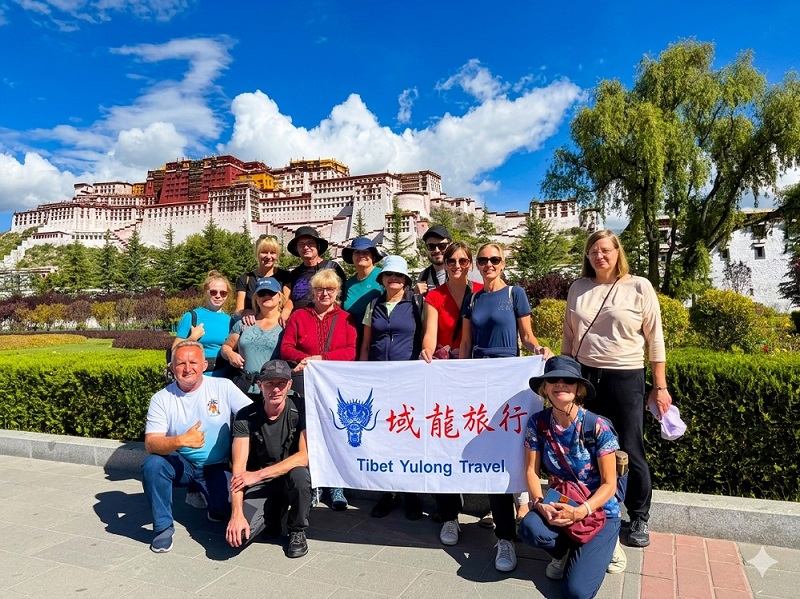
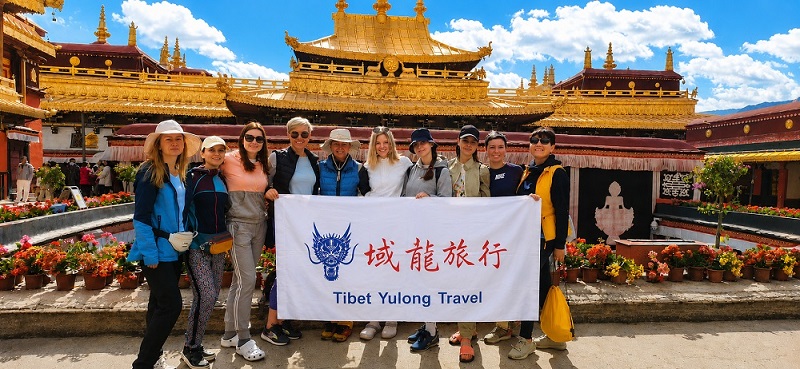
Tibet Tourists in Potala Palcace
For personal activity safety, solo travellers should avoid going out alone at night, especially in remote suburban areas and unlit country roads. Try to arrange all outdoor activities in the daytime. When hiking, visiting lakes, or exploring pastoral areas, do not leave the official tourist routes without authorization. Many wild areas in Tibet have complex terrain, including wetlands, steep slopes, and unmarked cliff areas, which are prone to falling and getting lost. In addition, avoid approaching wild animals randomly. Although most wild animals in Tibet are docile, random feeding and approaching will trigger defensive attacks.
Female foreign solo travellers do not need to worry about special safety risks. Local residents are simple and hospitable, and tourist areas have complete public security patrols. Just maintain conventional travel precautions: do not accept unknown drinks from strangers, do not follow unfamiliar personnel to remote unopened scenic spots, and keep your guide informed of your real-time itinerary at all times.
Climate & Road Safety: Adapt to Unique Tibetan Weather & Terrain
Tibet’s high-altitude climate is changeable, with obvious temperature differences between day and night, strong ultraviolet radiation, and sudden rain, snow, and gale weather, which are easily overlooked safety hazards for foreign solo travellers. Mastering climate adaptation and road travel safety rules can effectively avoid travel accidents.
In terms of climate adaptation, the ultraviolet rays on the Qinghai-Tibet Plateau are far stronger than low-altitude areas. Travellers must equip professional sunscreen products, UV-protective clothing, sun hats, and polarized sunglasses to avoid sunburn and ultraviolet eye damage. The temperature difference between day and night in Tibet can reach 15-20 degrees Celsius. Even in summer, the temperature drops sharply after sunset, so it is necessary to carry warm and windproof jackets, thermal underwear, and thick trousers to prevent colds. A cold at high altitude is easy to induce severe altitude pneumonia, which is extremely dangerous. In winter and early spring, blizzards and strong winds are frequent, so avoid long-distance cross-region travel during this period.
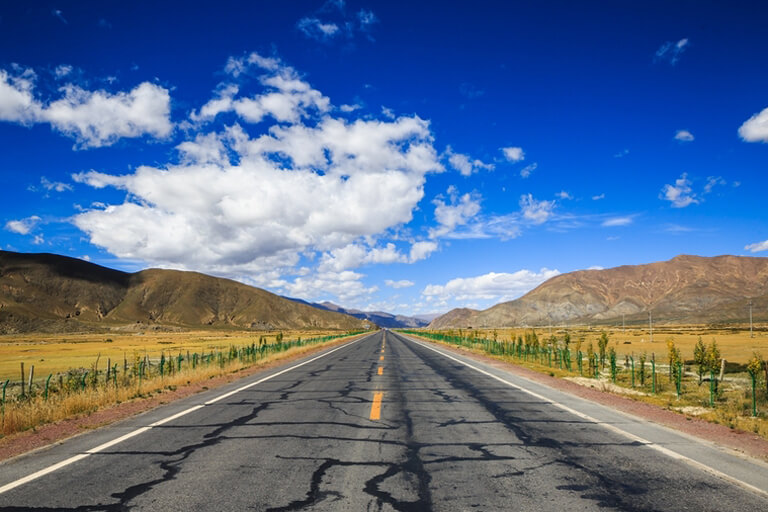
318 National road
In terms of road safety, most scenic spots in Tibet are far apart, with long mountain roads, many curves, and steep slopes. Although foreign solo travellers cannot drive independently in remote areas, they need to pay attention to travel vehicle safety. Choose official licensed tour vehicles, avoid overloaded private cars. During mountain road travel, fasten seat belts throughout the journey, and do not stand up or stretch out your body arbitrarily. In rainy and snowy weather, mountain roads are slippery and foggy, with poor visibility. Once the weather deteriorates, follow the guide’s arrangement to stop traveling and wait for the weather to improve, and do not urge speeding. In addition, some plateau sections have strong wind and sand, so close vehicle windows in time to avoid sand damage and physical discomfort.
Cultural & Religious Safety: Avoid Offensive Behaviors
Tibet is an important ethnic and religious cultural region in China, with profound Tibetan Buddhism culture and unique folk customs. For foreign solo travellers, respecting local culture and religious taboos is not only a manifestation of travel quality but also an important part of travel safety, which can effectively avoid unnecessary disputes and conflicts.
When visiting monasteries, follow strict religious etiquette: do not step on the monastery thresholds, do not take photos of Buddha statues, scriptures, and religious ceremonies without permission, do not talk loudly or make noise in the temple, and do not randomly touch religious utensils and prayer flags. When walking around monasteries and sacred mountains, follow the local clockwise pilgrimage rule, and do not walk counterclockwise.
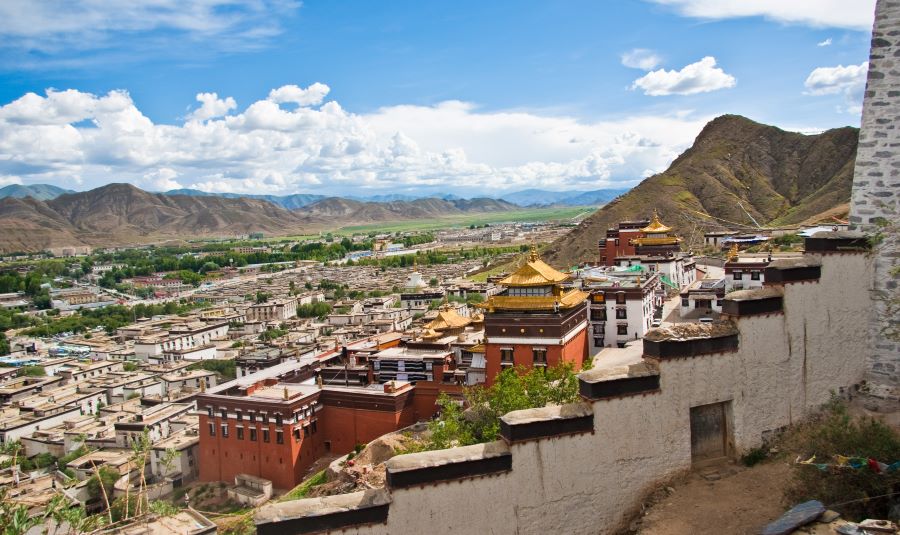
Tashilumpo Monastery
When contacting local Tibetan residents, respect their living customs and religious beliefs. Do not comment on local religious culture and folk customs arbitrarily, do not tease local children at will, and do not randomly shoot portraits of residents. When entering local villages and residential areas, obtain the consent of residents in advance. When participating in local folk activities, follow the guidance of guides and local people to avoid violating local customs.
Emergency Preparation & Travel Insurance: Build a Complete Safety Barrier
Tibet’s remote areas have sparse population, backward signal coverage, and limited medical and rescue resources. For solo foreign travellers with no companions, perfect emergency preparation is the final guarantee of travel safety.
First, purchase targeted travel insurance before departure. Ordinary travel insurance often does not cover high-altitude travel risks. It is necessary to choose insurance products that include altitude sickness medical treatment, remote rescue, accident medical care, and travel interruption compensation, to cope with unexpected medical expenses and rescue needs.
Second, sort out and save all emergency contact information. Store local emergency numbers, tour guide contact information, travel agency 24-hour service hotlines, and foreign consulate emergency calls in mobile phones and notebooks separately. For remote areas with no mobile signal, carry a satellite phone or walkie-talkie as a backup communication tool.
Third, prepare a portable emergency kit, including altitude sickness medicines, cold medicines, anti-inflammatory drugs, band-aids, disinfectant, energy bars, and drinking water. When traveling to remote scenic spots, reserve sufficient food and water to cope with possible road delays and stranded situations. In addition, formulate a personal emergency plan: once physical discomfort or accidental loss occurs, stop traveling immediately, contact the guide for help, and do not take risks alone.
Conclusion
Solo travel in Tibet is a unique and precious travel experience for foreign independent travellers. The region’s stable public security, simple folk customs, and standardized tourism management system have created a safe travel environment for foreign tourists. The core of safe solo travel lies in abiding by regulatory rules, adapting to high-altitude environments, maintaining safety awareness, and respecting local culture.
By completing permit procedures in advance, mastering altitude sickness prevention methods, standardizing personal travel behaviors, and perfecting emergency guarantee measures, foreign solo travellers can effectively avoid all potential safety risks. This guide’s practical and targeted safety advice can help every independent foreign traveller explore the beauty of Tibet safely, calmly, and enjoyably, and harvest a pure and shocking plateau travel memory.